
Lot 3001
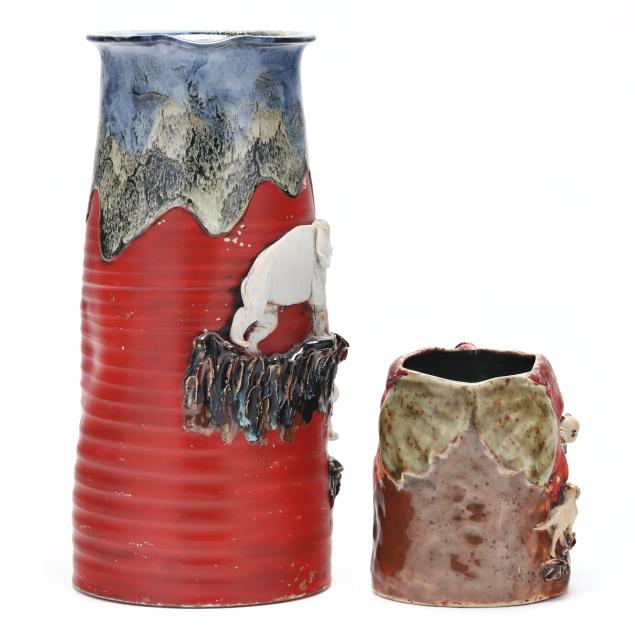
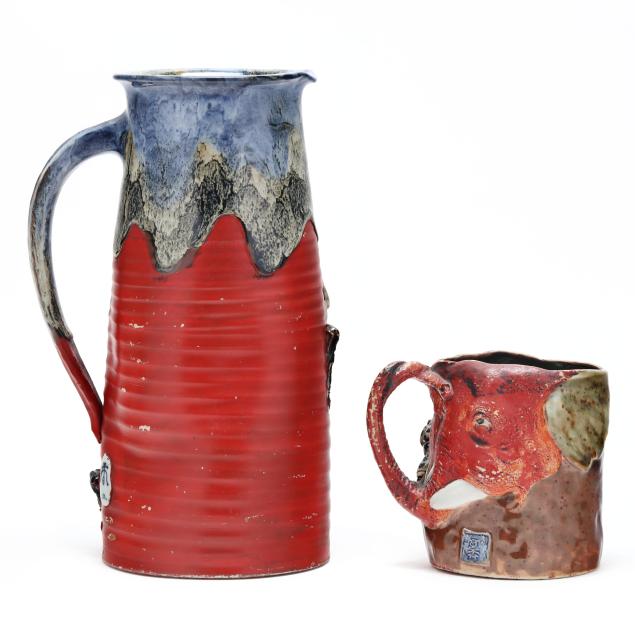
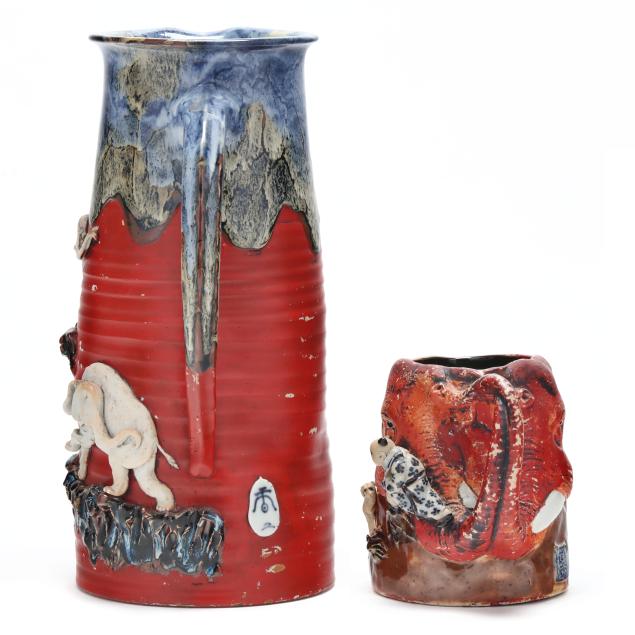
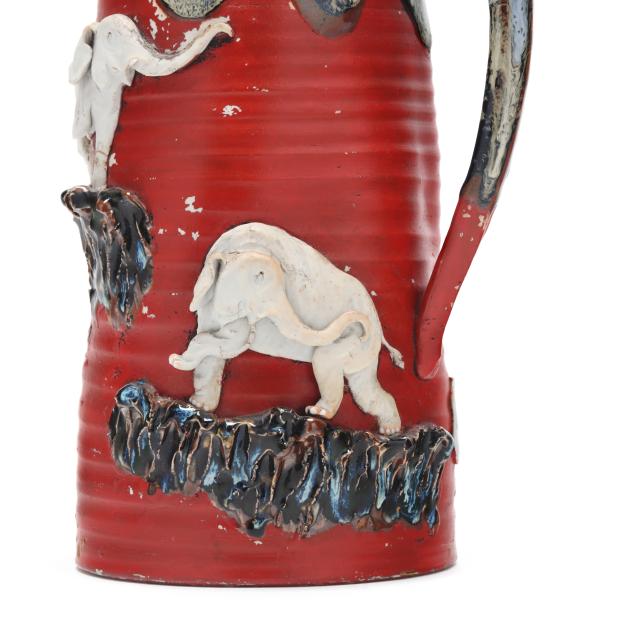
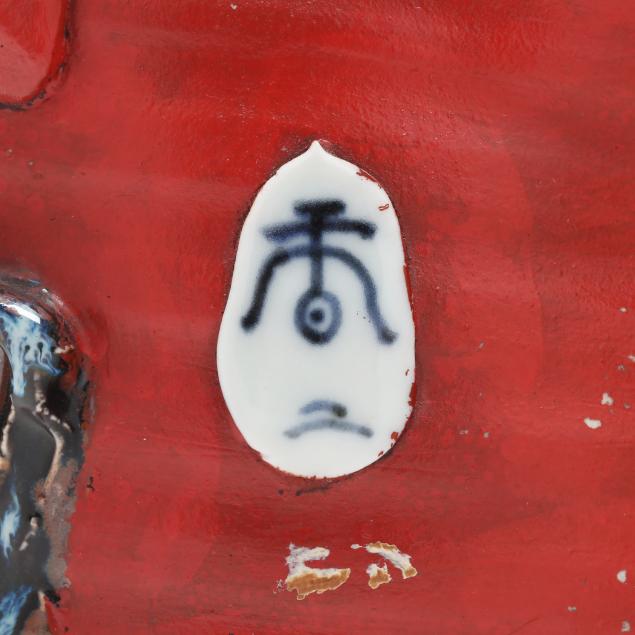
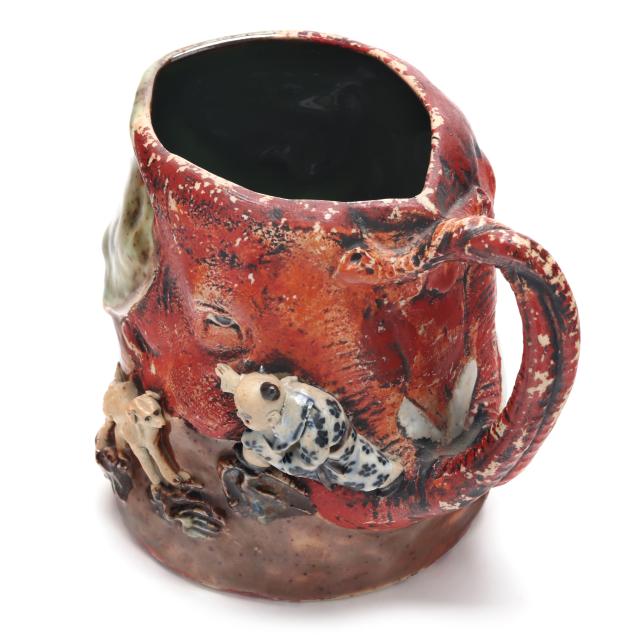
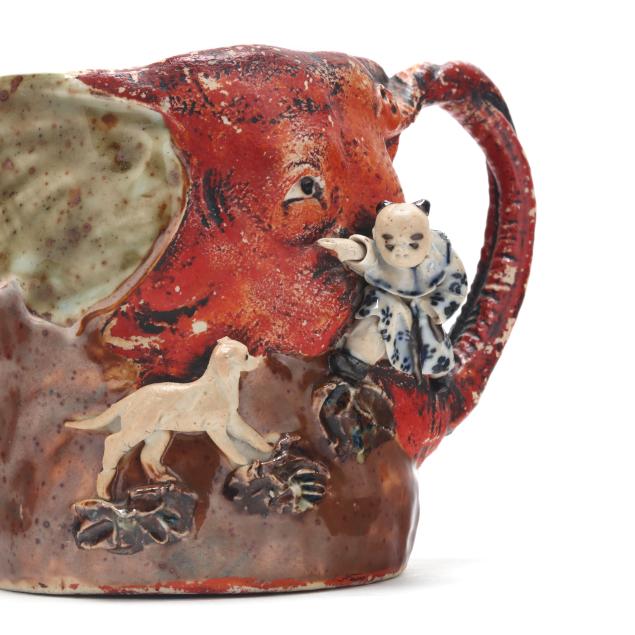
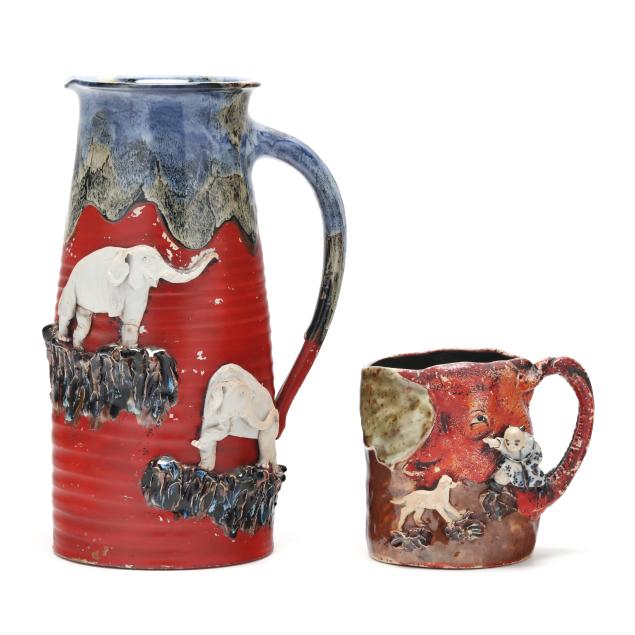
Two Japanese Sumida Gawa Pottery Vessels with Elephants
Explore more items like this one.
Visit our Asian Arts Department Asian Arts
Lot Details & Additional Photographs
Pitcher 11 7/8 in., Mug 5 1/8 in.
Collection of Michael and Ingrid Kelly, Worldwide Gallery Antiques, Fredericksburg, Virginia From the personal collection of antique gallery owners Michael and Ingrid Kelly who owned Worldwide Gallery Antiques, dealing with antiques for over sixty-five years, retiring to Fredericksburg, Virginia, where they filled their own residence with Asian and Belle Epoch fine arts and antiques.
Sumida Gawa pottery is a distinctive type of Japanese ceramic ware named after the Sumida River near the Asakusa pottery district in Tokyo where it was first produced around 1890. The style, known for its bold colors, rich glazes, and whimsical three-dimensional relief animals and figures, was primarily created for export to the West.
The most prominent artist associated with Sumida Gawa ware is Inoue Ryosai, considered to be the style's originator. However, Sumida Gawa production is also closely linked to the work of his successors, Inoue Ryosai II and Inoue Ryosai III as well as other artists like Hara Gozan, Sakurai Fuji, and Sezan.
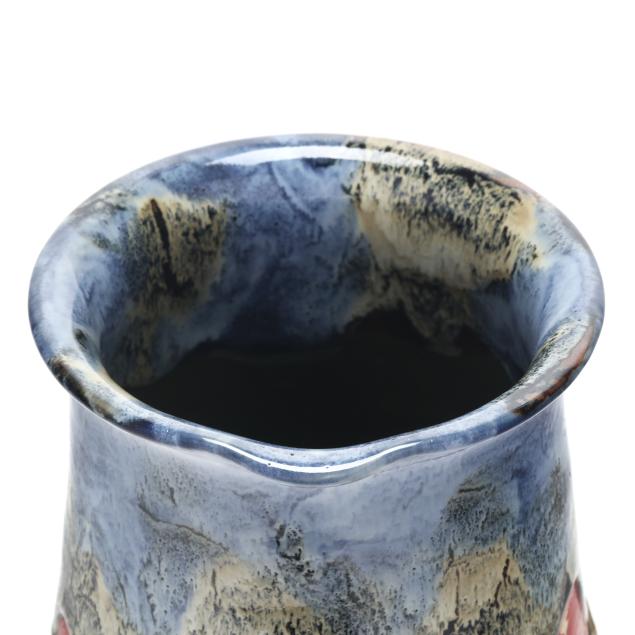
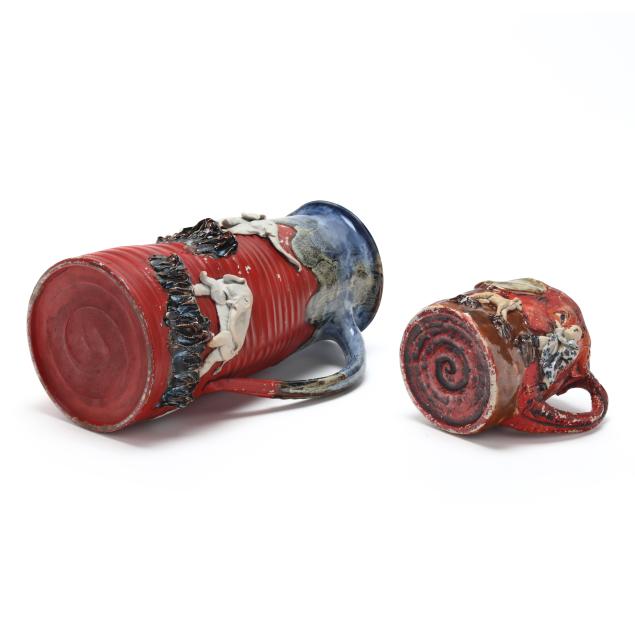
Some scattered glaze flakes and a few minor firing cracks to applied figures of both; loss to one elephant leg and possible break and repair to another on pitcher; possible later paint touch ups to both.