
Lot 3055
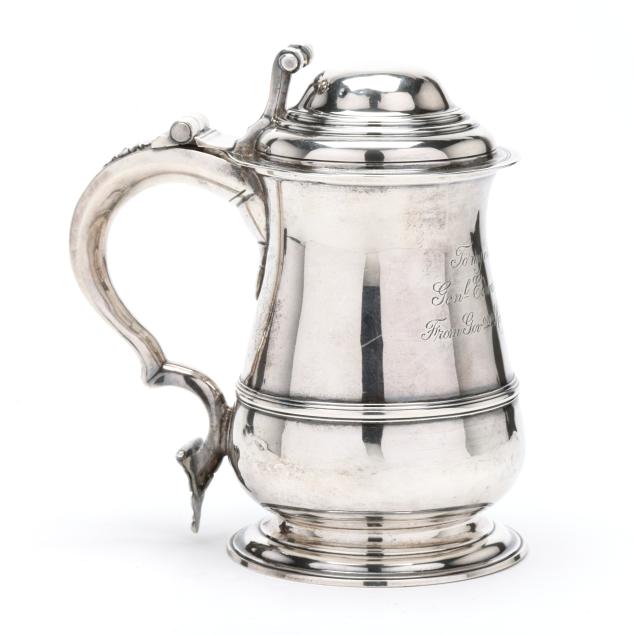
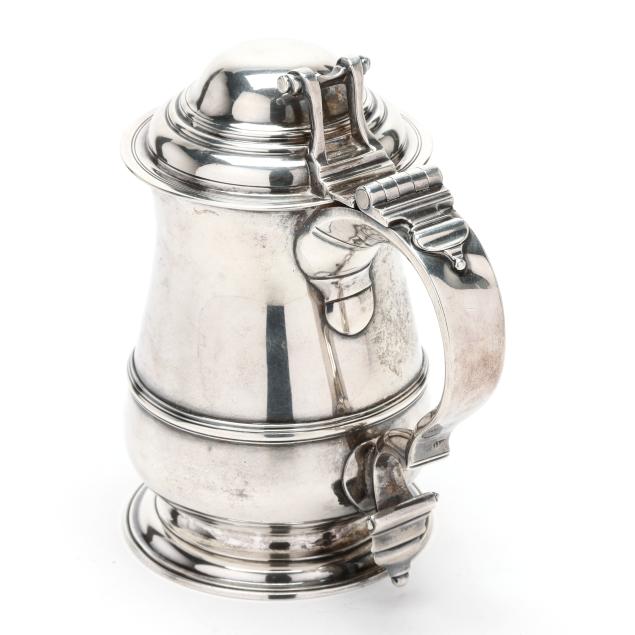
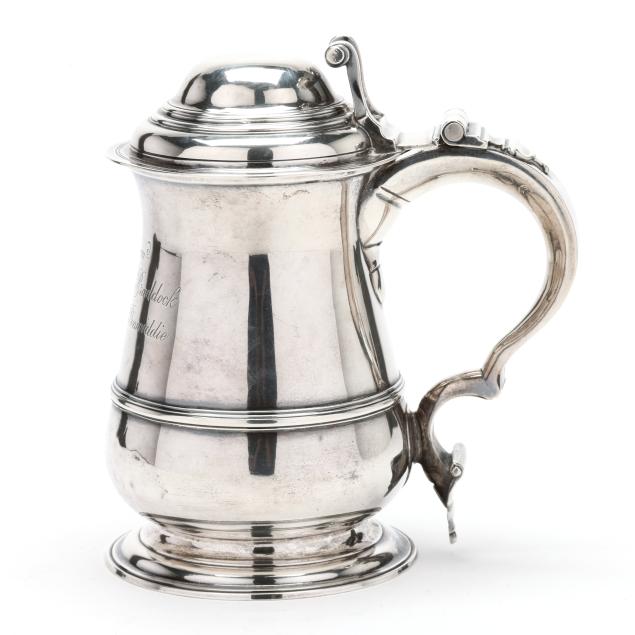
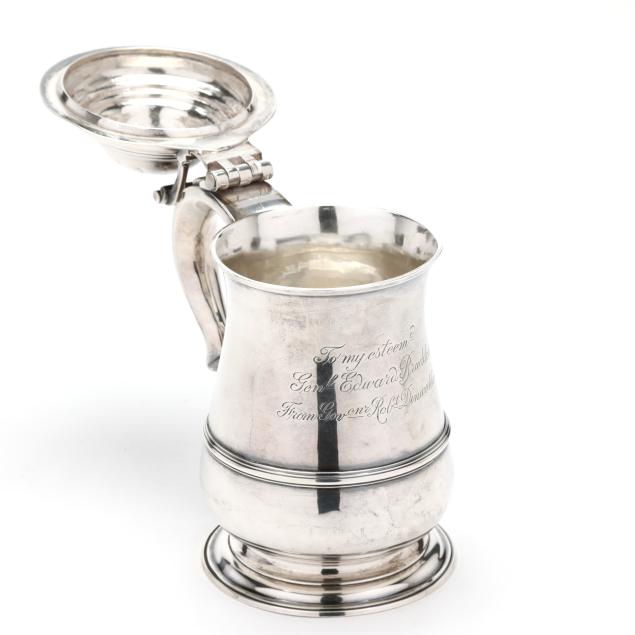
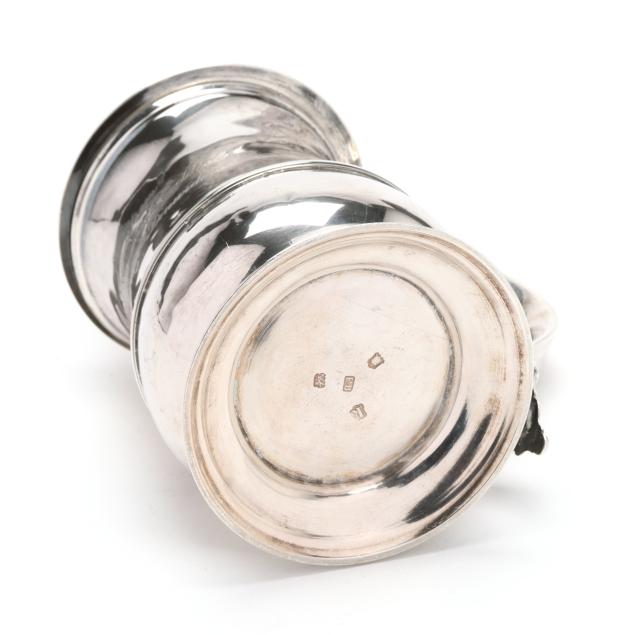
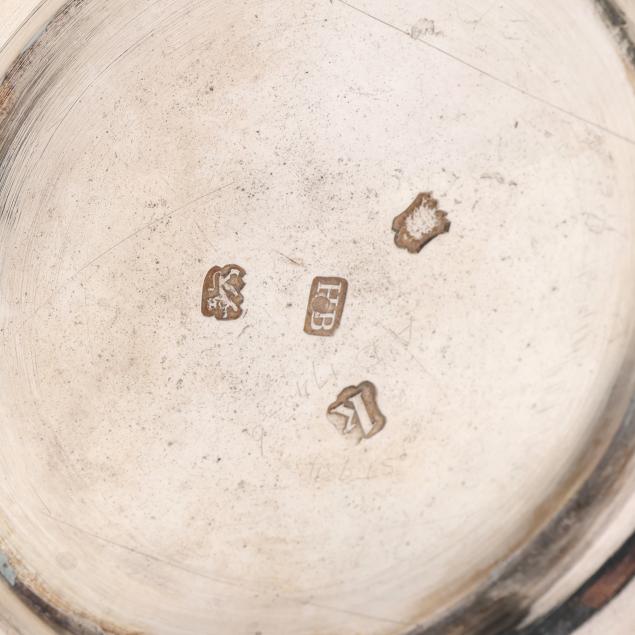
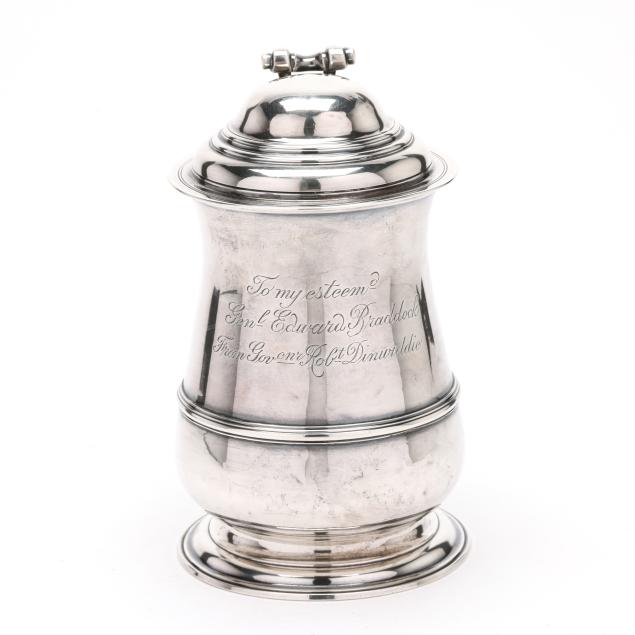
George II Silver Presentation Tankard, Mark of Henry Brind
Explore more items like this one.
Visit our Silver Department Silver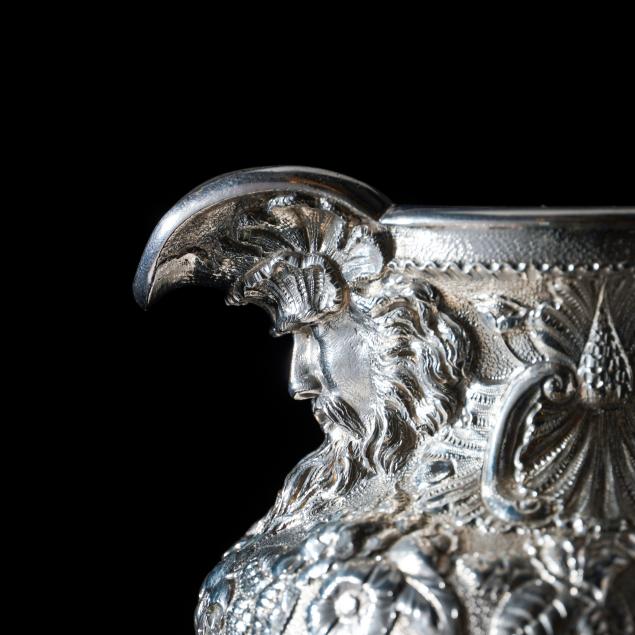
Lot Details & Additional Photographs
7 1/2 in.
27.26 troy oz.
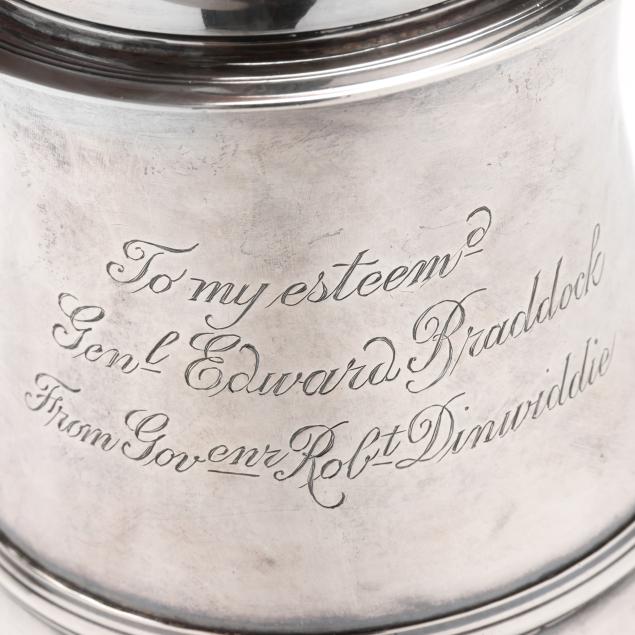
The engraving to the piece, which is from a later period, pertains to General Edward Braddock (1695–1755) and Robert Dinwiddie (1693–1770), who were central figures in Britain’s early efforts to secure the Ohio Valley during the Seven Years War. Their collaboration epitomized the partnership between English imperial military authority and American colonial administration at a critical moment in North American history.
As Lieutenant Governor of Virginia, Robert Dinwiddie was one of the first colonial leaders to recognize the threat posed by French expansion into the Ohio Valley. Determined to assert Britain’s territorial claims, he dispatched a 21 year old George Washington on a mission to warn the French at Fort Le Boeuf in 1753, an act that helped ignite the conflict. Dinwiddie lobbied for British military support, resulting in the arrival of General Edward Braddock, a seasoned officer appointed Commander-in-Chief of British forces in North America in 1755.
Together, Dinwiddie and Braddock orchestrated the ambitious expedition to seize Fort Duquesne, the French stronghold at the forks of the Ohio River. Dinwiddie secured colonial funds, supplies, and militia, while Braddock commanded the multinational British and colonial army. Among Braddock’s aides was Washington, whose service bridged Dinwiddie’s patronage and Braddock’s military leadership.
The campaign culminated in disaster at the Battle of the Monongahela on July 9, 1755, when Braddock’s force was ambushed by French and Native American warriors. Braddock was mortally wounded, and the defeat exposed Britain’s unpreparedness for frontier warfare. For Dinwiddie, the loss undermined colonial confidence and marked a sobering turning point in the war’s early stages.
Their partnership played a pivotal role in the unfolding of the French and Indian War and the early shaping of Washington's military career. After the battle became known as “Braddock’s Defeat", Washington was the only surviving British officer. Three years later, he served in the final British expedition to seize Fort Duquesne in 1758, his last campaign with the British army.
Minor denting to the lower body and lid of the tankard.