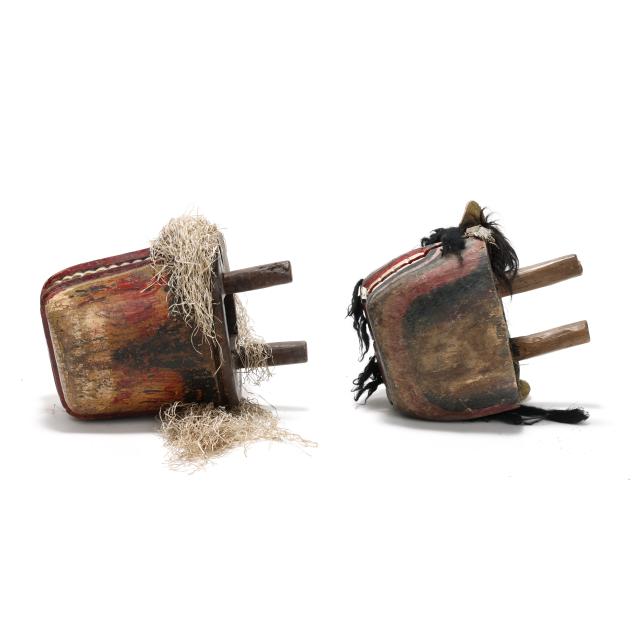

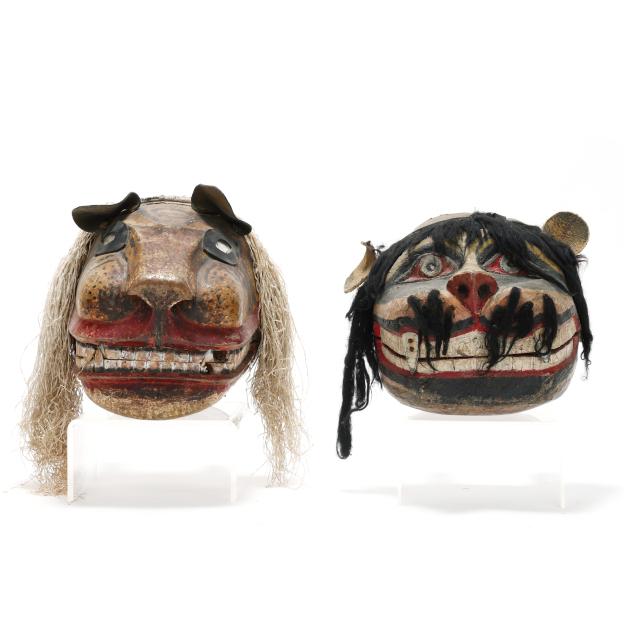
Lot 7247
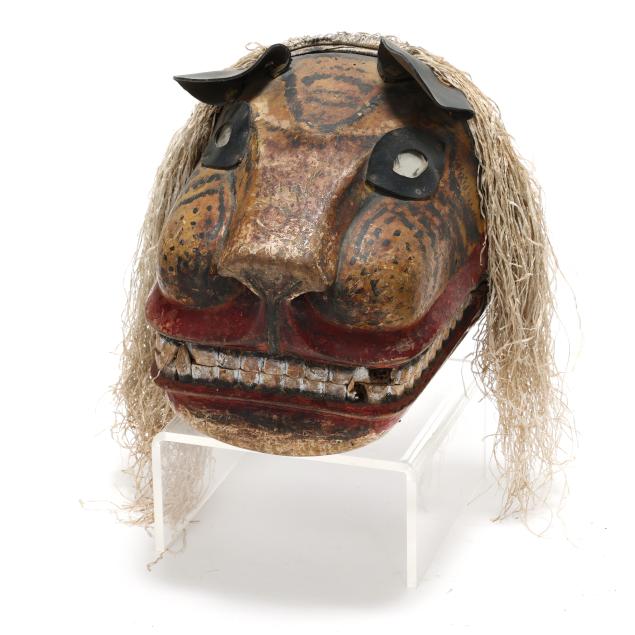
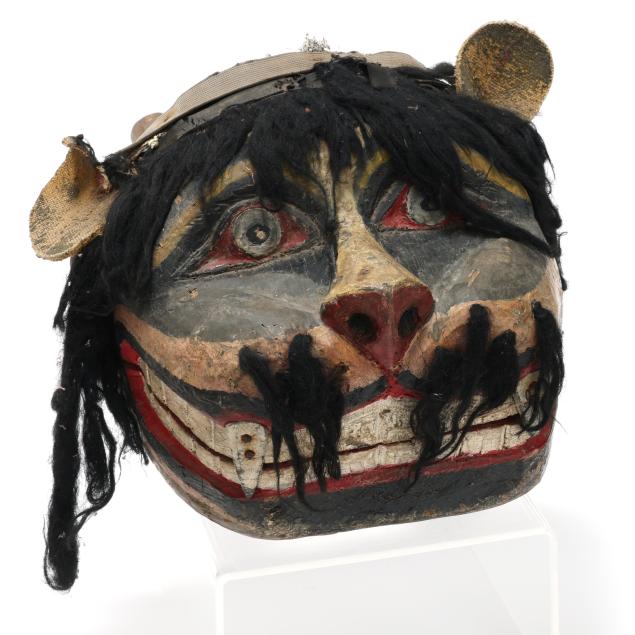
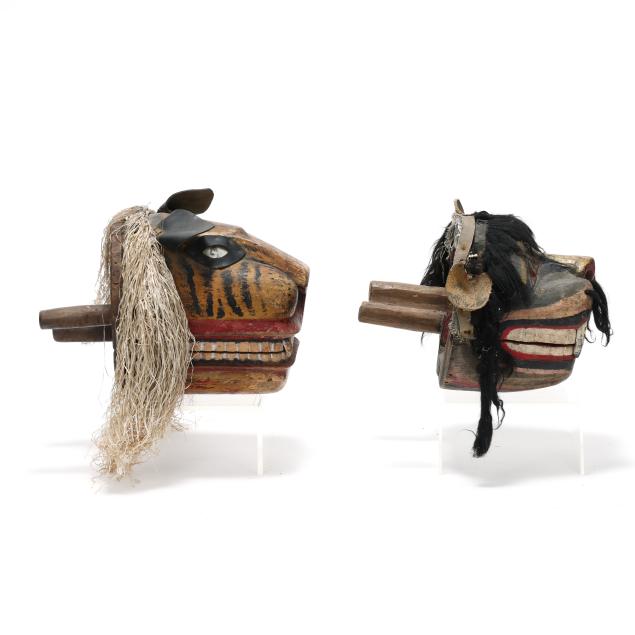
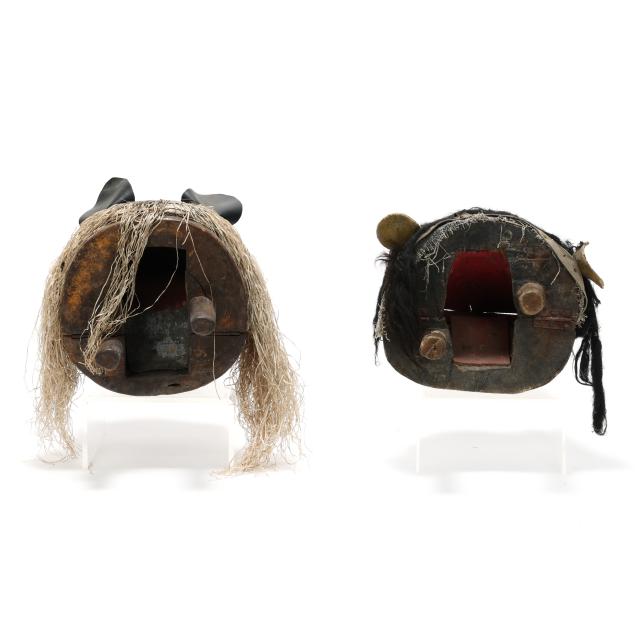
Two Indonesian Ceremonial Dance Masks
Explore more items like this one.
Visit our Asian Arts Department Asian Arts
Lot Details & Additional Photographs
The taller mask 17 x 20 x 16 in.
From the Estate of the late Susan C. Frankenberg, Hillsborough, North Carolina
The Barong is a mythical beast that purifies and protects the village in Balinese culture. Masks representing the Barong are created as a sacred object of worship and usually kept in a temple. A Barong mask can take the form of a lion-like creature (most masks representing the Barong in this form are erroneous in their description of the form as a lion as there are no wild lions in Bali; however because they resemble a lion, they are often described as such), a tiger, boar, bull, deer, or an amalgamation of any of these. The ket is the chief of all barongs and acts as a potent protector against the harmful influence of ghosts on the village. Barong masks are taken out to perform dances and ceremonies on major holidays, most notably the Kunti Sraya, or Barong Dance. The dance recreates a battle between good (represented by the Barong and its followers) and evil (represented by the goddess of death, Rangda, and her followers).
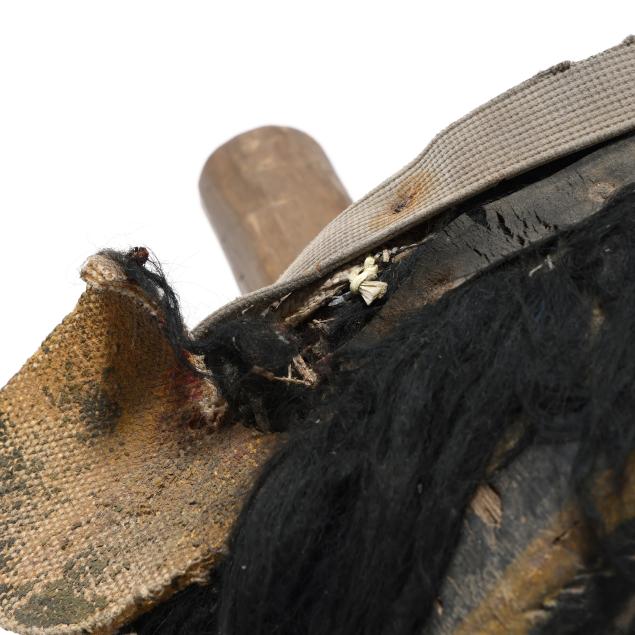
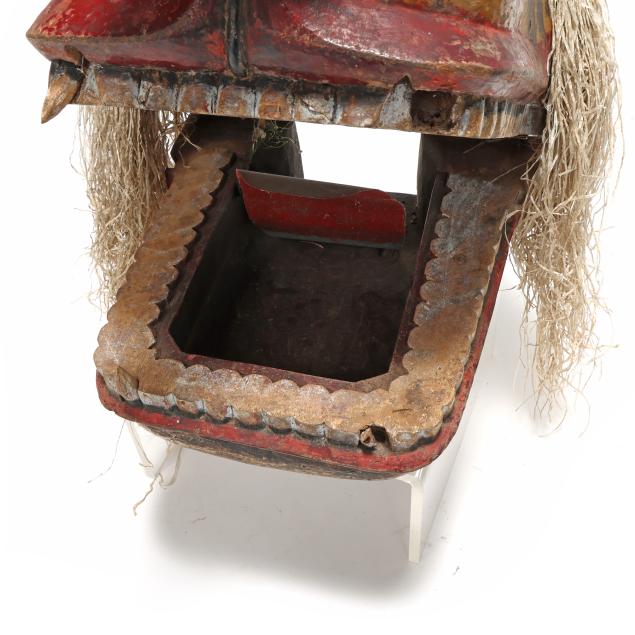
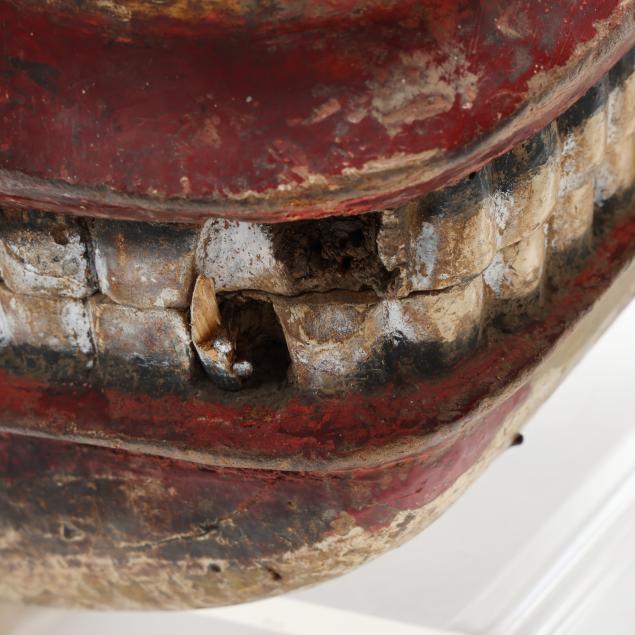
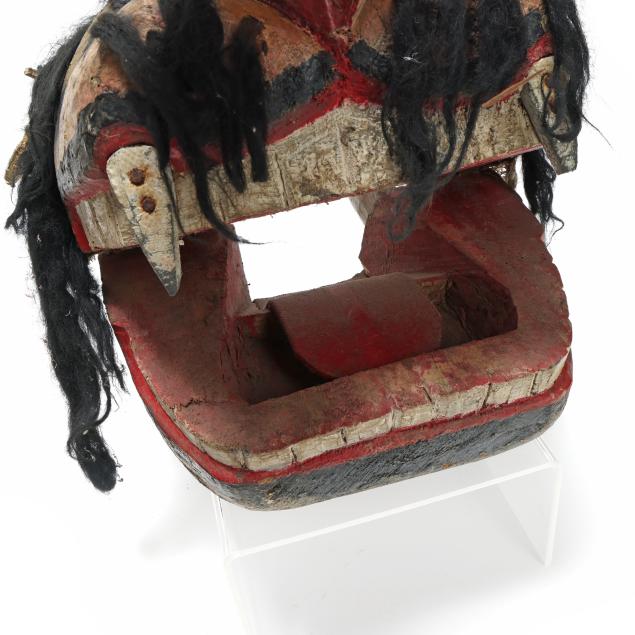
Both with overall paint loss and rusting to metal nails and hinges; the tiger mask with loss to one fang and missing another, cracking and paint stains to glass pupils, old break and repair to one handle; the lion mask with insect damage to posterior, one ear with separation from head, loss to decorative straw fur to posterior.