
Lot 1437
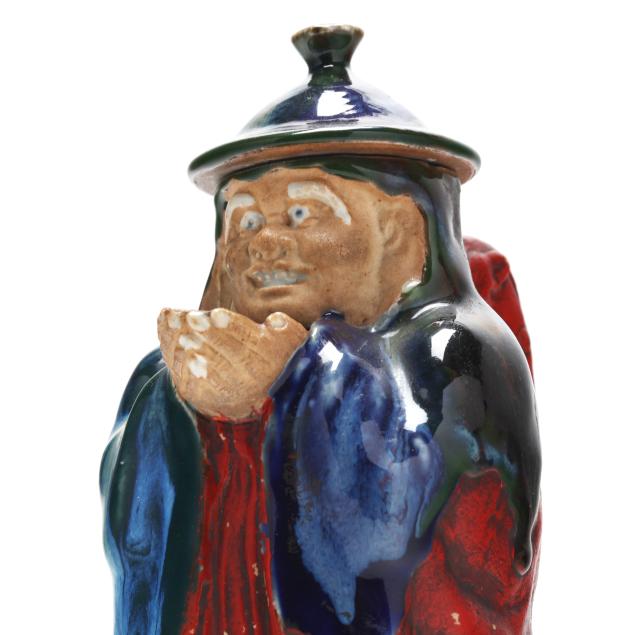
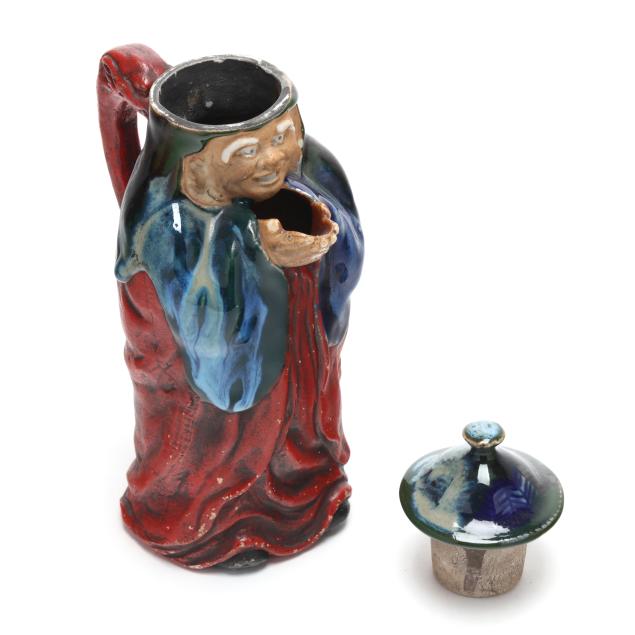
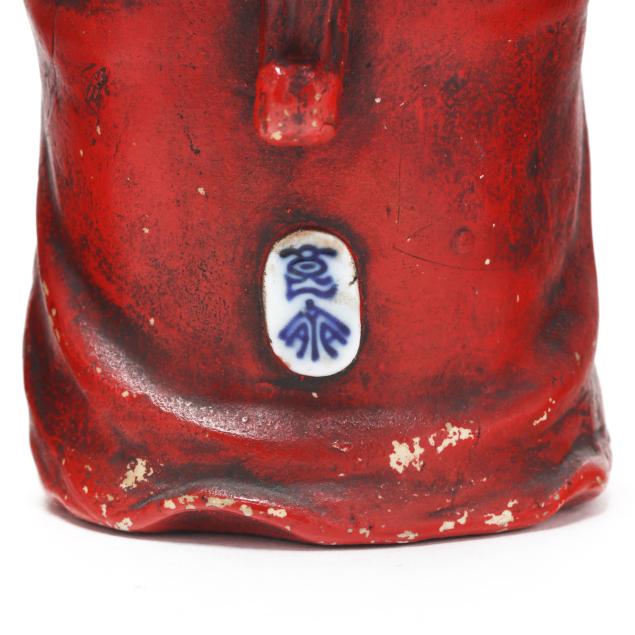
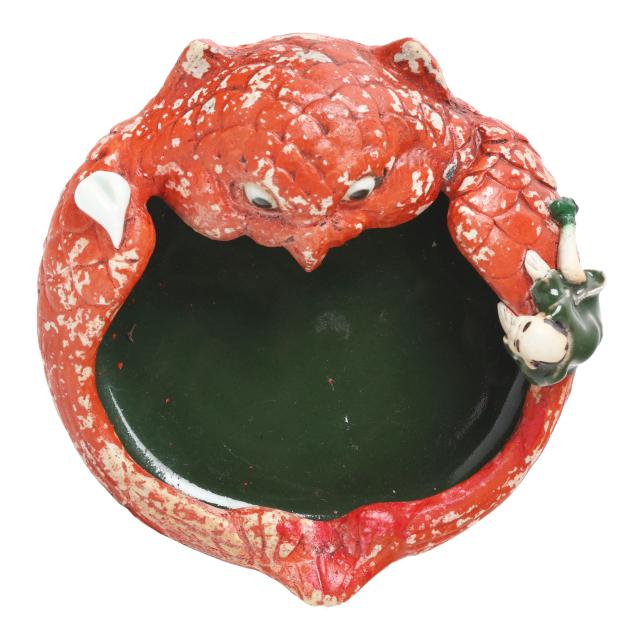
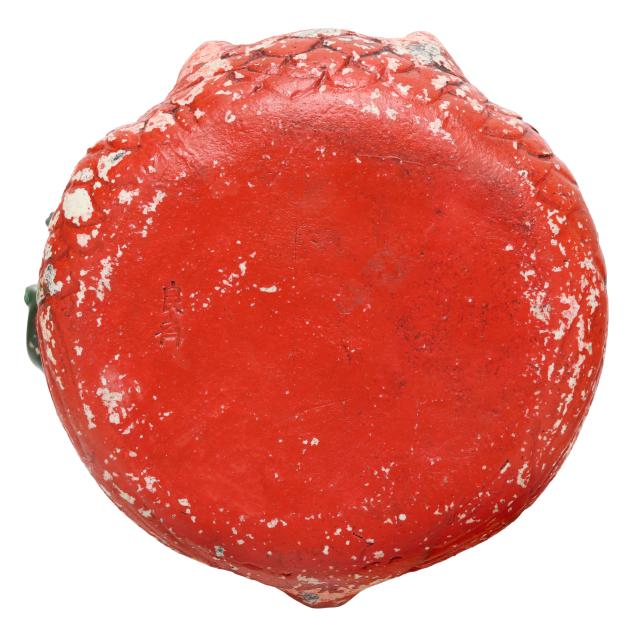
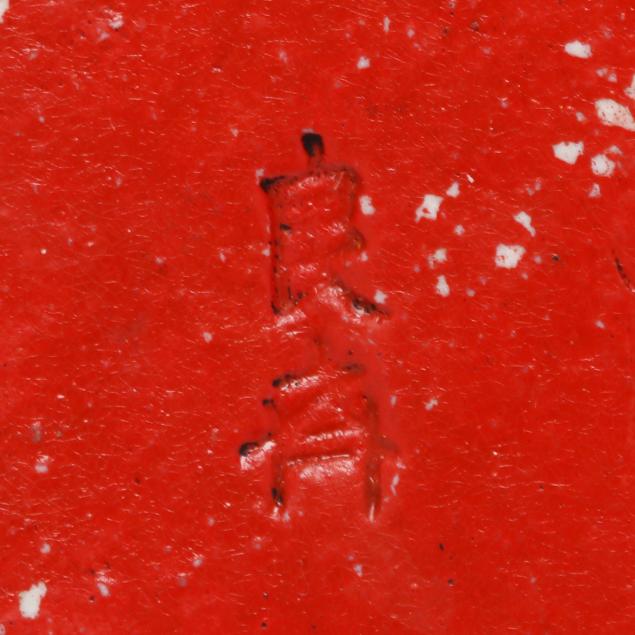
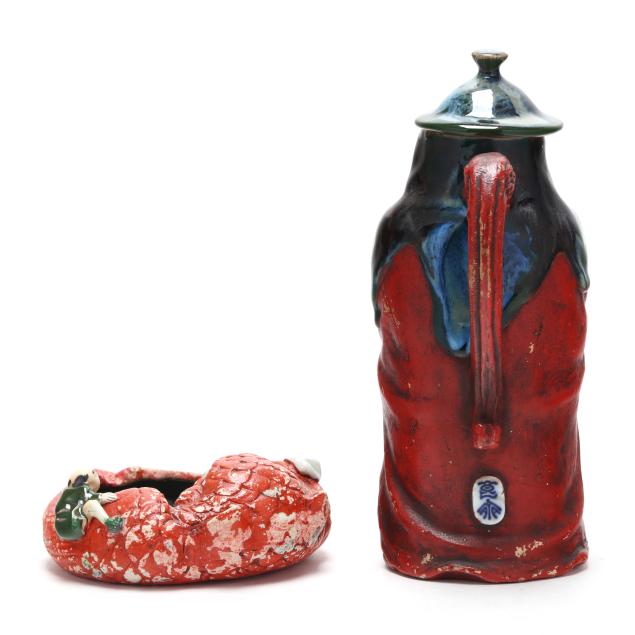
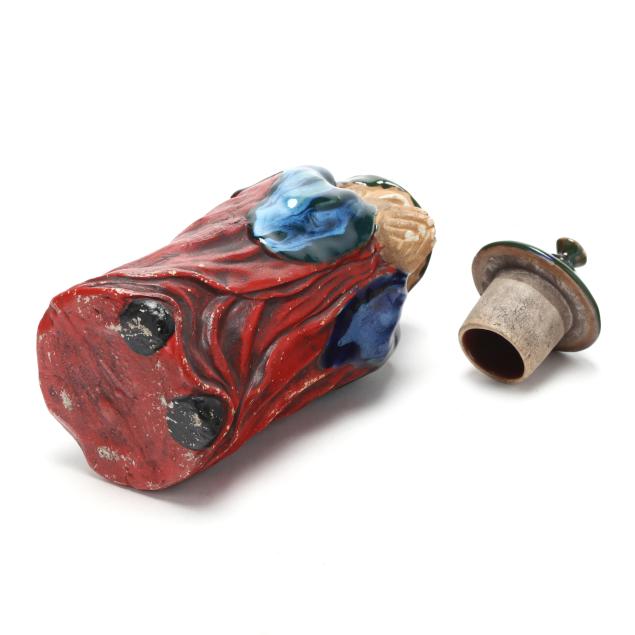
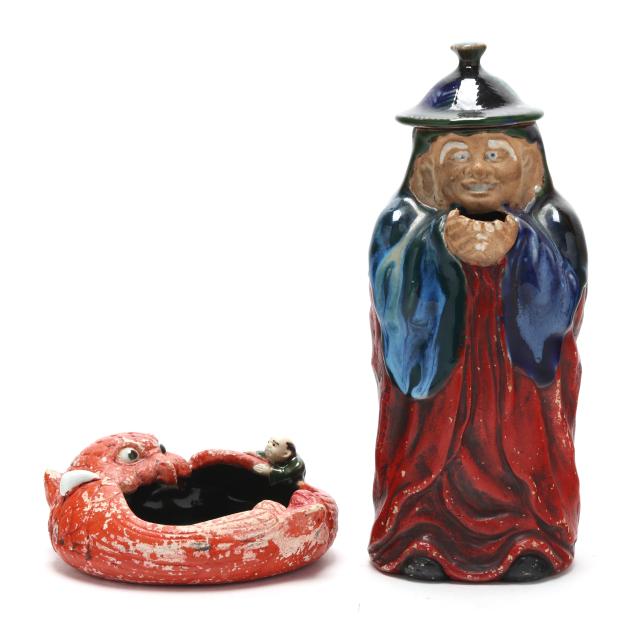
Sumida Gawa, Owl Face Bowl and Monk Figural Teapot
Explore more items like this one.
Visit our Asian Arts Department Asian Arts
Lot Details & Additional Photographs
Collection of Michael and Ingrid Kelly, Worldwide Gallery Antiques, Fredericksburg, Virginia
Sumida Gawa pottery is a distinctive type of Japanese ceramic ware named after the Sumida River near the Asakusa pottery district in Tokyo where it was first produced around 1890. The style, known for its bold colors, rich glazes, and whimsical three-dimensional relief animals and figures, was primarily created for export to the West.
The most prominent artist associated with Sumida Gawa ware is Inoue Ryosai, considered to be the style's originator. However, Sumida Gawa production is also closely linked to the work of his successors, Inoue Ryosai II and Inoue Ryosai III as well as other artists like Hara Gozan, Sakurai Fuji, and Sezan.
Paint flaking to bowl, small chip to figure; a few small paint flakes to teapot.