
Lot 3026
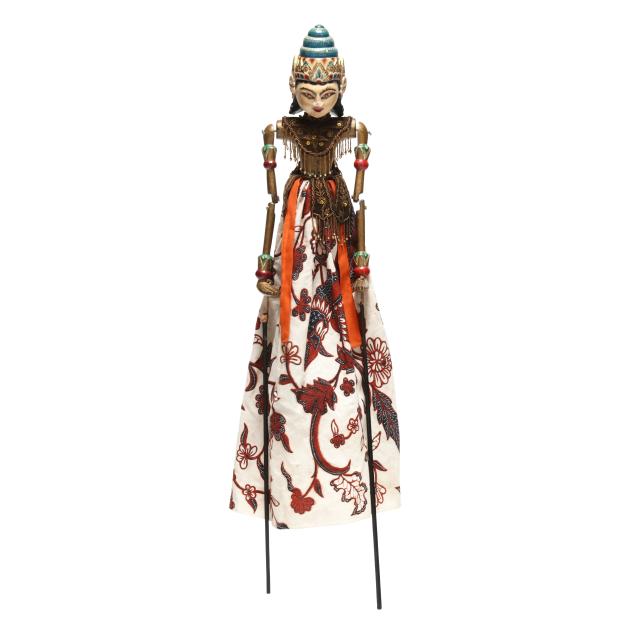
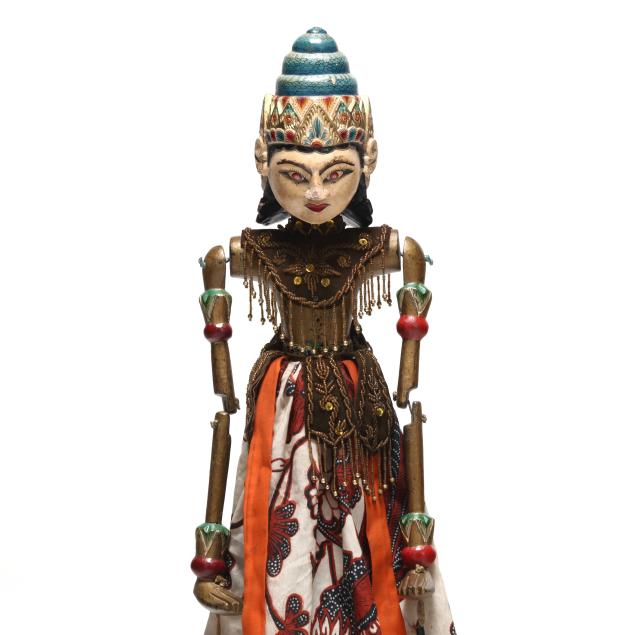
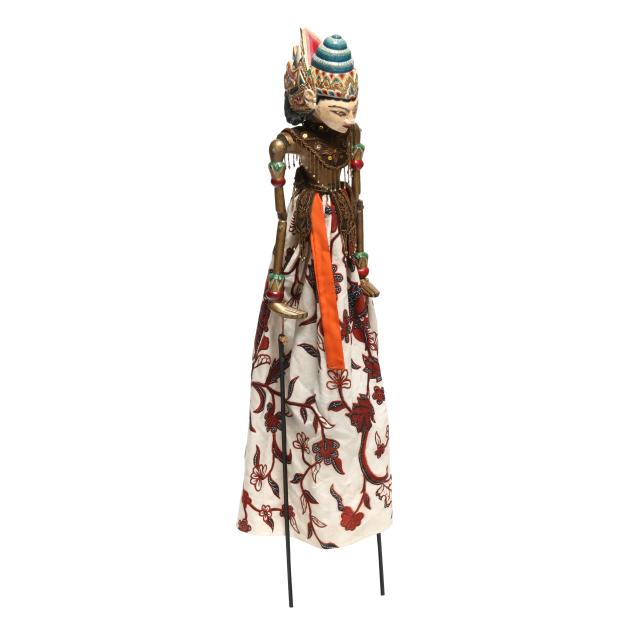
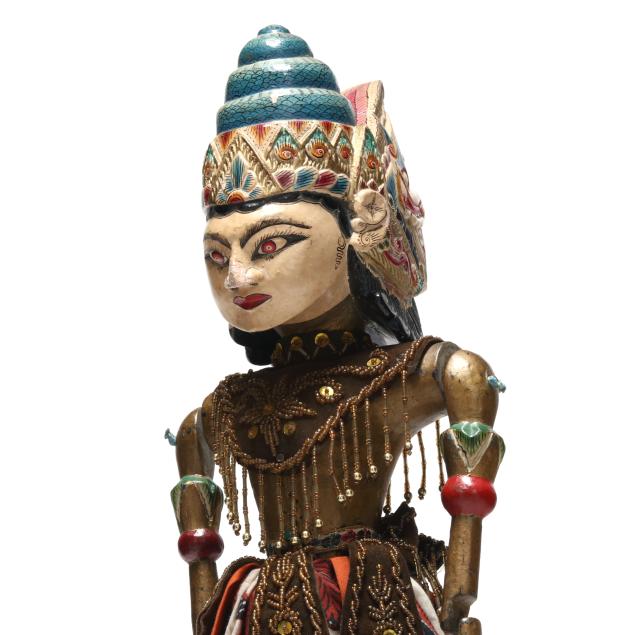
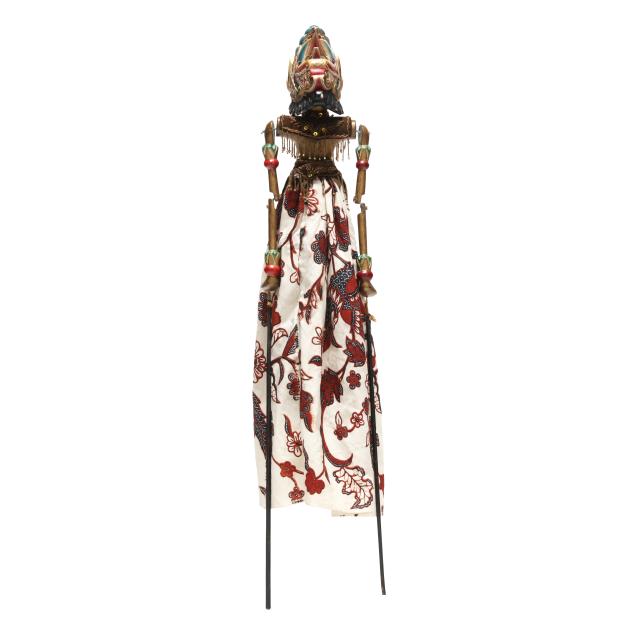
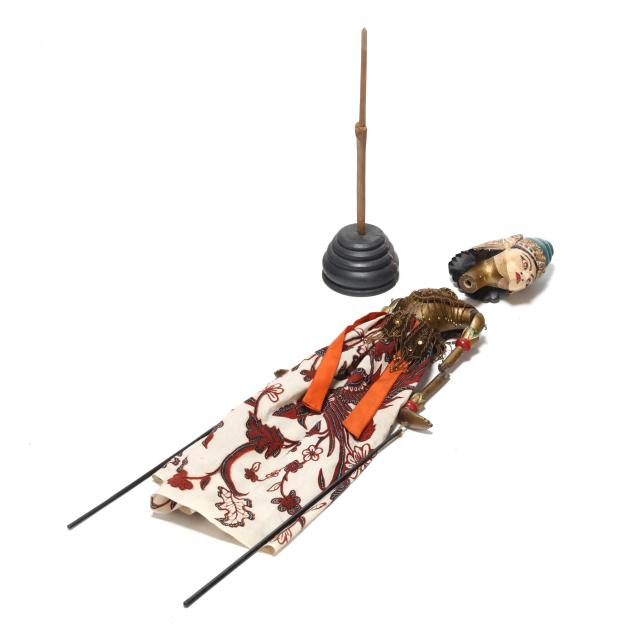
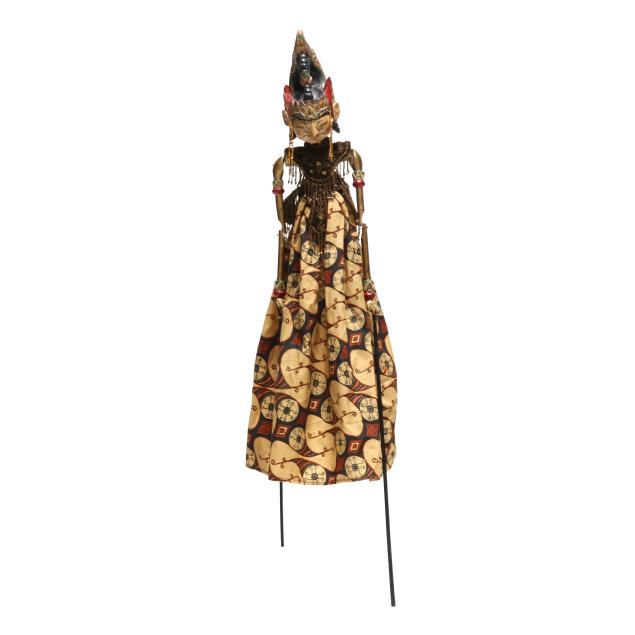
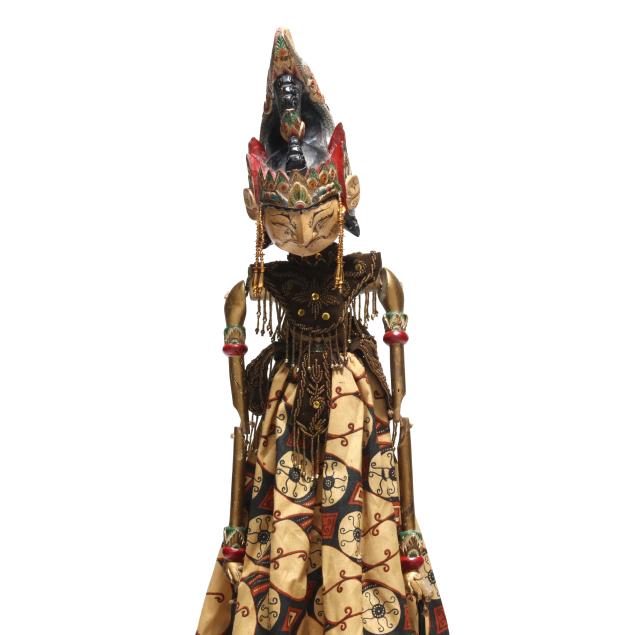
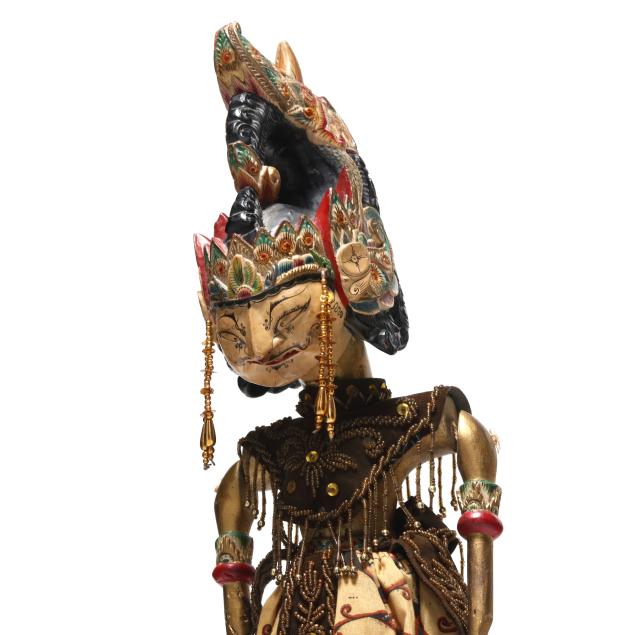
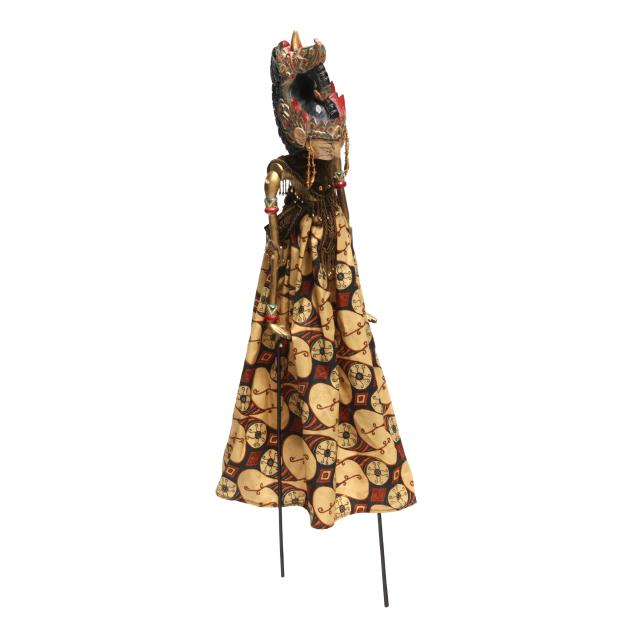
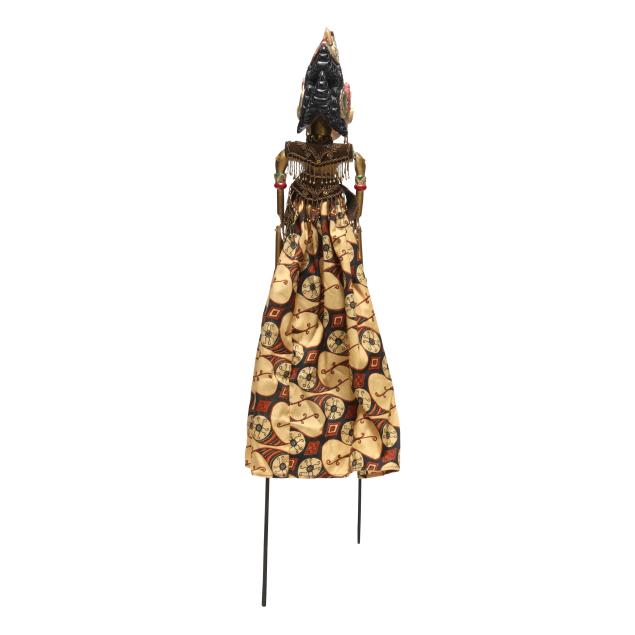
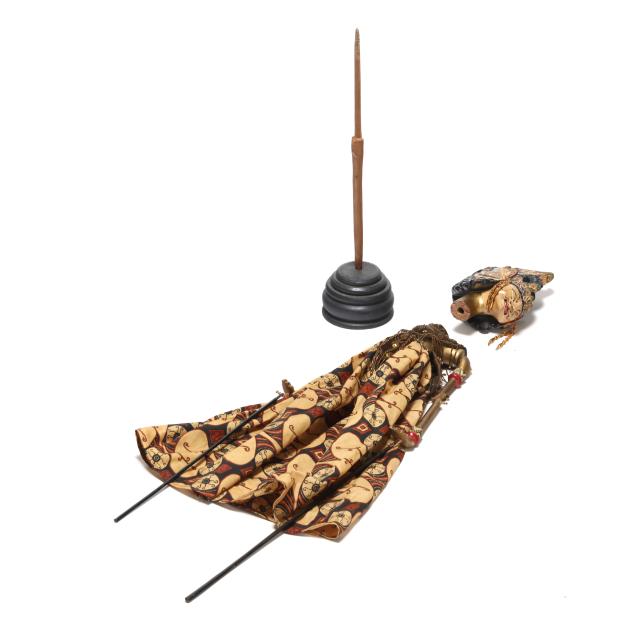
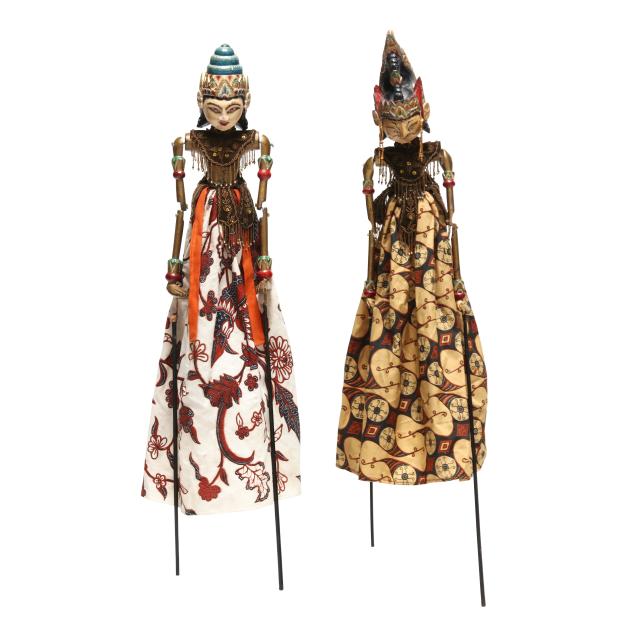
Two Javanese Wayang Golek Puppets
Explore more items like this one.
Visit our Asian Arts Department Asian Arts
Lot Details & Additional Photographs
Each puppet approximately 34 x 7 x 4 in.; socle 3 1/2 x 4 1/2 in. diameter
From the Collection of Jon and Mary Leadbetter, Chapel Hill, North Carolina
Wayang golek is performed with three-dimensional wooden rod puppets. It is most popular along the north coast of Java and in Sunda, the highland area of West Java. Wayang golek has two major variants: Wayang (golek) cepak is a form employed by dalang on the north coast. They use puppets that sport Javanese dress to perform a repertoire consisting of tales from the Javanese and Islamic traditions: stories of Prince Panji’s endless search for his beloved princess, of grasscutter Damar Wulan’s rise from doing menial work to marrying a queen and defeating her bitter foe, and of Amir Hamzah, the uncle of Muhammad, and his defeat of those who attack his Islamic kingdom. An alternate name for the tales of Amir Hamzah is wayang menak. Wayang golek purwa has been the favored form in the highlands of West Java for the past 150 years.
Information courtesy of the Asian Art Museum in San Francisco.
Heads with areas of loss and chips; torsos, hands, and socles with scattered areas of insect damage; one socle with crack.