
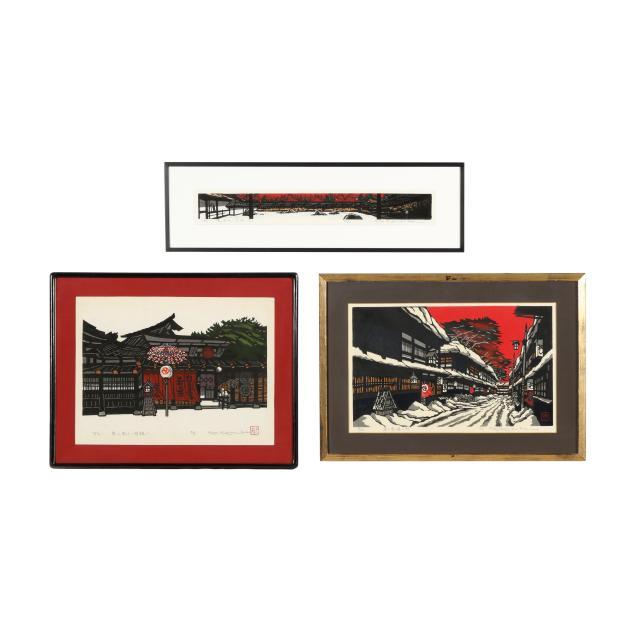
Lot 7098
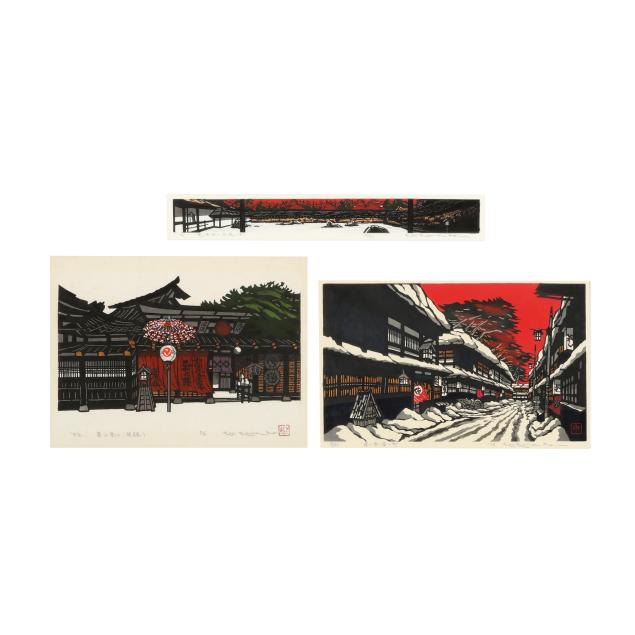
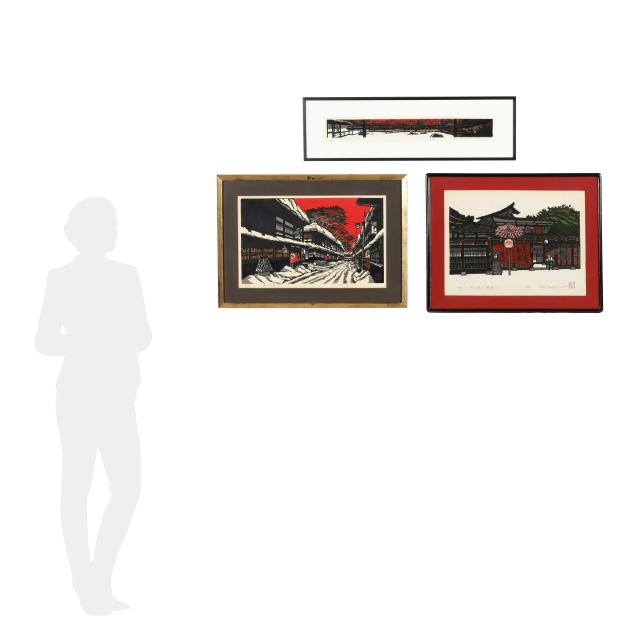
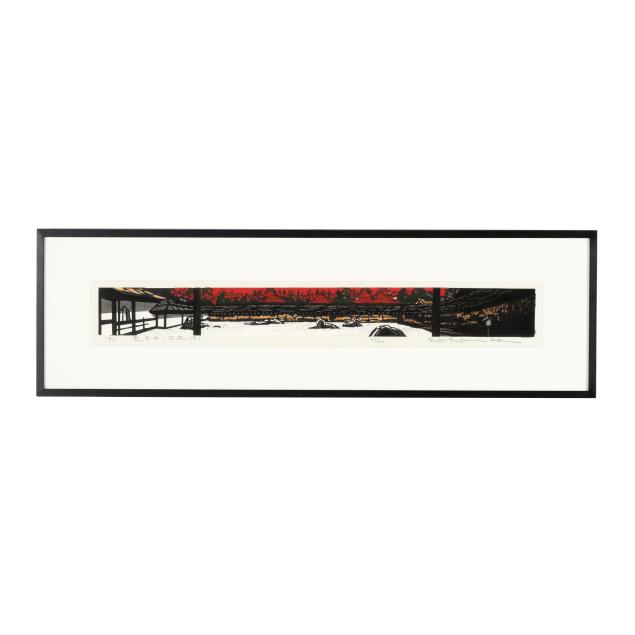
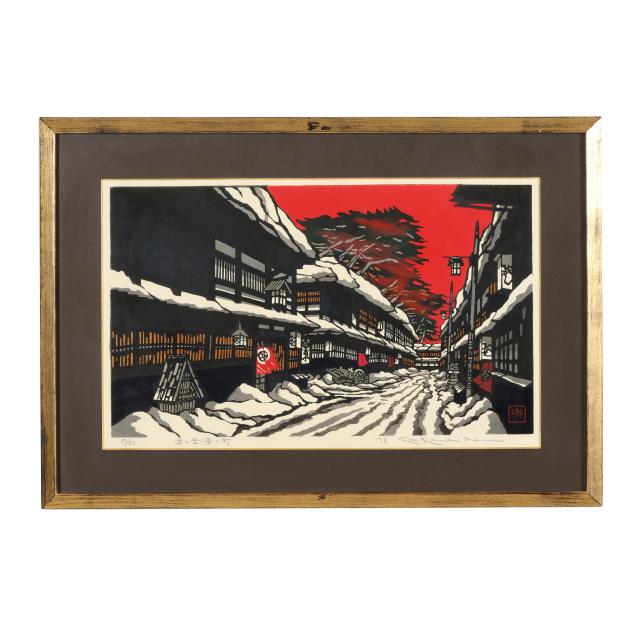
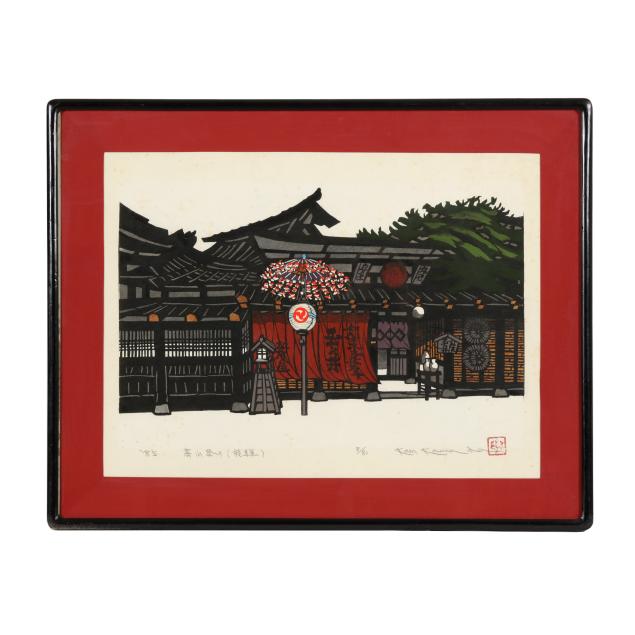
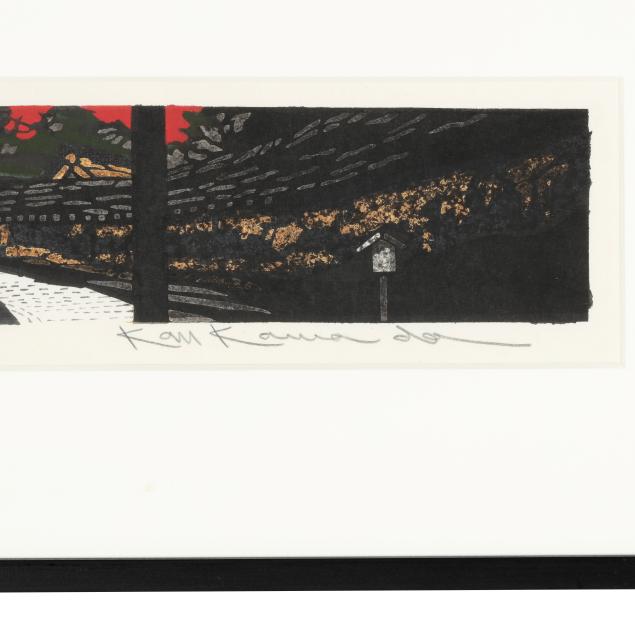
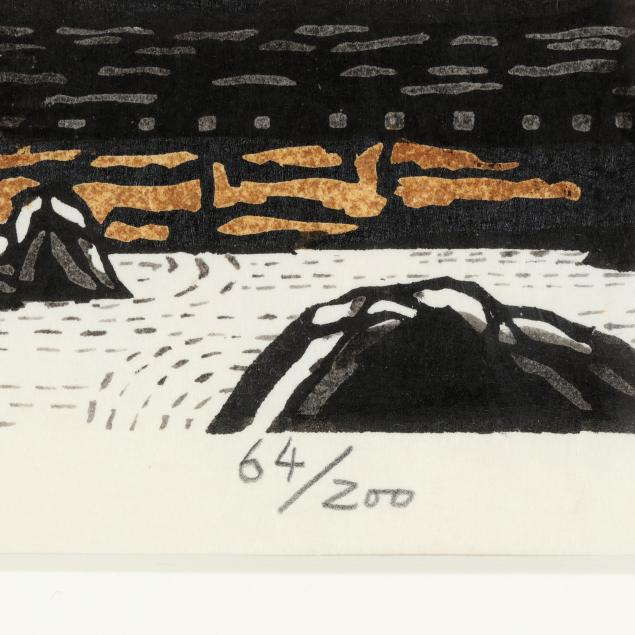
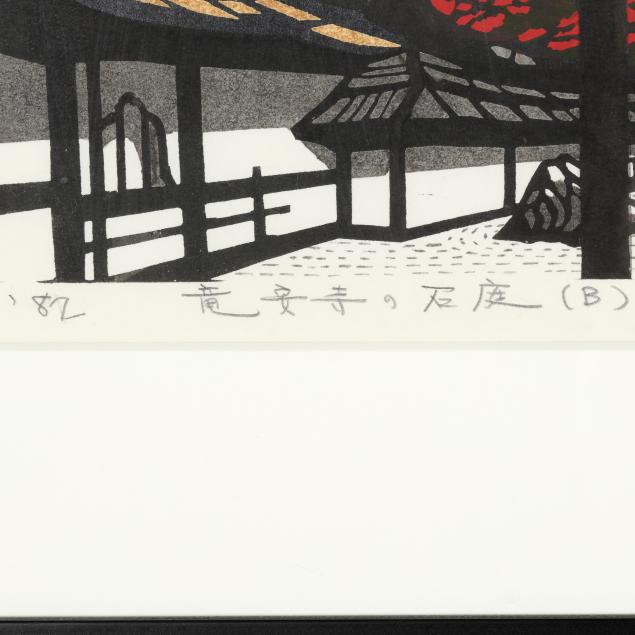
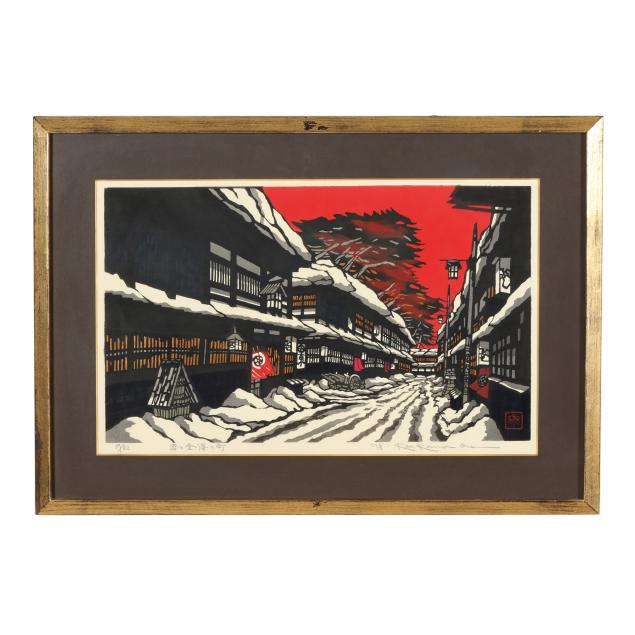
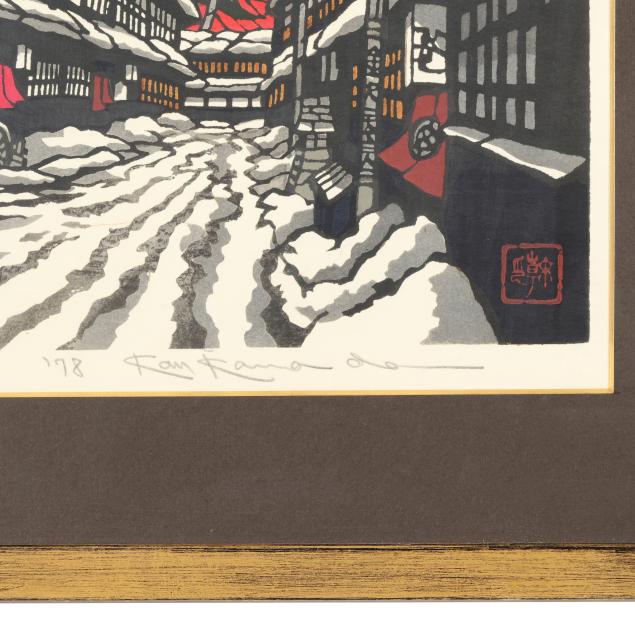
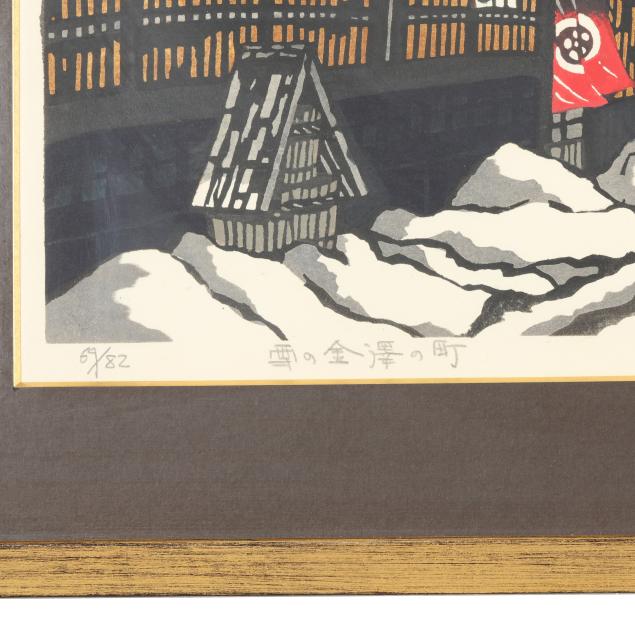
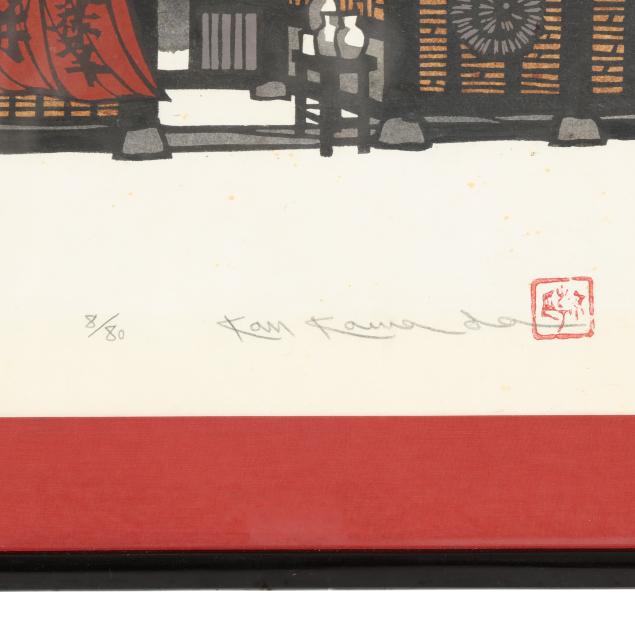
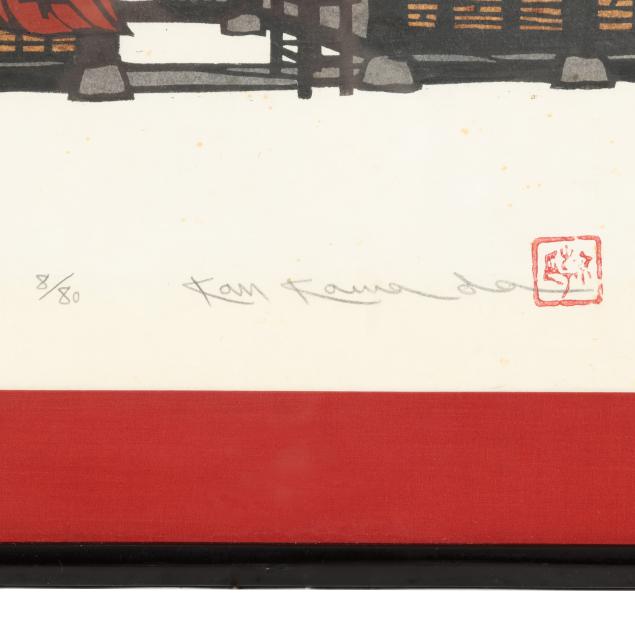
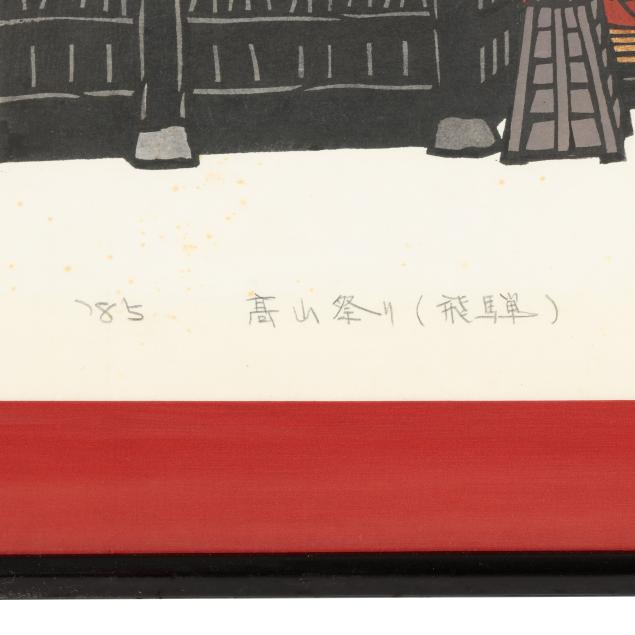
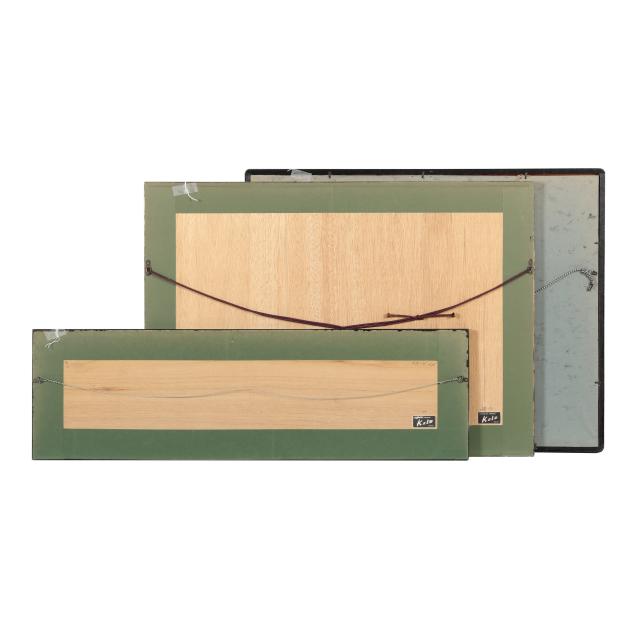
Kan Kawada (Japanese, 1927-1999), Three Woodblock Prints
Explore more items like this one.
Visit our Asian Arts Department Asian Arts
Lot Details & Additional Photographs
From the Collection of David and Vidabeth Bensen, collected during the 1960s and 1980s while living in Japan
Kan Kawada was a leading figure in the postwar revival of Japanese woodblock printmaking, widely admired for his technically refined and emotionally resonant landscapes. Born in Hokkaido, Kawada trained in the traditional ukiyo-e method of collaborative print production, working closely with skilled block carvers and printers to achieve subtle tonal gradations and richly textured surfaces.
Deeply influenced by the aesthetics of shin-hanga yet working firmly within the modern era, Kawada became especially celebrated for his poetic depictions of Kyoto machiya townhouses, temple precincts, snow-covered farmhouses, and quiet rural vistas. His compositions frequently exclude figures, allowing architecture, shifting light, and seasonal atmosphere to convey a meditative stillness. Masterful bokashi shading and carefully balanced color harmonies lend his prints a luminous, almost nostalgic quality.