
Lot 7089
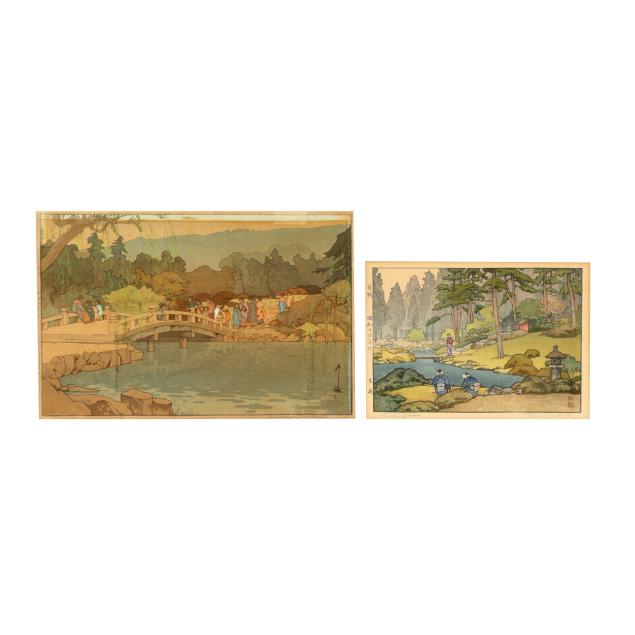
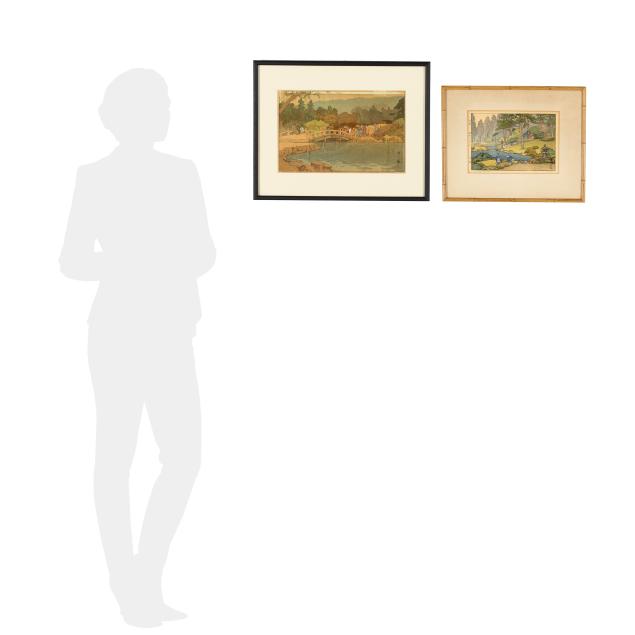
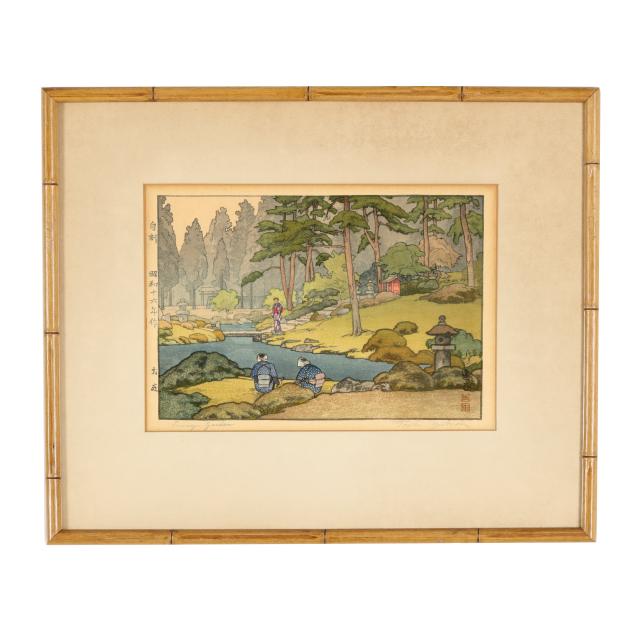
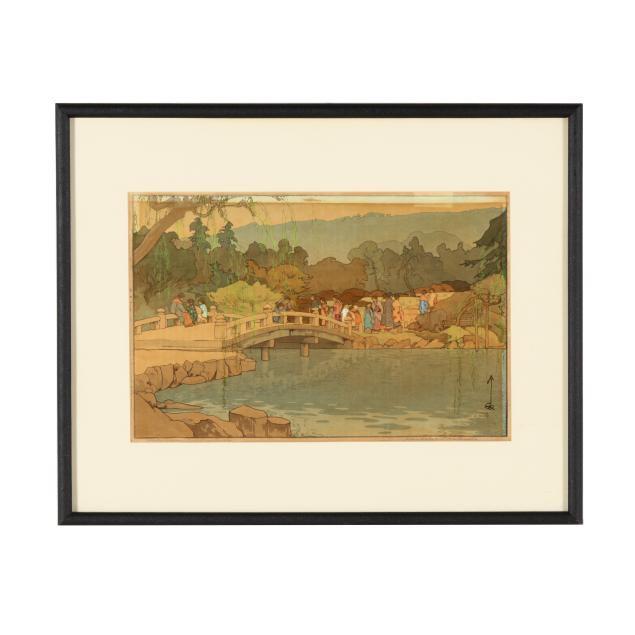
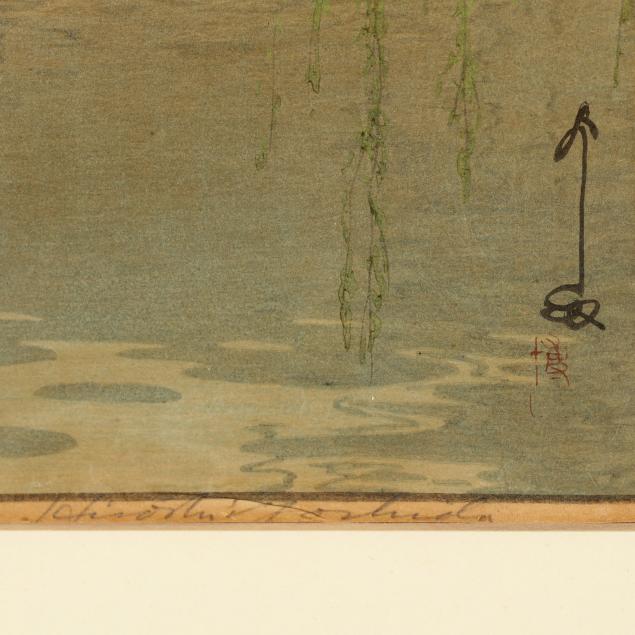
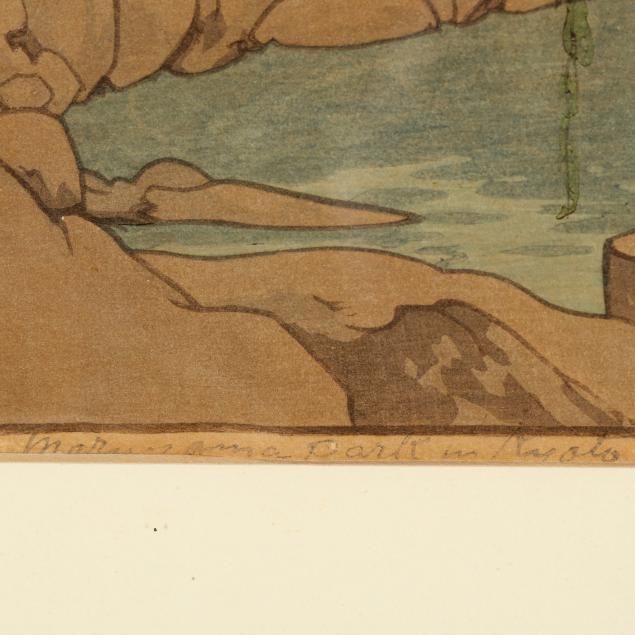
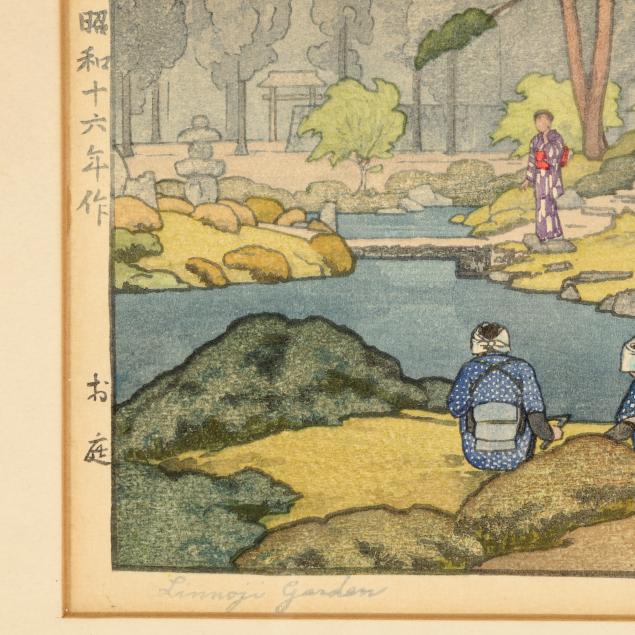
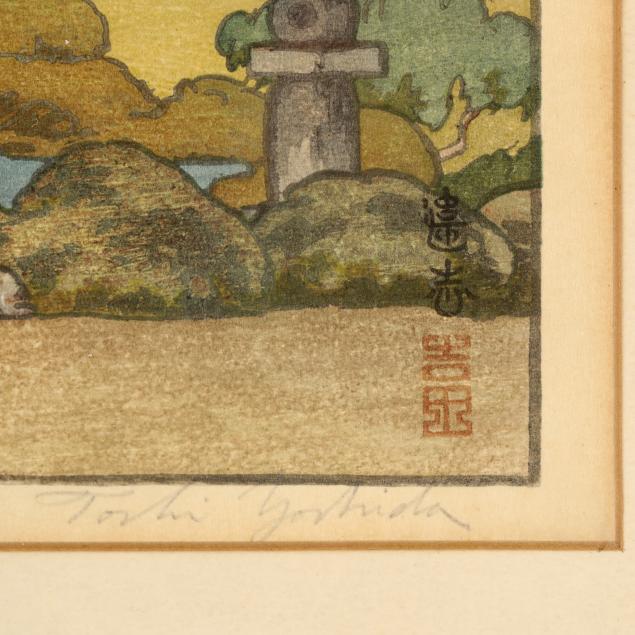
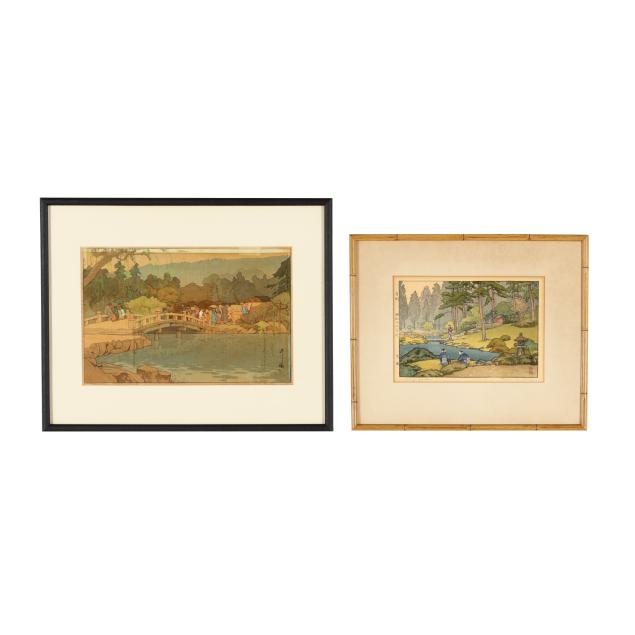
Japanese Woodblock Prints by Hiroshi Yoshida (1876-1950) and Toshi Yoshida (1911-1995)
Explore more items like this one.
Visit our Asian Arts Department Asian Arts
Lot Details & Additional Photographs
Hiroshi Yoshida was a leading figure of the shin-hanga movement, celebrated for his luminous landscapes that captured sites across Japan, Europe, India, and the United States. Exercising unusual artistic control, he supervised the carving and printing of his designs within his own studio, achieving refined gradations of color and atmospheric light effects that set a new standard in twentieth-century woodblock printmaking.
His eldest son, Toshi Yoshida, trained within the family atelier and initially worked in the shin-hanga landscape tradition before developing a distinctive focus on animals and wildlife subjects inspired by travels throughout Asia and Africa. Combining naturalistic observation with elegant design and harmonious color, Toshi helped extend the Yoshida legacy into the postwar era. Together, father and son stand as central figures in the evolution of modern Japanese woodblock prints, bridging tradition and global perspective across two generations.