

Lot 6002
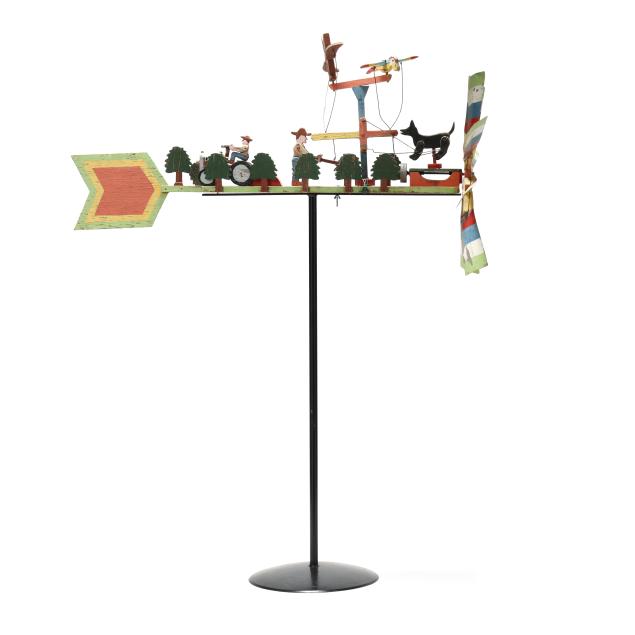
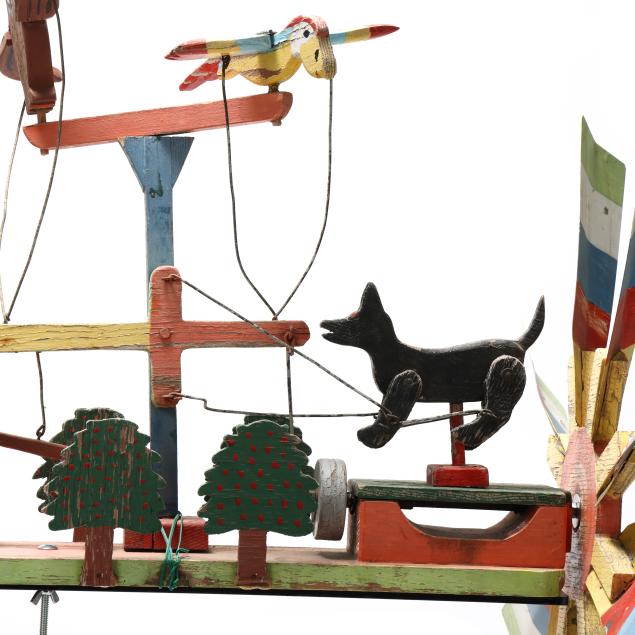
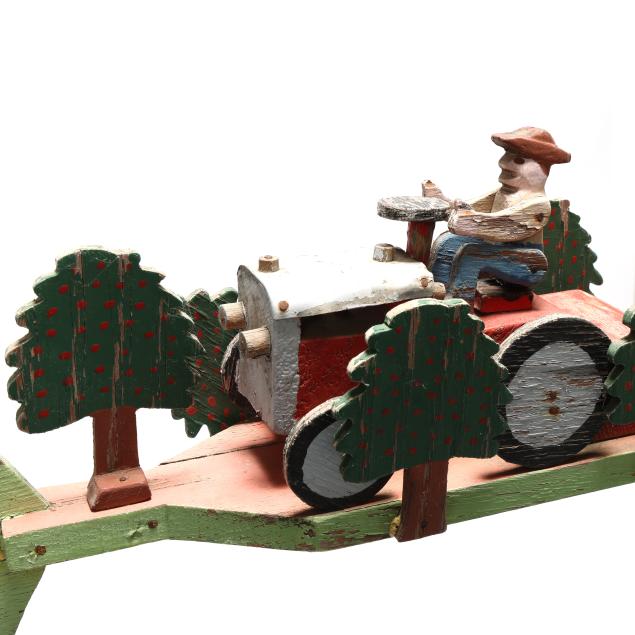
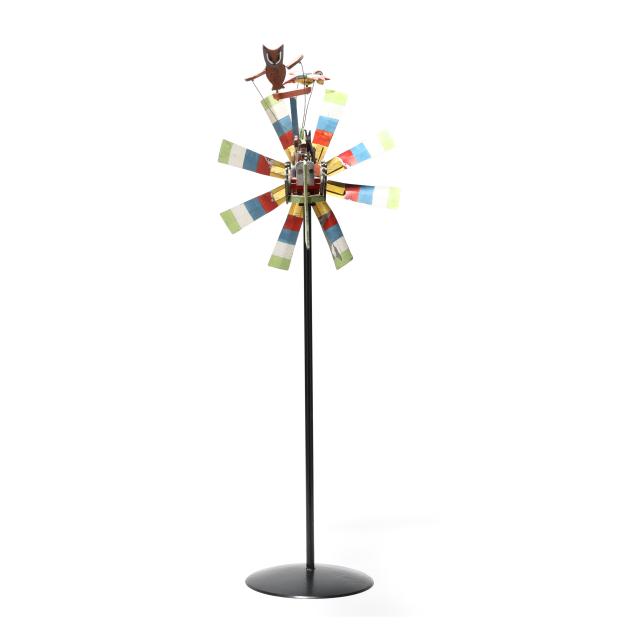
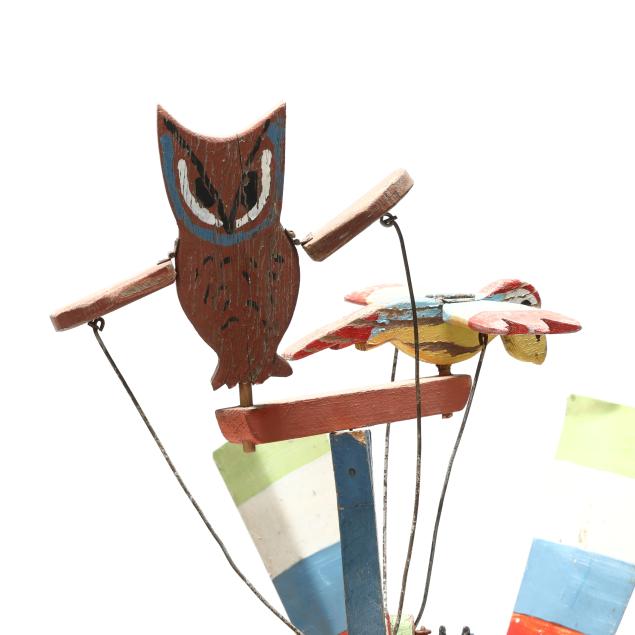
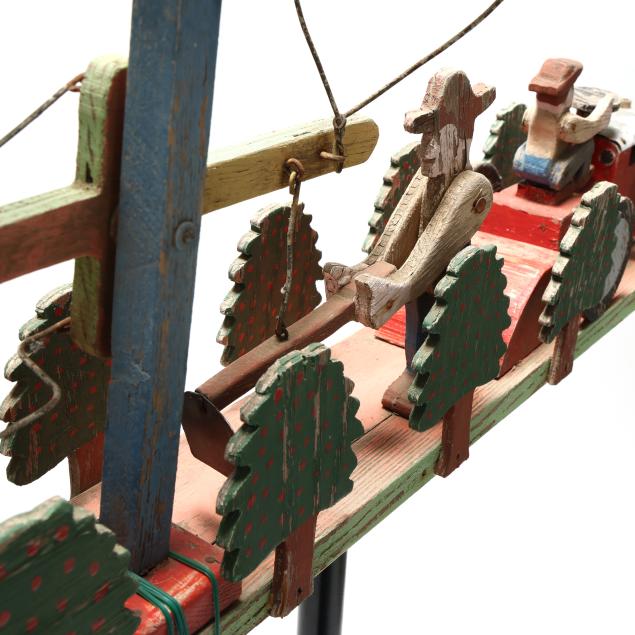
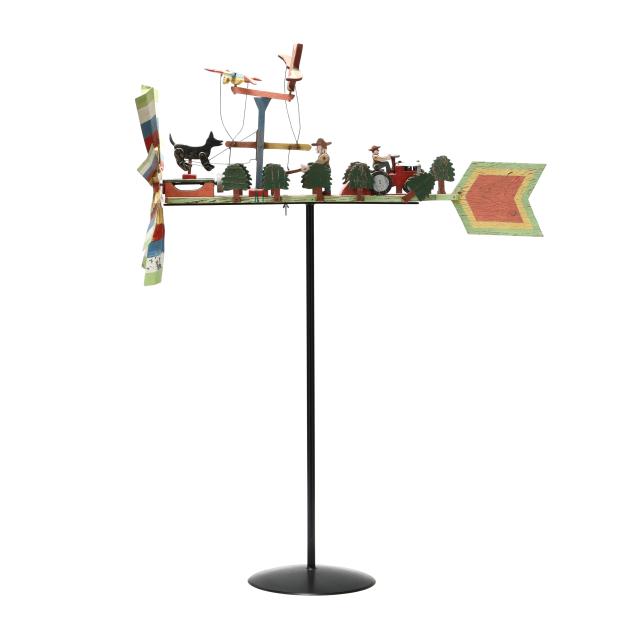
Attributed Vollis Simpson (NC, 1919-2013), Kinetic Folk Art Orchard Scene Whirligig
Lot Details & Additional Photographs
67 x 49 x 16 in.
Private Collection, Raleigh, North Carolina
Vollis Simpson was born to a farming family of twelve children. Growing up, he learned ad hoc engineering by helping his father move buildings. Simpson was drafted for one year of military service in 1940, at age twenty-one, but with the U.S. entry into World War II, Simpson served a five-year term in Saipan. During his service, he was fascinated and overwhelmed by the scale of the military equipment he was exposed to in the Mariana Islands.
Upon his return to his hometown of Lucama, North Carolina, around 1950, he opened a shop with several friends, repairing farm tools, broken factory equipment, cars and trucks, and sometimes, moving buildings. Always keen on finding usable parts, as early as 1952 Simpson began to save odds and ends, including entire cars and decommissioned airplanes, in outbuildings that dotted his property. After his retirement in the early 1990s, Simpson used his stockpile of stored materials to create countless kinetic works of art, affectionately known as "whirligigs." Vollis, however, prefers to refer to these complicated, awe-inspiring creations by a simpler term: windmills. He has built over thirty monumental wind-driven whirligigs, some as tall as sixty feet and weighing five tons.
In 2010, the nearby town of Wilson decided to move, conserve, and reinstall the whirligigs at a downtown park named in Simpson’s honor. Before his death in 2013, he witnessed the first fully restored whirligigs being installed.
Literature:
John Michael Kohler Art Center
Kampe, Adam. Vollis Simpson: Making Something Out Of Nothing, Arts and Culture at the Core, No. 3, 2012.
Some scattered paint losses; some rusting to metal; later base; all pieces moving at time of examination.