
Lot 7003
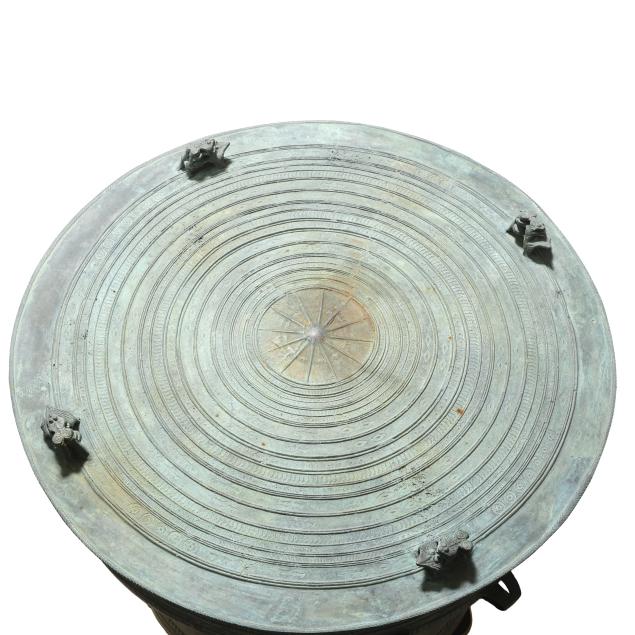
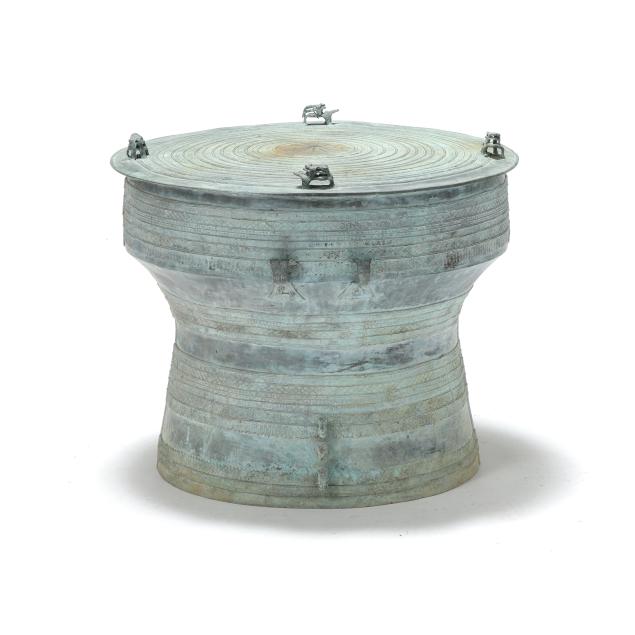
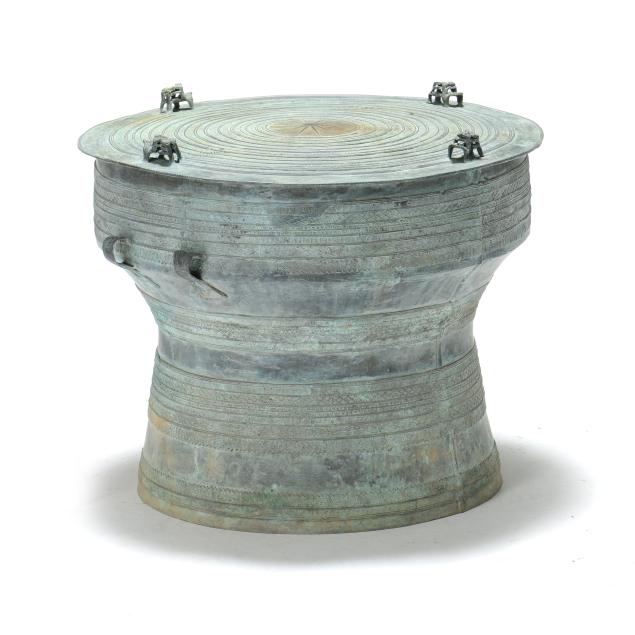
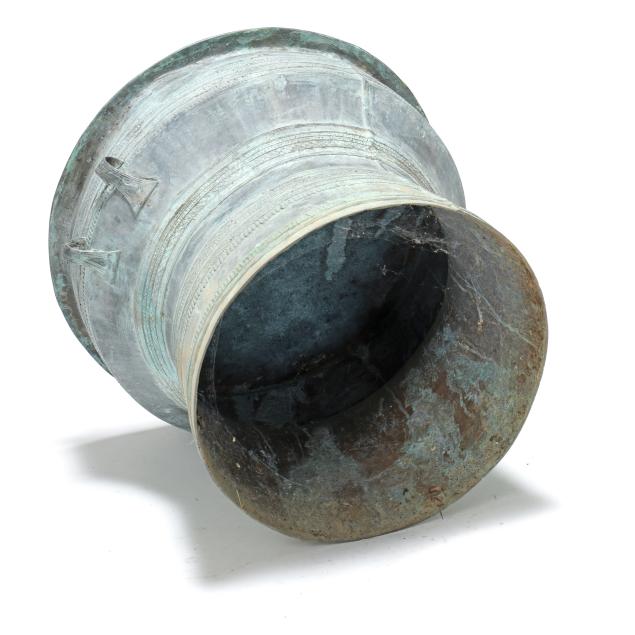
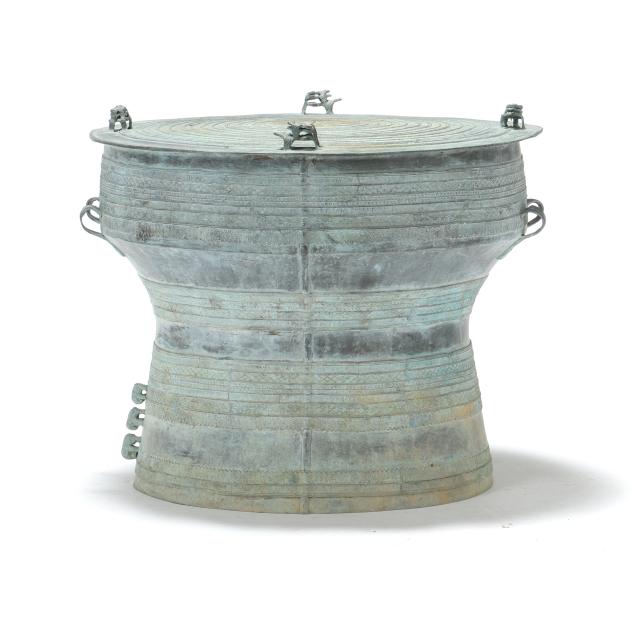
A Burmese Bronze Karen Frog or Rain Drum
Lot Details & Additional Photographs
20 x 24 x 24 in.
Private Collection, Greensboro, North Carolina
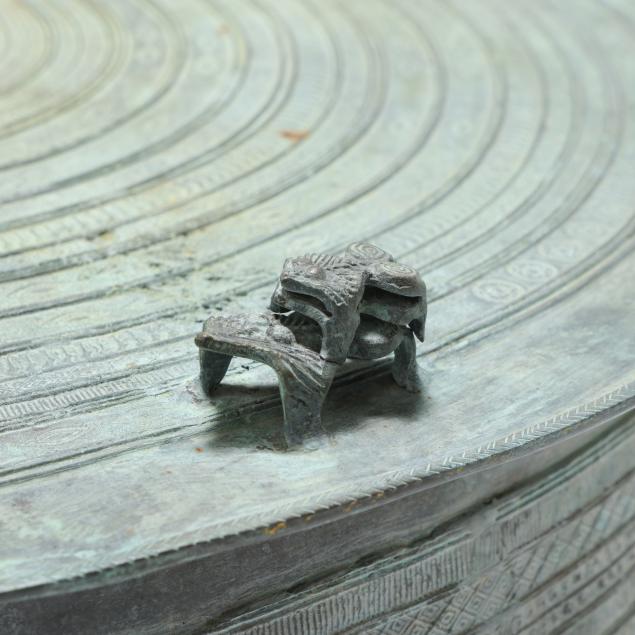
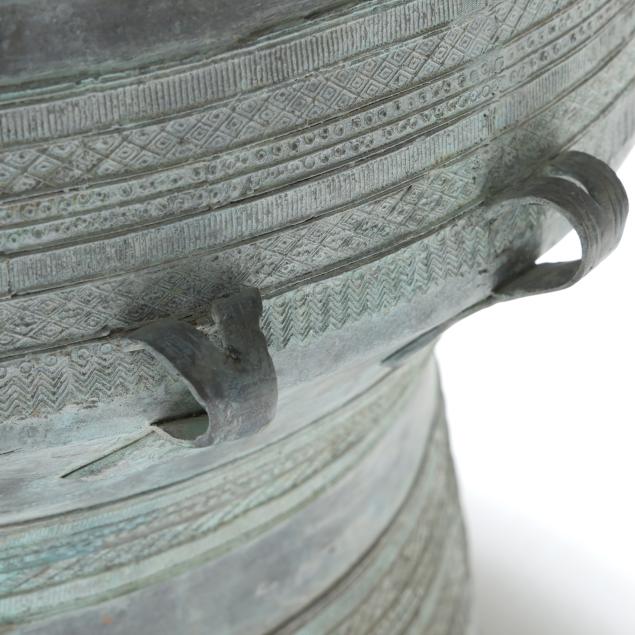
The Karen bronze drum tradition, descended from the Dong Son bronze-casting culture of Southeast Asia and continuously produced for over a thousand years. The waisted cylindrical form, the tympanum centered on a radiating star within concentric decorated bands, and the small frog figures cast equidistantly around the rim are the defining hallmarks of the type. Known to the Karen as rain drums for their ceremonial use in invoking rainfall, they also played a role in funerary rites, sounded to guide the deceased into the afterlife.
The frogs are traditionally understood as an indication of the drum's ritual use — the low-frequency tone was thought to induce frogs to croak, croaking frogs being a harbinger of rain, and the drums were played to summon rain and to invite ancestor spirits to witness important ceremonies.
Tradition holds that the Karen once buried their most treasured drums in secret, in the belief that their owners could carry such possessions with them into the next life. This practice was curtailed under Bayinnaung (r. 1551–1581), the formidable Burmese king who at the height of his power ruled over all of Burma and much of Thailand; as a devout Buddhist, he prohibited the burial of complete drums. In its place arose a compromise still reflected in surviving fragments today: a token piece, often cast in the shape of a single frog cut from the drum, interred instead.
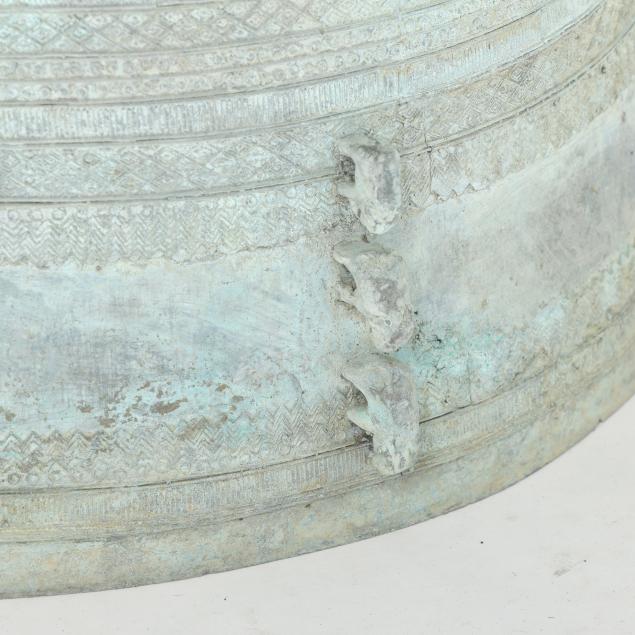
Oxidation and some staining and surface wear from outdoor display; some casting inconsistencies; overall pale green verdigris patina from being outdoors.