
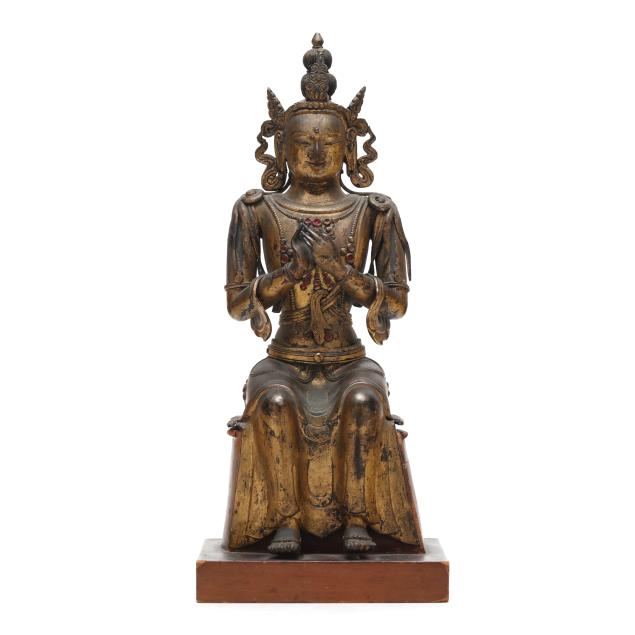
Lot 7010
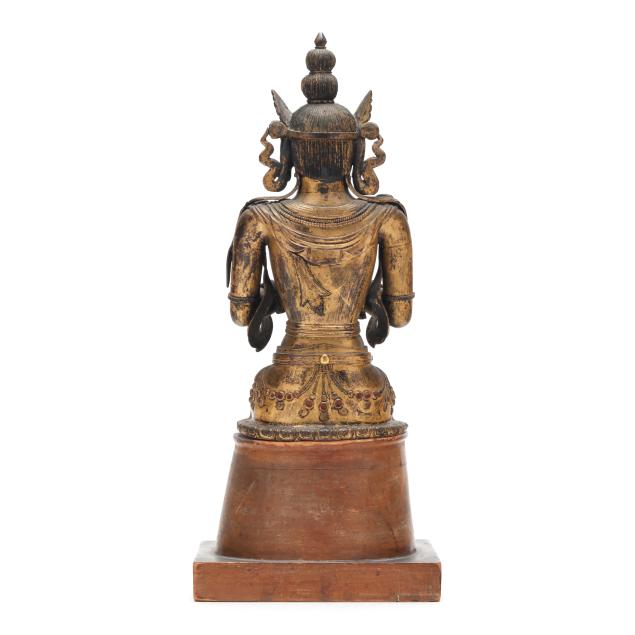
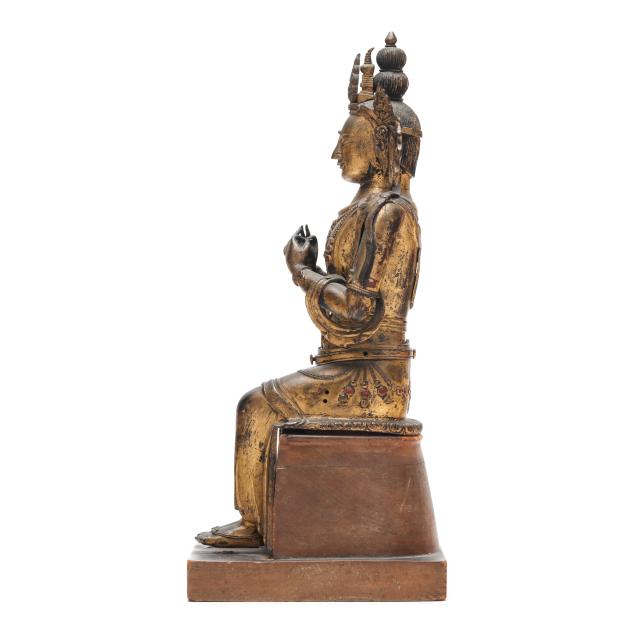
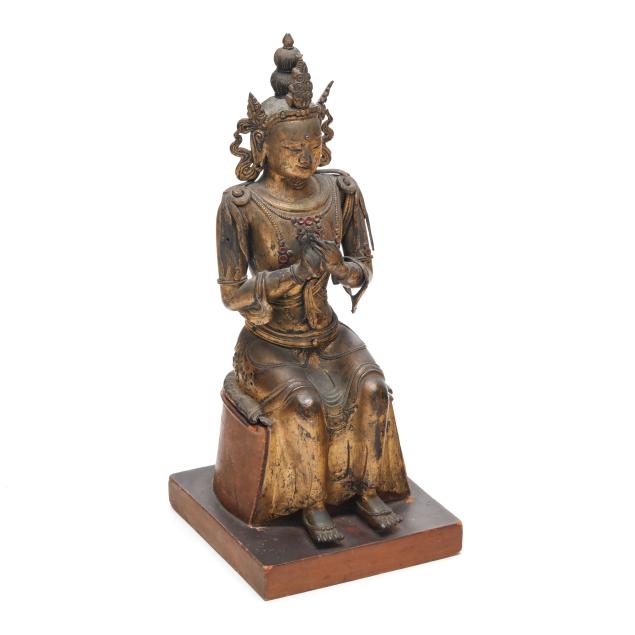
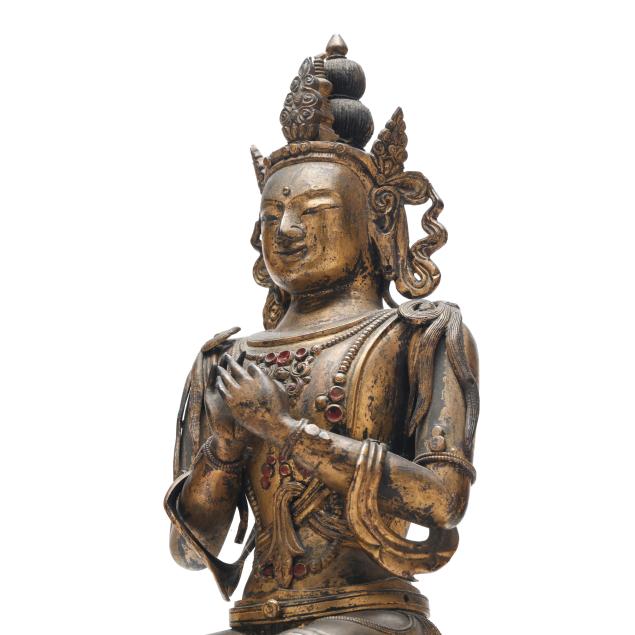
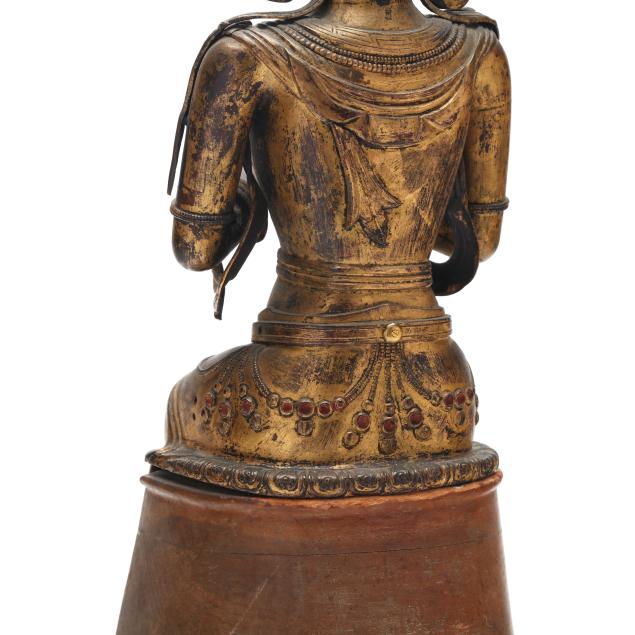
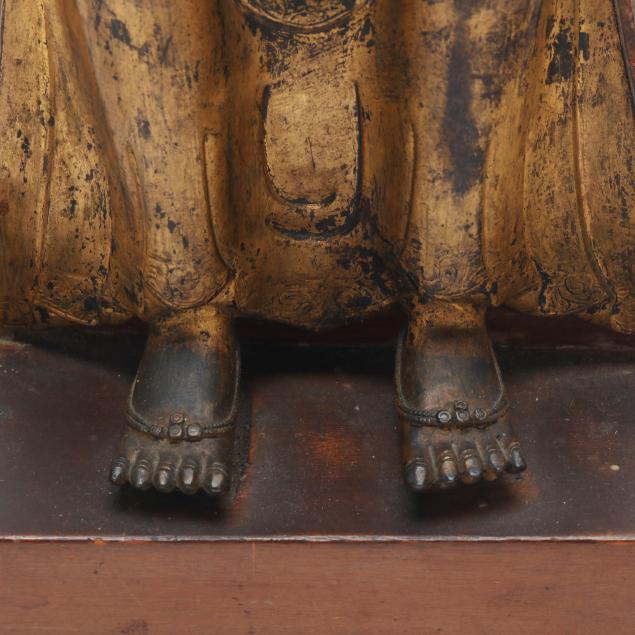
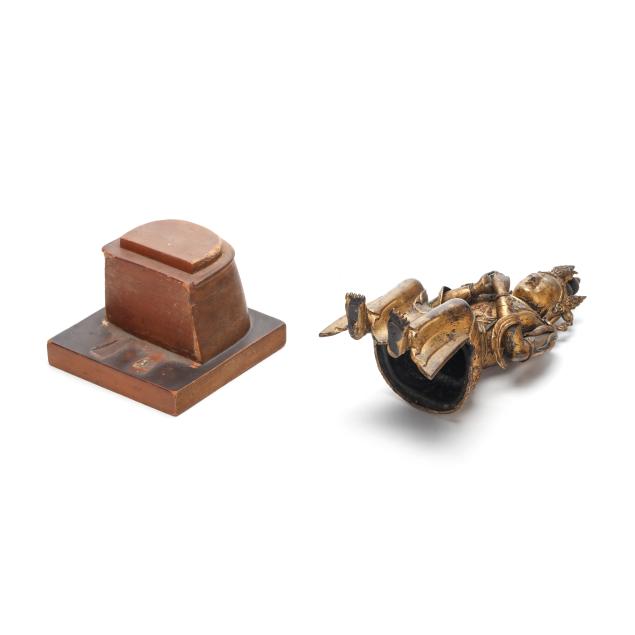
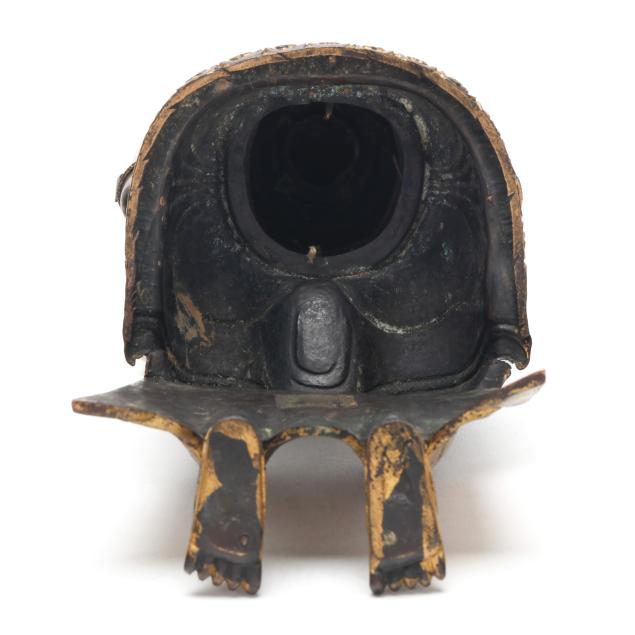
A Himalayan Gilt Bronze Figure of Maitreya
Explore more items like this one.
Visit our Asian Arts Department Asian Arts
Lot Details & Additional Photographs
DOA 13 x 5 1/2 x 5 1/2 in., Sculpture only 12 x 4 1/2 x 5 1/4 in.
From the Collection of John and Sandra Christian, III, of New York, San Francisco, and Richmond
John Wortham Christian III (1951–2023) of Richmond, Virginia, was a lifelong traveler and collector whose appreciation for the arts and cultures of Asia developed through decades of international travel. After graduating from Duke University, Christian began his career with Bloomingdale’s in New York, where his work as a buyer and later Vice President of Contemporary Apparel took him extensively throughout Europe, Far East Asia, Southeast Asia, and India in search of emerging designers, artisans, and traditional crafts.
He later moved to San Francisco to join I. Magnin, eventually serving as Vice President and General Merchandise Manager. Travel remained a defining passion throughout his life. Christian and his wife, Sandra, sought out destinations well beyond the conventional tourist routes, traveling extensively in Asia and the Himalayas, including India, Nepal, Bhutan, Myanmar, Thailand, and other parts of Southeast Asia. These journeys fostered their enduring interest in the art, craftsmanship, and material cultures of the countries they visited.
For a similar Buddhist sculpture in style see: Bonhams, New York, March 17, 2014, Lot 16, Bonhams, Hong Kong, November 30, 2022, Lot 1007, and Buddha Amitayus, 17th century, Rubin Museum of Himalayan Art, C2005.16.48. For similar sculptures with broad shoulders and small waists from Tibet, see Pratapaditya Pal, Himalayas: An Aesthetic Adventure, figures 108 and 109.
Missing elements to the side of of its body and arms; carved inset stones now lacking; holes where earrings would have originally hung on earlobes; rubbing and wear consistent with age and travel; appears to have been separated from original base, remains of lotus petals extend from bottom of robe from sides around the back.