
Lot 7109
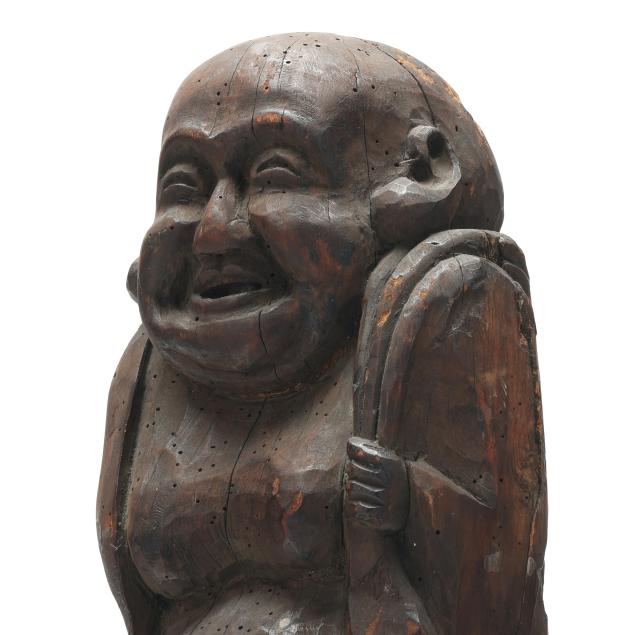
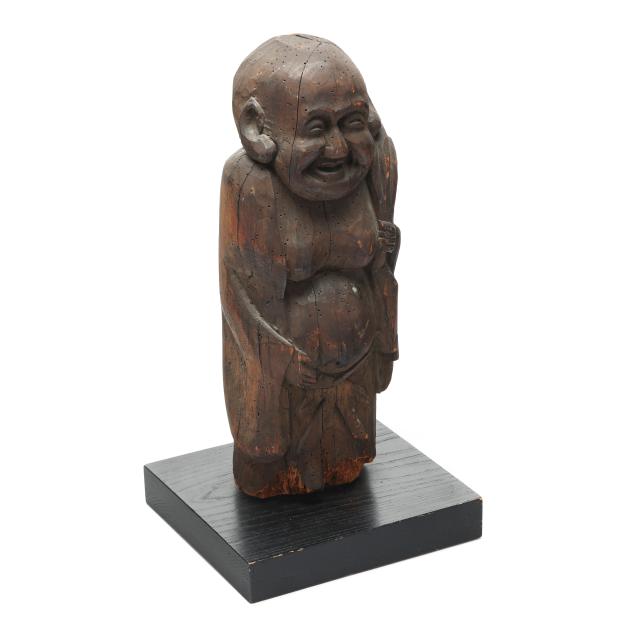
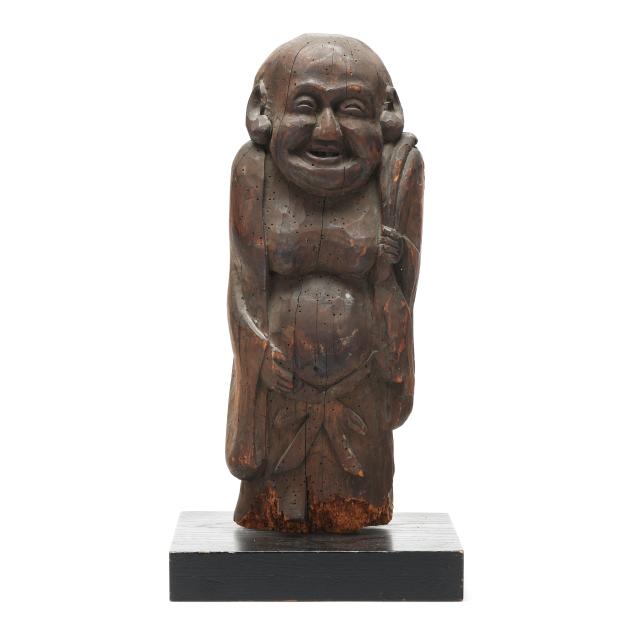
A Large Japanese Carved Wood Sculpture of Hotei
Lot Details & Additional Photographs
DOA 20 1/4 x 10 x 9 1/2 in., Figure only 18 x 7 x 6 in.
From the Collection of William Arthur and Ferol Smith, Pennsylvania, and by descent
William Arthur Smith (1918–1989) was an American artist, illustrator, portraitist, and international cultural ambassador whose work was profoundly influenced by his experiences in Asia. He began his professional career in New York in the late 1930s, where he illustrated books, ghostwrote the comic strip Polly and Her Pals, and taught at the Grand Central School of Art. From the 1940s through the mid-1960s, his illustrations appeared frequently in The Saturday Evening Post, Cosmopolitan, and Redbook, and he created advertising art for companies including Coca-Cola, Remington, U.S. Steel, John Hancock, and Dow Chemical.
During World War II, Smith served with the Office of Strategic Services (OSS) in China. His years in China had a lasting influence on his artistic interests and his subsequent engagement with Asia. After the war, he and his wife, artist Ferol Stratton, lived in Paris from 1949 to 1951.
Smith's involvement with international art and cultural exchange expanded throughout the 1950s and 1960s. He lectured in Athens, Manila, and Warsaw and served as an official delegate to the International Association of Art in Venice in 1954. In 1958, he traveled to the Soviet Union as a member and official delegate under a cultural exchange agreement. He subsequently traveled extensively throughout Asia on State Department-sponsored cultural exchanges, lecturing and exhibiting his work in countries including the Philippines, Taiwan, Thailand, Vietnam, Burma (Myanmar), Nepal, India, Japan, and Turkey.
Smith was also a collector of Asian art, reflecting his sustained personal and professional interest in the region. He moved from New York to Pineville, Pennsylvania, in 1956. His work is held in the collections of numerous museums, including the Metropolitan Museum of Art, National Portrait Gallery, National Gallery of Art, Michener Art Museum, and Norman Rockwell Museum.
This sculpture of Hotei is wonderfully expressive, with a face featuring deeply crescent-shaped eyes, broad cheeks and open laughing mouth, giving him a folk sculptural quality associated with Edo period popular Buddhist carving. Hotei had long been absorbed into Japanese popular culture as one of the Seven Gods of Good Fortune and has been a popular and auspicious subject in all mediums of Japanese art.
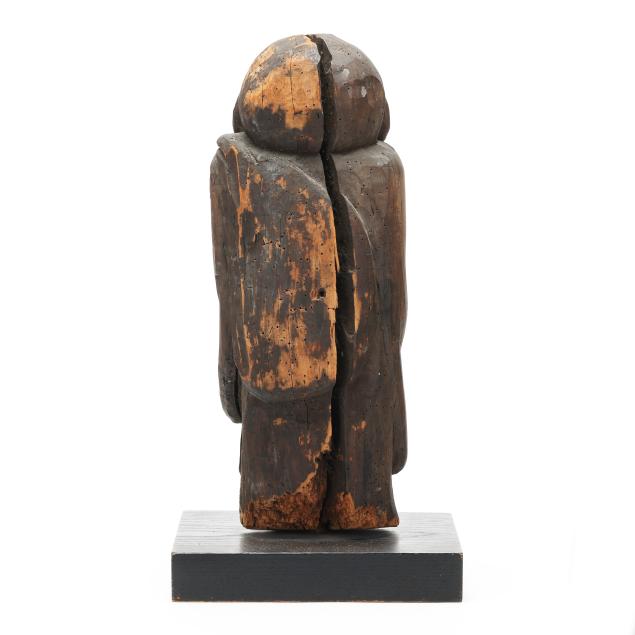
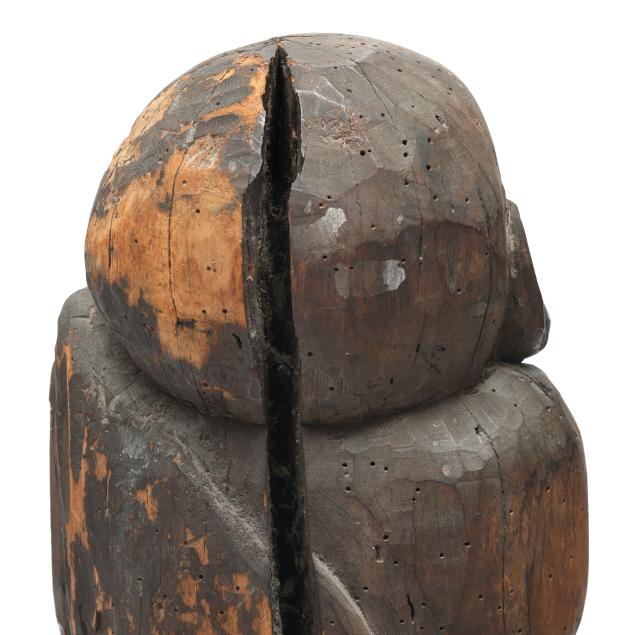
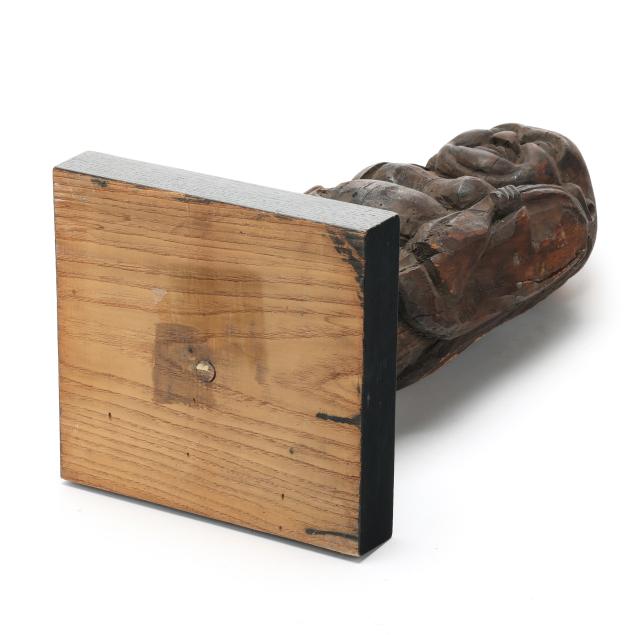
A large crack down length of back of sculpture; some scattered stable stress cracks to wood; insect damage spots; area of loss to robe under right hand.