Lot 7099
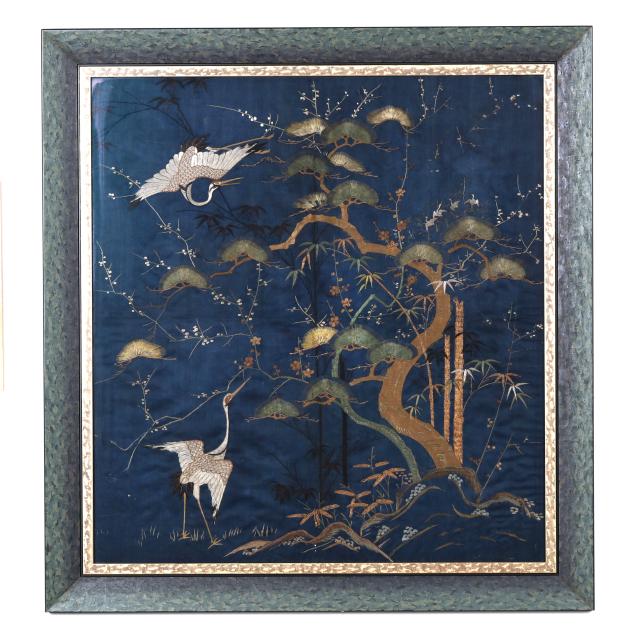
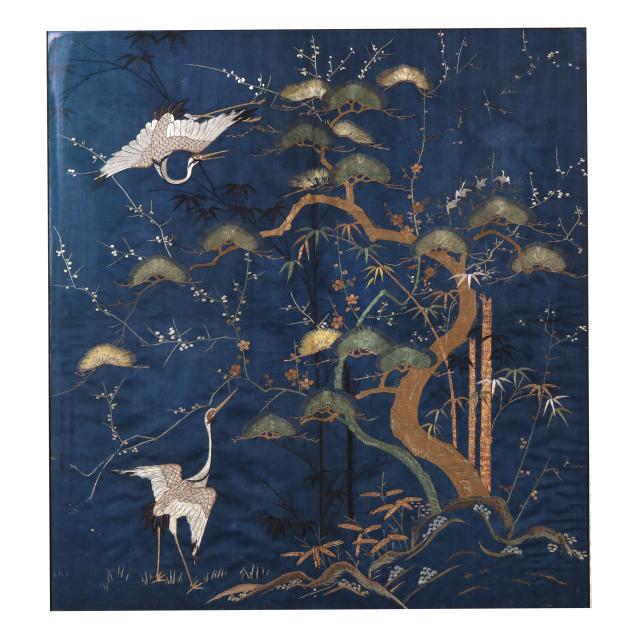
A Very Fine Japanese Blue Ground Silk Embroidered Fukusa
Explore more items like this one.
Visit our Asian Arts Department Asian Arts
Lot Details & Additional Photographs
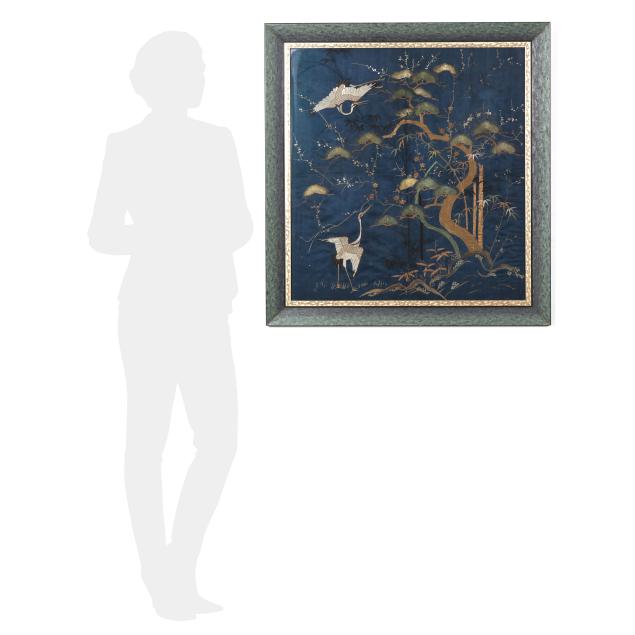
Frame dimensions 33 3/4 x 31 3/4 x 1 1/4 in., Sight size 28 x 26 in.
In Japan, fukusa (袱紗) are finely woven or embroidered textiles traditionally used to cover and ceremonially present gifts on important occasions. Particularly popular during the Edo (1615–1868) and Meiji (1868–1912) periods, fukusa were often lavishly decorated in silk embroidery, brocade, or tapestry weave with auspicious imagery chosen to reflect the occasion and convey wishes for longevity, prosperity, or good fortune. Rather than being given away with the gift, the fukusa was generally removed and returned to the giver, making these textiles enduring expressions of Japanese social etiquette as well as exceptional examples of textile artistry.
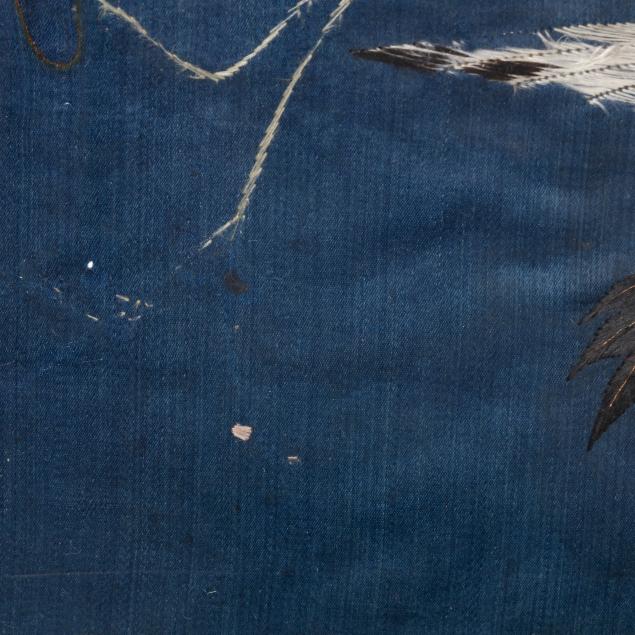
Very good estate condition; a few loose threads; a few areas with some loss to thread at lower left corner and right hand side; not examined outside of the frame.