

A Field Guide to Rare Spirits - Part 2
Welcome to the second installment of our Rare Spirits Field Guide, an educational resource crafted to give our buyers confidence to know what’s being offered and pick out the perfect bottles to bid on in our Rare Spirits auctions. We’ll be adding to this ‘Field Guide’ over the coming months, diving into a litany of common words and phrases found on the spirits bottles in our catalog and providing context as to why they may or may not make a difference to the quality of the product inside.
-
-
In our December 5th Rare Spirits sale, we featured an exceptional selection of both the top American bourbons and Scotch whiskies. In perusing the catalogue, you might have noticed the discrepancy between the spelling of bourbon whiskey and Scotch whisky. So why the difference?
The whisk(e)y schism began with a rift between Scottish and Irish distillers in the 1800s. When the continuous column still was patented by Aneas Coffey in 1830, Scottish distillers began blending the newly produced, lighter spirit with their richer malt whisky creating the first widely produced blended Scotch whisky. Irish distillers initially refused to embrace this trend of blending and chose to rebrand their unblended spirit as pure pot-still Irish whiskey. Though they later caved to the pressure and began blending as well, the distinct spellings stuck and trickled down to other whisk(e)y producing regions in turn.
The whisk(e)y schism began with a rift between Scottish and Irish distillers in the 1800s. When the continuous column still was patented by Aneas Coffey in 1830, Scottish distillers began blending the newly produced, lighter spirit with their richer malt whisky creating the first widely produced blended Scotch whisky. Irish distillers initially refused to embrace this trend of blending and chose to rebrand their unblended spirit as pure pot-still Irish whiskey. Though they later caved to the pressure and began blending as well, the distinct spellings stuck and trickled down to other whisk(e)y producing regions in turn.
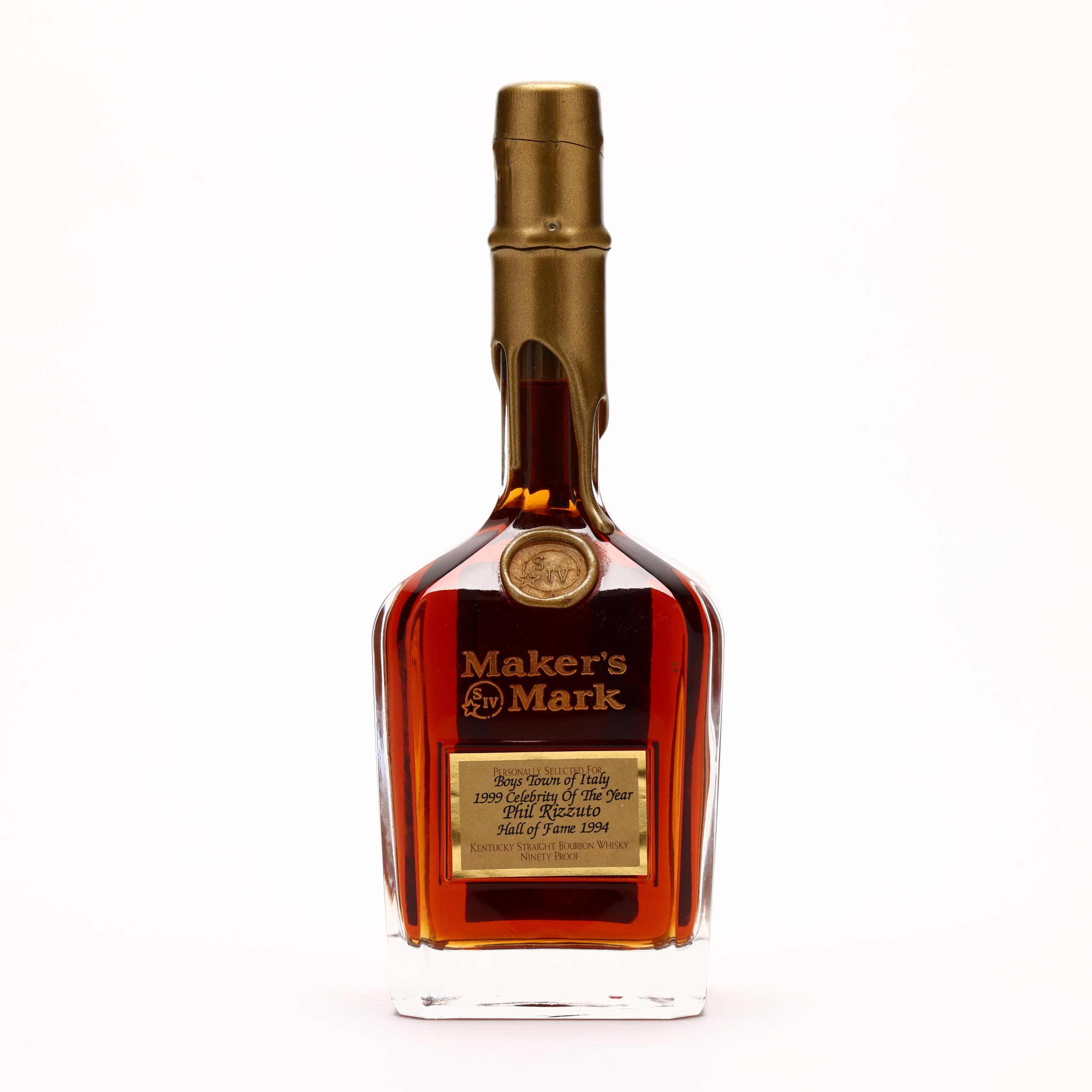
American distillers, for their part, saw rejecting the Scottish spelling as a bit of rebellion against British traditions, and therefore claimed whiskey with an e. Japanese and Canadian producers, meanwhile, were heavily influenced by Scottish distilling traditions and chose to claim the term whisky. Of course, there are always exceptions to the rule. Maker’s Mark, for instance, sells bourbon whisky. At the end of the day, the difference in spelling doesn’t actually indicate anything about the product inside, but it’s a fun historical tidbit to share at your next dinner party.
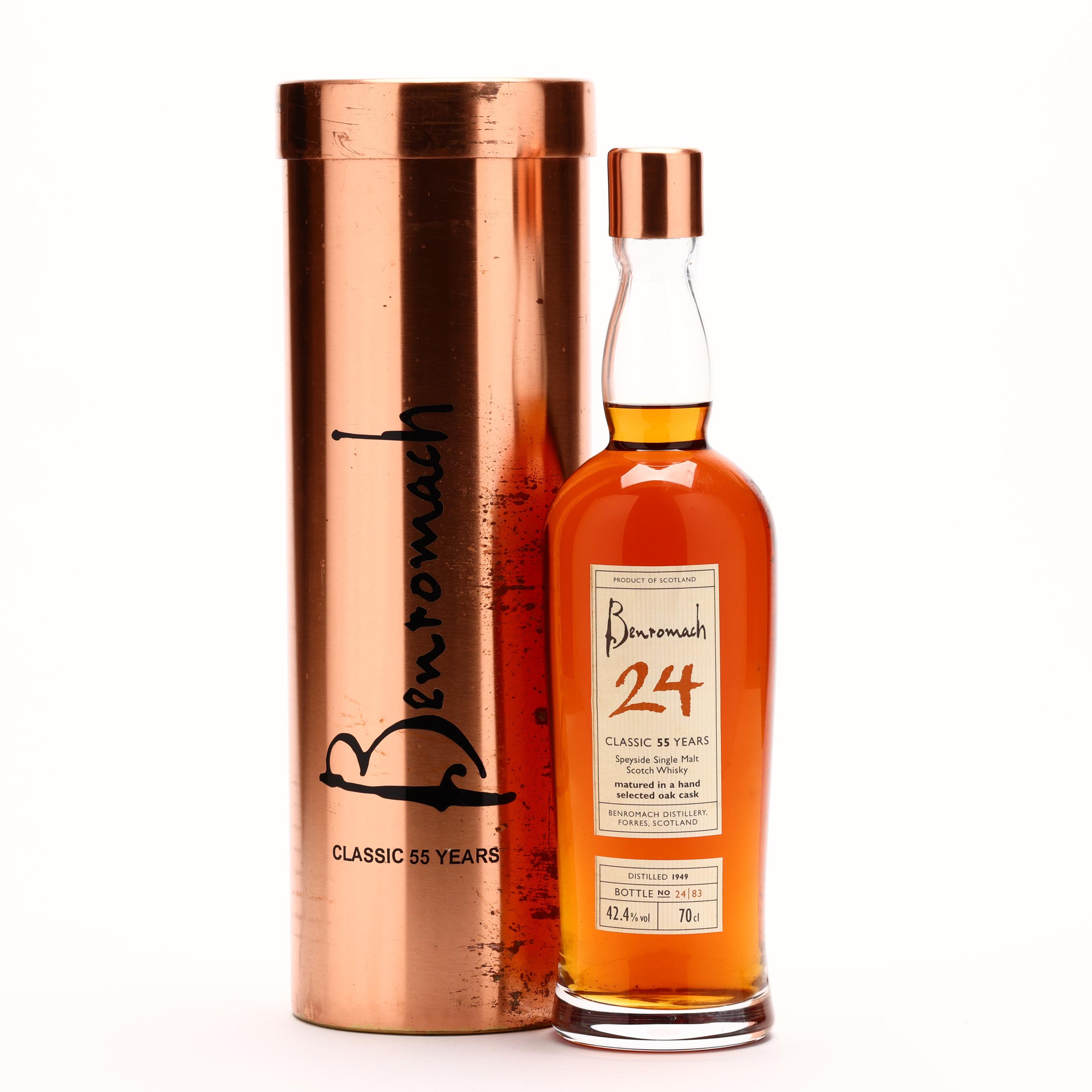
Another very common question among those new to whiskey, and Scotch, specifically is: “What does the term single malt mean?” Single malt Scotch whisky must be made from 100% malted barley, produced by a single distillery using copper stills, and (like all Scotch whisky) matured for at least three years. For an outstanding example of a single malt, see this Benromach 55 Year 1949 Classic Single Malt Scotch.
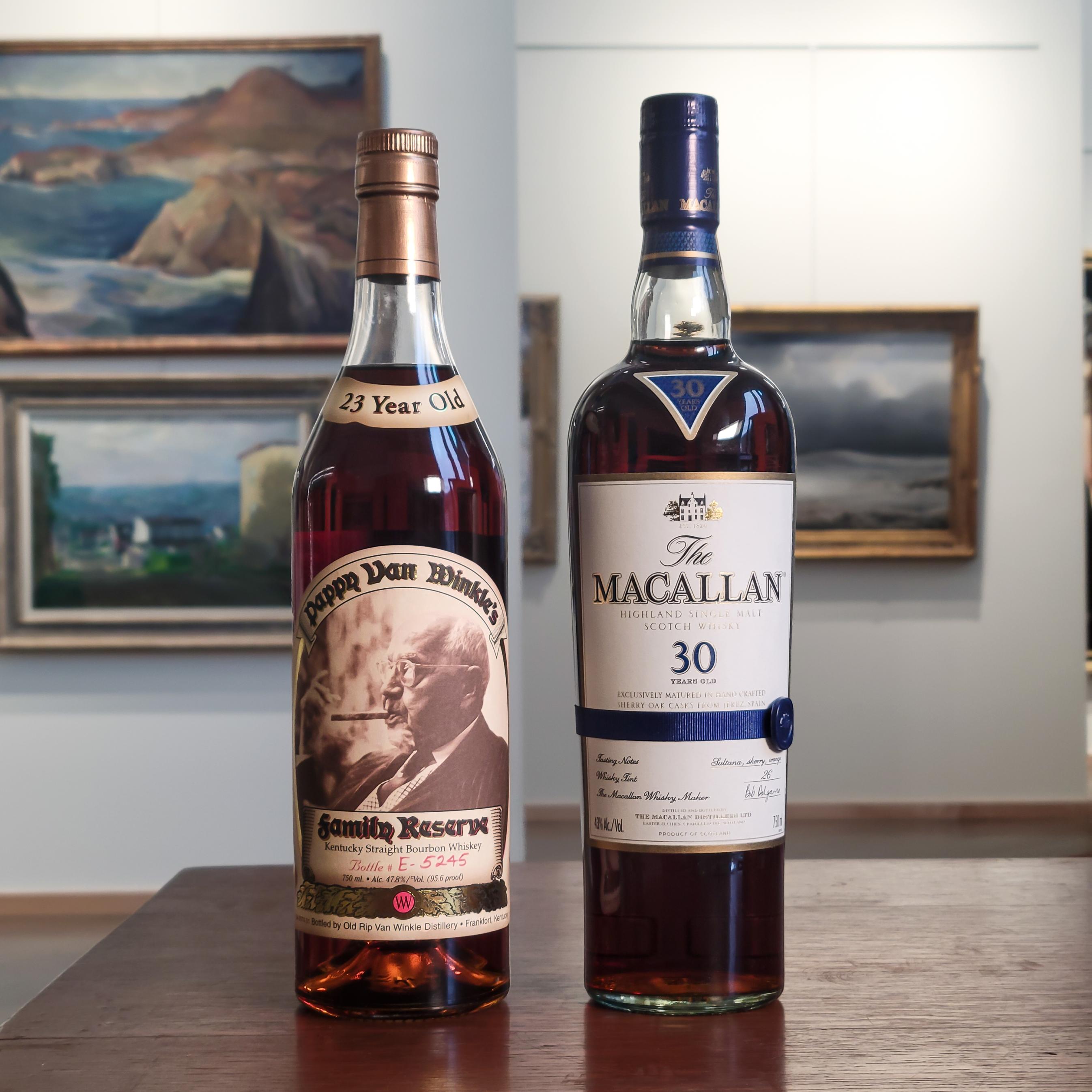
55 years seems like an unthinkable age statement for a bottle of whisky, doesn’t it? Why don’t we ever see bourbon that has aged that long? The answer lies in one of the key differences between Scotch and bourbon. Scotch is almost always aged in previously-used oak casks, while bourbon must be aged in new charred oak barrels. This means that, in general, Scotch can age much longer inside the casks without the flavor of the whisky being completely overwhelmed by wood. That’s why you will often see Scotch aged for 20 years or more (like the Macallan Sherry Oak 30 Year Scotch Whisky pictured above), while bourbon is generally viewed as hitting its sweet spot between 7-10 years in barrel. Of course, as discussed previously, there are always exceptions, and the 23 Year Old Pappy Van Winkle’s Family Reserve Bourbon is a classic example of a heavily-aged bourbon that has fans across the globe.