

A Field Guide to Rare Spirits - Part 3
Welcome to the third installment of our Rare Spirits Field Guide, an educational resource crafted to give our buyers confidence to know what’s being offered and pick out the perfect bottles to bid on in our Rare Spirits Auctions.
-
-
Before starting this job, I had no idea just how much detective work goes into being a rare spirits specialist. One of the main aims of our cataloging process is to provide our buyers with as much information as possible, and an important part of that is dating bottles as accurately as possible. Though wine bottles almost always include the vintage clearly stated on the label, spirits rarely do. Often, therefore, figuring out what year a particular bourbon or scotch was released requires knowing a few tips and tricks of the trade. In today’s installment of our Field Guide to Rare Spirits, I’m pulling back the curtain to share some of those tips with you.
Tax Strips and Glass Clues
The first tax strips were introduced on liquor bottles in 1897 after the Bottled in Bond Act was passed. These green strips were affixed on all bottled in bond whiskeys, guaranteeing that the product inside met regulations and had not been tampered with. They also, helpfully, included the year the whiskey was distilled and the year it was bottled.
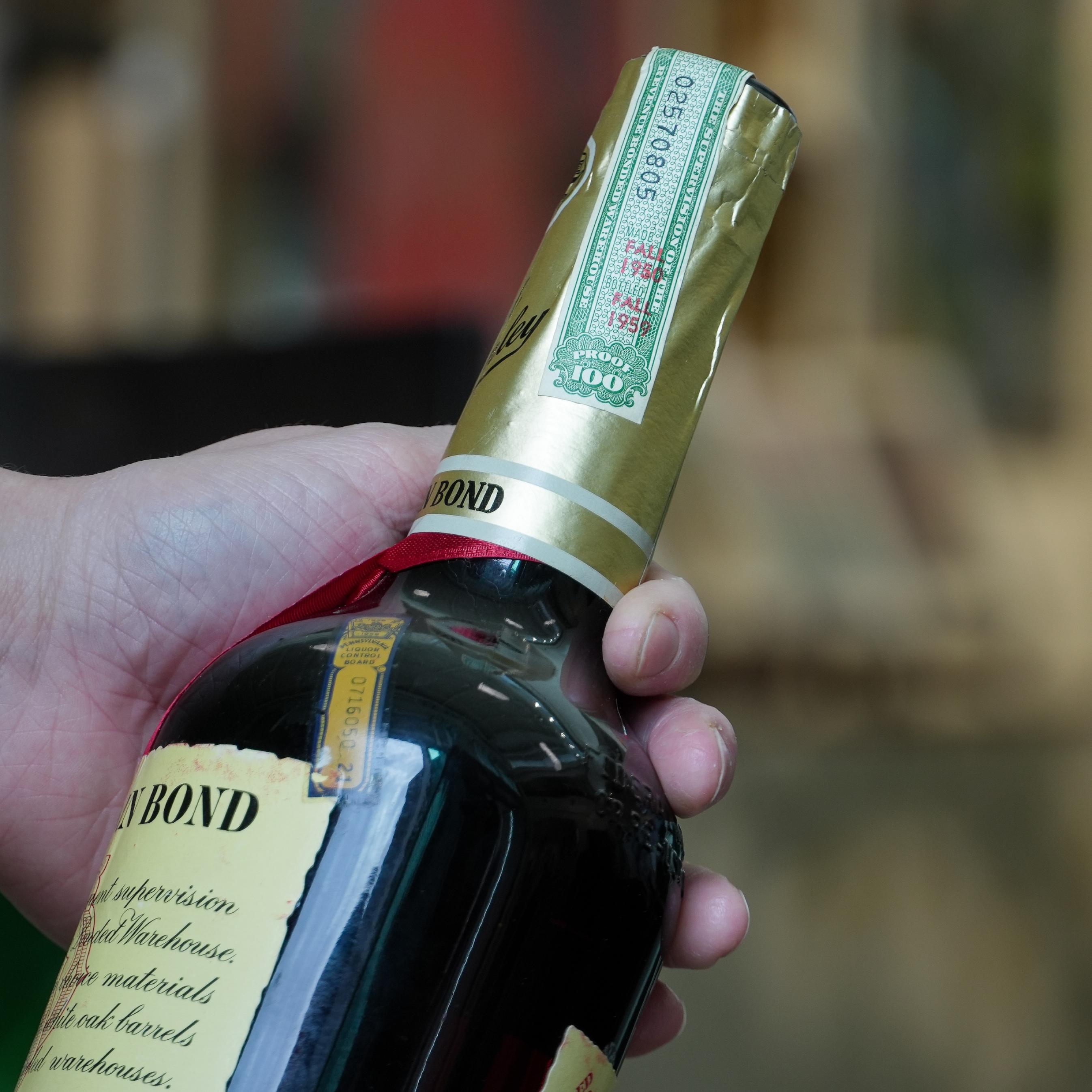
In the case of this Old Schenley Rye bottle, we also have the luxury of a second, corroborating dating clue. Between 1935-64, liquor bottles were required to have the phrase ‘Federal law forbids sale or re-use of this bottle’ either embossed on the bottle itself or written on the label.
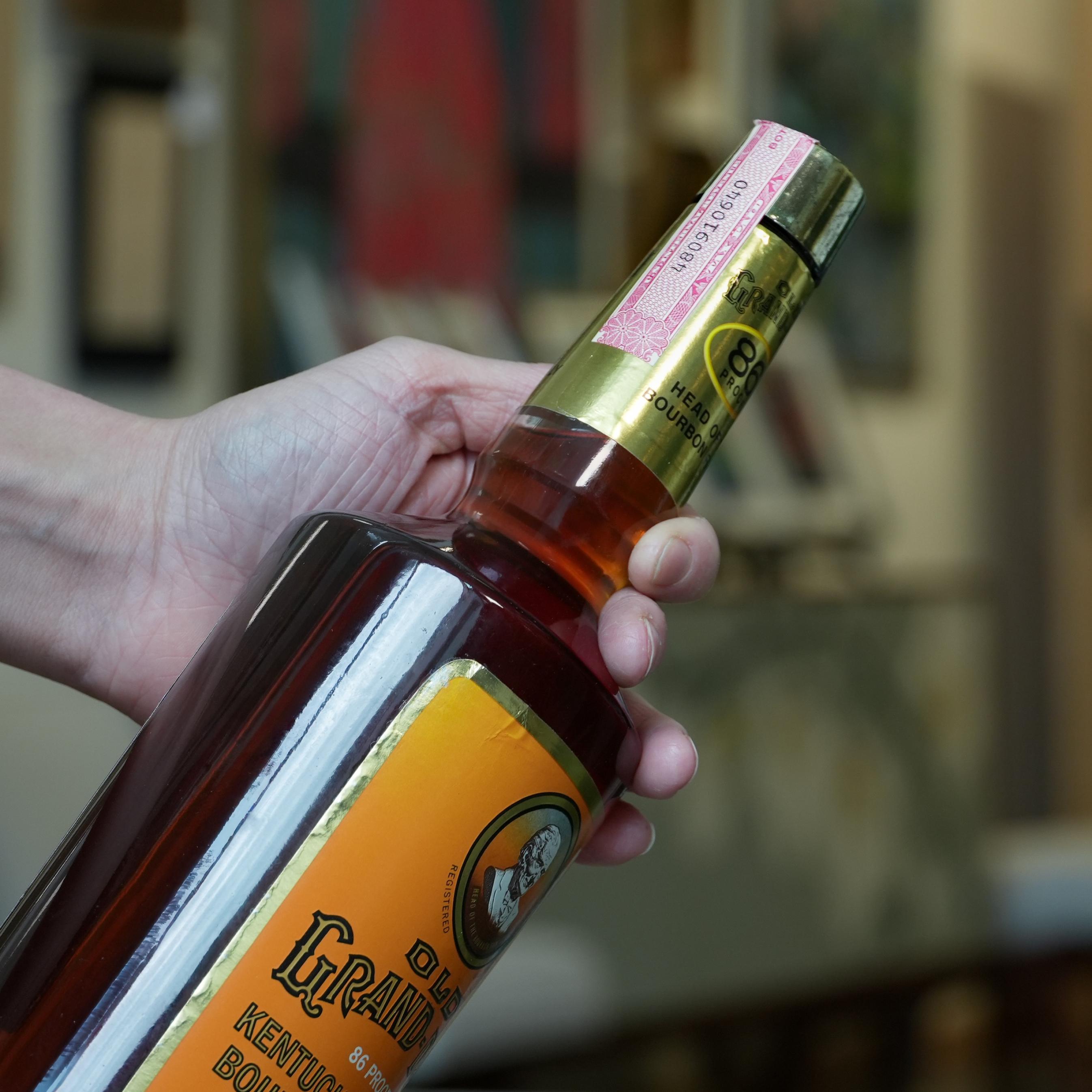
After Prohibition, starting in 1934, all whiskey bottles produced in the United States were required to use a paper strip to indicate that taxes had been paid on the liquid inside. Although they were more generic and did not include specific distillation and bottling dates, these strips can be used to narrow down the window in which a particular bottle was released. The strip we see most commonly is the one pictured here on this bottle of Old Grand-Dad, used between 1961-77.
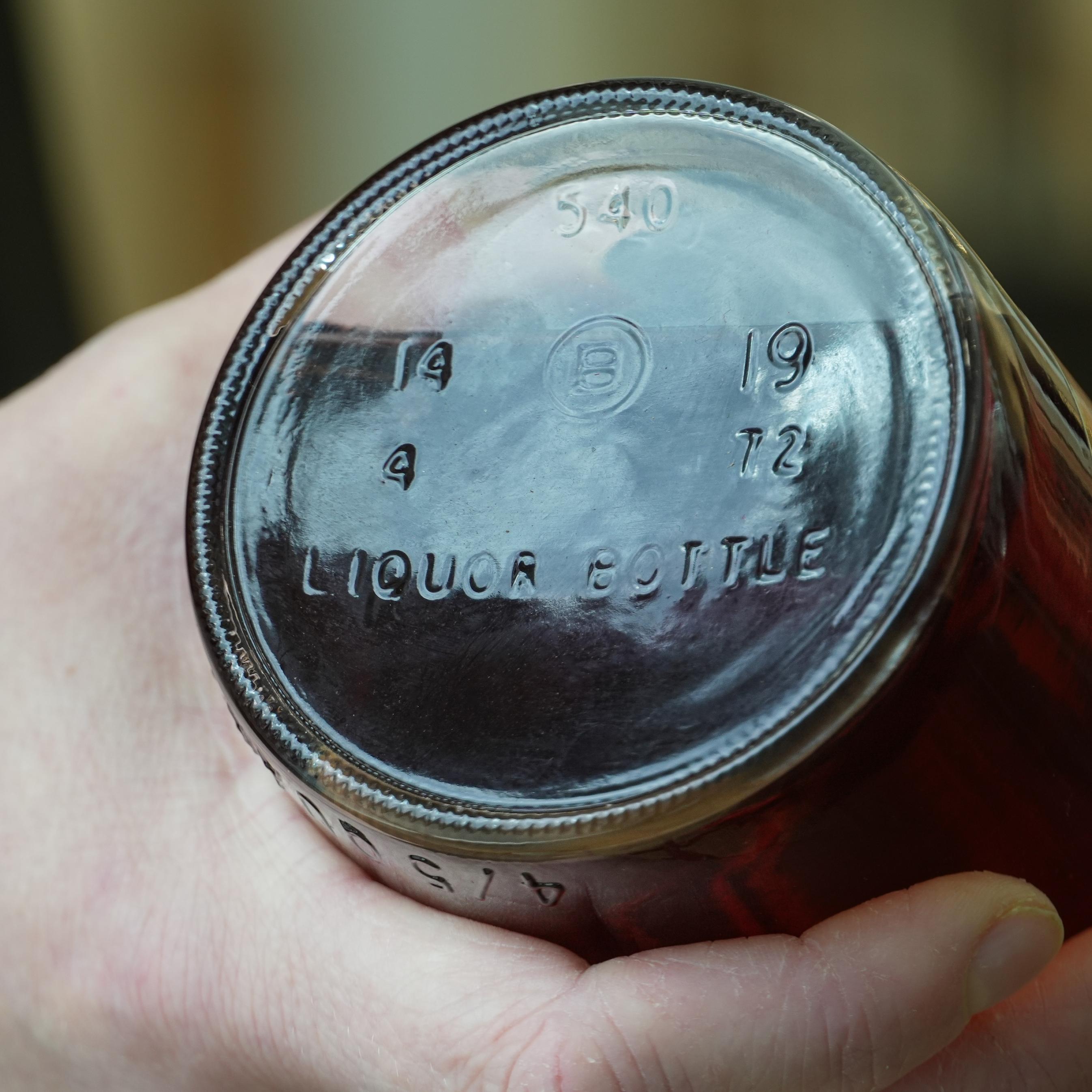
Fortunately for us, this relatively broad time frame coincided with a period where glass bottles were often embossed on the bottom with a two-digit code indicative of the year of production. On this bottle, for instance, the numbers ‘72’ are visible on the bottom, which correlates with the 1961-77 tax strip.
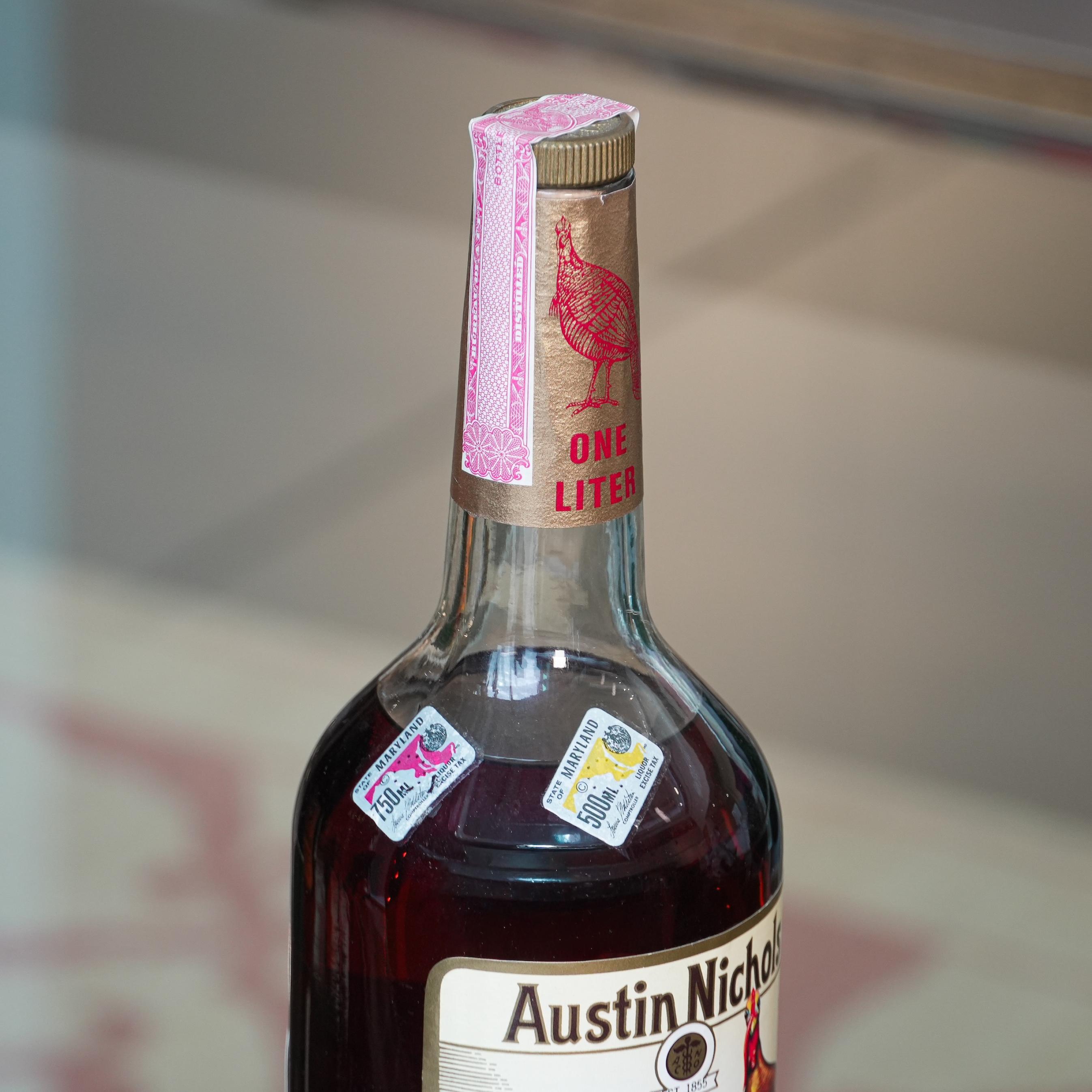
Of course, not all bottles have helpful indicators like these, so oftentimes we are limited to providing a range of dates for production. In the case of this Wild Turkey bottle, the tax strip comes from a much shorter, later range than the one previously mentioned. This 1983-85 strip was actually the last iteration used before they were phased out entirely in 1985. Without any other information to guide us, therefore, we can simply say that this bottle of Wild Turkey was produced between 1983-85.
Modern Mysteries
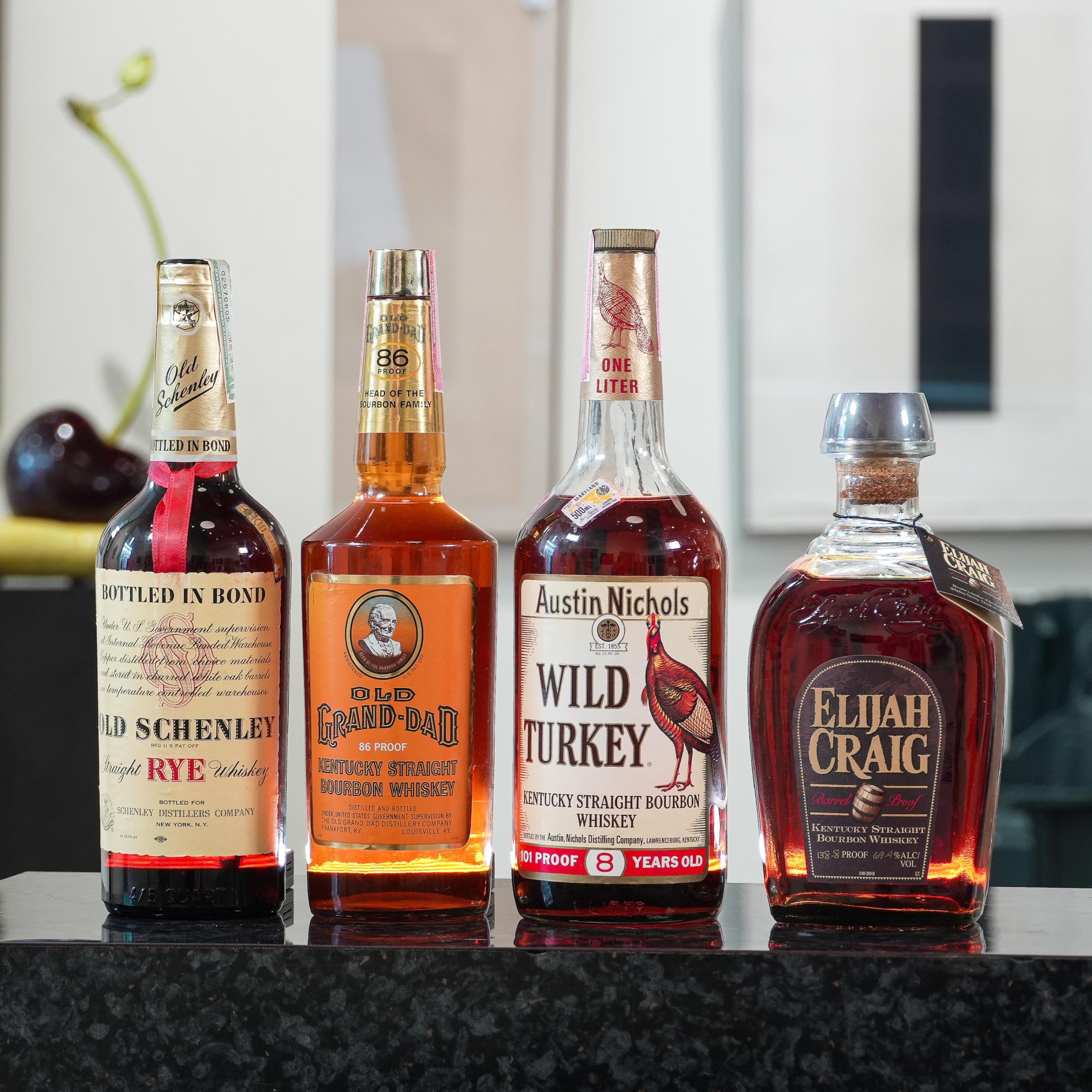
Somewhat counterintuitively, in the early 2000s dating particular bottles became more difficult. Tax strips were gone, glass bottles rarely included helpful production information, and many labels became more generic. This Elijah Craig Barrel Proof represents two of the methods we often use to date these more recent bottlings.
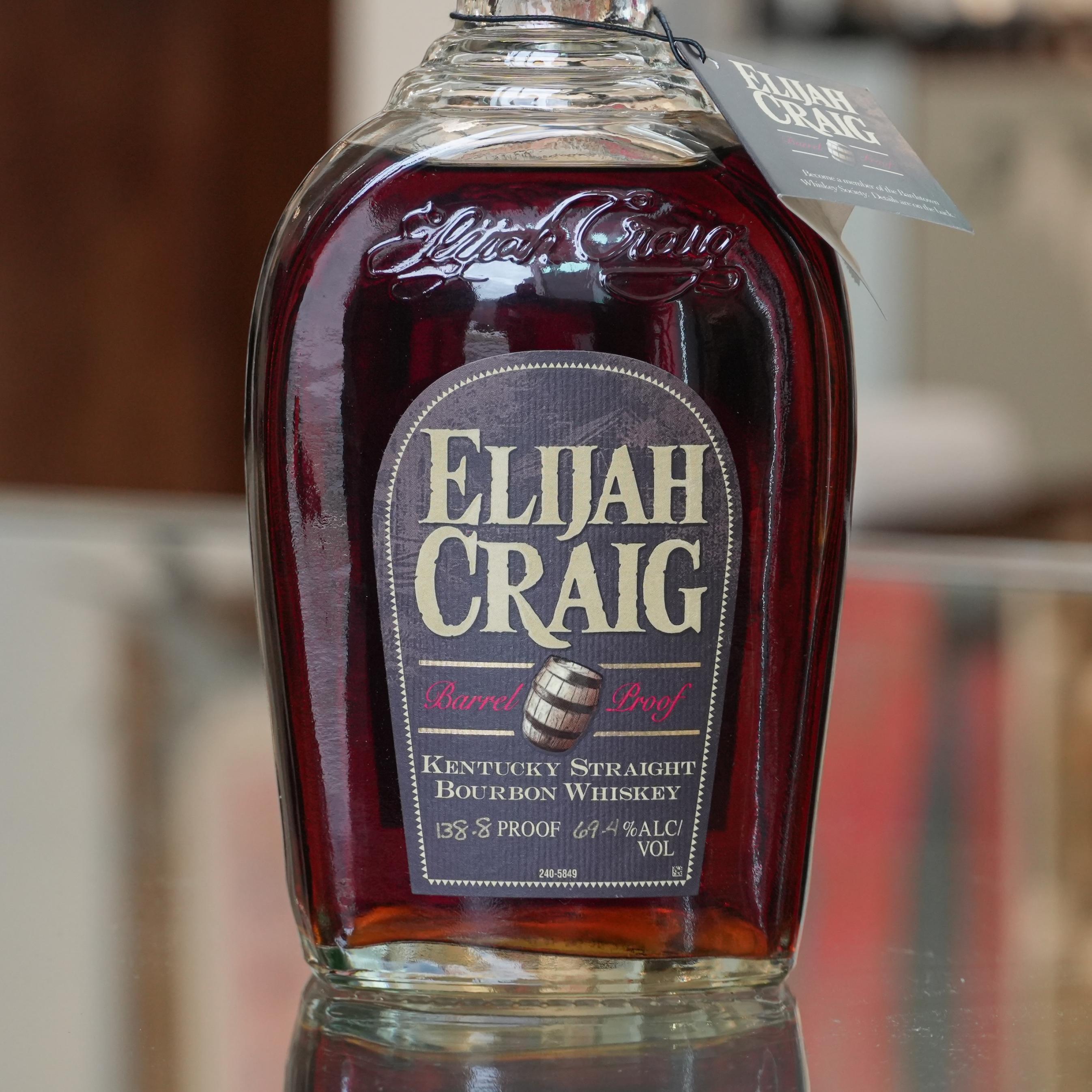
Highly sought after by collectors for many years, the Barrel Proof line began in 2013. In 2017, Elijah Craig changed the bottle shape from this older, squat style, to a taller, sleeker design. We know, therefore, that this particular bottle pre-dates 2017. We also know that each batch of ECBP is released at a unique proof point, a trend which caught on with other producers (see, for instance, the Buffalo Trace Antique Collection releases).
This bottle is 138.8 proof, which correlates to the January, 2016 release. Of course, finding a master list of all releases and their proofs requires its own sleuthing, but that’s part of the fun.
If this topic intrigues you as it does me, I hope you’ll follow along for future installments of our Field Guide, where we’ll continue unpacking some of the tips and tricks of our trade. And of course, look out for these bottles (and many more) coming up in our March 6th Rare Spirits Auction, which will post for pre-bidding on February 24th.
If this topic intrigues you as it does me, I hope you’ll follow along for future installments of our Field Guide, where we’ll continue unpacking some of the tips and tricks of our trade. And of course, look out for these bottles (and many more) coming up in our March 6th Rare Spirits Auction, which will post for pre-bidding on February 24th.