
From Workshop to Assay: Dating Early Baltimore Silver by Samuel Kirk
"Together, these pieces serve as historical artifacts from a brief period in Baltimore’s silver history."
- Erin Mancini, Fine Silver Director
- Erin Mancini, Fine Silver Director
Samuel Kirk (1793–1872) was one of the most important American silversmiths of the 19th century. Known for popularizing the ornate and floral “Repoussé” style in the United States, he turned Baltimore into an epicenter of silver production. He opened his first workshop in 1815, which grew into a multi-generational firm and brand that still produces richly decorated pieces today.
Baltimore was unique among American cities at the time. From 1814 to 1830, it was the only city that legally regulated the quality of silver through an official assay program, requiring appointed assayers to hallmark items certifying their purity or fineness. The city adopted a complex marking system that combined the Maryland coat of arms with an annual Dominical letter, which indicated the day of the week on which the first Sunday of the year fell. Leap years made the system more convoluted, creating short cycles of letters that were used inconsistently by assayers. This hallmarking system has challenged and fascinated historians and collectors alike, making precise dating from this period especially tricky. In our upcoming Fine Silver Auction, two exceptional lots demonstrate how interpreting these makers’ and assay marks together allows us to more confidently date early works by silversmith Samuel Kirk.
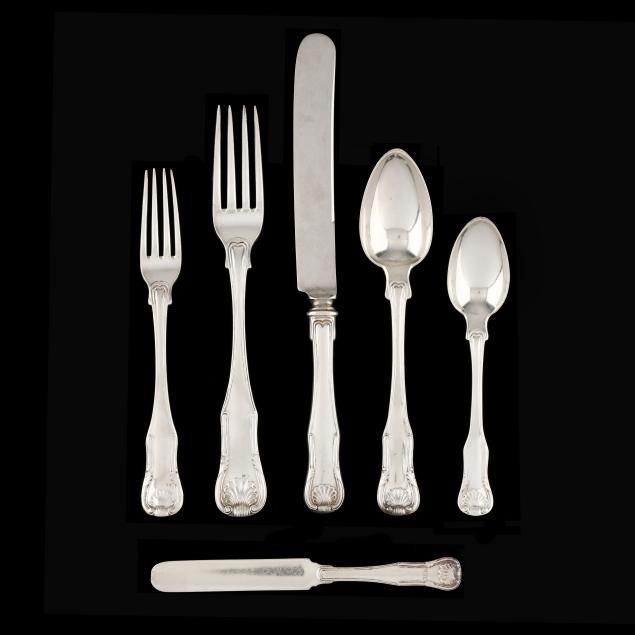
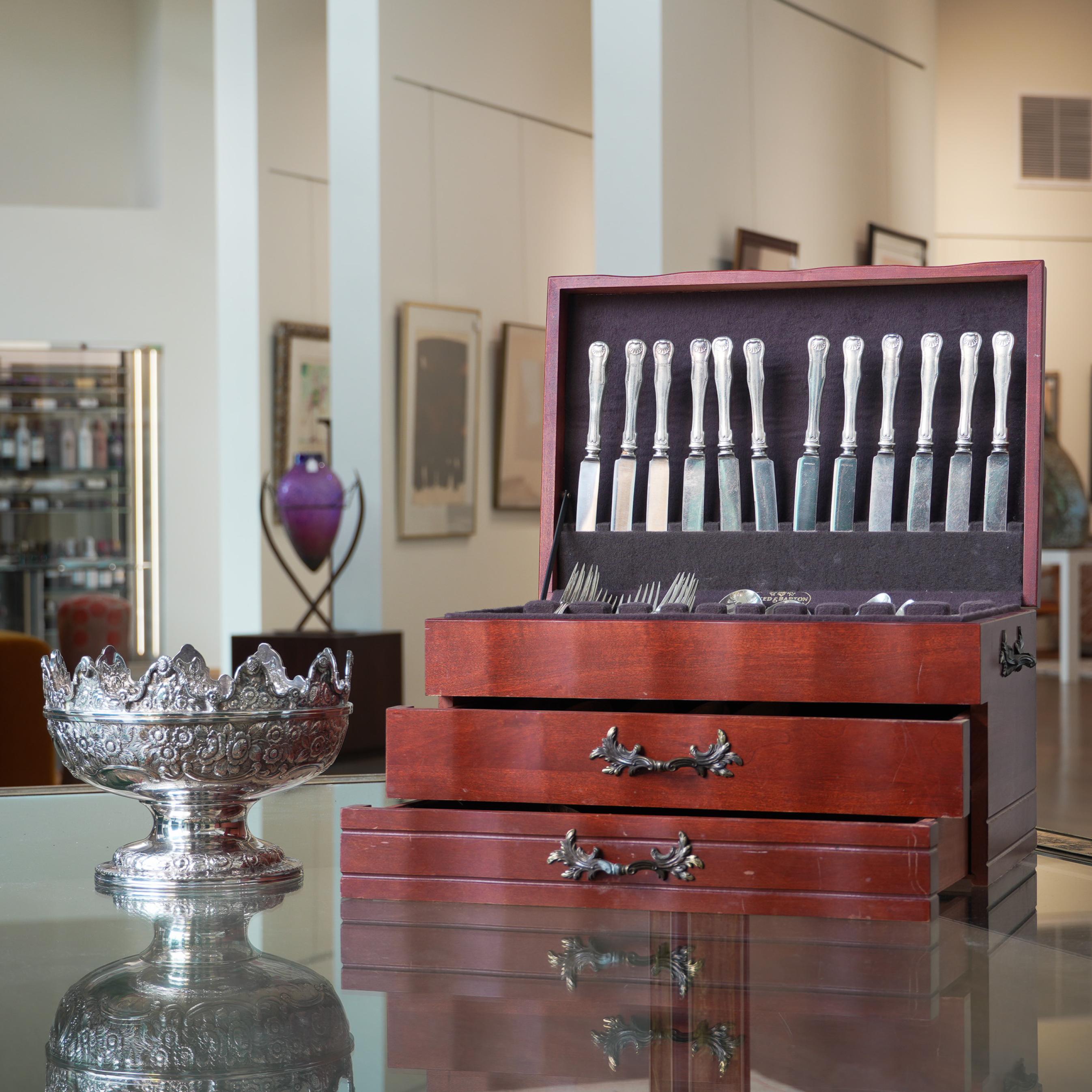
Lot 4024: A Samuel Kirk King Pattern Coin Silver Flatware Service
This service bears the "S. Kirk" mark within a serrated rectangle, accompanied by the Dominical letter "C" and the Maryland coat of arms featuring a "bend dexter," or a prominent diagonal stripe running from the upper left to the lower right of the coat of arms. This specific configuration was utilized by assayer Leroy Atkinson when he assumed office in 1824 and continued in use until 1827, providing a definitive window for the production of this flatware service.
This service bears the "S. Kirk" mark within a serrated rectangle, accompanied by the Dominical letter "C" and the Maryland coat of arms featuring a "bend dexter," or a prominent diagonal stripe running from the upper left to the lower right of the coat of arms. This specific configuration was utilized by assayer Leroy Atkinson when he assumed office in 1824 and continued in use until 1827, providing a definitive window for the production of this flatware service.
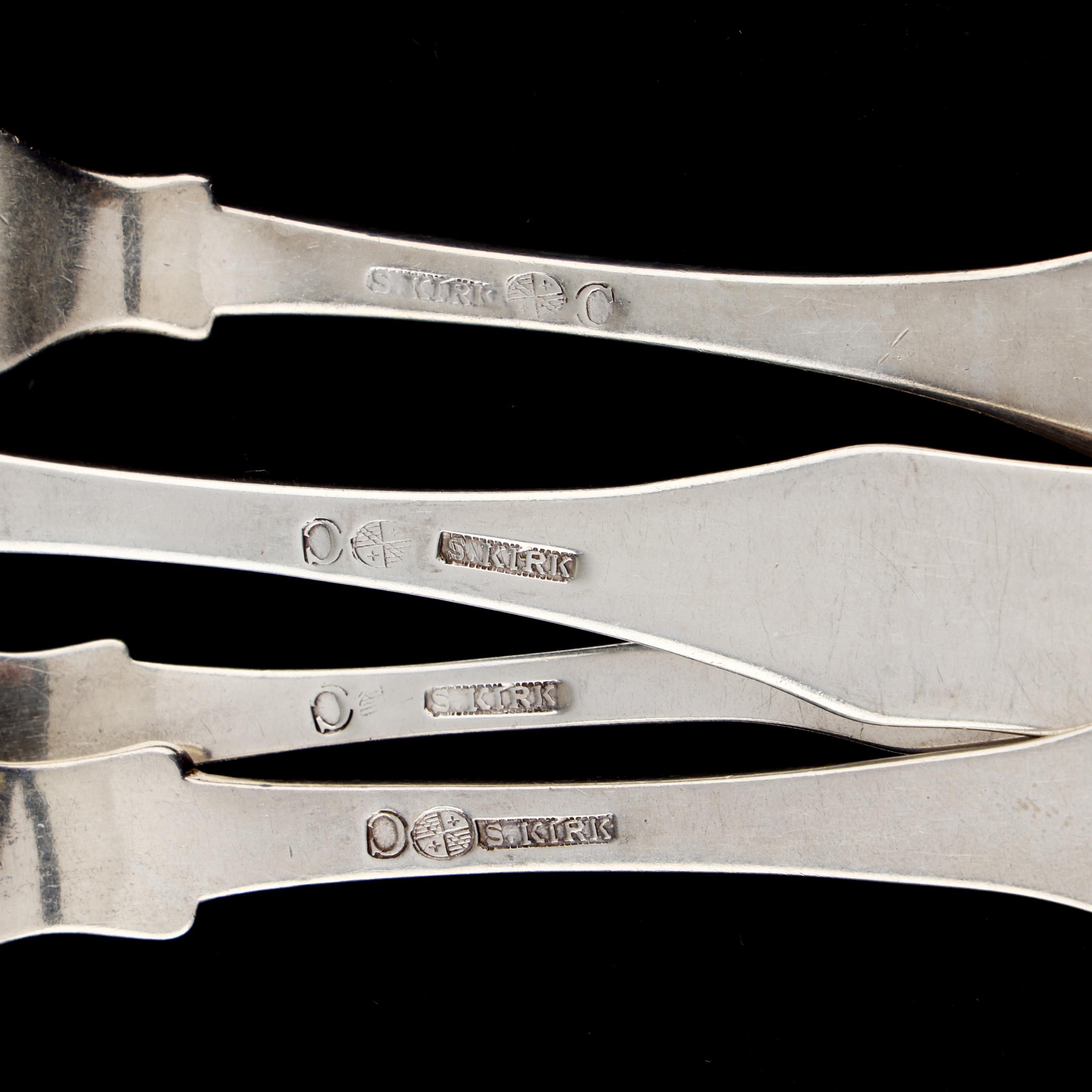
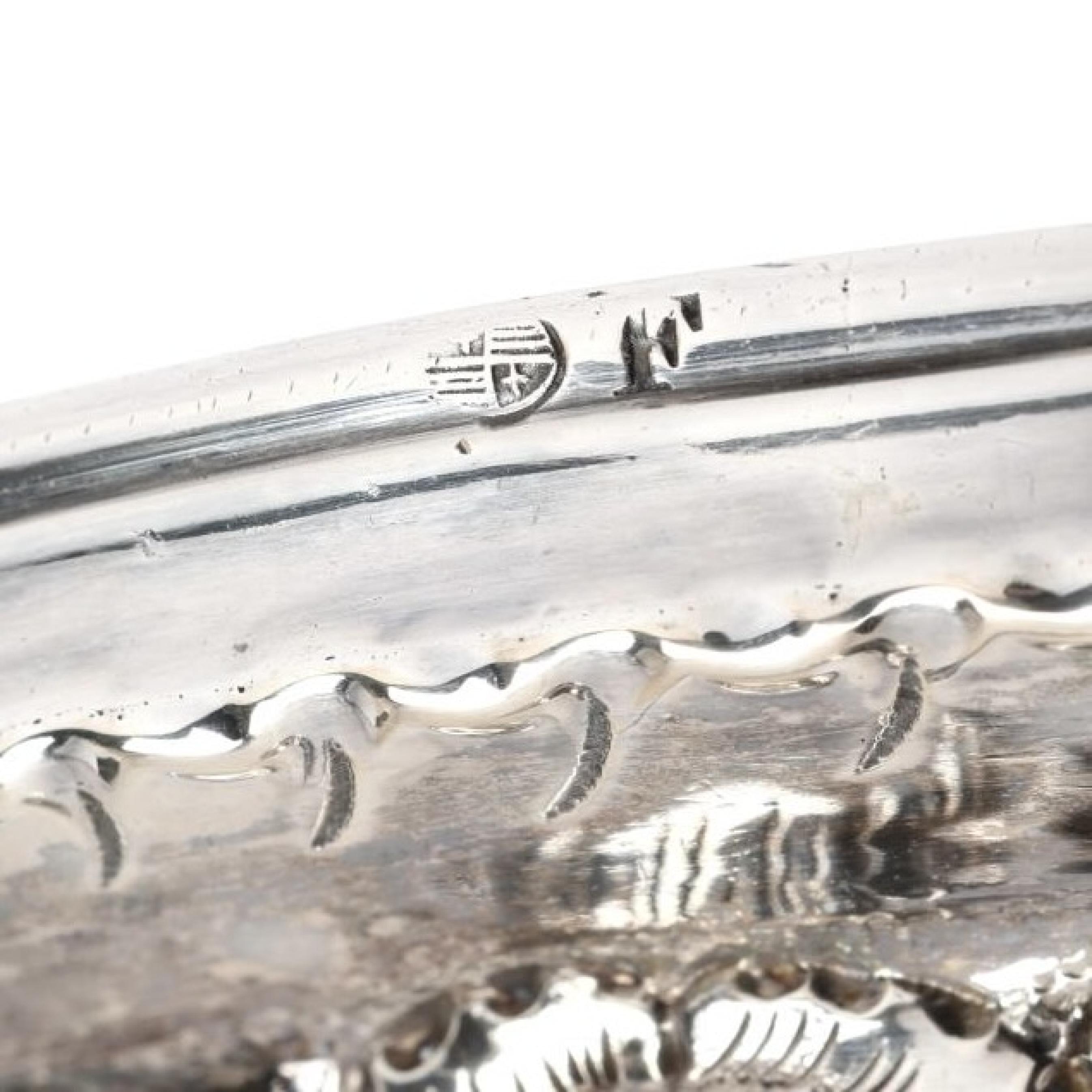
Dominical letter ‘F’ accompanied by the Maryland coat of arms prominently displayed on lot 4033.
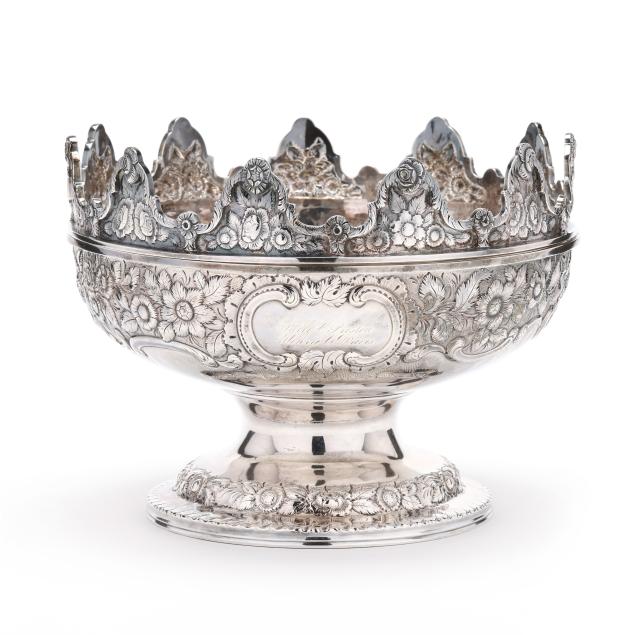
Lot 4033: An Early Monteith by Samuel Kirk
This magnificent Monteith bears the Dominical letter "F" and the Maryland coat of arms, which notably lacks the bend dexter. Furthermore, the underside is additionally stamped "SamL Kirk / 11 oz." Historical records indicate the bend dexter was removed from the coat of arms mark in 1828, but was adopted again in a modified form the following year. This brief stylistic departure, combined with the Dominical letter and maker's marks, allows us to attribute this Monteith to 1828.
This magnificent Monteith bears the Dominical letter "F" and the Maryland coat of arms, which notably lacks the bend dexter. Furthermore, the underside is additionally stamped "SamL Kirk / 11 oz." Historical records indicate the bend dexter was removed from the coat of arms mark in 1828, but was adopted again in a modified form the following year. This brief stylistic departure, combined with the Dominical letter and maker's marks, allows us to attribute this Monteith to 1828.
Together, these pieces serve as historical artifacts from a brief period in Baltimore’s silver history. Although the city’s assay office ceased operations in 1830, requiring silversmiths to self-report purity thereafter, careful study of these marks and the shifts in the assay system has become an important tool for dating early Baltimore silver and establishing a chronology of works from Samuel Kirk’s early career. For connoisseurs, these objects offer valuable insight into the foundational years of American silver production and the development of Baltimore’s distinctive silversmithing tradition.
Explore these works, as well as many others being offered in our Fine Silver Auction, which opens for live-online bidding on Thursday, February 12 at 10:00 am. Pre-bidding is available now.
Explore these works, as well as many others being offered in our Fine Silver Auction, which opens for live-online bidding on Thursday, February 12 at 10:00 am. Pre-bidding is available now.

Fine Silver Auction
February 12, 2026 at 10:00 am ET
February 12, 2026 at 10:00 am ET