

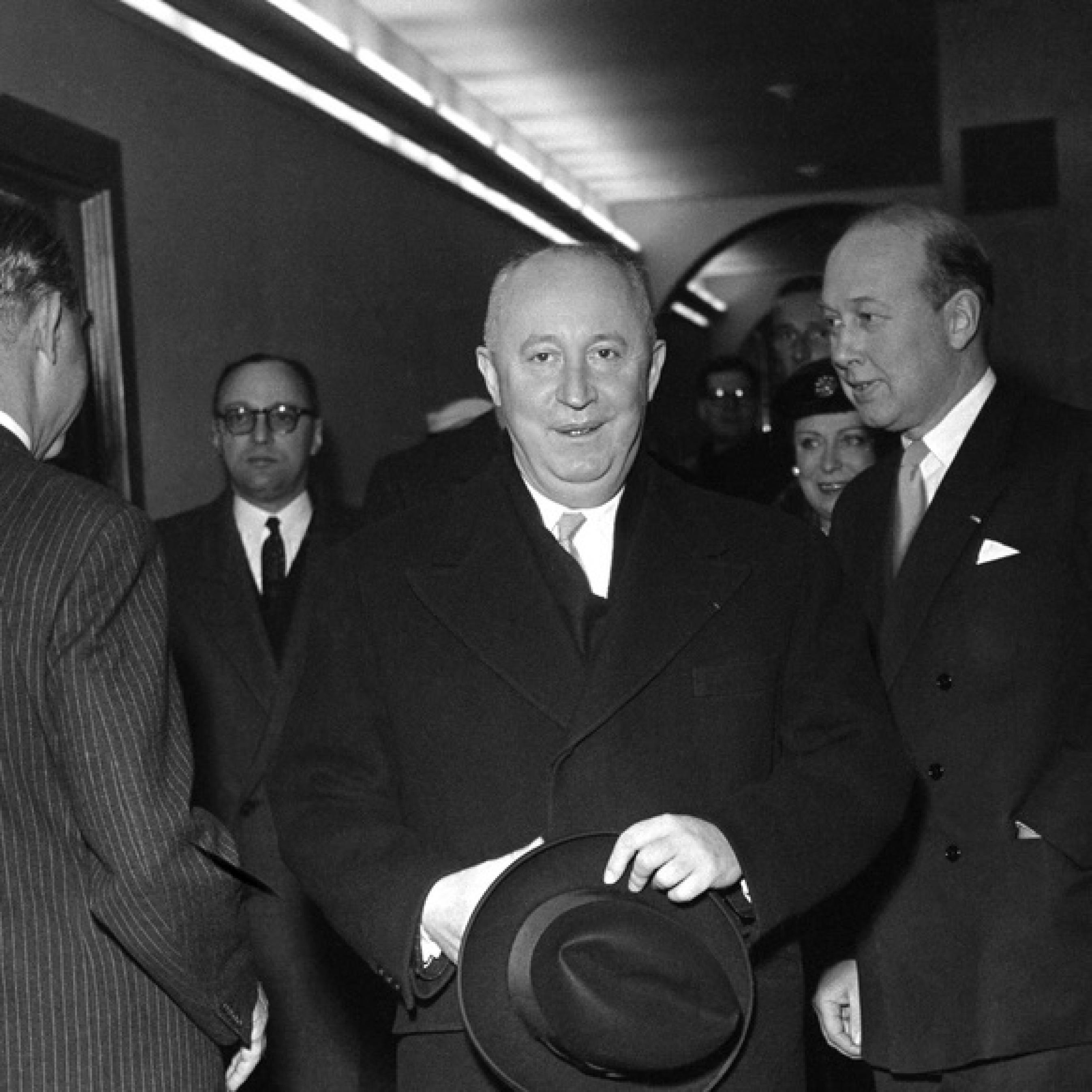
Christian Dior's visit to NK, Nordiska Kompaniet in Stockholm, February 1957. Credit to Nordiska museet Digital Museum
Pillars of Style: Dior
"My dream? To make women happier and more beautiful" - Christian Dior, Fashion Designer
“J’adore Dior.” The saying captures more than admiration, it defines a legacy of elegance and innovation. From a quiet childhood in Normandy to the very center of Parisian fashion, Christian Dior followed his vision and transformed the way the world dressed. With the founding of his house in 1946 and the debut of the “New Look” the following year, he restored a sense of femininity and postwar optimism to fashion, establishing a legacy that continues to shape luxury today.
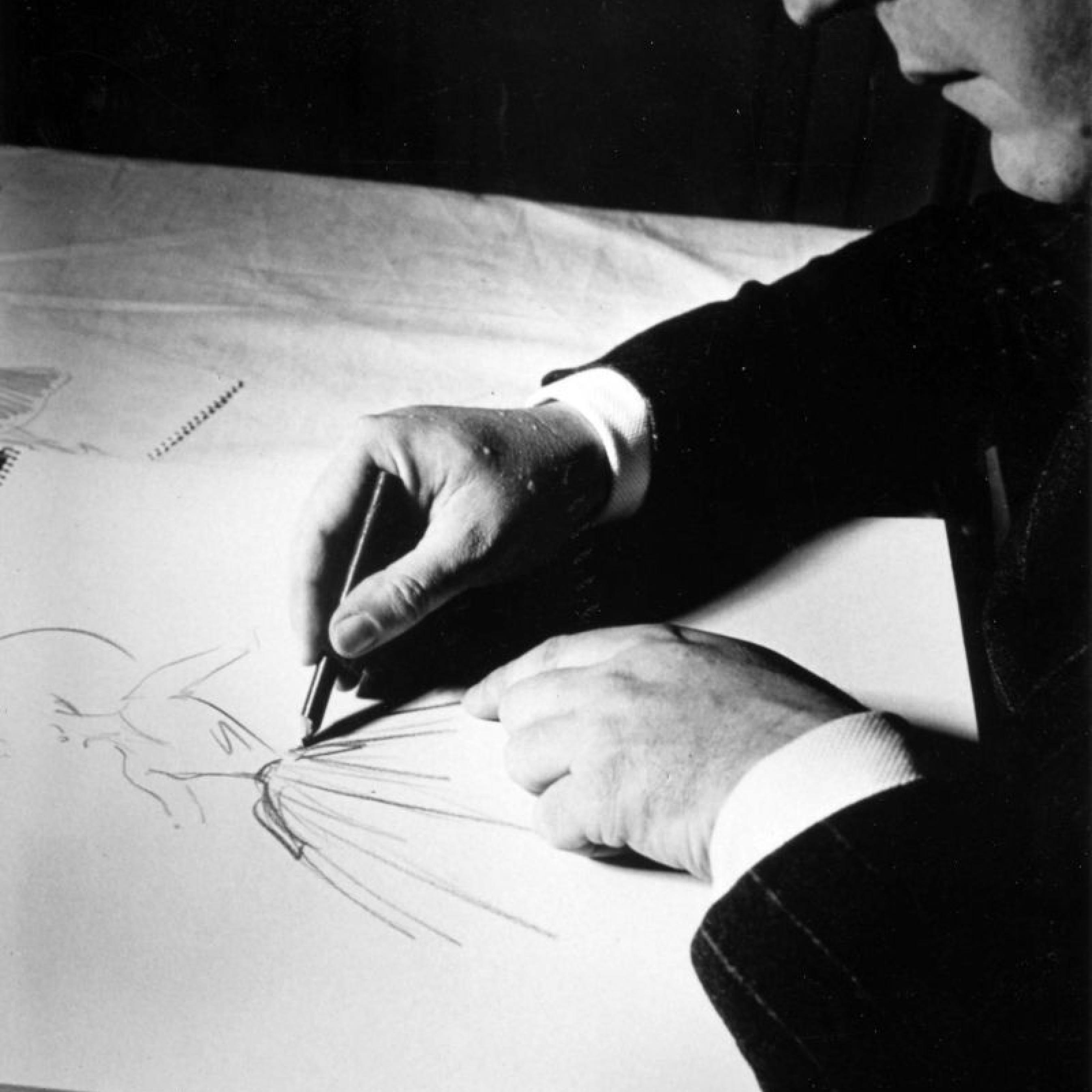
Hands of famous designer Christian Dior, as he makes a sketch. Credit Christian Dior Couture Linkedin.
So, who was Christian Dior? Born in Granville, Normandy, Dior was raised in a wealthy family before relocating to Paris in his youth. Though he studied political science at his parents’ urging, his true passion was art and design, leading him to open a small gallery in his twenties with family support. There, he exhibited works by leading modern artists, including Picasso, before the Great Depression forced its closure. He then turned to fashion illustration, selling sketches to sustain himself and eventually contributing to Figaro Illustré, establishing his early presence in the industry.
By the 1930s, Dior had begun working under Robert Piguet, where he received his first significant opportunity within a couture house. Under Piguet’s guidance, he developed a disciplined approach to silhouette and proportion. Dior later reflected that Piguet taught him “the virtues of simplicity through which true elegance must come,” a principle that would define his work in the years ahead. His career was interrupted by World War II, during which he briefly served in the French military before returning to civilian life. In 1941, he joined Lucien Lelong, contributing to the preservation of French couture during wartime alongside contemporaries such as Pierre Balmain. These formative experiences refined his technique and established the connections that would support his future success.
In 1946, with financing from textile tycoon Marcel Boussac, Dior founded his own house in Paris. The following year, he unveiled his debut collection, soon dubbed the “New Look,” characterized by cinched waists, voluminous skirts, and an unmistakable return to refined femininity. That same year, he introduced his first fragrance, Miss Dior, extending his vision beyond fashion into a complete expression of modern elegance. The House of Dior quickly became synonymous not merely with clothing, but with a fully realized luxury lifestyle.
Dior’s career was cut short in 1957 when he died unexpectedly at just 52. Yet within the span of a single decade, he irrevocably altered the course of fashion. His vision redefined postwar style, restoring structure and femininity while introducing a renewed sense of optimism in dress. At the same time, he established a house grounded in artistry, precision, and innovation. Through a meticulous command of silhouette and proportion, Dior elevated couture into an expression of both discipline and imagination. His enduring legacy resides not only in his designs, but in the new language of elegance he created, one that continues to shape the world of luxury today.
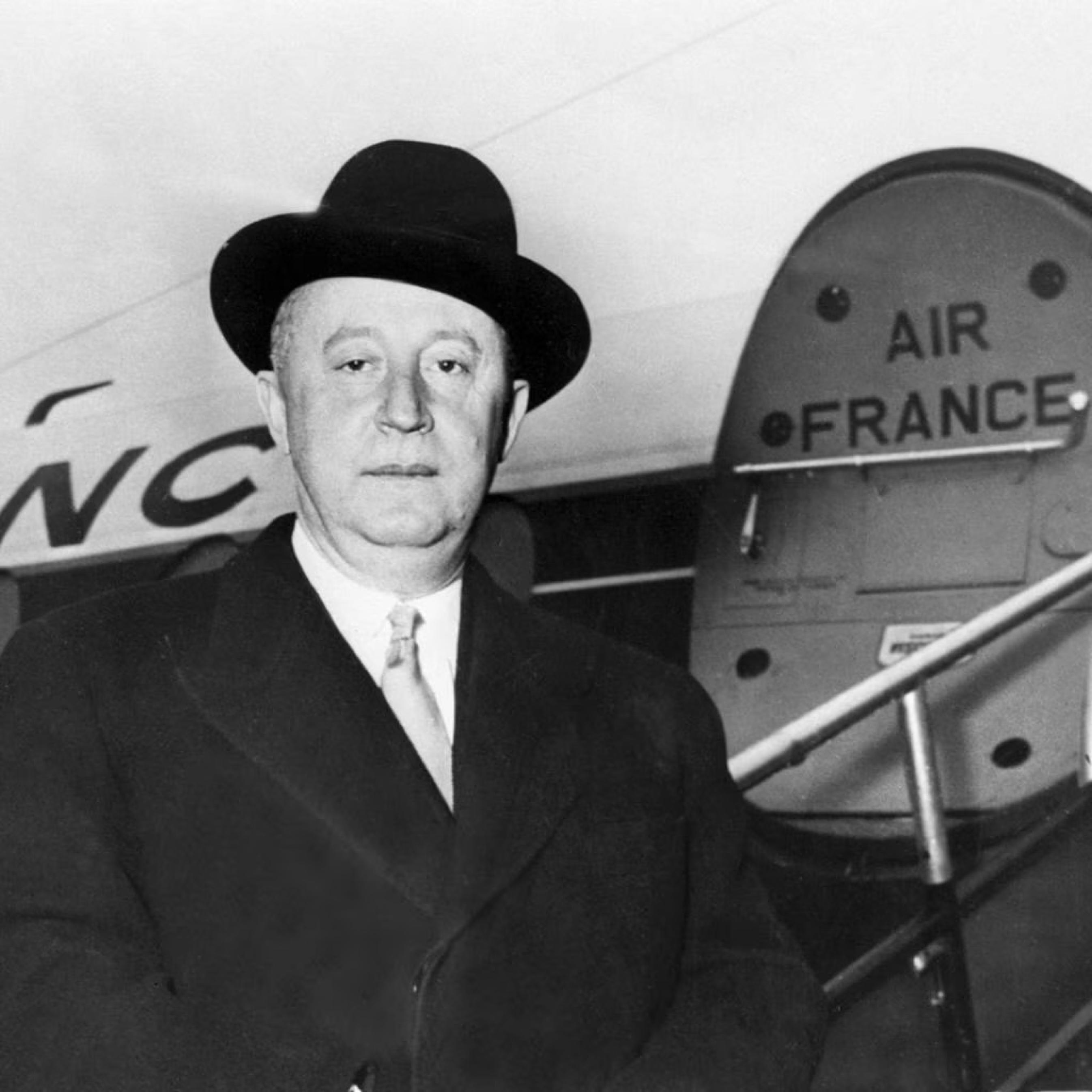
Christian Dior in front of an Air France plane before leaving Paris to Copenhagen, 1950. Credit Vogue Australia Christian Dior's life through images
In present, Dior stands at the forefront of contemporary couture while remaining deeply rooted in the vision of its founder. Iconic creations, from the Lady Dior Medium to the Classic Saddle Shoulder Bag and these Tortoiseshell Sunglasses, continue to reflect the house’s commitment to craftsmanship and sophistication.
Take it Beyond the Page and Experience it for Yourself:
• Dior
• Dior