

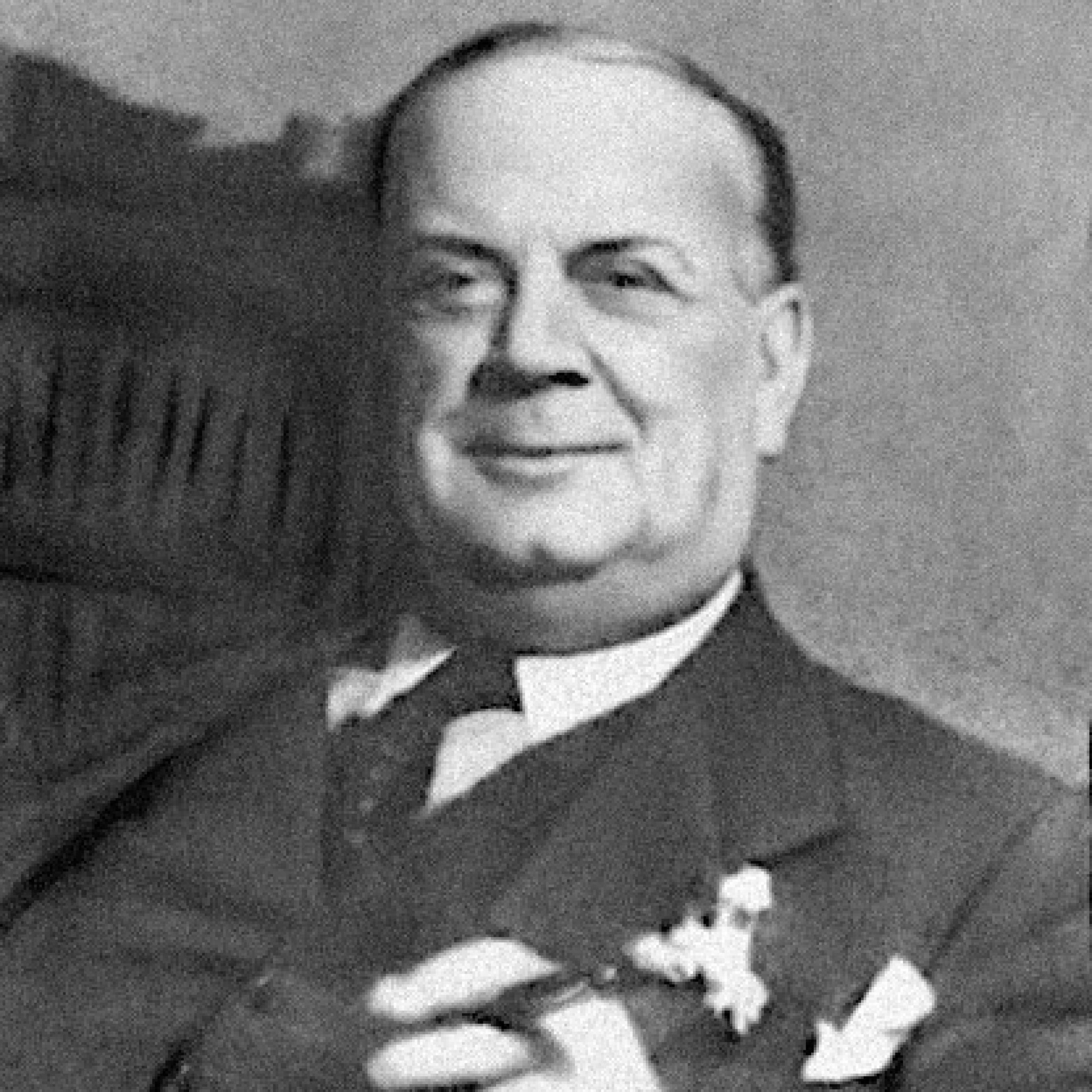
Guccio Gucci, 1940. Credit Wikipedia.
Pillars of Style: Gucci
"Quality is remembered long after the price is forgotten." - Aldo Gucci, son of Guccio, former Gucci Chairman
Gucci has long stood as a defining force in luxury craftsmanship and Italian design. So, who was Guccio Gucci? Born in Florence, Tuscany, Guccio was influenced early by his father, Gabriello, a skilled leather craftsman who instilled in him a respect for quality, material, and technique. As a young man, he traveled to London and worked at the prestigious Savoy Hotel as a lift boy and porter. There, he encountered the refined tastes of the international elite and closely observed their luggage and personal effects. The elegance of finely crafted travel goods, particularly pieces by makers such as H.J. Cave & Sons, sparked his enduring fascination with luxury leatherwork.
Returning to Florence in the early 1900s, Guccio married, raised a family, and refined his craft while working for established firms such as Franzi. These experiences led to the opening of his first shop on Via della Vigna Nuova in 1921, a location that had not yet acquired its present-day opulence, making it both understated and forward-looking. There, he established a workshop dedicated to finely crafted leather goods. His work was inspired by travel and equestrian traditions, with saddles, riding accessories, and travel bags forming the foundation of his offerings, and was defined by durability, function, and restrained elegance.
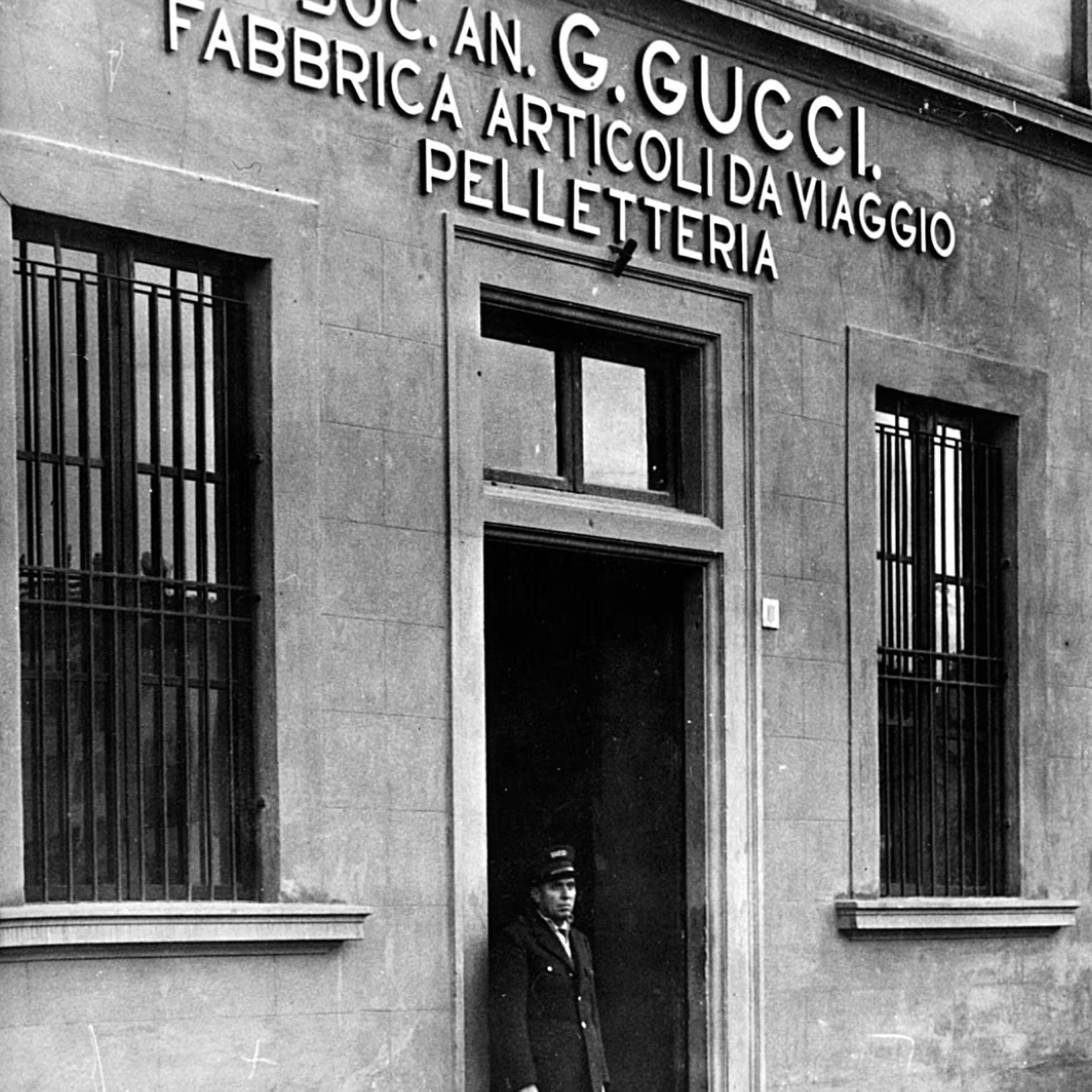
Gucci workshop, Lungarno Guicciardini 11, Florence, 1940s. Credit Gucci Archive
Material shortages in the 1930s prompted innovation, leading to the introduction of hemp canvas with a signature diamond pattern, establishing an early visual identity for the house. Guccio’s meticulous attention to detail is evident in signature details such as the iconic horsebit hardware, the green-red web stripe inspired by saddle girths, the interlocking G monogram, and the distinctive bamboo handle, an inspired solution born of material scarcity. Together, these elements formed a cohesive design language that balanced function with enduring recognizability.
As demand grew, his sons, Aldo, Vasco, and Rodolfo, joined the business and supported its expansion beyond Florence to Rome, Milan, and eventually New York. Despite this growth, and familial discord, the brand’s identity remained firmly anchored in Guccio’s original vision, a balance of craftsmanship, innovation, and aspirational lifestyle. By the time of his death in 1953, he had established not only a successful enterprise, but a lasting blueprint for modern luxury.
Today, Gucci’s global presence continues to reflect the same founding principles, rooted in craftsmanship, shaped by vision, and sustained by an unwavering understanding of luxury.
Today, Gucci’s global presence continues to reflect the same founding principles, rooted in craftsmanship, shaped by vision, and sustained by an unwavering understanding of luxury.
Examples of Gucci's classic style can be found in the New Bamboo Europe Exclusive Handbag, Four Coordinated Gucci Accessories, and the Unisex Travel Backpack.
Take it Beyond the Page and Experience it for Yourself:
• Gucci
• Gucci