

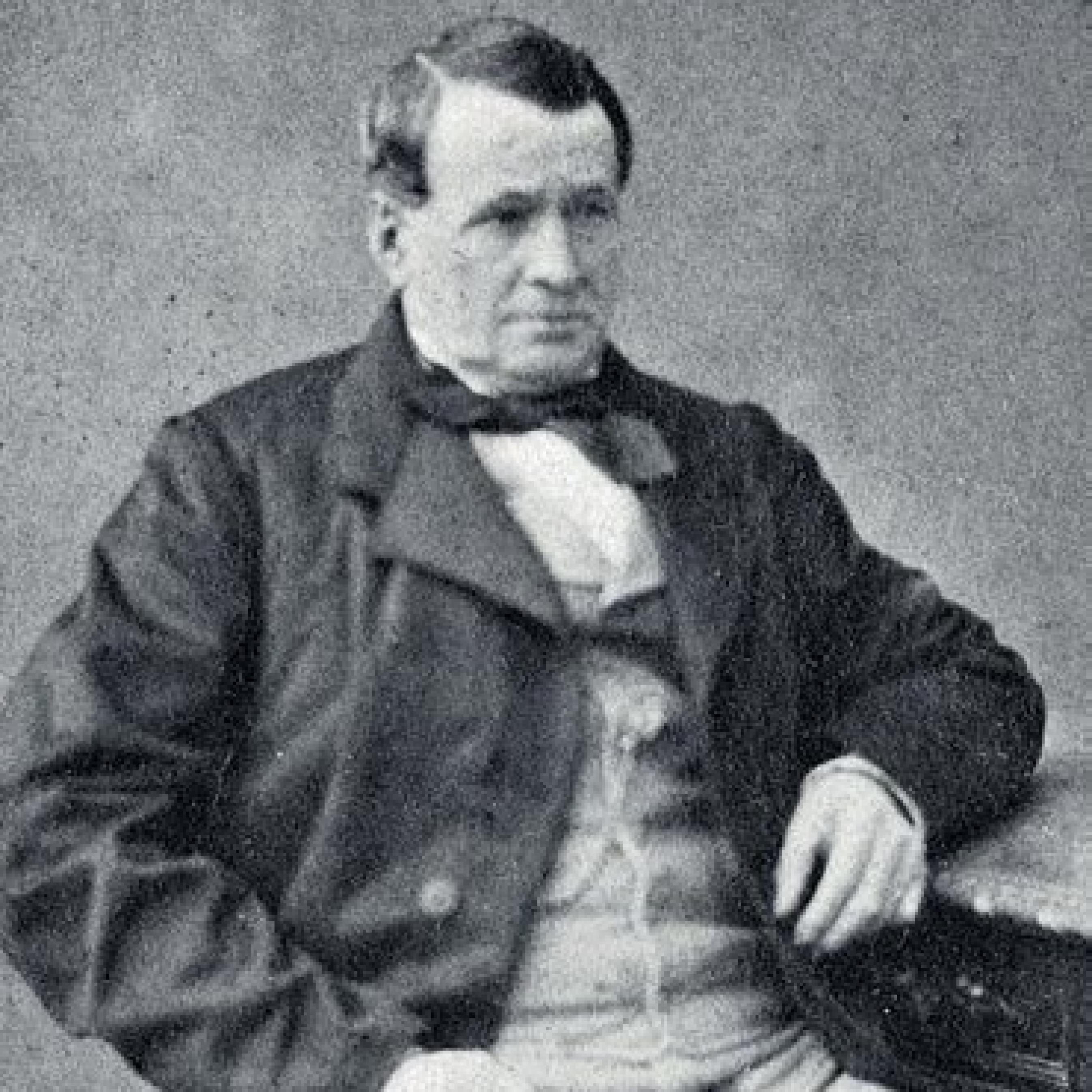
Thierry Hermès (1801-1878), founder of Hermès.
Pillars of Style: Hermès
"We will continue to make things the way the grandfathers of our grandfathers did." - Jean-Louis Dumas, direct descendant of Thierry Hermès and former CEO and artistic director of Hermès (1978–2006).
What has long distinguished Hermès from other fashion houses is its unwavering devotion to artisanal excellence and an origin story rooted not in couture, but in craftsmanship. Founded in Paris in 1837 by Thierry Hermès, the house first garnered acclaim for its exquisite saddlery and harnesses, prized by Europe’s elite for their precision, elegance, and enduring quality. What began as the work of a meticulous saddler would ultimately evolve into an enduring symbol of sophistication and restraint.
Who was Thierry Hermès? At just twenty, Thierry left his homeland, now part of Germany, and settled in Pont-Audemer, Normandy, a town celebrated for its mastery of leatherwork. There, he apprenticed as a saddler and harness maker, honing the exacting skill that would define his life’s work. By 1837, he established his Paris workshop, dedicating himself to the creation of finely crafted harnesses that balanced strength with refinement. His reputation quickly spread among aristocratic clientele, culminating in a prestigious award at the 1867 Paris Universal Exhibition, an achievement that elevated Hermès from respected craftsman to celebrated name.
Following his death in 1878, his son Charles-Émile Hermès assumed leadership and relocated the workshop to 24 Faubourg Saint-Honoré, an address that would become synonymous with the house itself. Under his direction, Hermès preserved its commitment to uncompromising quality while strengthening its standing among Europe’s elite.
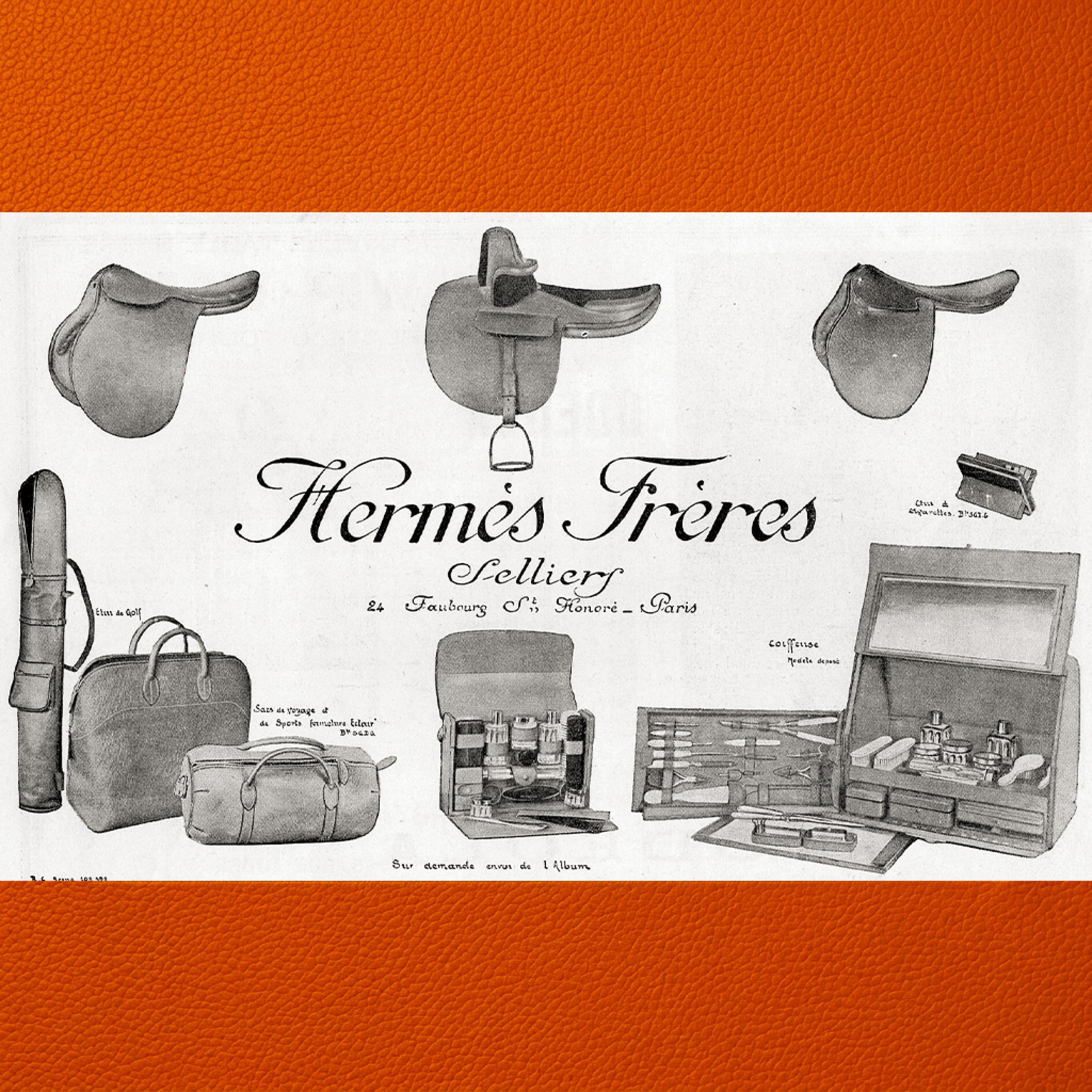
Hermès advertisement of 1923.
In 1902, Charles-Émile Hermès sons, Émile and Adolphe, carried the family legacy into a new era. As the age of horse-drawn travel began to wane, they guided the house through a thoughtful evolution, expanding beyond saddlery into finely crafted leather goods, including handbags, luggage, and small accessories. This natural progression preserved Hermès’s artisanal foundation while broadening its relevance for a changing clientele, where the house began to anticipate the needs of a more modern and mobile world.
From this same discipline and devotion to craftsmanship would later emerge the Birkin bag, an icon of rare exclusivity that reflects the house’s enduring commitment to function, restraint, and excellence. Beyond the Birkin, later decades saw thoughtful expansion into silversmithing and watchmaking allowing the Hermès of today to stand as the world’s most valuable luxury house, its worth built not on scale but on exclusivity, artistry, and integrity.
Recognized as the world’s most valuable fashion house by market capitalization, Hermès continues to set the benchmark for timeless luxury. From the Kelly Noir 35 Bag to its signature Silk Scarves and Enamel Bangles, each creation reflects a legacy of excellence that continues to inspire admiration across generations.
Take it Beyond the Page and Experience it for Yourself:
• Hermès
• Hermès