

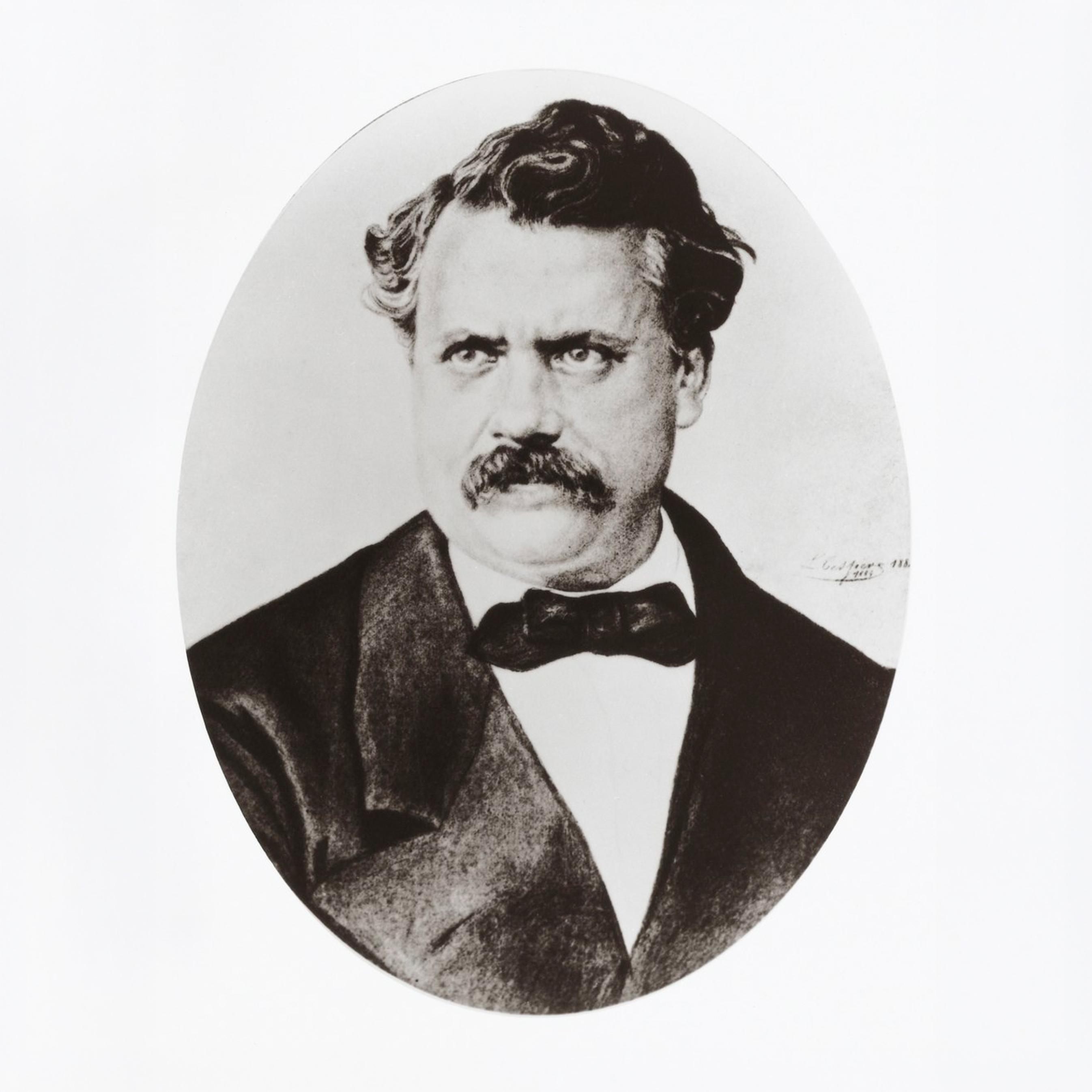
Portrait of Louis Vuitton (1821-1892), founder of the House of Vuitton
Pillars of Style: Louis Vuitton
"At the heart of Louis Vuitton lies a simple conviction: experiencing the beauty of the world comes with great responsibility — to preserve it from generation to generation." - Louis Vuitton, Foundational brand statement, louisvuitton.com
When speaking of resilience and enduring craftsmanship, few names command the same reverence as Louis Vuitton. Born in eastern France, Vuitton’s life was defined by determination, ingenuity, and an unwavering pursuit of excellence, qualities that would ultimately give rise to one of the world’s most enduring luxury houses.
Who was Louis Vuitton? At just sixteen, Louis Vuitton left his home and set out on foot for Paris, driven by a desire to build a new life. The journey, shaped by hardship and sustained through odd jobs along the way, marked the beginning of a remarkable ascent. Upon his arrival in 1837, he apprenticed under master box maker Romain Maréchal, whose workshop introduced him to the discipline and precision of fine craftsmanship. This formative period not only refined Vuitton’s technical skill but also ignited a lifelong dedication to innovation within the art of travel.
In 1854, after seventeen years under Maréchal’s guidance, Vuitton established his own workshop in Paris. Initially offering custom trunks and packing services, his early designs reflected the rounded silhouettes of the era. However, it was his revolutionary vision that would soon distinguish him. In 1858, Vuitton introduced the flat-top trunk, a design that was lightweight, airtight, and easily stackable. This innovation redefined luggage by blending practicality with refined elegance and responding to the evolving needs of modern travel. His work quickly attracted the patronage of Europe’s elite, securing his reputation as a master trunk maker.
By 1859, growing demand for his creations led to the opening of a larger workshop in Asnières. It was here that the house began to establish its visual identity, with the introduction of signature materials such as the Damier canvas, both a mark of distinction and a safeguard against imitation. Vuitton’s commitment to craftsmanship and forward-thinking design laid the foundation for a legacy that would endure well beyond his lifetime.
Following Louis Vuitton’s passing in 1896, his son Georges Vuitton assumed leadership of the house, honoring his father’s vision while advancing it through thoughtful innovation. That same year, Georges introduced the now iconic LV monogram canvas, conceived as both a tribute to his father and a means of protecting the brand’s integrity. Under his stewardship, the house continued to evolve, expanding its offerings while preserving the principles of craftsmanship and ingenuity that defined its origin. Together, Louis Vuitton and his son Georges established not only a brand, but a legacy rooted in resilience, shaped by innovation, and sustained through generations by an unwavering commitment to excellence.
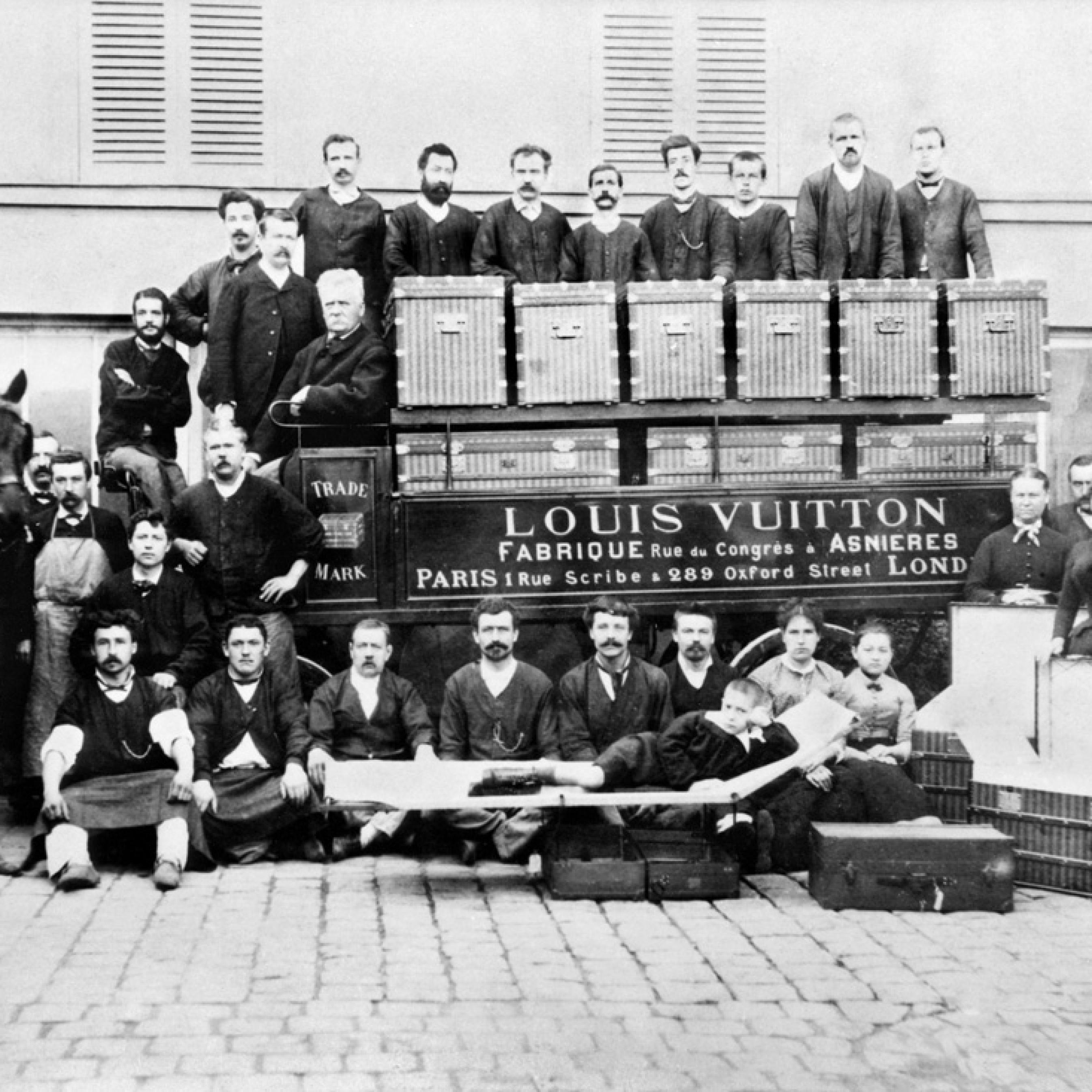
In the courtyard of the Asnières workshops, around 1888, Louis, Georges and Gaston L. Vuitton (sitting on a Bed trunk) © LOUIS VUITTON ARCHIVES
Present day, Louis Vuitton stands as a truly unmistakable brand of excellence within the world of modern luxury. Elegant pieces such as the Vintage Louis Vuitton Malle Armoire Wardrobe Trunk, Artsy Gm Handbag, Travel Bag Keepall Bandouliere 50, Monogram Canvas Neverfull MM with Pochette and Silk Shine Monogram Stole all embody the timeless sophistication of Louis Vuitton’s iconic pattern, a design that has been admired and celebrated around the world for generations.
Related Stories:
French or Fake?
Take it Beyond the Page and Experience it for Yourself:
• Louis Vuitton
French or Fake?
Take it Beyond the Page and Experience it for Yourself:
• Louis Vuitton