

Timeless Lines, Evolving Forms: Modern vs. Contemporary
What is the difference between Modern and Contemporary? Modern and Contemporary art and design are often discussed together, yet each belongs to a distinct moment in history. Modernism refers to the groundbreaking movements of the late 19th through mid-20th centuries, while Contemporary reflects the continually evolving practices and perspectives of the present day. Each offers its own lens through which to consider innovation, expression, and the changing role of art in daily life.
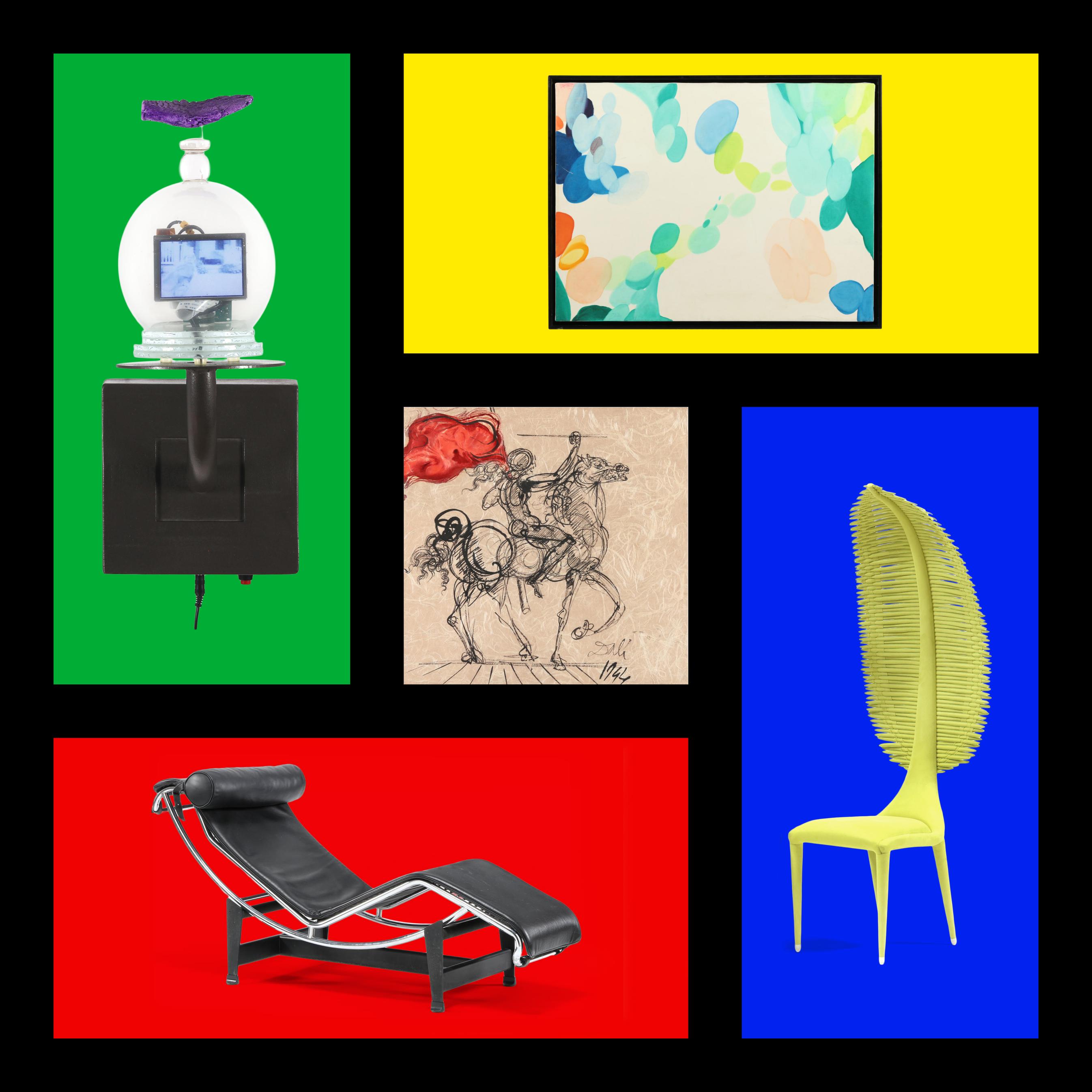
Modern Art and Furniture emerged as a quiet rebellion, breaking from tradition with bold ideas that reshaped how people saw and lived with design. Artists and designers alike embraced individuality and experimentation, challenging established rules while embracing abstraction, individual expression, and bold new visions. Early Modern artists often depicted scenes from life with attention to light and atmosphere, while later developments moved more fully into abstraction through dynamic shapes, vibrant colors, and imaginative forms. Artists such as Chagall, Picasso, Matisse, and Pollock brought emotional depth and expressive freedom to the forefront, inviting viewers to engage with art in fresh and lasting ways. Works such as Alice Baber’s Wayward Swing and Salvador Dalí's Le Cavalier de l'Apocalypse both capture this spirit beautifully, with bold contrasts, rich texture, and lyrical vibrancy in different formats.
Mirroring the artistic spirit of its era, Modern furniture transformed everyday objects into expressions of refined simplicity and purpose. Visionary designers like Marcel Breuer, Ludwig Mies van der Rohe, and Le Corbusier broke from tradition, pioneering the use of forward-thinking materials such as metal, leather, and glass. Their work championed clean lines, functional beauty, and structural honesty, reminding the world that restraint can be deeply expressive. Le Corbusier’s LC4 Lounge Chair, with its seamless blend of comfort and sculptural form, endures as a timeless symbol of early modernist design.
Building on modern foundations, Contemporary Art challenges the definition of art itself and reflects the ideas, cultural landscapes, and innovations of today. Since the mid-20th century, artists have expanded the field through recycled materials, digital media, large-scale sculpture, street art, glass, and traditional painting infused with current themes. A work that demonstrates transcending conventional limits can be found with Tim Tate's I Dream of Flying. Comprised of blown and cast glass, electronic components, and an original looped video, this work draws viewers in through its dynamic interplay of movement, responsive electronics, and intriguing glass dome.
Like Modern design, Contemporary Furniture celebrates clarity of form, purposeful simplicity, and versatility, while also distinguishing itself through bold expression and sustainability. Designers such as Kenneth Cobonpue exemplify this balance through iconic creations like this Pair of Zaza Chairs. Sculptural and visually arresting, these pieces are rendered in a vibrant lime green that immediately commands attention. Their minimalist seats are elevated by soaring, leaf like backs with finely ribbed detailing, creating a striking balance of organic elegance and contemporary design, furniture that feels as much like art as it does function.
In the end, both Modern and Contemporary works are united by a shared spirit of innovation. Yet, while Modern design draws from the revolutionary ideas of the past, Contemporary work remains fluid, constantly adapting and evolving to reflect the world as it is today.
Explore Related Stories:
• A Studio Visit with Ena Swansea
• Contemporary Art For All - A Legendary Collaboration
• Stories Within The Pilloff Collection
• Gallery Walkthrough: Modern & Contemporary Auction
• Modern & Contemporary Gallery Walkthrough
• Gallery Walkthrough with Luke Newbold
• Special Feature with Lauren Sanford
• Fall Modern & Contemporary Auction Walkthrough
• Spring Modern Art & Design Walkthrough
• A Studio Visit with Ena Swansea
• Contemporary Art For All - A Legendary Collaboration
• Stories Within The Pilloff Collection
• Gallery Walkthrough: Modern & Contemporary Auction
• Modern & Contemporary Gallery Walkthrough
• Gallery Walkthrough with Luke Newbold
• Special Feature with Lauren Sanford
• Fall Modern & Contemporary Auction Walkthrough
• Spring Modern Art & Design Walkthrough
Take it Beyond the Page and Experience it for Yourself:
• North Carolina Museum of Art
• North Carolina Museum of Art