
Lot 5054
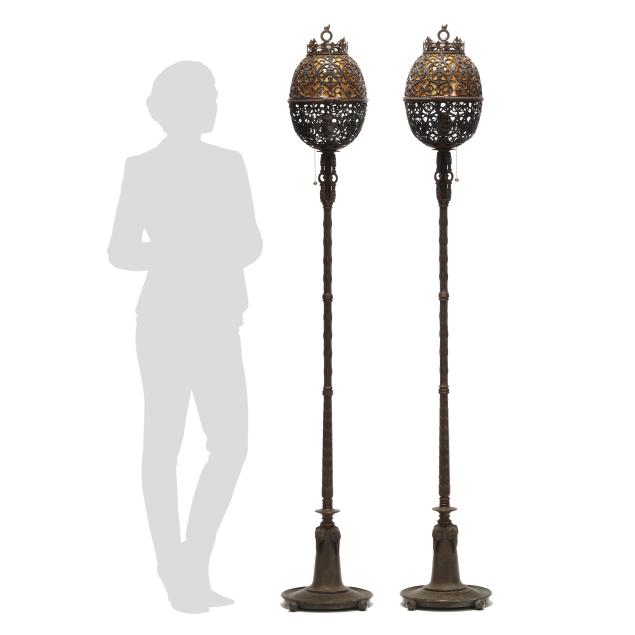
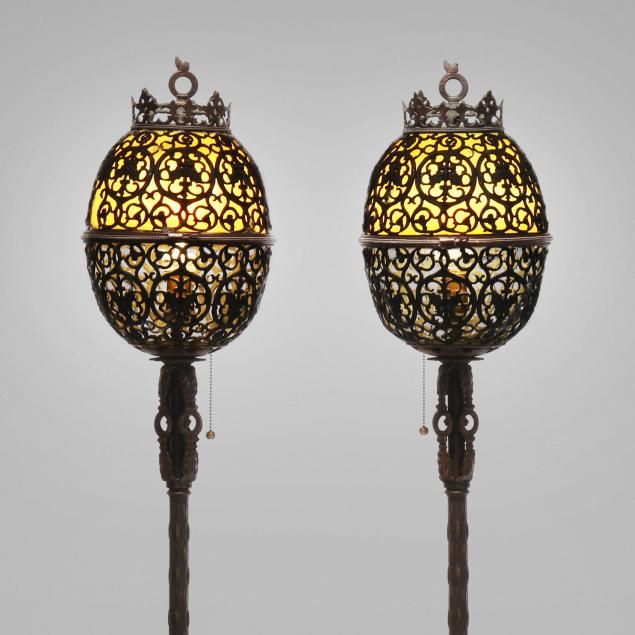
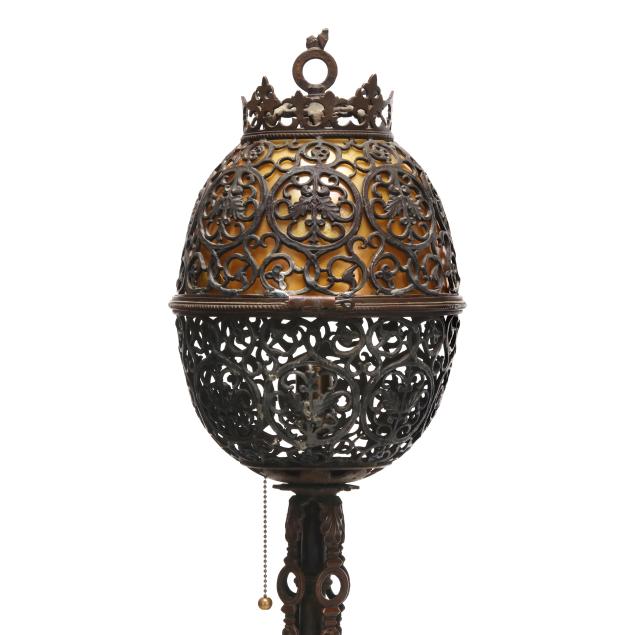
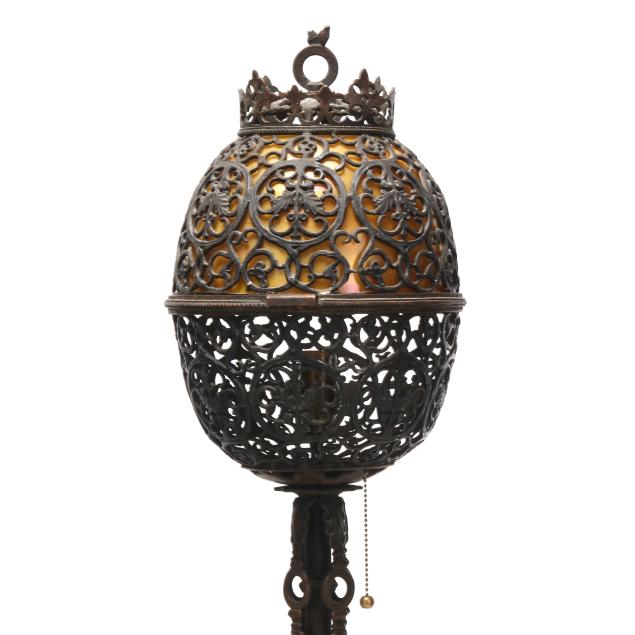
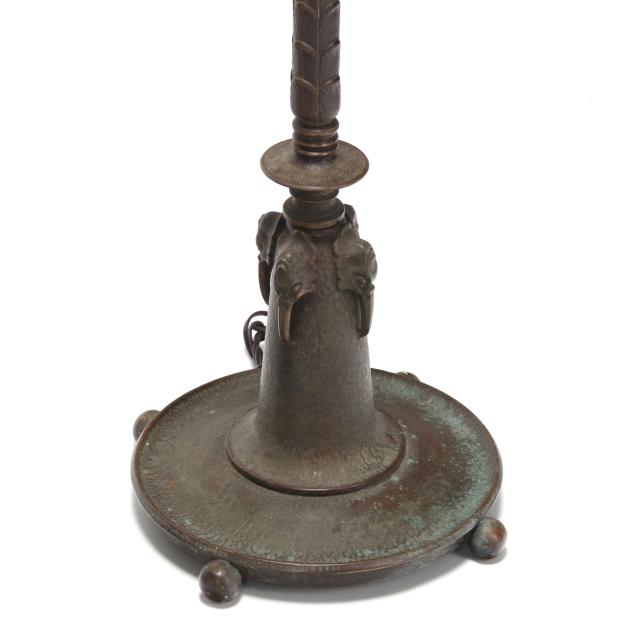
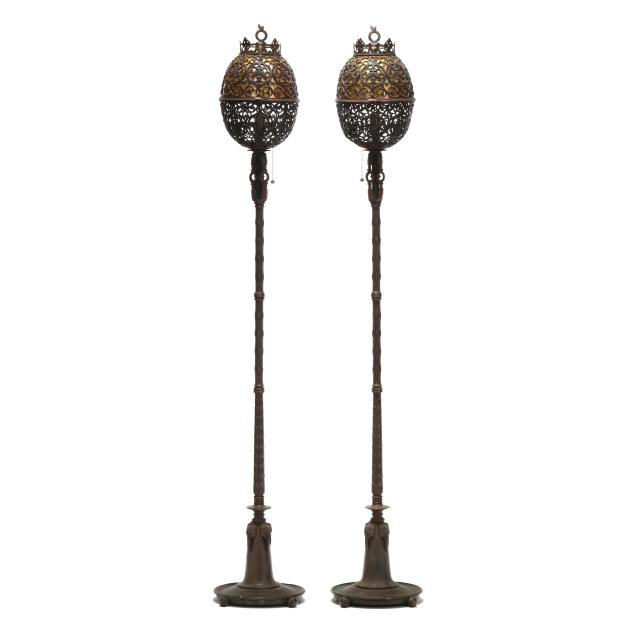
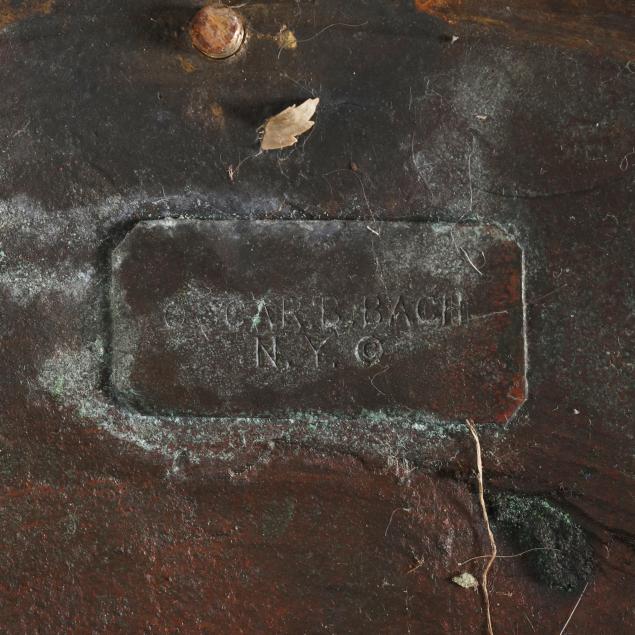
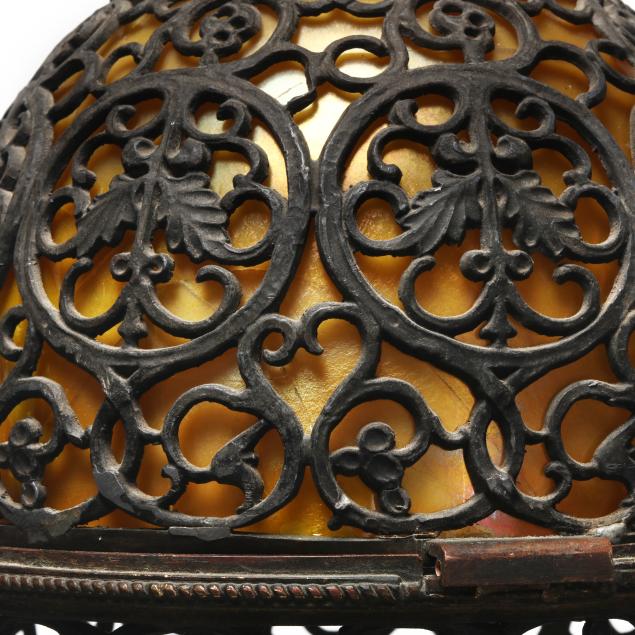
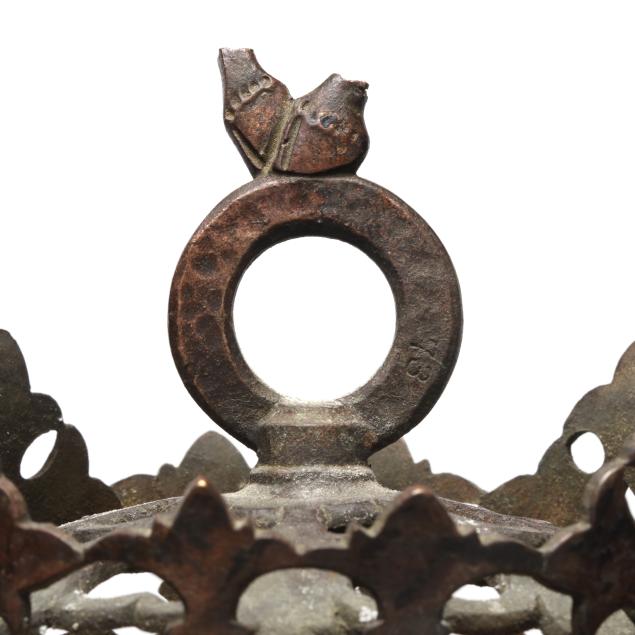
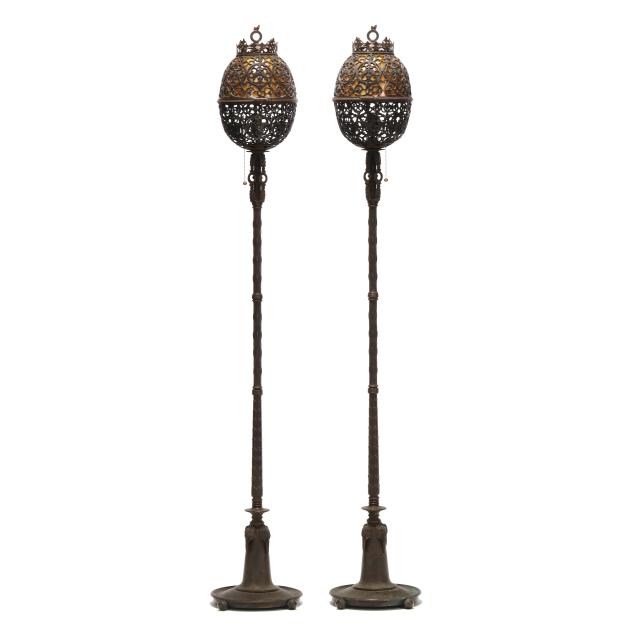
Oscar Bruno Bach (German/American, 1884-1957), Pair of Bronze Torchiere Floor Lamps
Explore more items like this one.
Visit our Decorative Arts Department Decorative Arts
Lot Details & Additional Photographs
72 x 9 x 9 in.
For a similar example, see Christie's Live Auction 1979, Lot 246, March 26, 2008, 20th Century Decorative Art & Design including a Private Collection of European Arts & Crafts.
German-born Oscar Bach was one of the most talented and commercially successful metalworkers in America during the first half of the twentieth century. His oeuvre ranges from small decorative objects to grand architectural elements, and his varied designs reference Arts and Crafts, Gothic, Renaissance and Baroque Revival, as well as Art Deco styles. After studying and working in Europe and winning the Grand Prize at the World’s Exposition in Turin for a bed he designed for Kaiser Wilhelm II in 1911, Bach moved to New York and opened a metal design studio with his brother Max. Bach exhibited his work routinely at The Metropolitan Museum’s industrial art exhibitions as well as at other museums. The Architectural League of New York awarded him a medal of honor for design and craftsmanship in industrial art in 1926, and he received countless commissions for domestic and public architectural projects including the Woolworth Building, Riverside Church, Toledo Museum of Art, Temple Emanu-El, Cranbrook School, the Chrysler Building, and Radio City Music Hall. Bach successfully retailed his metalwork throughout the United States through department stores such as Manhattan’s B. Altman, Joseph Horne in Pittsburgh, and Toledo's Forster-Smith. Many prominent homes and public buildings across the United States featured Bach’s metalwork, and his designs helped define taste and style for his era.
Bio courtesy of the Metropolitan Museum of Art.
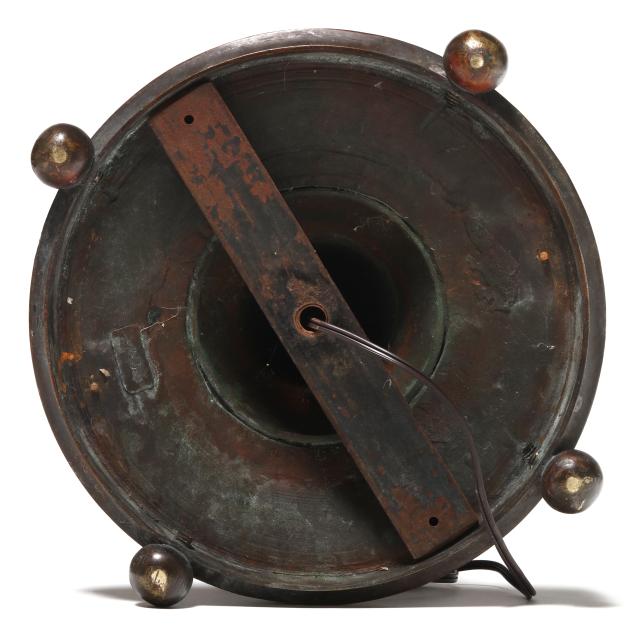
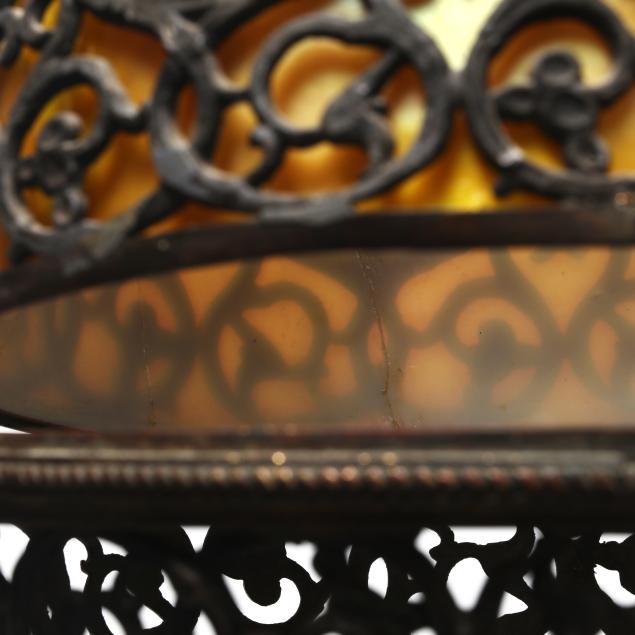
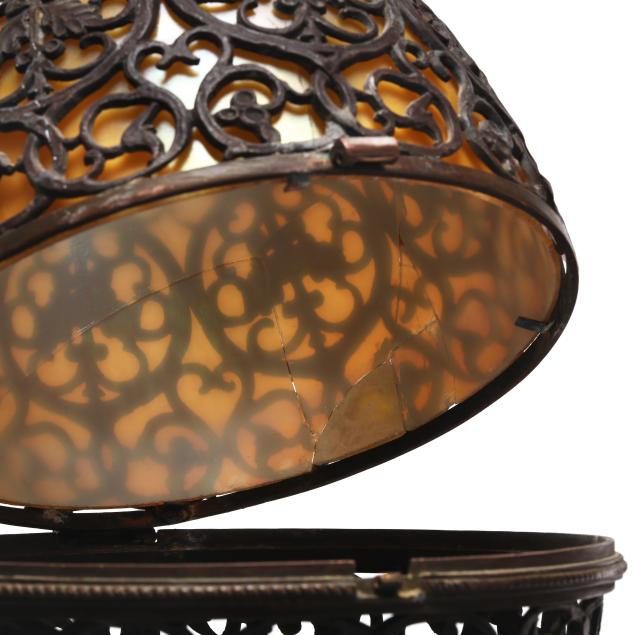
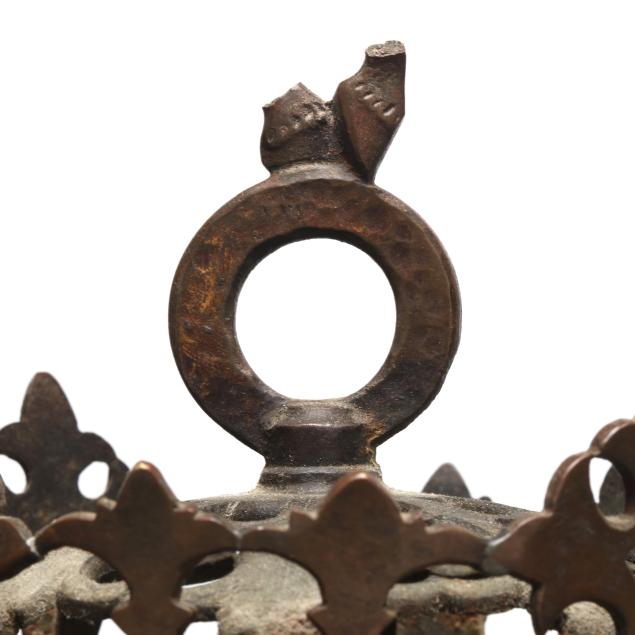
Finials with loss; scattered cracks and repairs to the remaining interior glass; lacking lower glass; rubbing and some oxidation verdigris to the patina; later wiring and sockets.