
Lot 6062
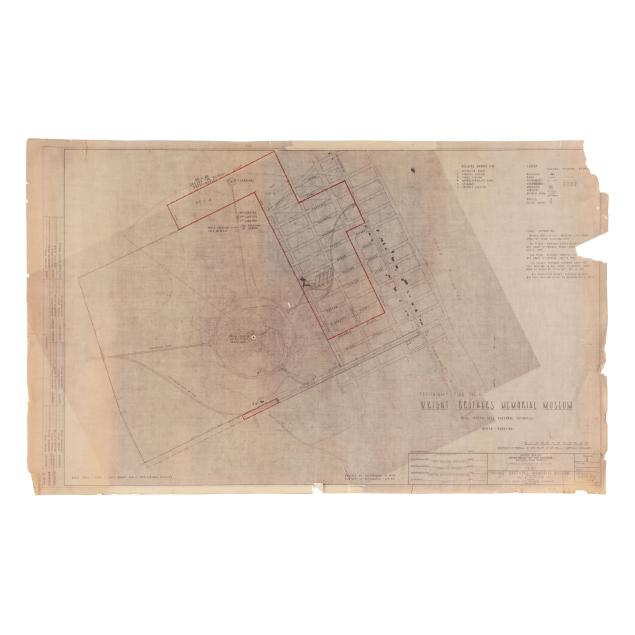
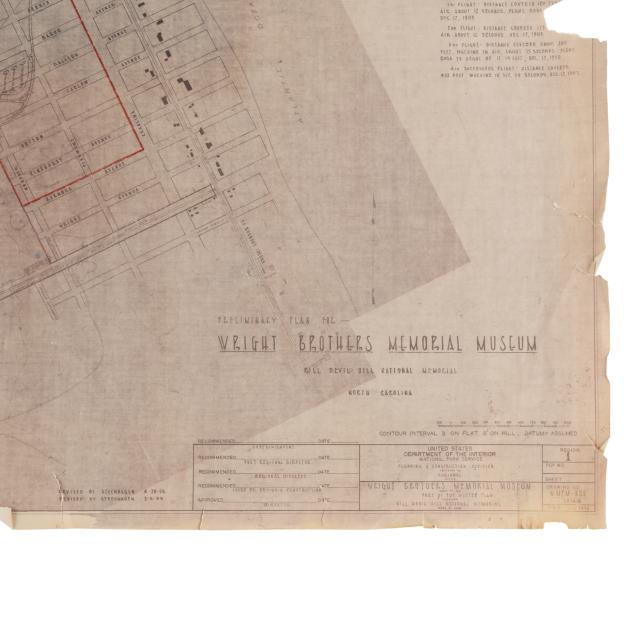
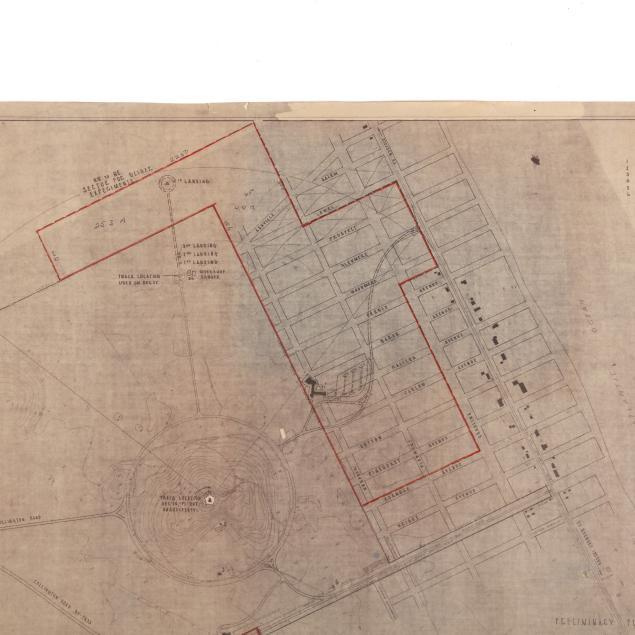
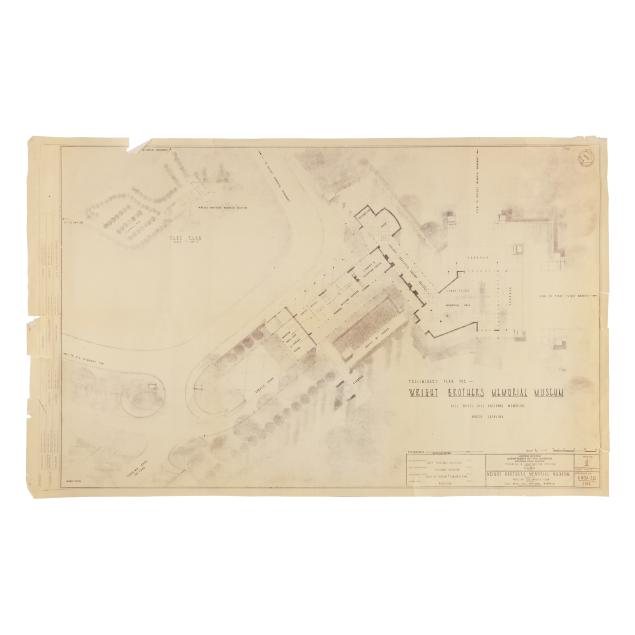
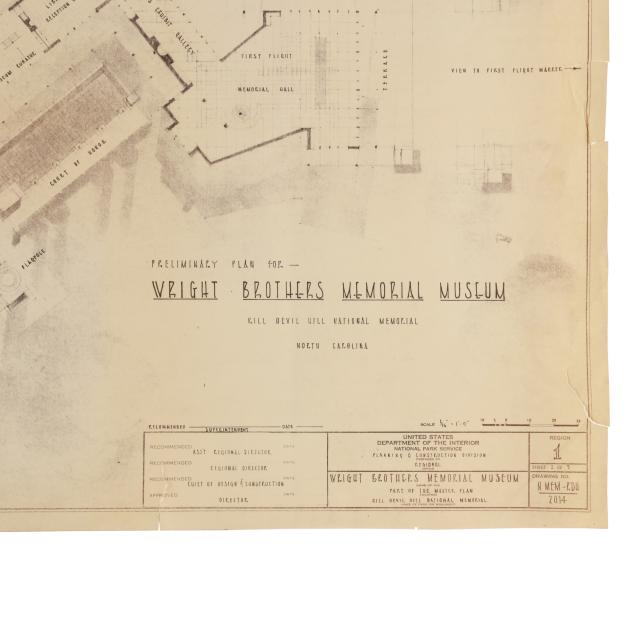
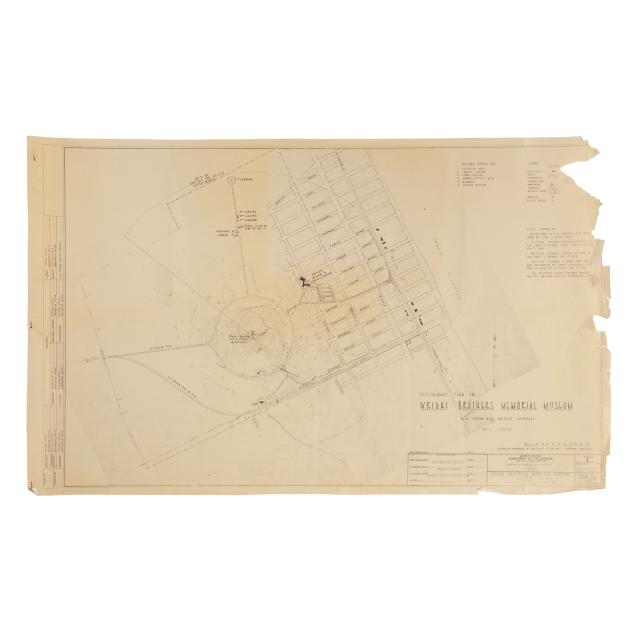
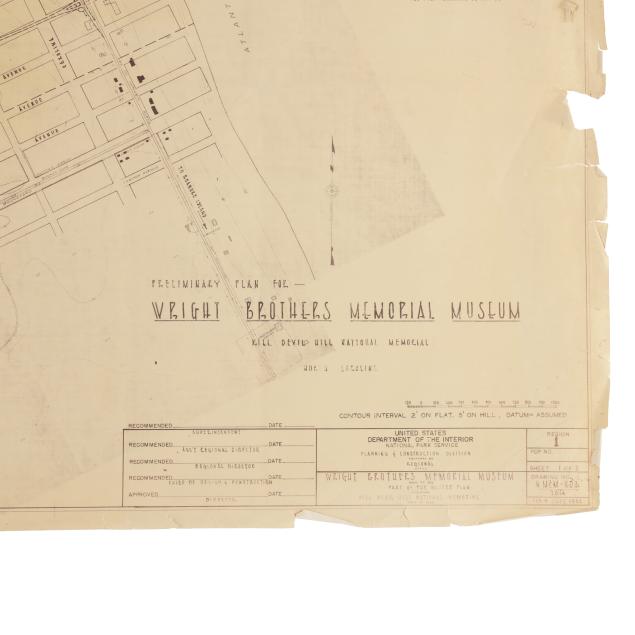
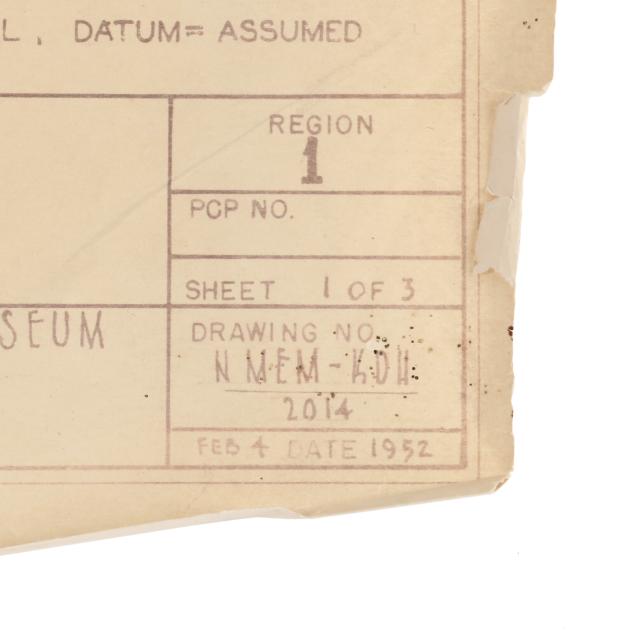
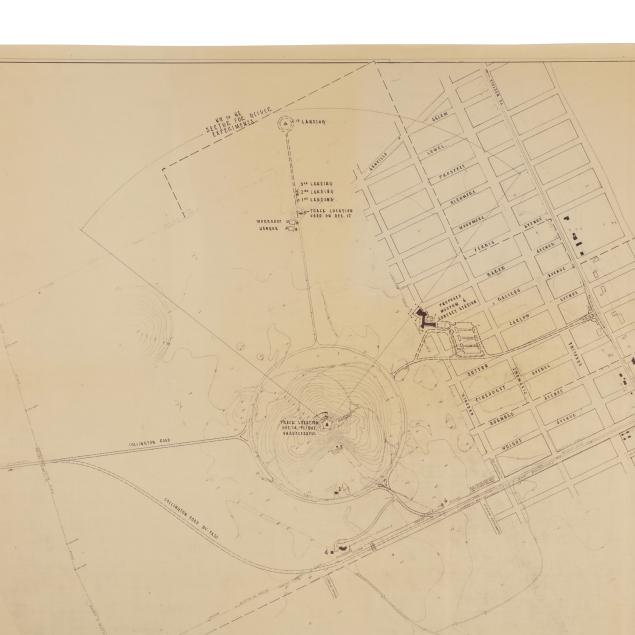
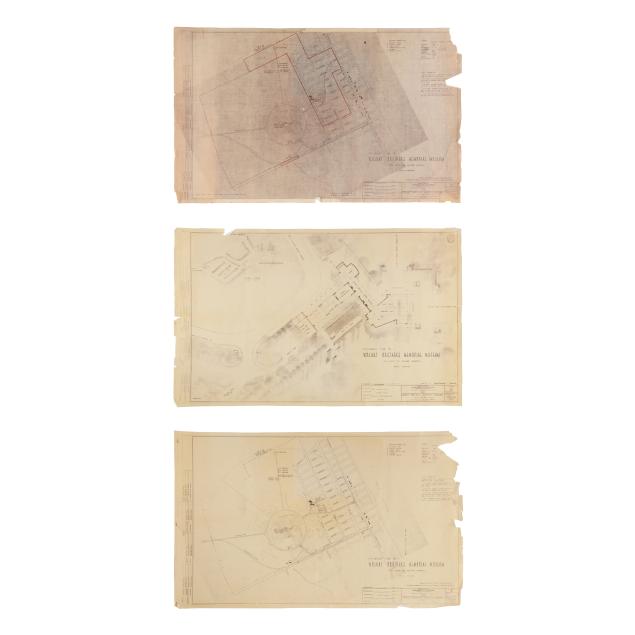
Preliminary Plans for Wright Brothers Memorial Museum
Explore more items like this one.
Visit our Historical Department Historical
Lot Details & Additional Photographs
Each sheet approximately 21 3/4 x 35 3/4 in.
From a Private Outer Banks Collection
Per the consignor, previously part of the collection of Outer Banks historian, author, and realtor David Stick (1919-2009).
The Wright Brothers National Memorial Visitor Center, designated a National Historic Landmark in 2001, grew from an initial idea to build a museum at the memorial in the 1950s. David Stick, a member of the Kill Devil Hills Memorial Society, established the Wright Memorial Museum Committee in 1952 with the hopes of building an aviation museum and the National Park Service soon drew up preliminary plans. Although funding could not be obtained for the original idea of a large and more elaborate museum, a smaller scale visitor center focusing specifically on the Wright Brothers' efforts in the Outer Banks was eventually built and opened to the public in 1960.
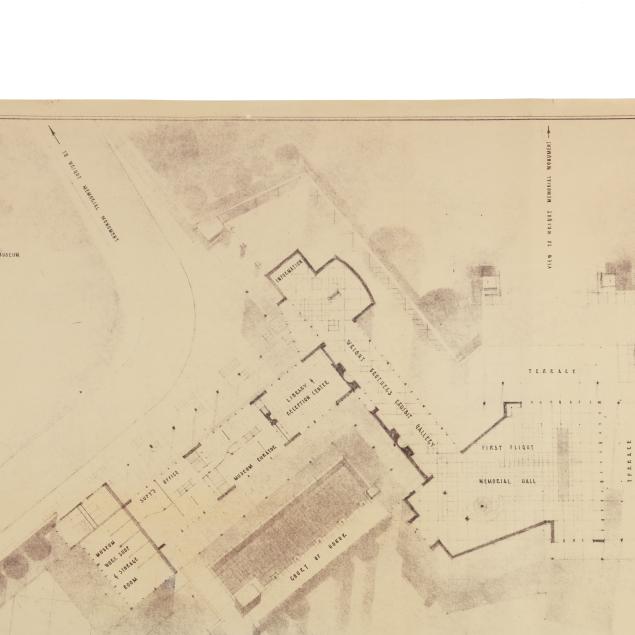
In this lot, sheet 2 depicts the proposed aspects of the museum, which as the NPS states, "included a 'court of honor,' 'Wright brothers exhibit area,' 'library and reception center,' and funnel-shaped 'first flight memorial hall' with outdoor terraces facing the view of the first flight marker to the north and Wright memorial marker to the west."
(https://www.nps.gov/parkhistory/online_books/allaback/vc2.htm)
Sheets with fold lines, mostly light creasing, and an occasional minor mark; the margins with small holes and rust marks from staples, and tears, chips, and losses that have frequent though overall minor impacts on the plans themselves; the revised sheet with toning to edges and verso and a rust mark from a previous paperclip.