
Lot 8087
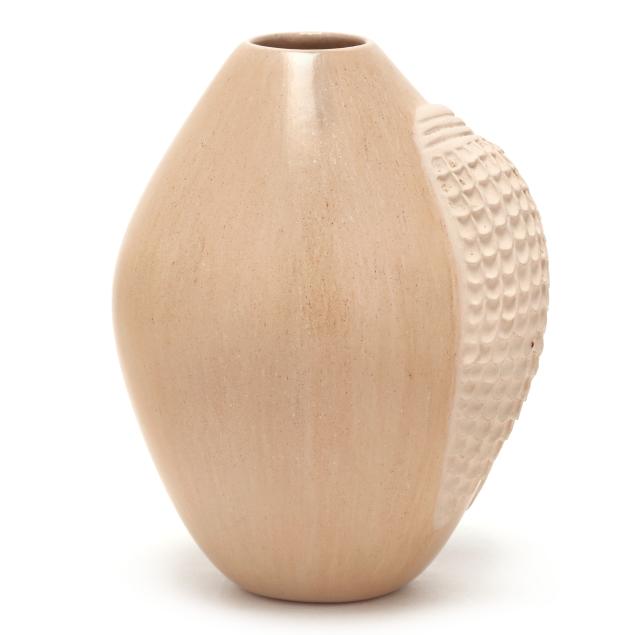
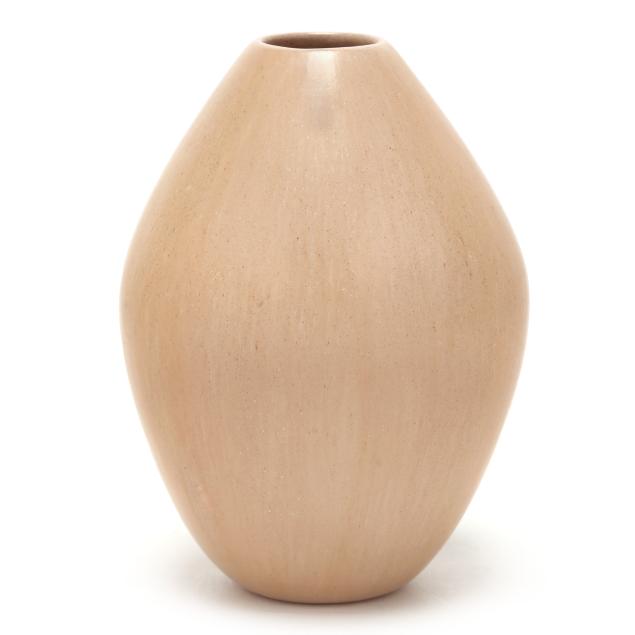
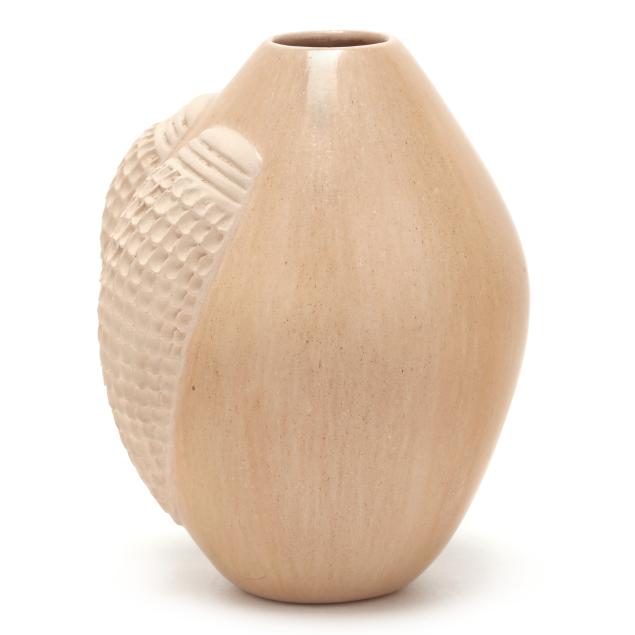
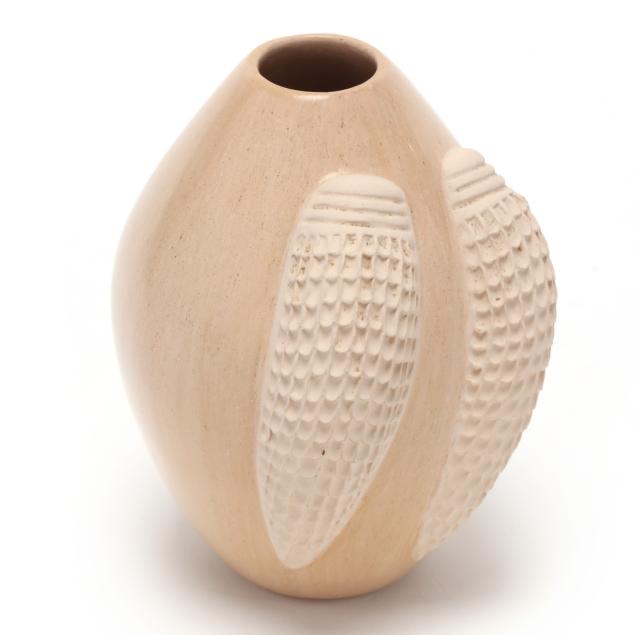
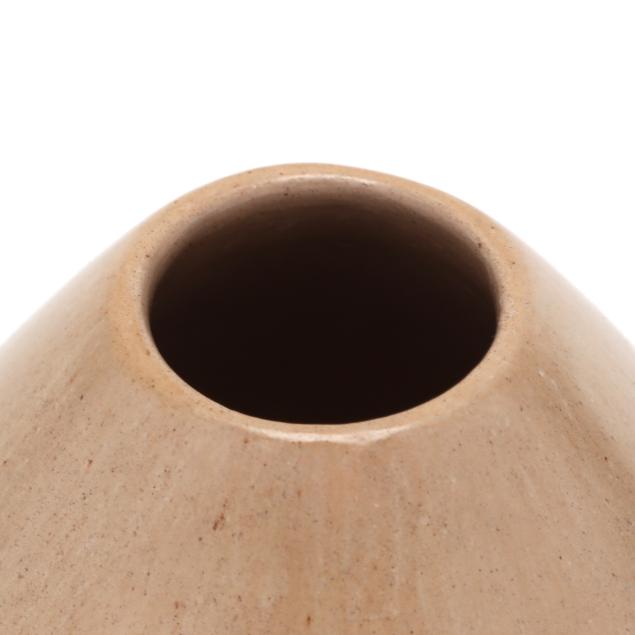
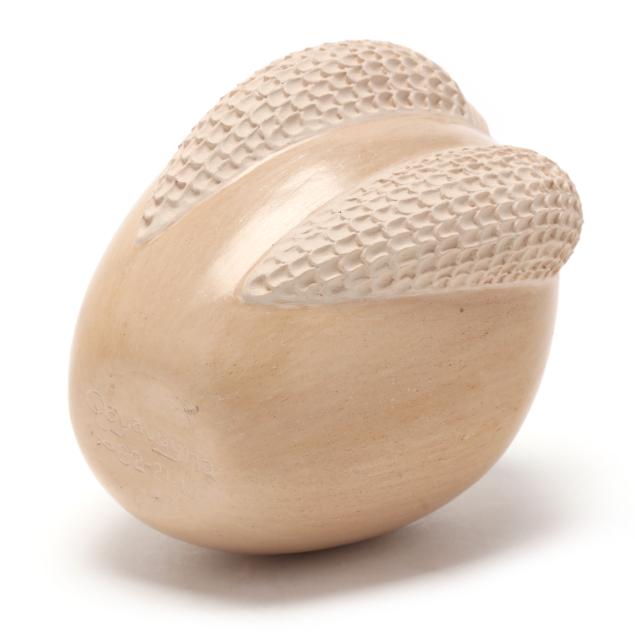
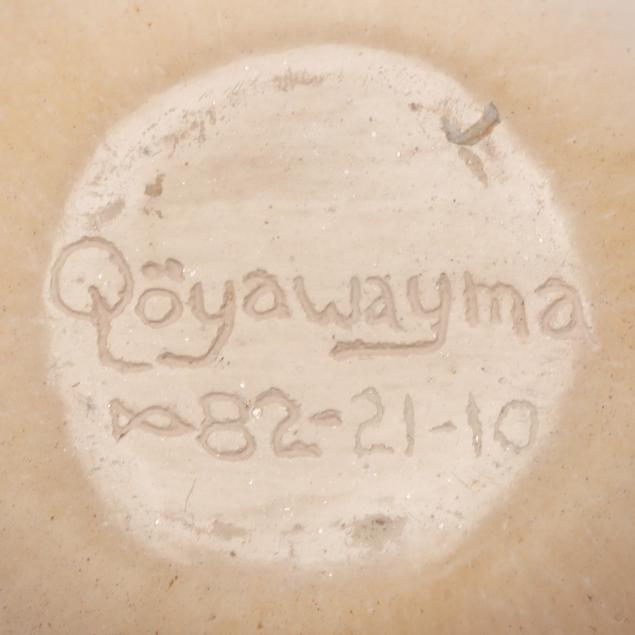
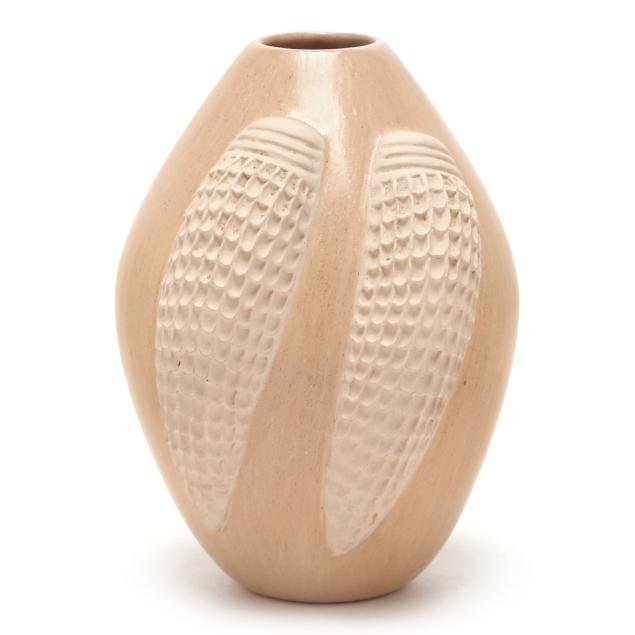
Alfred (Al) H. Qöyawayma (b. 1938), Buffware Seed Jar
Explore more items like this one.
Visit our Historical Department Historical
Lot Details & Additional Photographs
4 1/2 in.
Private Collection, Pittsboro, North Carolina
Al's artistry was significantly influenced by his aunt, Polingaysi Qoyawayma (also known as Elizabeth Q. White), who instilled in him the aesthetics and philosophy of their ancient pottery heritage. His work also draws inspiration from his relative Charles Loloma, a renowned innovator in ceramics and jewelry, and his father, Poliyumptewa, a talented painter. Both Charles and Elizabeth impressed on Al to blend tradition with contemporary expression.
Deeply rooted in Native American traditions, his creations embody a rich heritage of craftsmanship and storytelling. As a descendant of the Coyote Clan, Qoyawayma carries forward the Sikyatki tradition of ceramics, which dates back to 1400 A.D. and earlier. The Sikyatki tradition inspired the creative style of Nampeyo (Hano-Tewa) and shaped today's Hopi-Tewa pottery traditions.
“My style tends towards that of a minimalist. I use the repousse’ technique on native clay to produce pieces of pristine, fluid form, with high sculptural relief. The finish is stone polished producing the hue and shadow of high desert landscape, and softness to the touch. I use many motifs such as ancient architecture, dancing figures, and icons such as corn, animal and feather designs. My clays are from Hopi. Through study of our ancient Sikyatki ceramics I’ve been able to closely reproduce an original clay. Using this clay and traditional coiling techniques allows me to construct complex, thin, lightweight forms.”
Good condition.