
Lot 8088
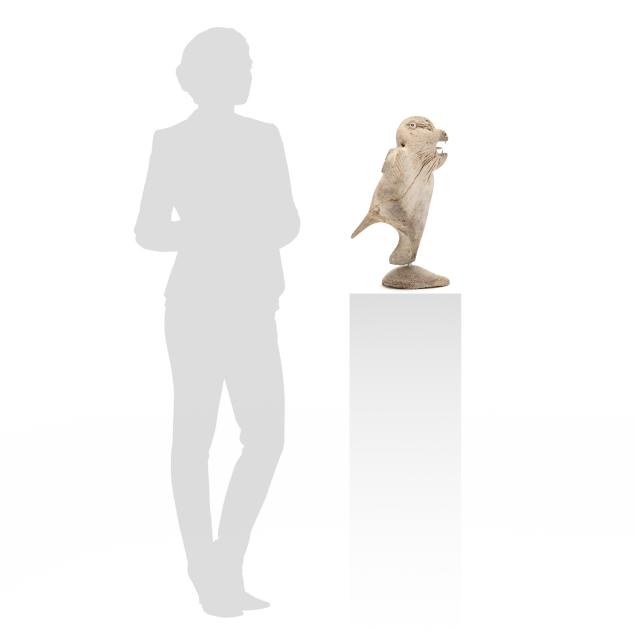
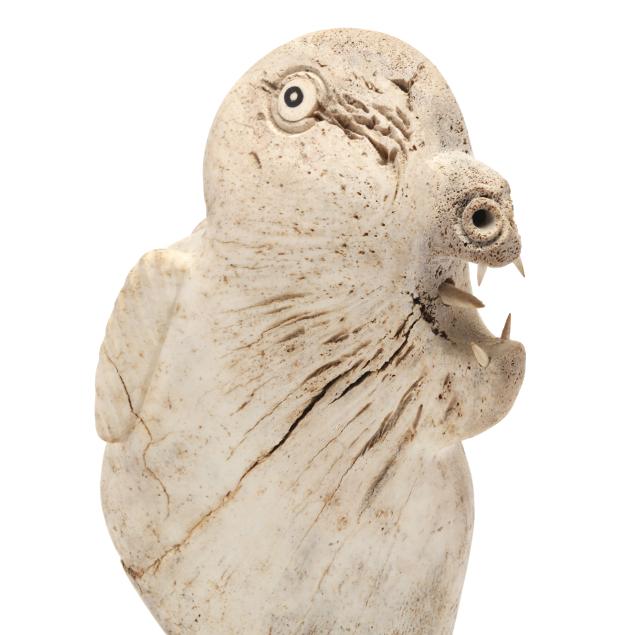
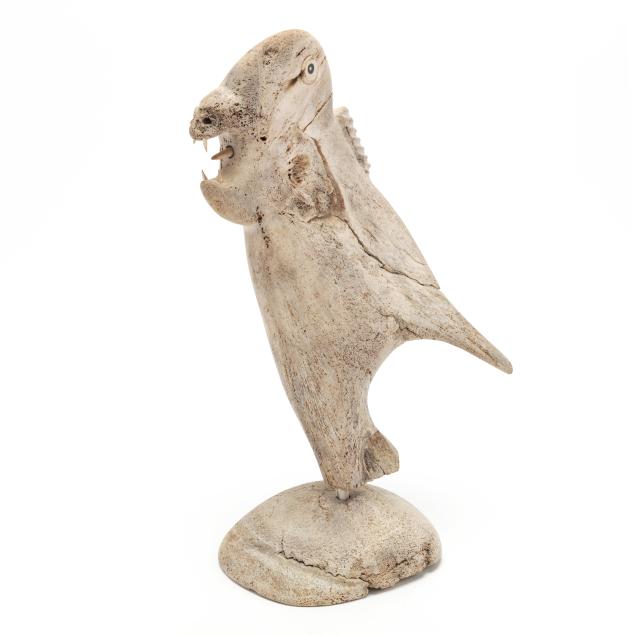
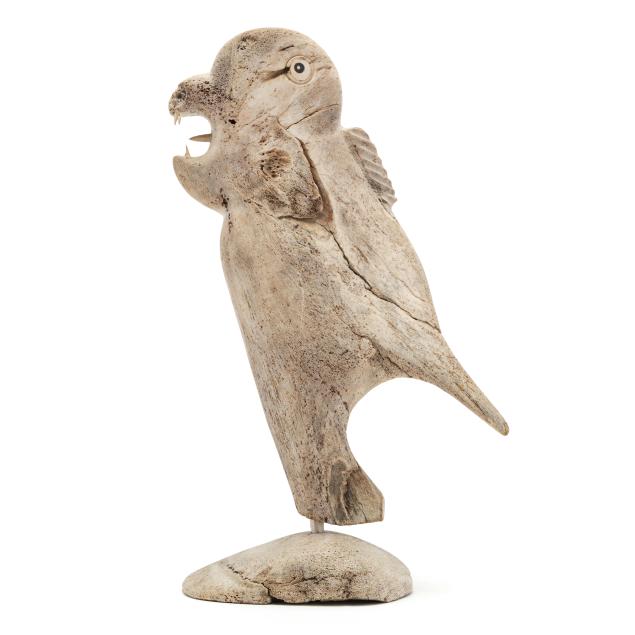
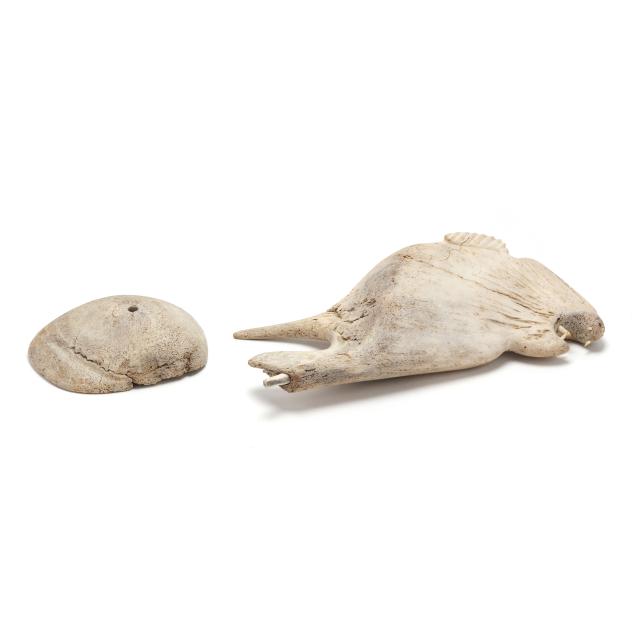
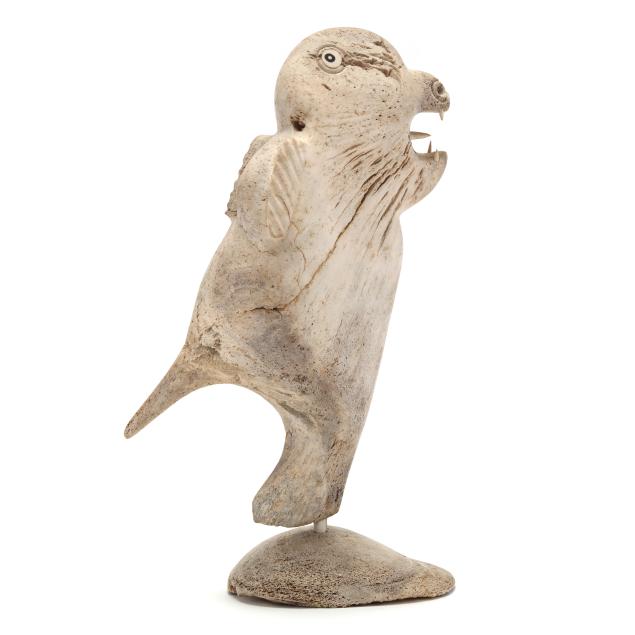
Karoo (Mungnelli) Ashevak (Inuit, 1940-1974), Spirit Figure
Explore more items like this one.
Visit our Historical Department Historical
Lot Details & Additional Photographs
19 1/4 x 9 1/2 x 6 1/2 in.
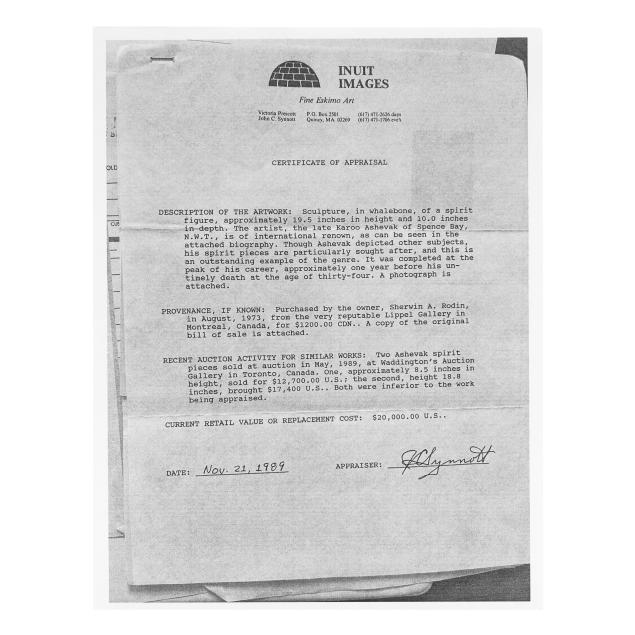
Private Collection, Pittsboro, North Carolina
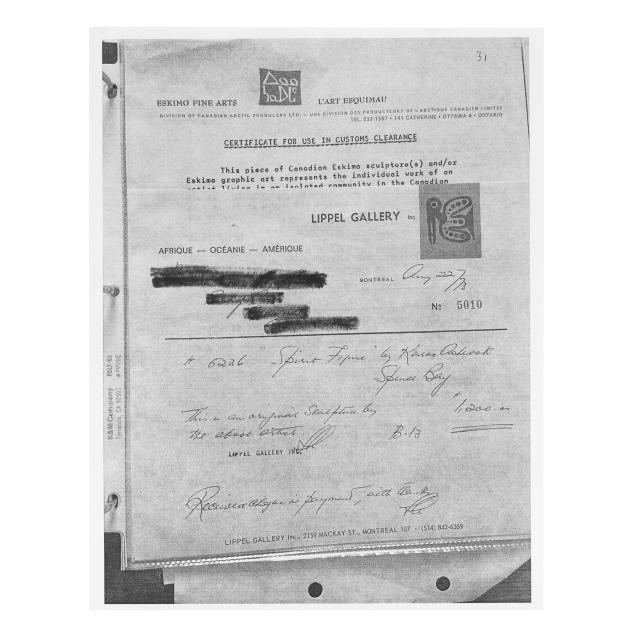
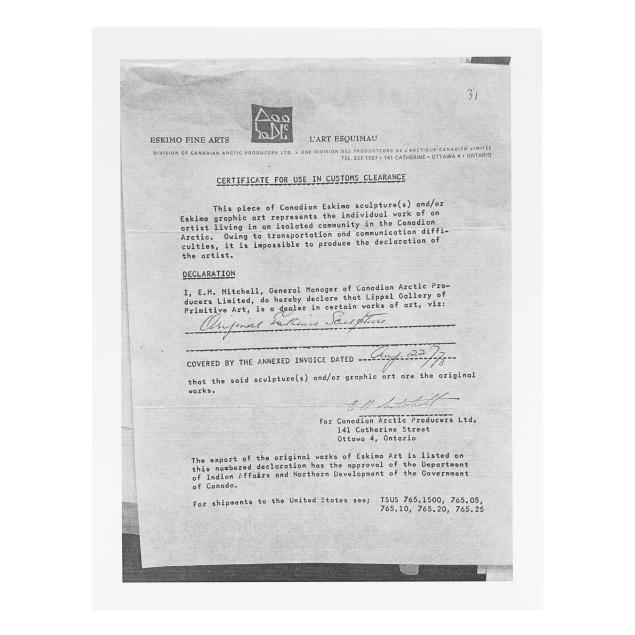
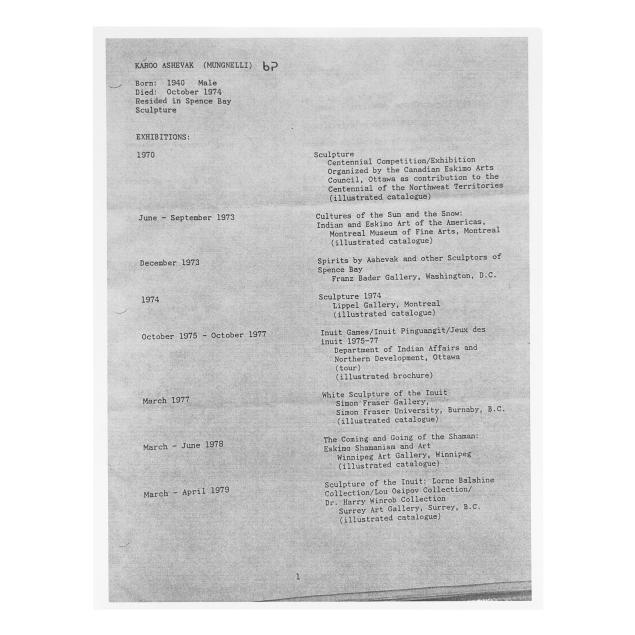
Purchased in 1973 from Lippel Gallery Inc., Montreal, Canada.
Karoo Ashevak (also known as Mungnelli) was born in 1940 in the Kitimeot, central Arctic region, of what is now known as Nunavut. In 1968, he and his wife Doris settled in Taloyoak. At the time, stone and other carving media were scarce. Whalebone, being lighter than stone, was imported for the artists by charter plane from nearby areas of the Arctic, explaining Karoo's extensive use of whalebone for his sculpture. He took up carving through the arts programs provided by Indigenous and Northern Affairs Canada, and his career quickly took off with his sculptures shown in galleries throughout Canada and the United States.
Ashevak’s carvings are predominantly in whalebone, although he occasionally worked with caribou antler, soapstone and ivory. He played with volumes and shapes in his carving, contrasting detailed design with minimally altered material. In his work, Ashevak often created other-worldly figures that conveyed his distinct sense of humor. Recurrent themes in Ashevak’s works were spiritual and otherworldly beings; many of his carvings were titled “Spirit” or “Figure.”
Ashevak exhibited his work across Canada and the United States with posthumous exhibition of his work continuing to date. His carvings and artwork can be found in the collections of the National Gallery of Canada, Ottawa, ON, the Art Gallery of Ontario, Toronto, ON, the Canadian Museum of History, Gatineau, QC, the Winnipeg Art Gallery and the Smithsonian Museum of the American Indian, Washington D.C., United States among others.
"In the short span of an artistic career that lasted only about four years before his death in 1974, Karoo Ashevak established himself as one of the major contemporary Inuit sculptors. Working primarily in whalebone, using stone, antler, ivory and baleen mostly for insets and embellishments, Karoo carved spirits, shamans, walruses, bears, birds, human figures and heads. These works are characterized by a lively sense of animation, religious undertones, humor and an assured and accomplished sculptural genius." Jean Blodgett, from Grasp Tight the Old Ways, 1983.
During his short career he achieved special status within his community, and nearby Uqsuqtuq (Gjoa Haven), influencing an entire generation of artists. Well known within Canada and the United States, Ashevak had solo exhibitions in Toronto, Montreal and New York. While his 1973 exhibition at the American Indian Arts Centre in New York City marked the height of his career, the 1994 exhibition at the National Gallery in Ottawa signified the continuing importance of his work in the context of contemporary Canadian art.
Ashevak died with his family in a house fire on October 19, 1974, at age 34.
Artist bio courtesy of Inuit Art Foundation
Good estate condition.