

Lot 8153
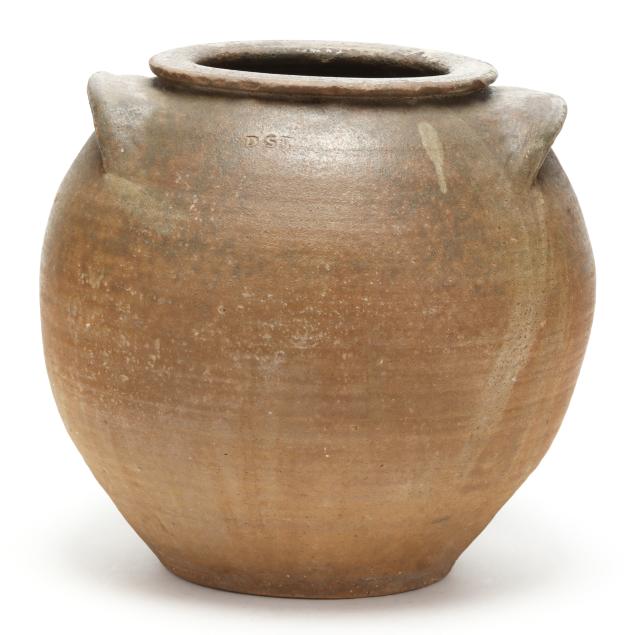
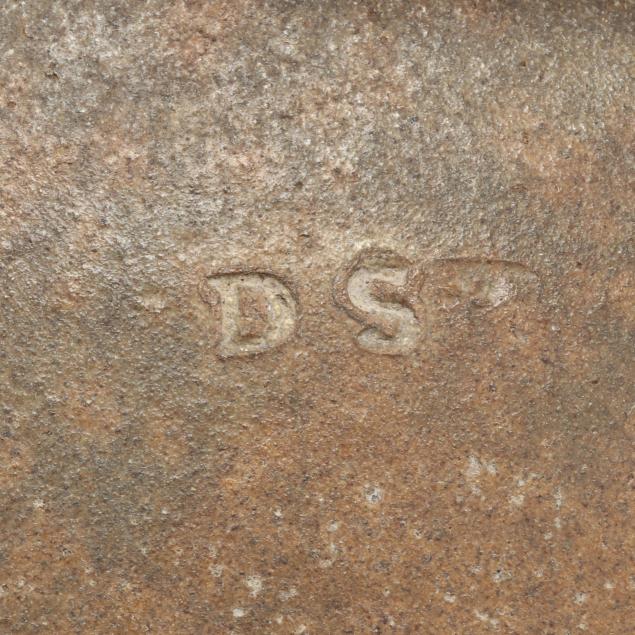
Daniel Seagle (Lincoln County, NC, 1805-1867), Ovoid Storage Jar
Explore more items like this one.
Visit our Pottery & Porcelain Department Pottery & Porcelain
Lot Details & Additional Photographs
12 x 13 x 13 in.
Daniel Seagle is the earliest known Catawba Valley potter and began making his pieces in the early 19th century for neighbors as utilitarian works. Seagle used the alkaline glaze, comprised of wood ash, silica in the form of sand or powdered glass, and clay, with water to control viscosity. It was fired to 2500 degrees Fahrenheit or higher. Seagle’s glossy, runny, greenish glaze has been identified with Catawba Valley pottery ever since, even when other innovations came on the scene.
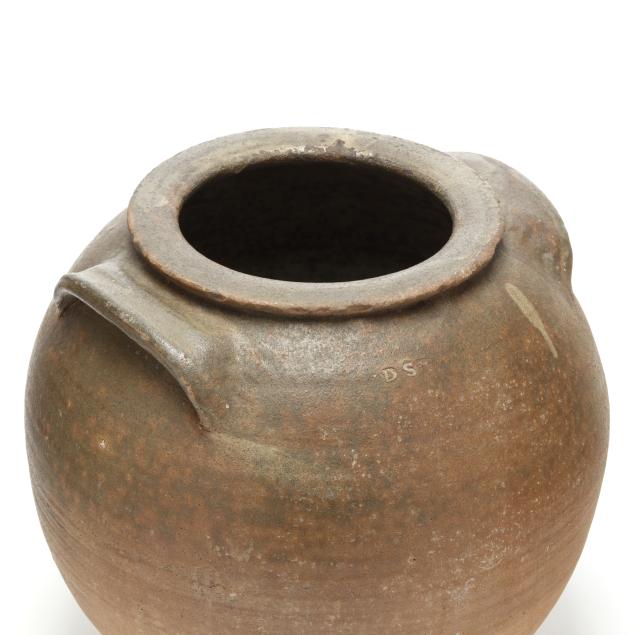
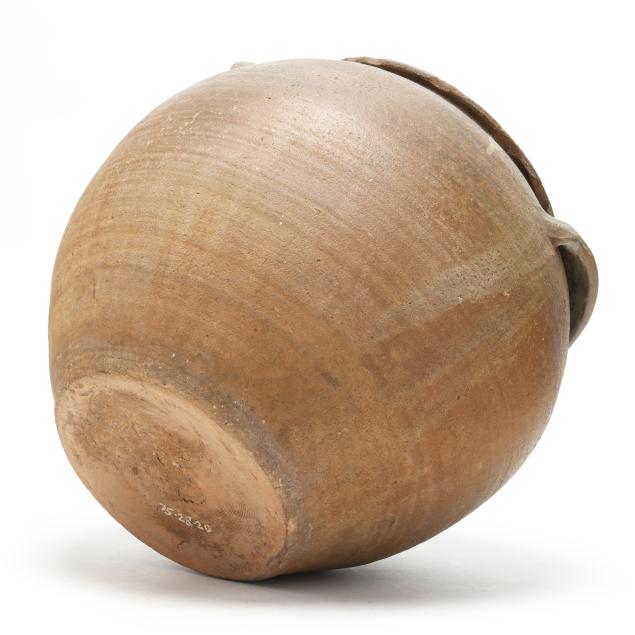
Some glaze flaking; some chipping to rim exterior; interior with leaching.