
Lot 6024
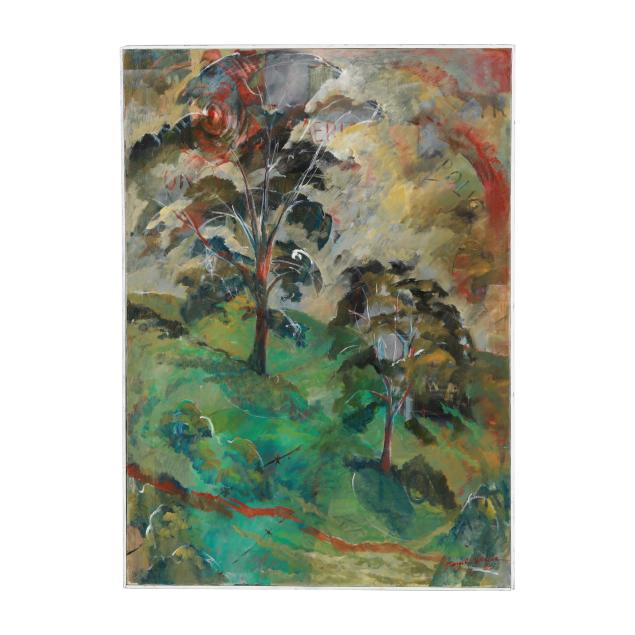
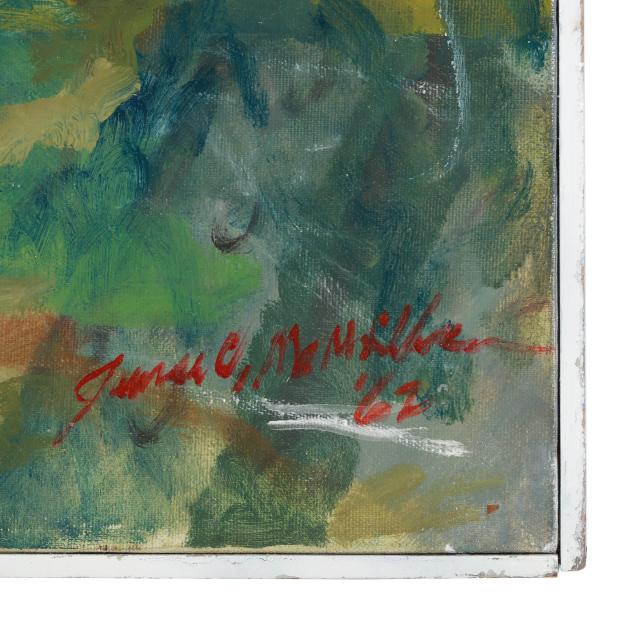
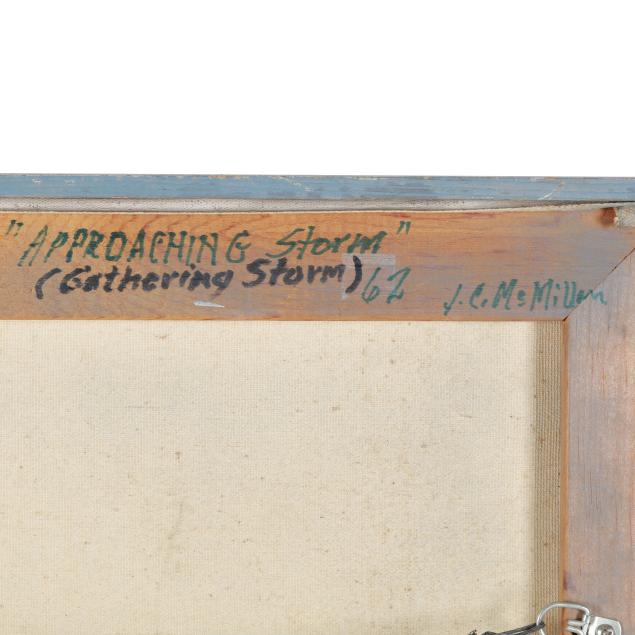
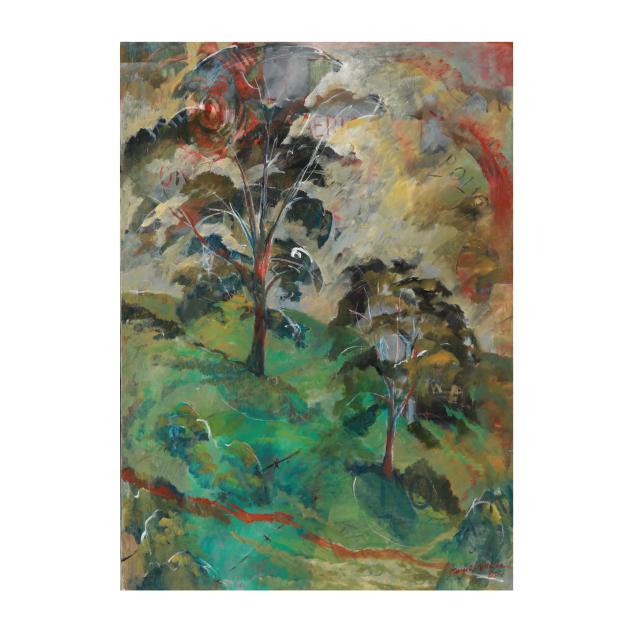
James C. McMillan (NC, 1925-2022), Approaching Storm (Gathering Storm)
Explore more items like this one.
Visit our Fine Art Department Fine Art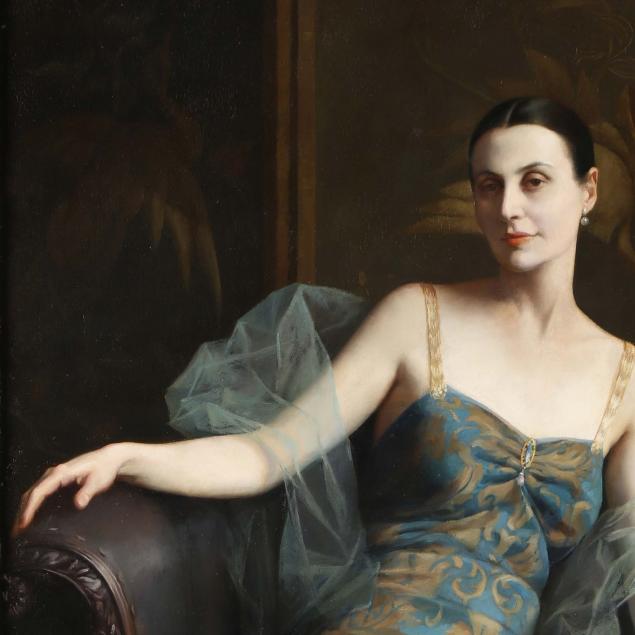
Lot Details & Additional Photographs
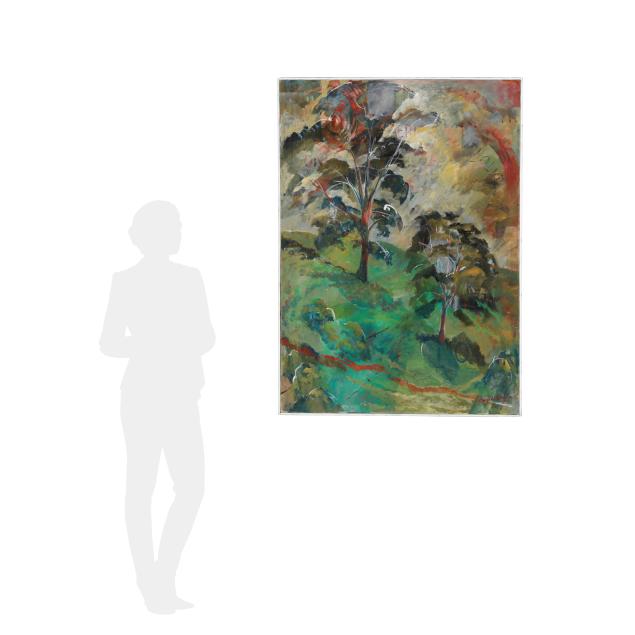
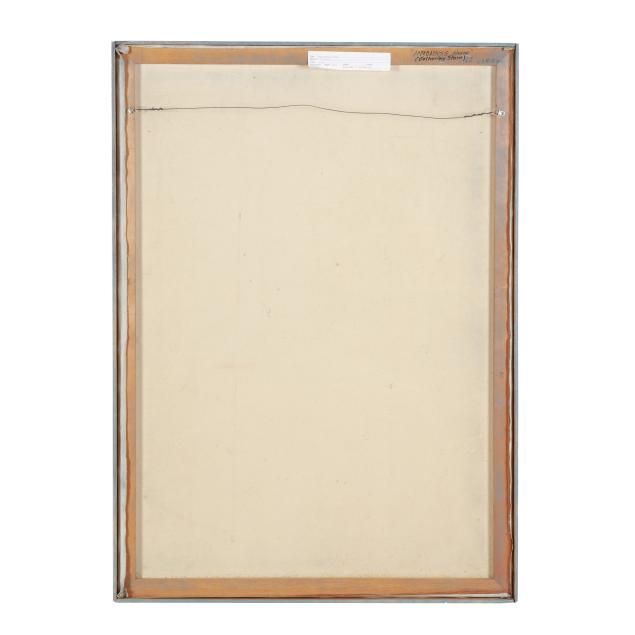
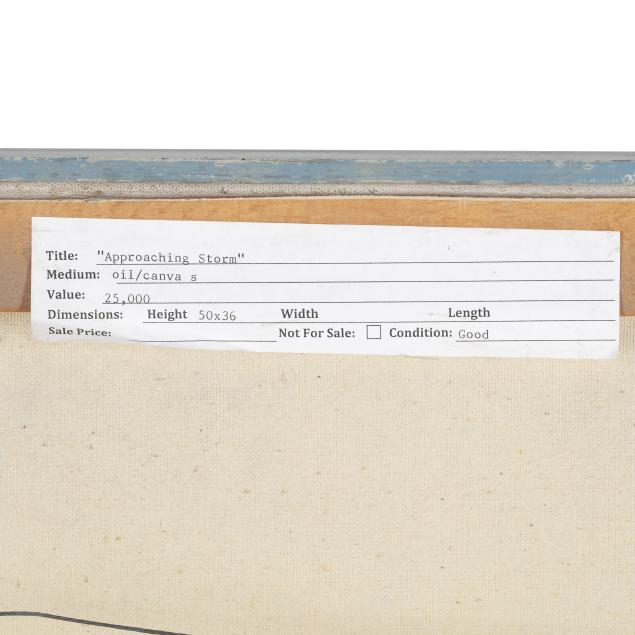
Stretcher size 50 x 36 in.; Frame dimensions 50 3/4 x 36 3/4 in.
Private Collection, North Carolina
James Carroll McMillan was a distinguished North Carolina painter and sculptor whose work documented the struggles of the civil rights movement and complexities of the African American experience. Born in Sanford, North Carolina, he graduated high school as valedictorian at age fifteen. He moved to Washington, D.C., to enroll at Howard University, where he studied under renowned artists including Lois Mailou Jones, James Amos Porter, and James Lesesne Wells. After serving in the Navy from 1943 to 1946, he returned to complete his degree in 1947 and later earned an MFA in sculpture from Catholic University.
In 1948, McMillan was the first African American awarded a fellowship at the Skowhegan School of Painting and Sculpture. That same year, he became the founding chair of the art department at Bennett College in Greensboro, where he actively participated in civil rights protests.
McMillan used his art to convey a global vision that included the Depression, war and the civil rights movement, creating works that served as powerful visual documentation of racial inequality and the struggle for justice. In 1969, he became the first African American chair of the art department at Guilford College, where he taught until his retirement in 1988. McMillan was a co-founder and first president of the African American Atelier, which opened in 1991. His work is held in numerous public collections including the Weatherspoon Art Museum, Bennett College, North Carolina Central University, Guilford College, and Virginia State University, and his artistic legacy continues to be celebrated for its technical mastery and profound social engagement.
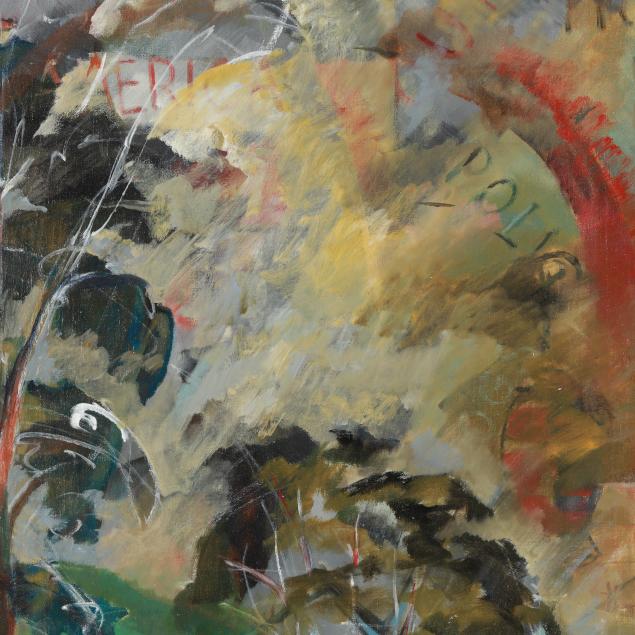
Faint stretcher mark along top edge of canvas, some rubbing and chipping to painted frame, no evidence of retouching under UV light.