
Lot 2427
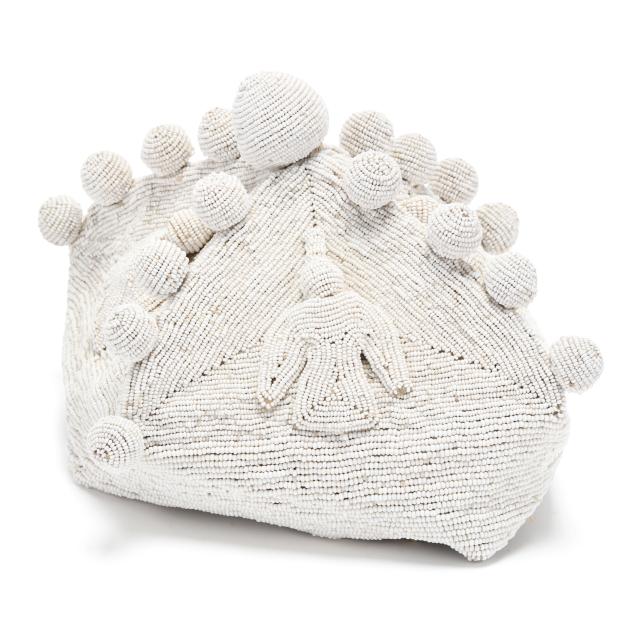
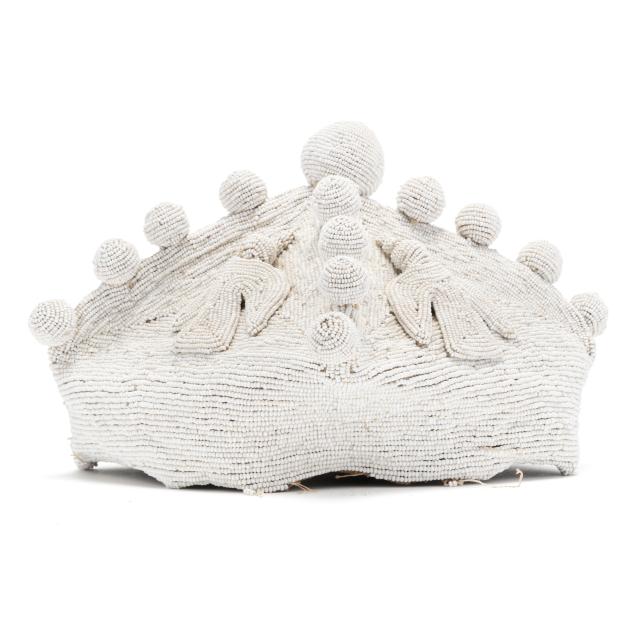
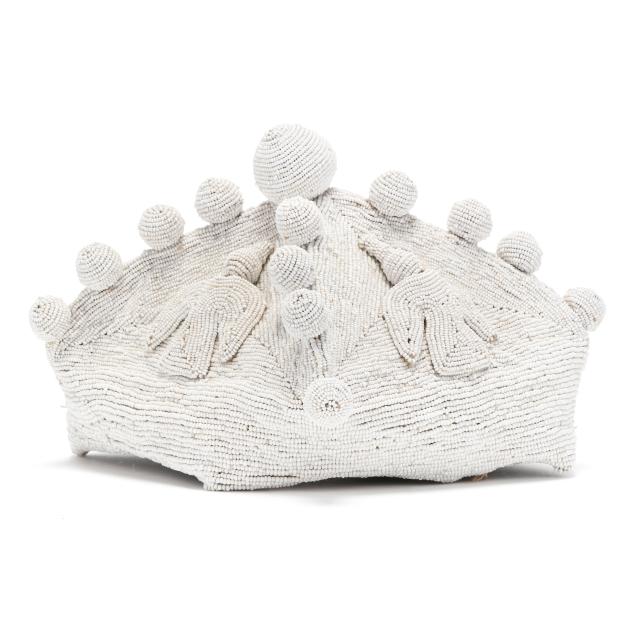
A Yoruba Beaded Crown (Adenla)
Explore more items like this one.
Visit our Historical Department Historical
Lot Details & Additional Photographs
6 1/2 x 9 x 10 in.
From the Collection of the late Robert and Judith Weston, Detroit, Michigan
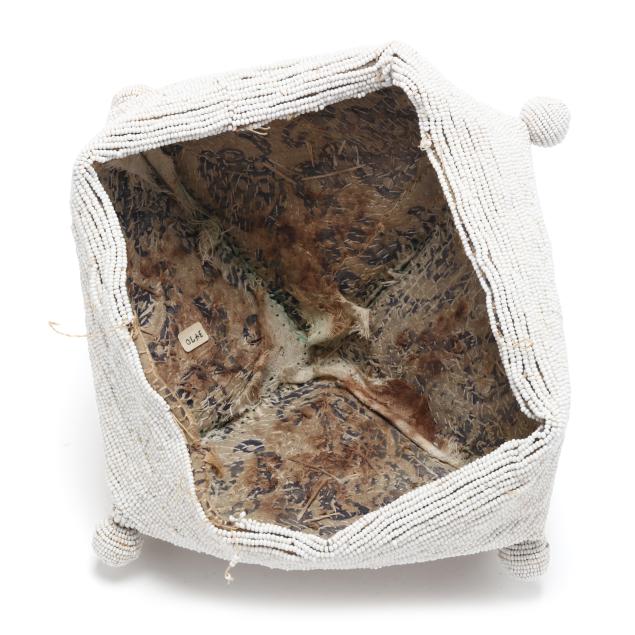
The great crown, known as adénlá in the Yoruba language, would have formed the centerpiece of the regalia of an oba, a sacred king that could trace his ancestry to Oduduwa, the founder and first oba of Yoruba peoples. Always in a conical shape with motifs of birds and frontal faces with a beaded, fringed veil (iboju), the adénlá was the main symbol of an oba’s authority. The conical shape of the adénlá reflects the ori inu, the inner head or personal destiny, of the oba; it was a visible symbol of his spiritual power. As the oba was incredibly powerful while wearing the crown, the beaded veil was necessary to protect people who looked upon him from a god-like gaze. The veil’s concealment increased the spirituality surrounding the oba, as it was a way to convey the divine qualities of the oba. The veil also masked the individual, so the focus was on the oba’s role as leader of the community. The faces on the crown may have represented past rulers, or allowed the oba to see and know everything that happened in his kingdom. On the outside of the crown, the beadwork was a sign of wealth and status, reserved for royals and religious leaders. Seed beads were introduced in the 19th century by European traders; the many colors allowed craftsmen to create patterns that showed the authority of the oba. The inside of the adénlá was significant as well. A herbalist priest prepared the crown by placing a packet of herbal medicines in the top. However, it was not an adénlá until placed on the head of the oba from behind by a senior woman, signifying that an oba could not rule without the support of women. The birds on the crown referred to this, as they were as symbol of the mystical power of women, known as awon iya wa, “our mothers.”
Information courtesy of University of Michigan Museum of Art.
Some looseness to beadwork at base; a few areas of staining to textile at interior.