
Lot 3018
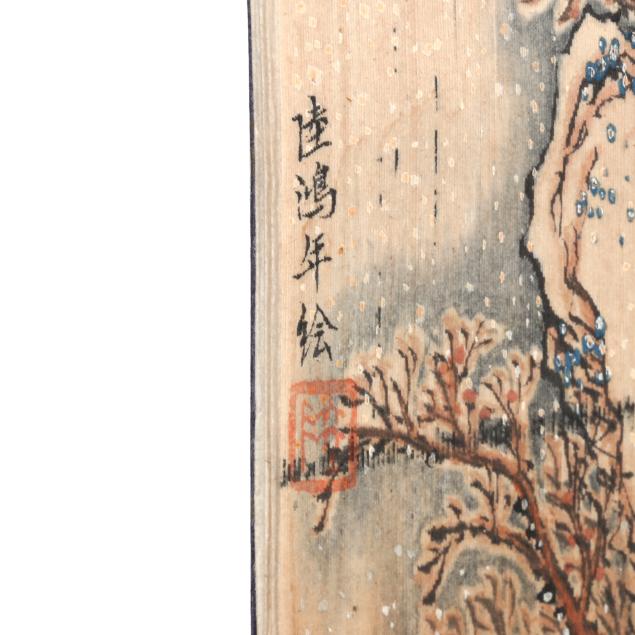
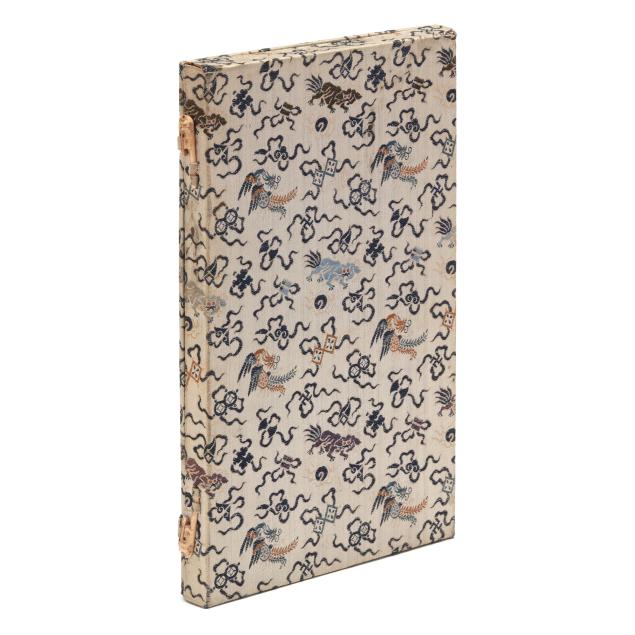
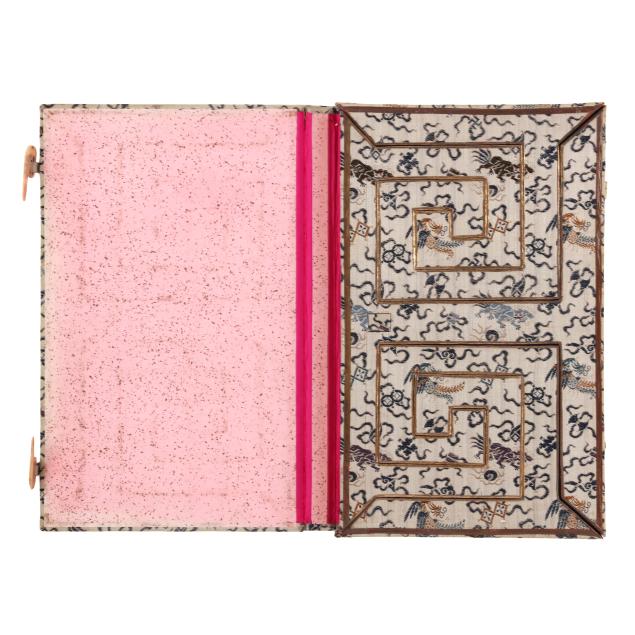
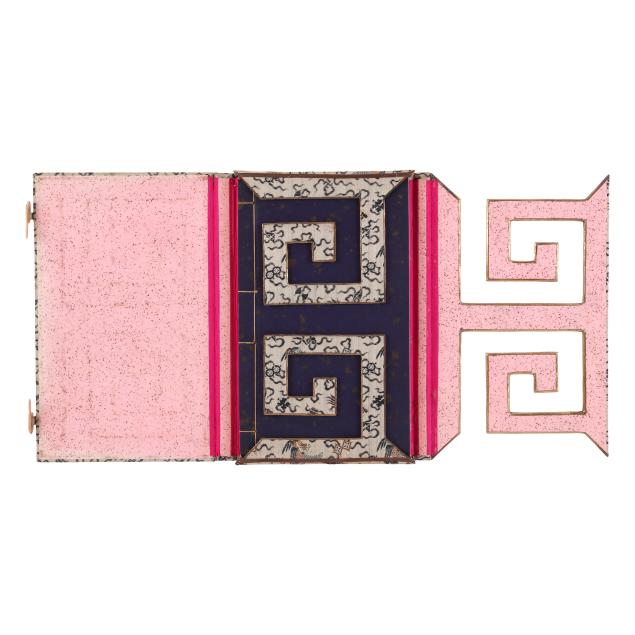
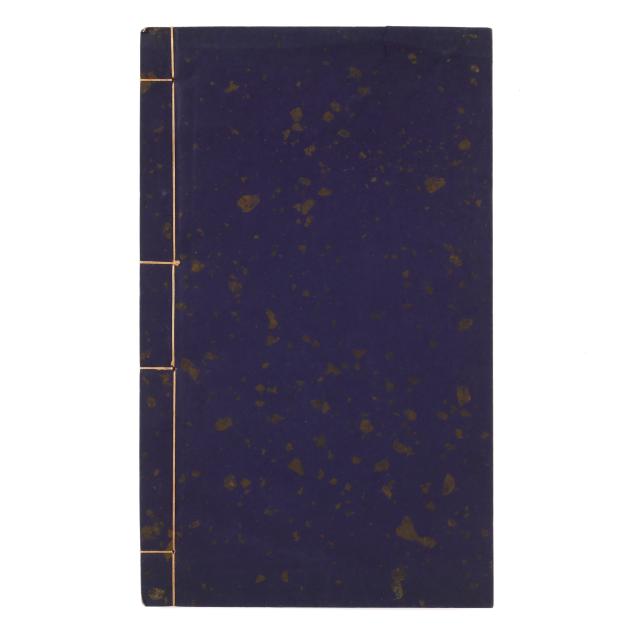
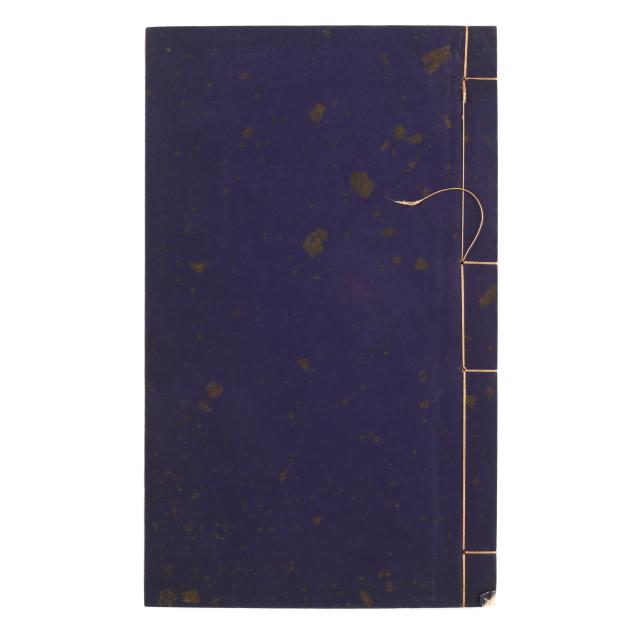
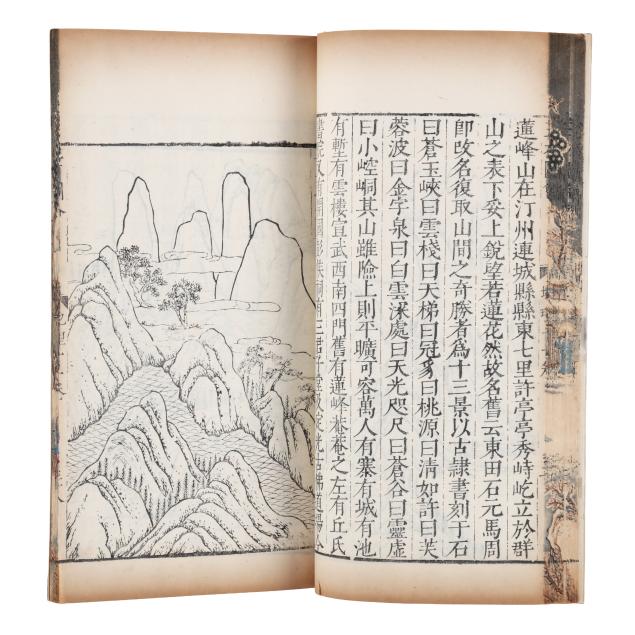
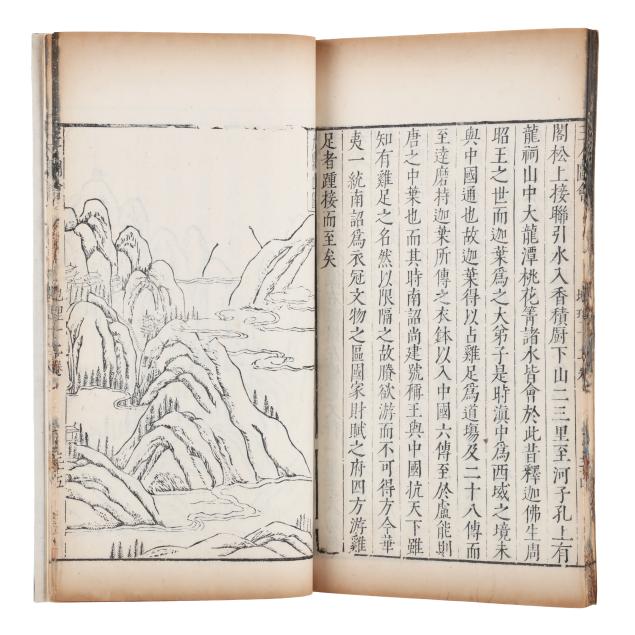
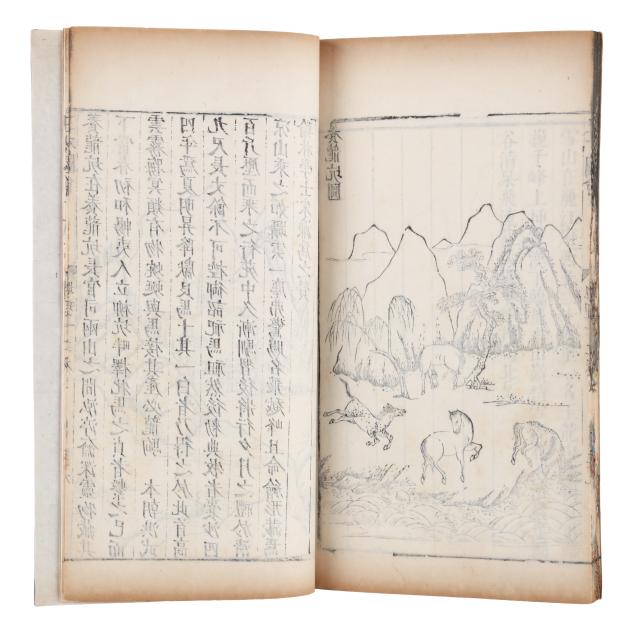
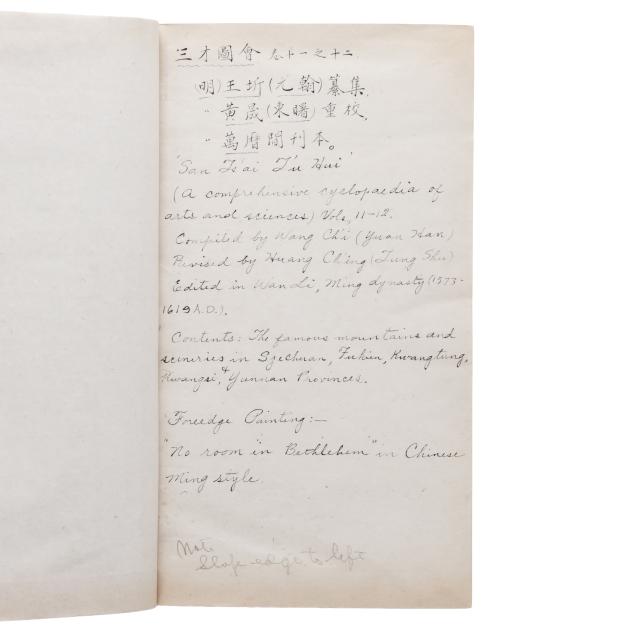
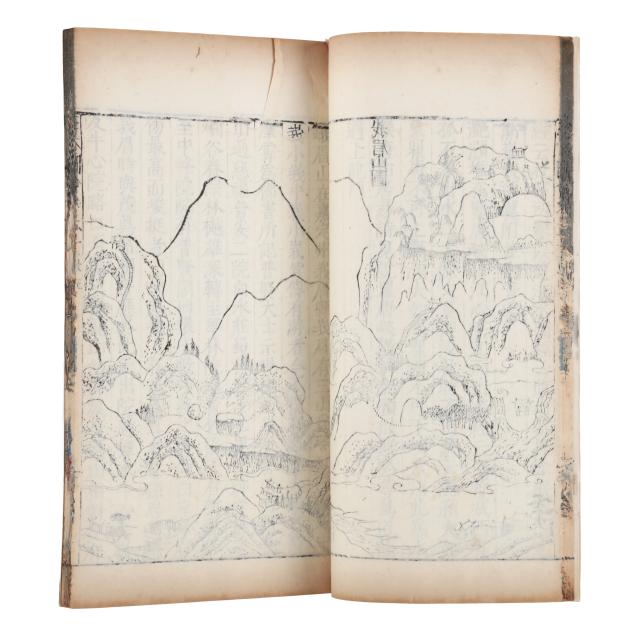
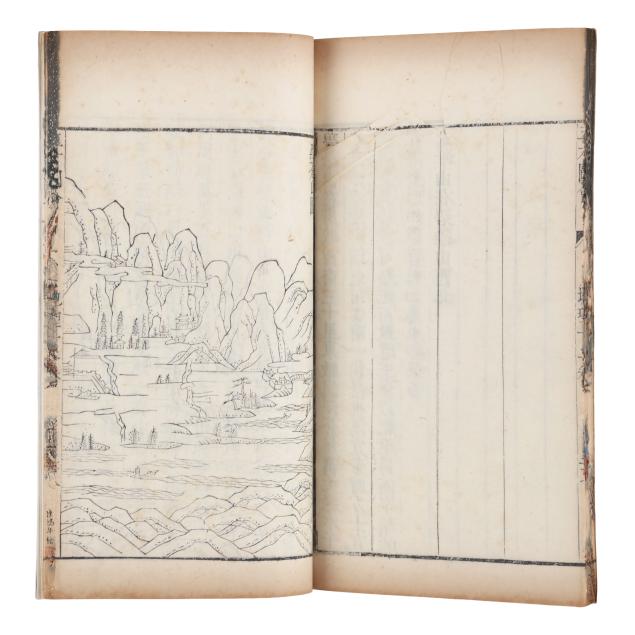
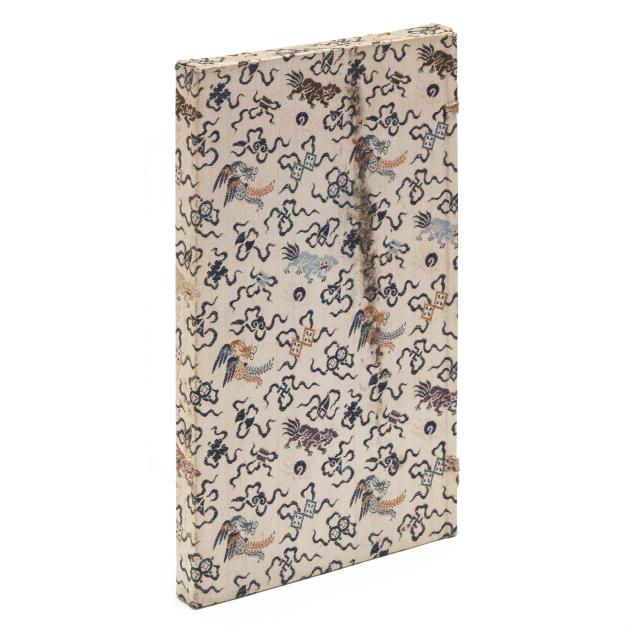
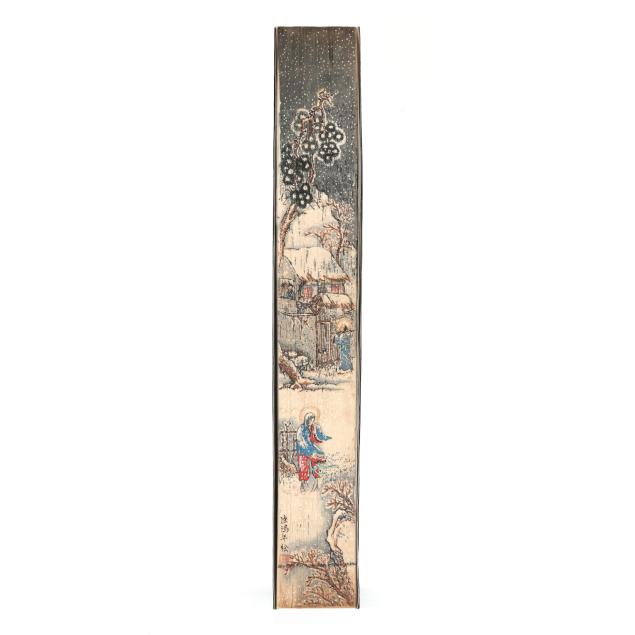
Lu Hongnian (1914-1989), Rare Chinese Christian Fore-Edge Painting, With Brocade Case
Explore more items like this one.
Visit our Historical Department Historical
Lot Details & Additional Photographs
Book 10 1/2 x 6 3/8 in.; Case 11 x 6 7/8 x 7/8 in.
Acquired in China by Thomas R. Jernigan, Consul General of the United States, Shanghai.
Chinese fore-edge painting originated in the 20th century when Dr. William Bacon Pettus (1880-1959), an American teacher in what is now Beijing, visited Los Angeles and first learned about the art form. He brought an example of an English fore-edge painting back to his students in China, who chose to paint on a variety of books, first mostly European and then later Asian texts. These books were created and then sent to the United States for sale in ornamental cloth boxes during the short period from 1936 until 1942, with the abrupt end caused by the start of the Pacific War. Pettus's students modified the art form in several ways, including often painting scenes vertically rather than horizontally which was the format used by English fore-edge painters. Chinese Christian artists painted only religious scenes, such as the one depicted on this volume, and were not concerned with aligning their work with the subject of the book. Reference: Weber, Fore-Edge Painting, pgs. 161-166.
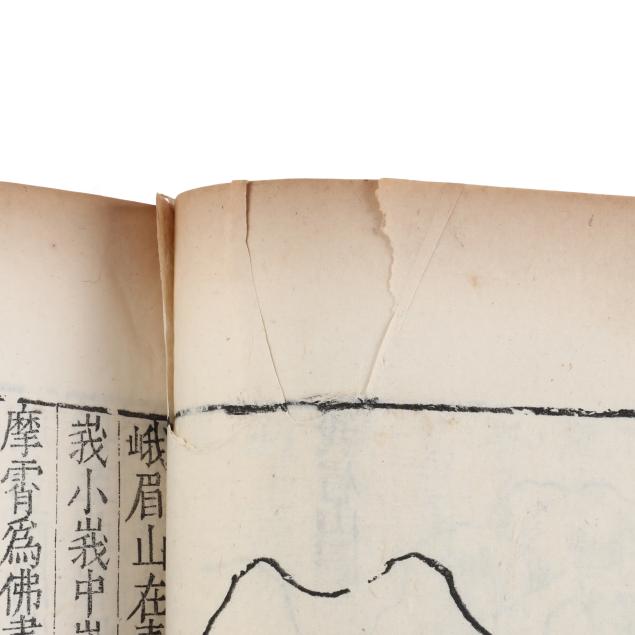
Wraps with light creasing, mild wear to corners, and one small tear; text block with toning (mostly in margins), light scattered foxing, a few leaves with losses, and occasional minor wear such as a small chip or fold; brocade case with some wear, heaviest to front cover. Extremely rare, especially signed (most Chinese fore-edge paintings were not signed per Weber).