
Lot 6250
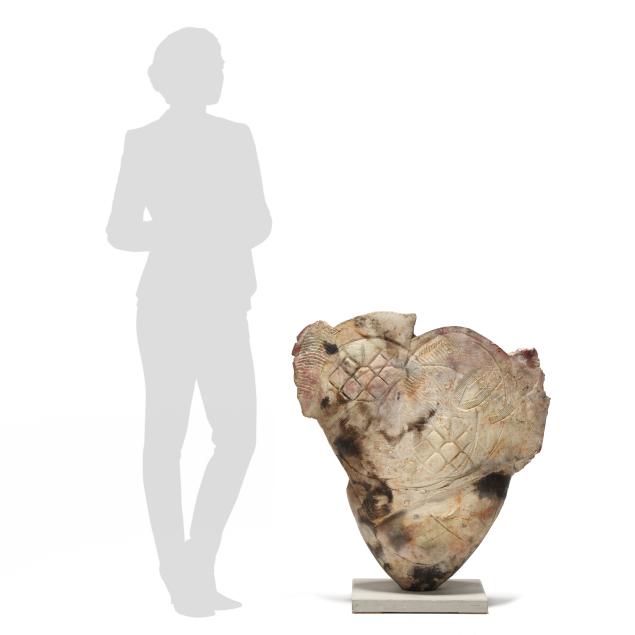
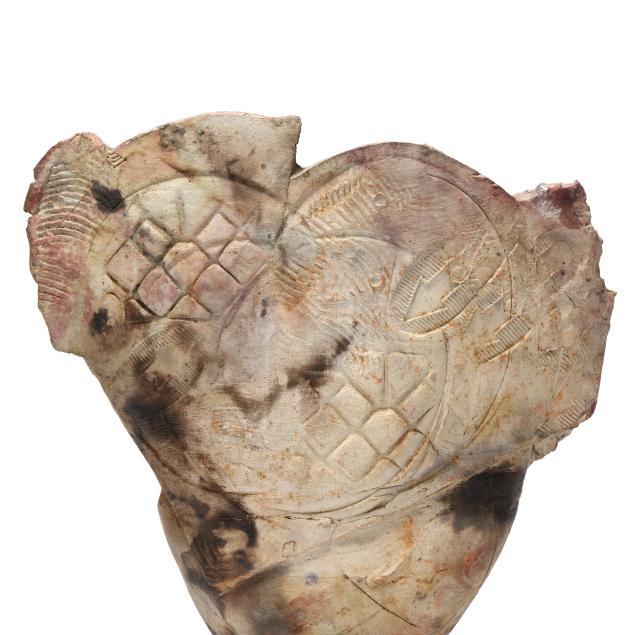
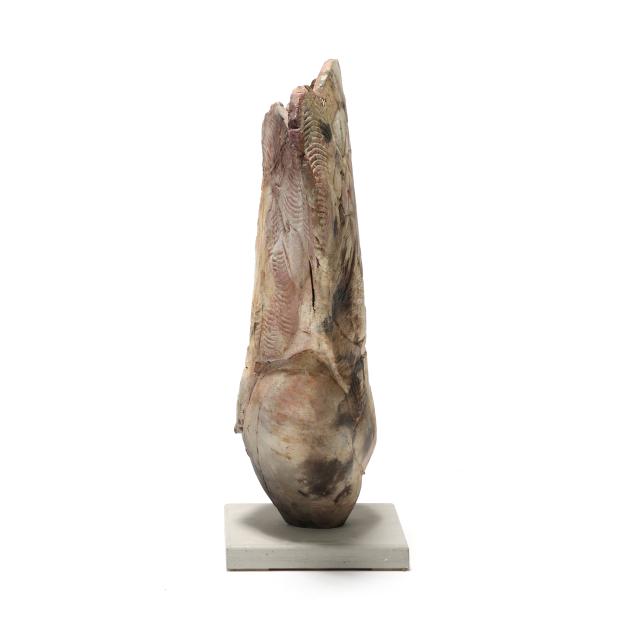
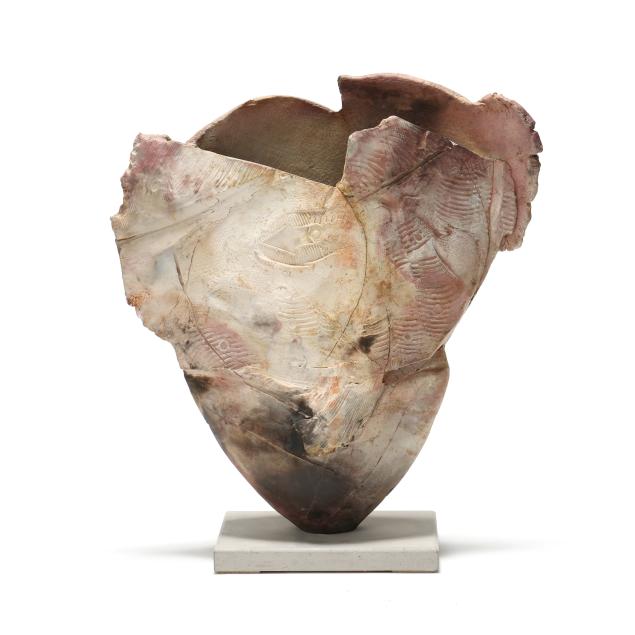
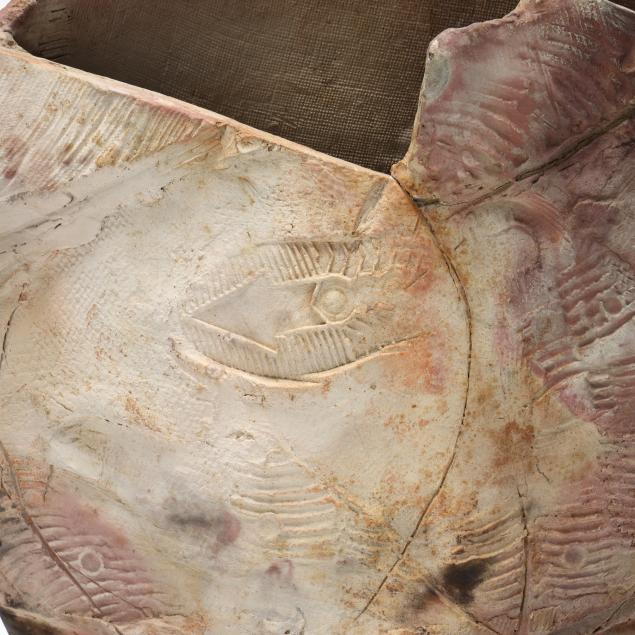
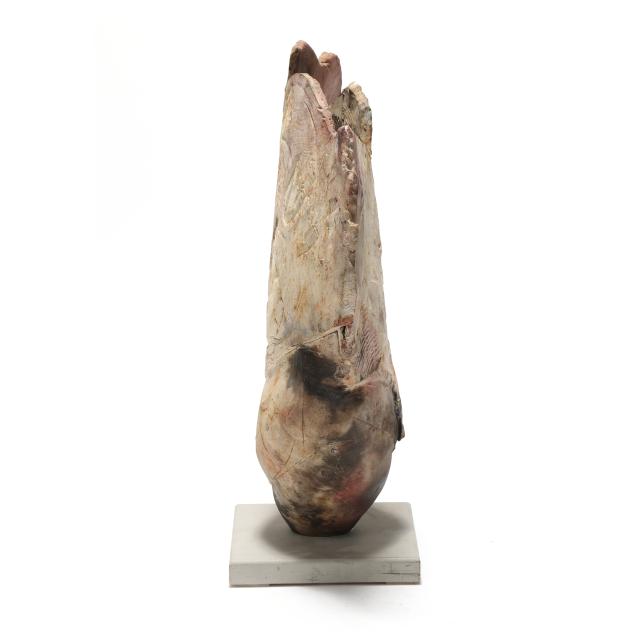
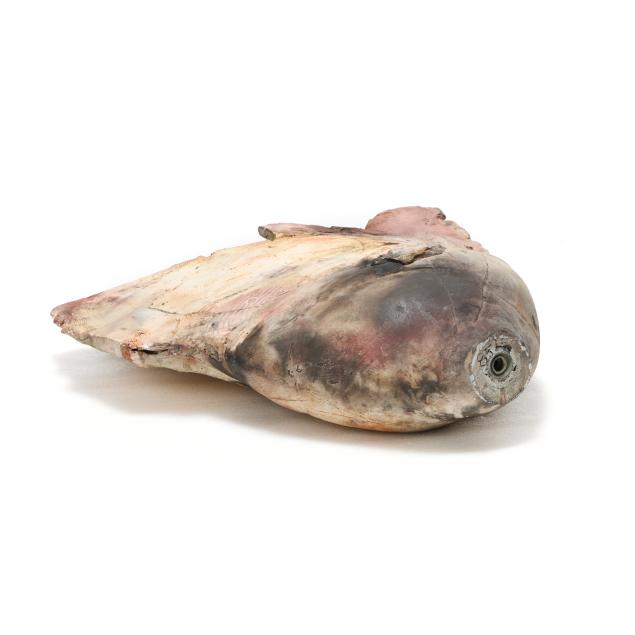
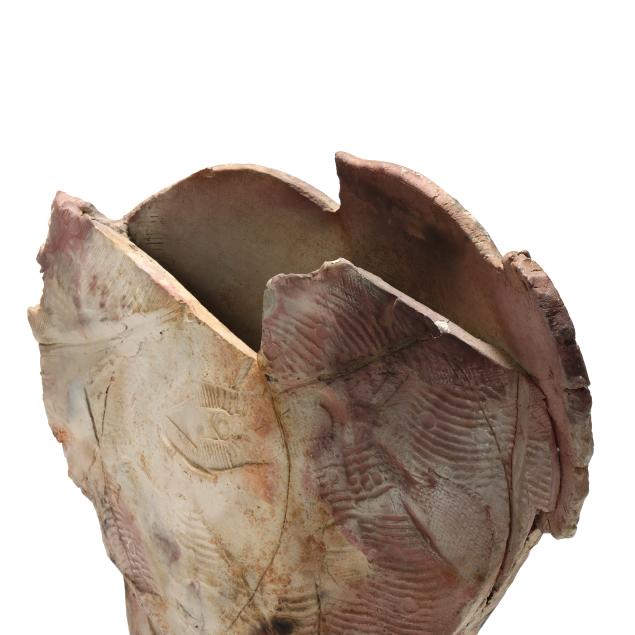
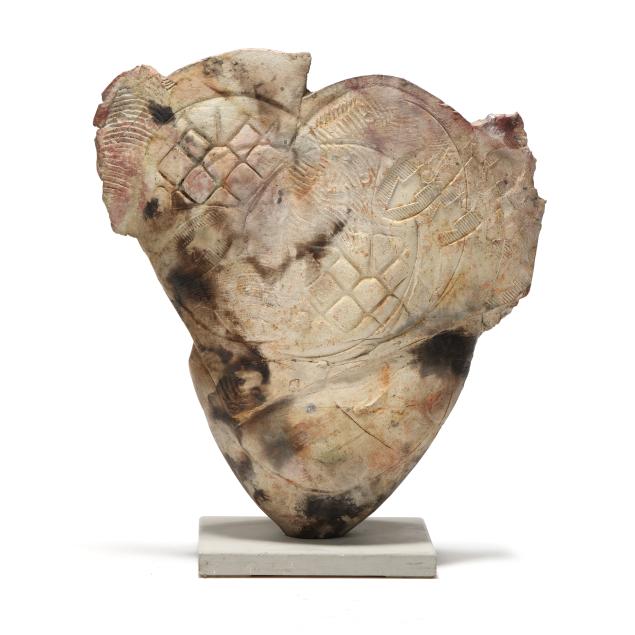
Paul Soldner (American, 1921-2011), Large Ceramic Vessel
Explore more items like this one.
Visit our Pottery & Porcelain Department Pottery & Porcelain
Lot Details & Additional Photographs
33 1/2 x 29 1/4 x 12 in.
Paul Soldner was born in Summerfield, Illinois on April 24, 1921. He served in the United States Army as a medic for three and a half years during World War II. He earned his BA in Art Education at Bluffton College and went on to earn his MA in Arts Administration from the University of Colorado. It was in Boulder that he was introduced to ceramics by Katie Horseman, a visiting lecturer and head of ceramics at Edinburgh College of Art in Scotland. After eight years of teaching art in public schools, at the age of 33, Soldner decided to become a potter. He enrolled in the Los Angeles County Art Institute where became Peter Voulkos's first student, earning an MFA in 1956. Paul was one of Voulkos's few students who continued to make functional ceramics at the institute (Garth Clark, A Century of Ceramics in the United States, 1878-1978, p. 330).
Though he worked with traditional forms, new issues and experimentation have always been incorporated into Soldner's work. His began making his monumental "floor pots," standing up to 9 feet tall often with expressionistically painted areas. Among his numerous invaluable contributions to the field of ceramics, he developed what is now known as American Raku. He also devised a low-temperature salt firing method for his raku pottery and "pedestal pieces" that pushed the limits of clay, revealing unique textures and forms.
Soldner's works have been exhibited throughout all of the major cities of Europe and the United States, Canada, Latvia, Japan, Taiwan, Korea, and Australia. Soldner authored numerous articles and a book entitled Kilns and Their Construction. He went on to found the Anderson Ranch Arts Center in Snowmass Village, Colorado in 1968 where he served as director in the early 1970s. It is now well-known for its excellent summer program, drawing people from all over the world to study with renowned artists.
His work is important international collections including: The University of Iowa Museum of Art, Iowa City Iowa; Gardiner Museum of Ceramic Art, Ontario, Canada; Victoria and Albert Museum of Art, London, England; The Los Angeles County Museum of Art, Los Angeles, California; Smithsonian American Art Museum, Washington, D.C.; National Museum of Modern Art, Kyoto, Japan; Australian National Gallery, Sydney, Australia; among many others.
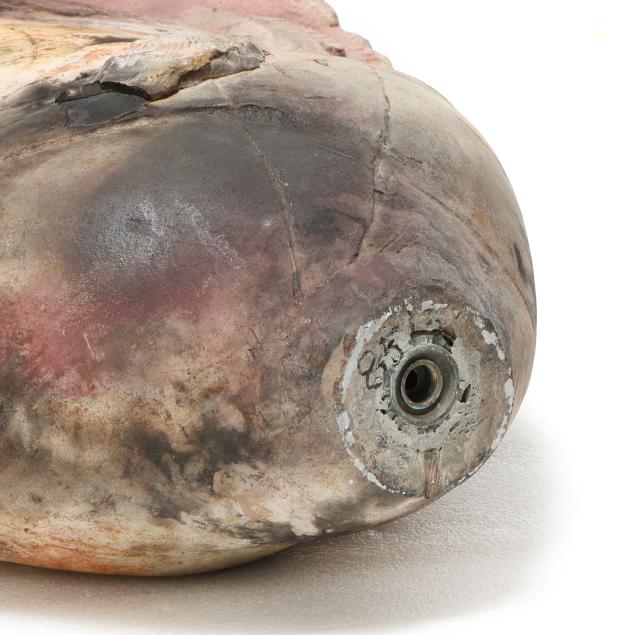
Scattered cracks (some with associated repair); and edge chipping, primarily along the upper rim.