
Lot 6046
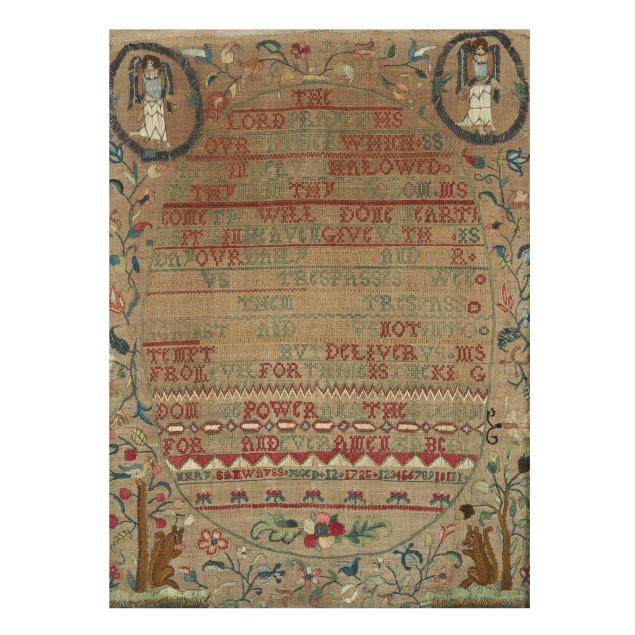
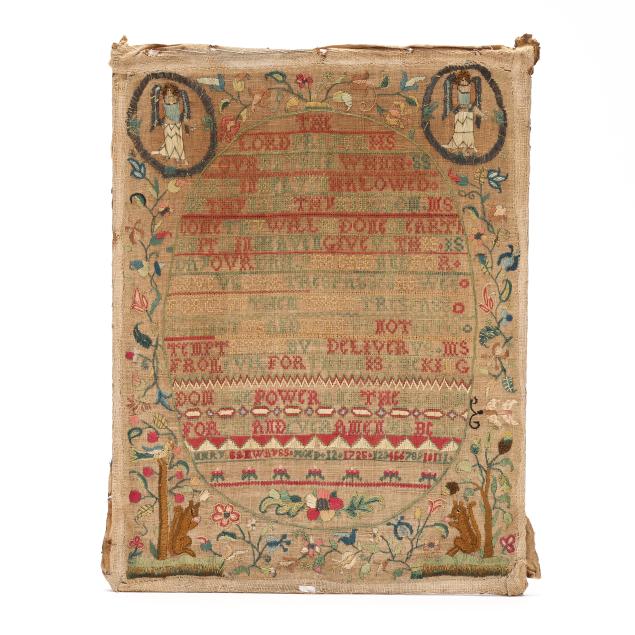
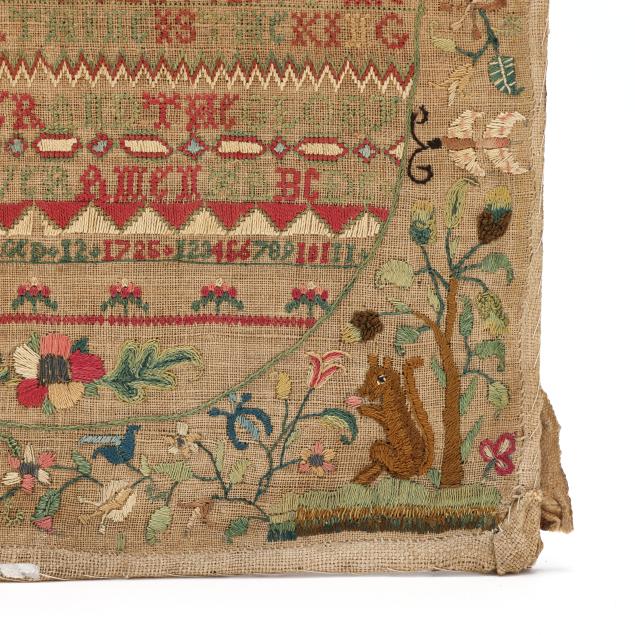
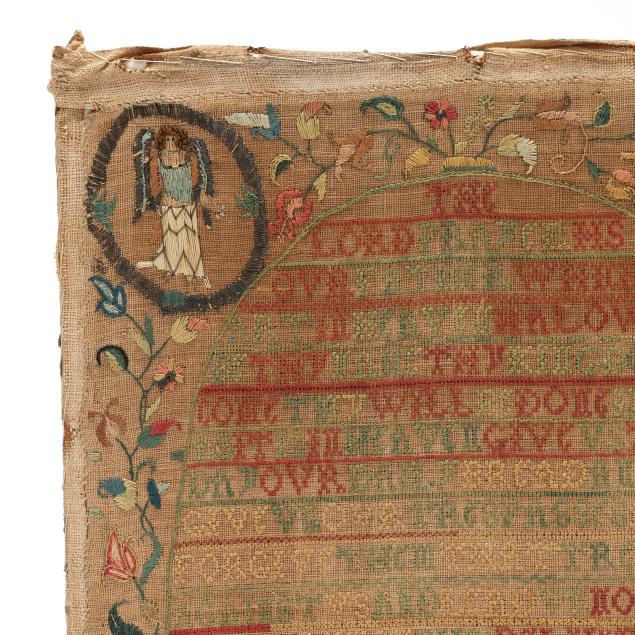
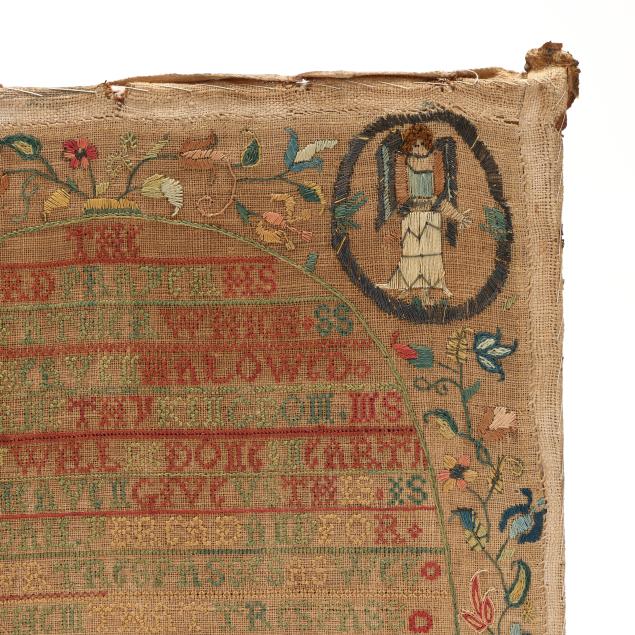
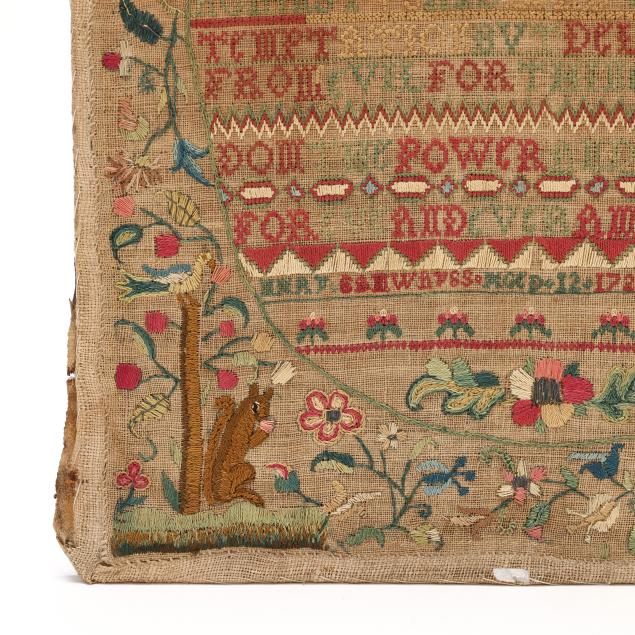
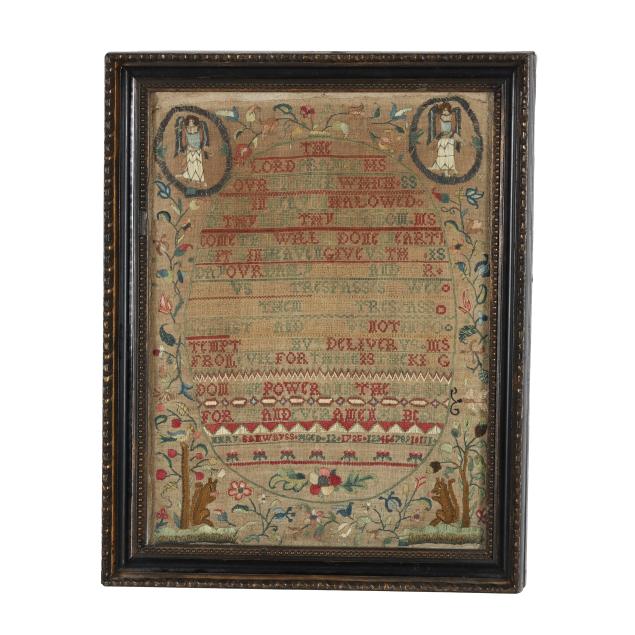
The 1725 Needlework Sampler of Mary Samwayss
Explore more items like this one.
Visit our Rugs & Textiles Department Rugs & Textiles
Lot Details & Additional Photographs
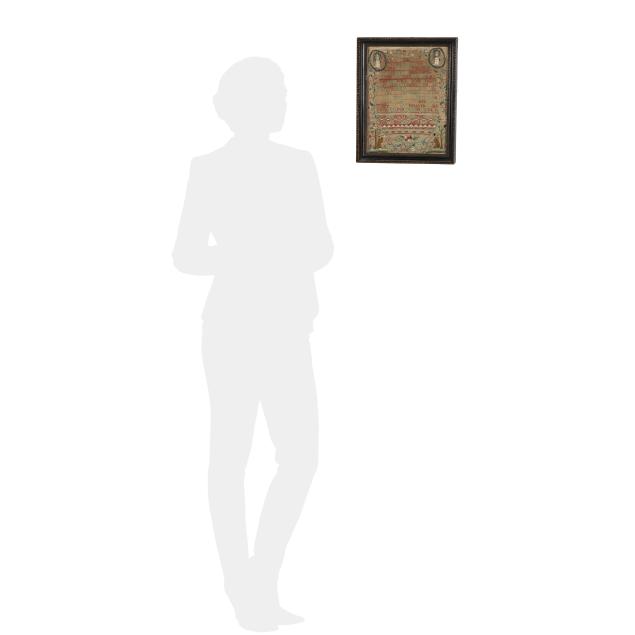
Frame 14 1/4 x 11 1/4 in.; sight size 12 x 9 in.
From the Collection of Josephine Chapman Borthwick, Pinehurst, North Carolina
The Samways family name originates in Dorset, England, but has several early American branches. Notable early emigrants include Richard Samways, who arrived in Windsor, Connecticut, from Dorchester, England, before 1640. His son John Sammis was an early settler in Suffolk County, New York. Records also indicate that an Edward Samways arrived in Pennsylvania in 1682, and a Samways family was established in South Carolina prior to 1711.
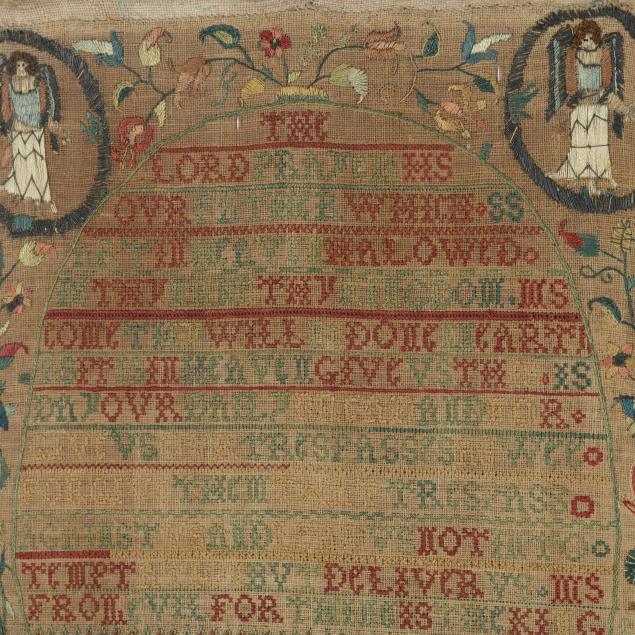
Some clues to the maker's identity may be found in the family initials "hidden" within the text of the Lord's Prayer: HS, SS, MS, IS, MS. These are no doubt Mary's immediate family members, such as parents and siblings.
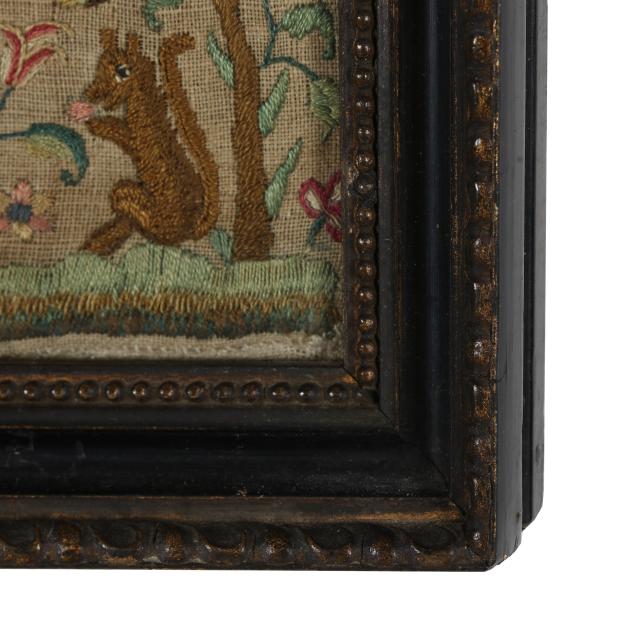
A comparison to the Elizabeth Russell (1719, attributed Marblehead or Boston) sampler in the collection of the Museum of Fine Arts Boston (accession number 42.161) results in some striking similarities. Not only do both samplers feature facing squirrels eating nuts or berries beside fanciful shrubs, both samplers feature several almost identical decorative bands of stitching, freeform floral decoration, letters rendered in the same way, with the maker's name, age, and year, in the same style. While there is more research to do, these clues point to both samplers being made in the same community, or by girls who both had access to the same design material.
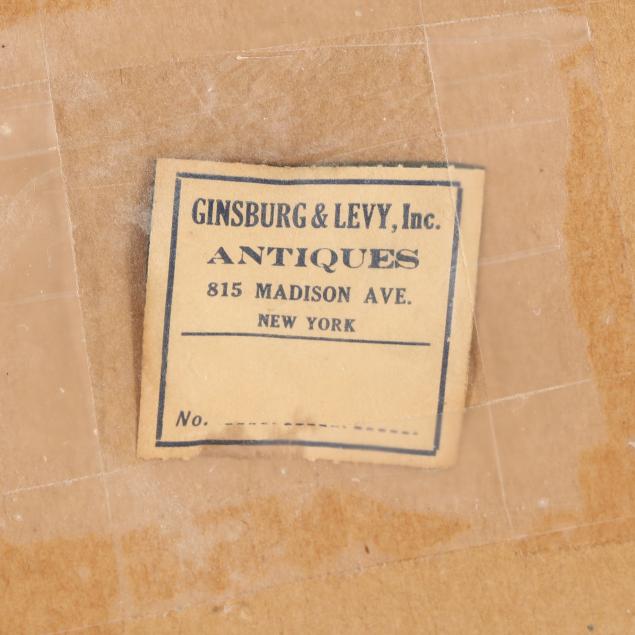
This sampler was likely once sold by Ginsberg & Levy Antiques, founded in 1901. With a focus on fine early American antiques, items from Ginsberg & Levy Antiques can be found in numerous public and private collections including The Metropolitan Museum of Art, Bayou Bend, Winterthur, The Art Institute of Chicago, The Museum of Fine Arts Boston, Historic Deerfield, The Diplomatic Reception Rooms at the United States Department of State, and The White House.
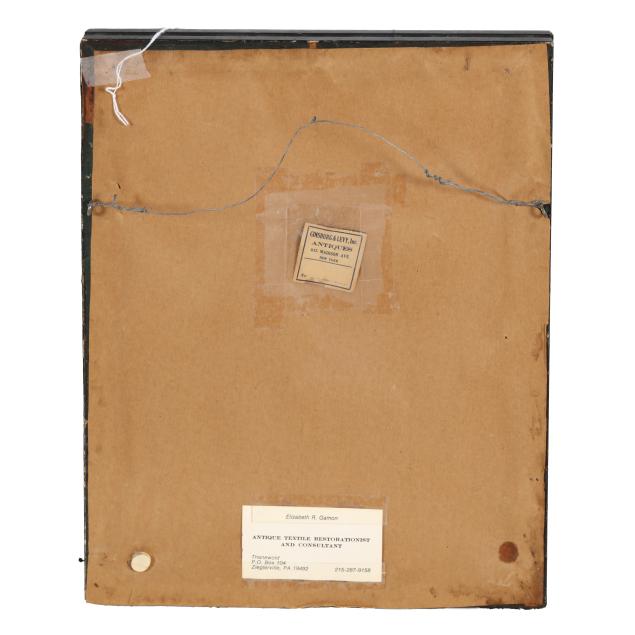
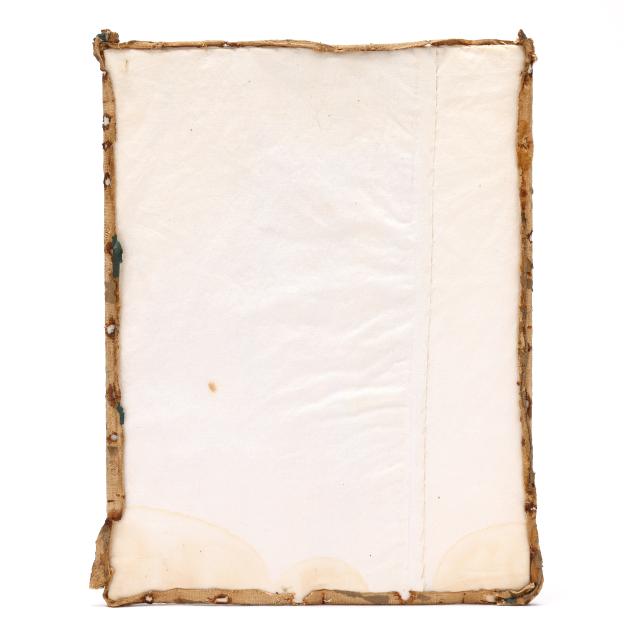
Mostly bright unfaded colors; some discoloration to ground; tarnishing of metallic thread; some loss to frame; frame with paper fillets and looseness to glass; with old strips of linen hand-sewn to edges and with old tack holes from original mounting, now discolored and with some brittleness and residue; paper backing on frame has been removed; back of cotton mounting board with evidence of moisture damage.