
Lot 6063
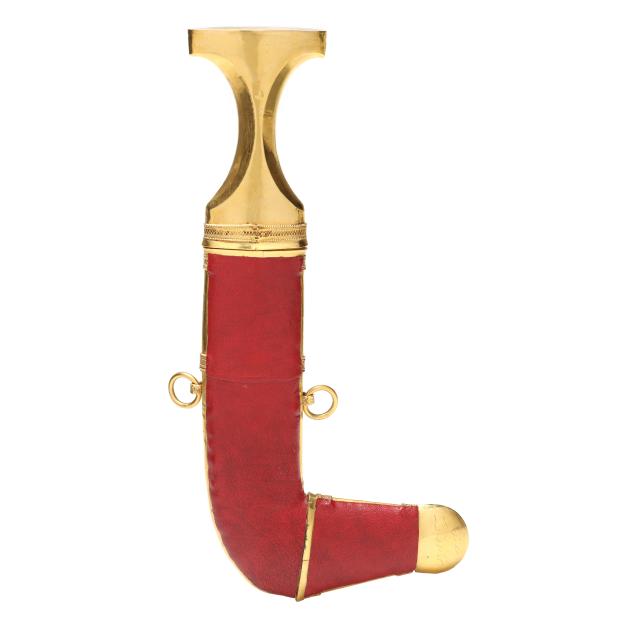
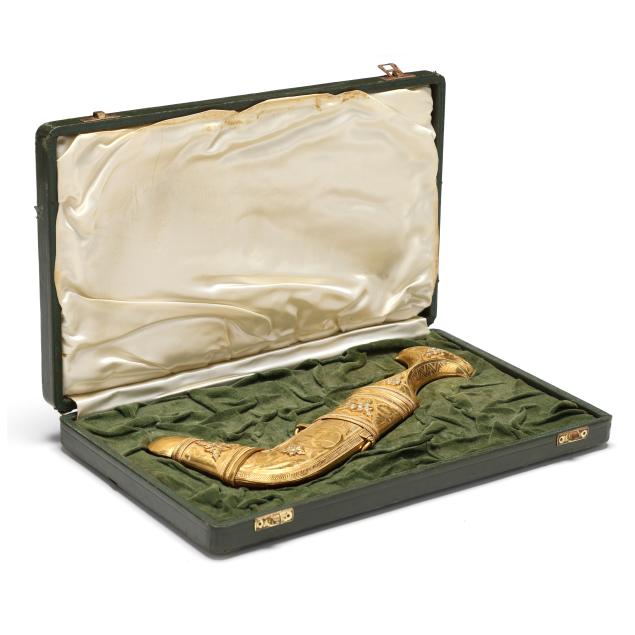
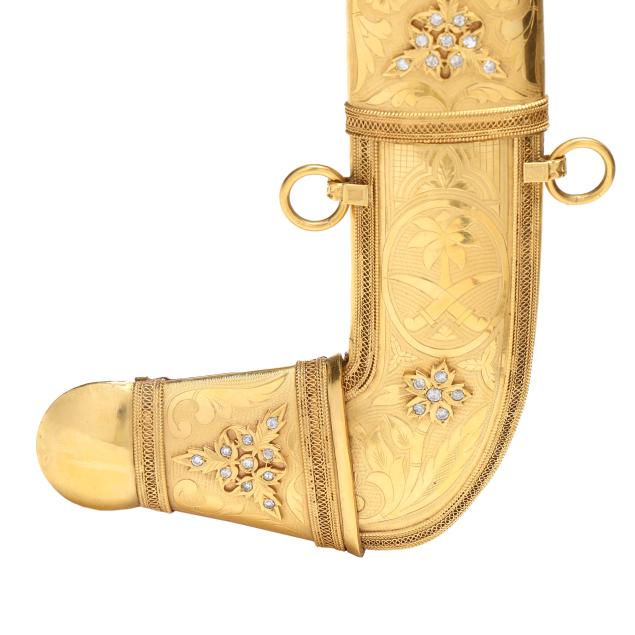
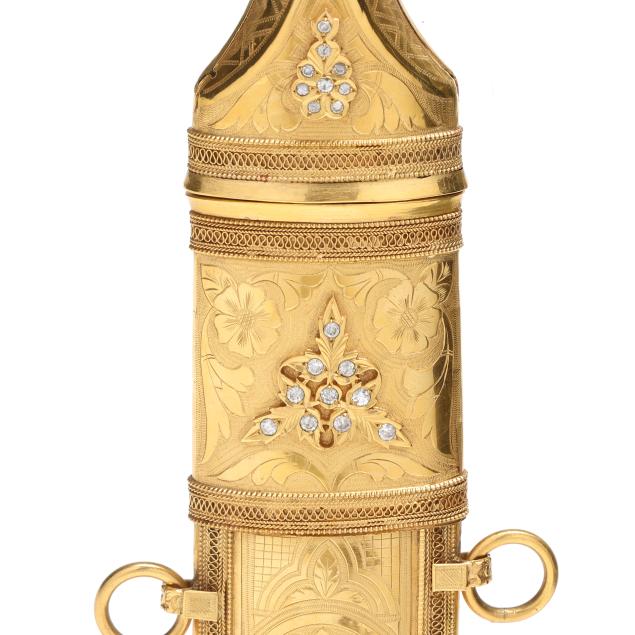
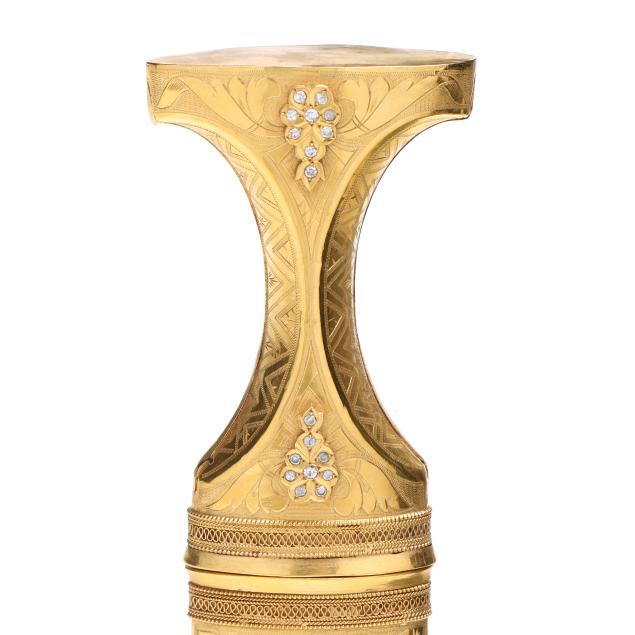
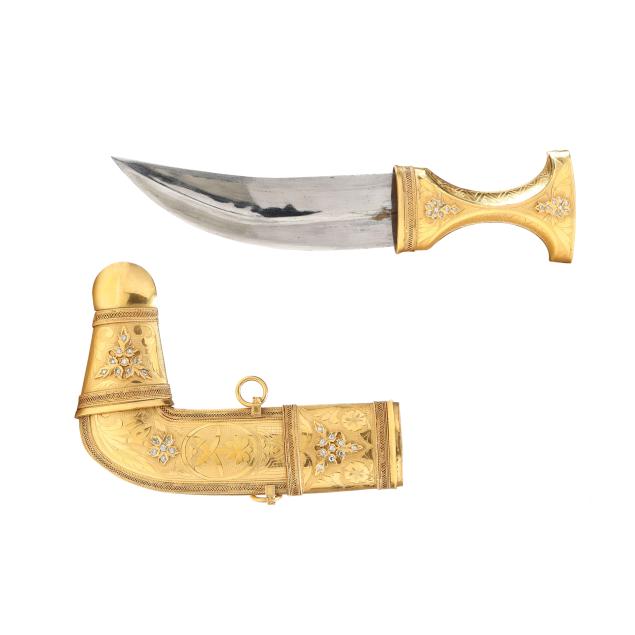
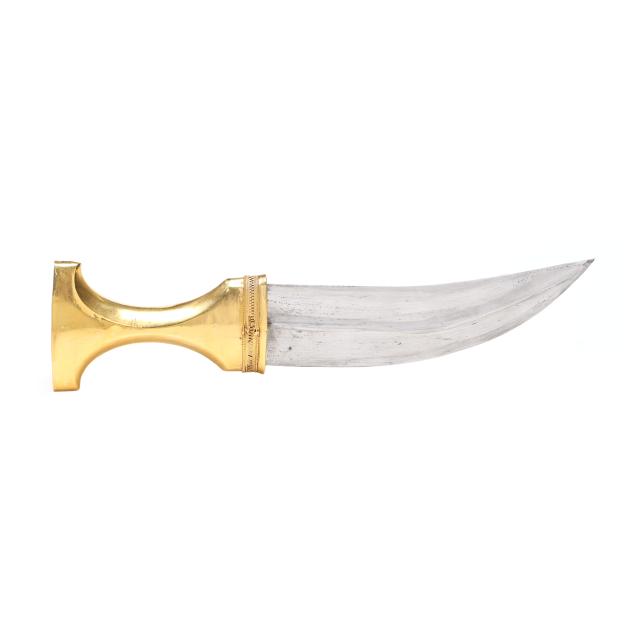
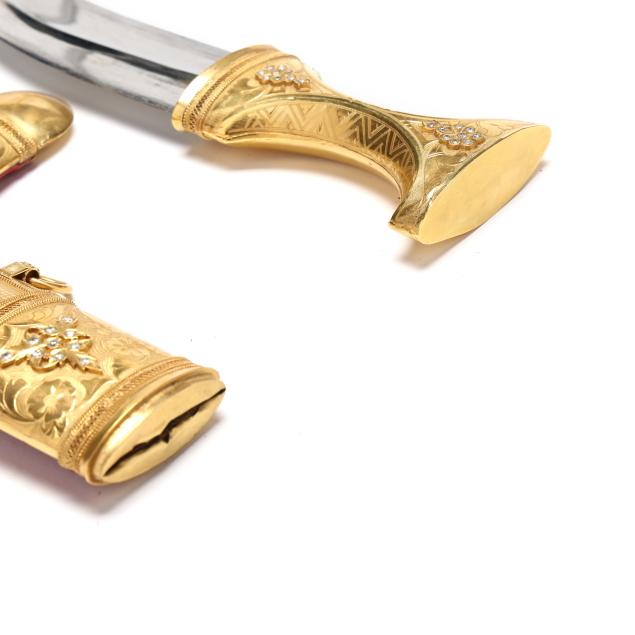
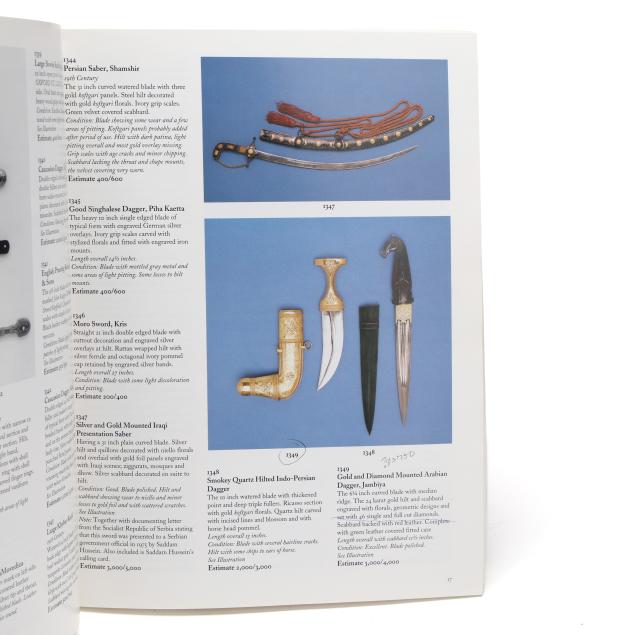
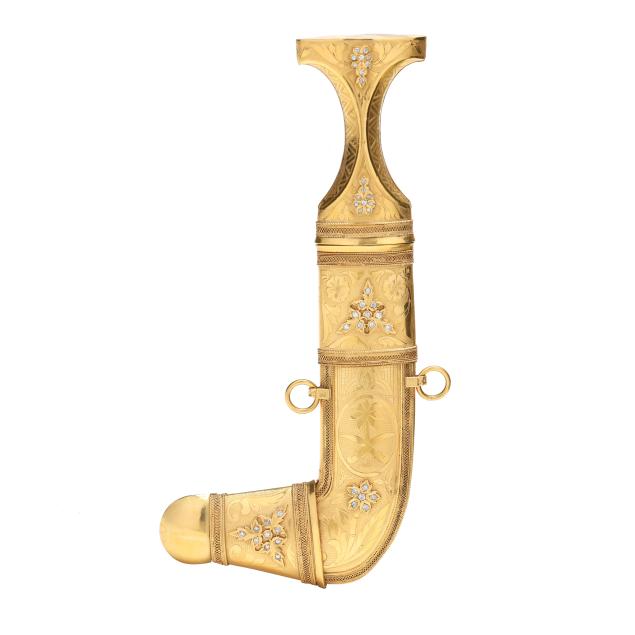
22 Karat Gold and Diamond Mounted Arabian Dagger, Jambiya
Explore more items like this one.
Visit our Historical Department Historical
Lot Details & Additional Photographs
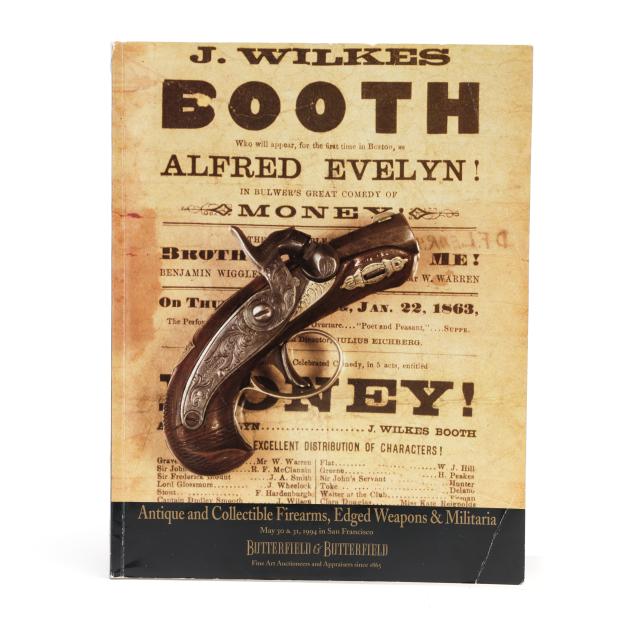
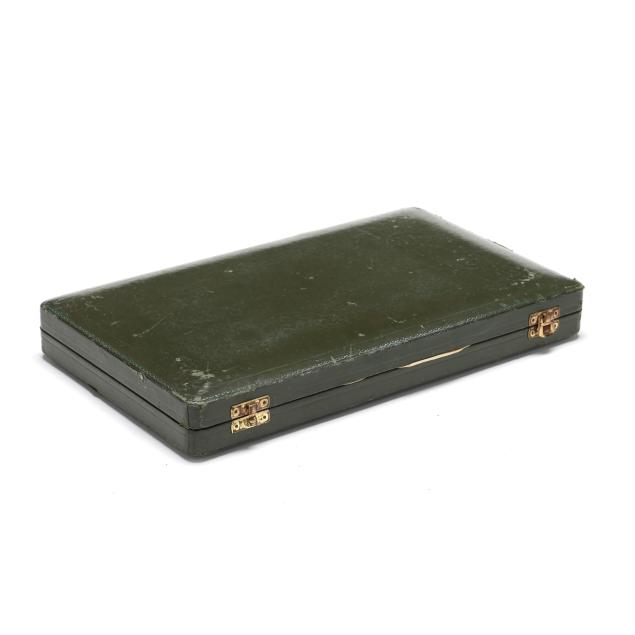
The Lot also includes a catalog from Butterfield & Butterfield Auction in 1994, featuring the dagger and case.
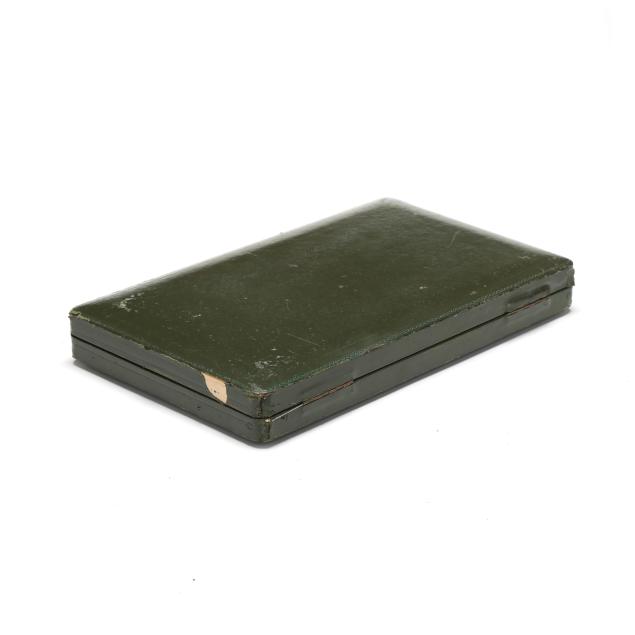
Dagger 11 x 5 1/4 x 1 in.; 6 1/4 in. blade length; case 13 3/4 x 8 1/4 x 2 in.
Total gross weight approximately 404 grams
XRF testing 22 K gold.
From a Private Collector, Davie County, North Carolina
Butterfield & Butterfield Fine Art Auctioneers & Appraisers, Antique & Collectible Firearms, Edged Weapons, and Militaria, San Francisco, May 30-31, 1994, Lot 1349.
Ahmad bin Ibrahim Badr (1920-2009) was the chief artist in charge of the production of the gold doors for the Ka'ba ordered by King Khaled bin Abd al-Aziz in October 1979. He was born in Mecca and joined his father in his gold and silver workshop at the age of 15. Following his death in 2009, prayers were held in his honor at The Grand Mosque.
The jambiya or janbīyyah (Arabic: جنبية) is derived from the Arabic word for ‘side’. The weapon embodies centuries of tribalism and honor, representing manhood, social prestige, and family identity. So impactful is the jambiya on Yemeni culture that its presence echoed throughout regions of the Islamic world, from Morocco to India, inspiring regional versions of the weapon.
Research has pointed perhaps to the weapon's first introductions through the Ottoman Turkish conquest and occupation of Yemen (1538–1630), as well as through trade with Iran and India. In fact some of the earliest illustrations of the weapon are seen in Ain-i-Akbari by Abu’l Fazl (1551–1602), at the British Library in London, depicting various similar weapons from India of the period including a ‘jambhwa.’
The Yemeni jambiya was an ideal weapon for its semi-nomadic and rural population, who primarily used it in defence. The short, curved blade provided several advantages for the wielder. First, when worn at the waist, it allowed for mobility and comfort while traveling, or even fighting, on horse or camel. Second, like most curved knives and daggers, the blade bends towards the opponent, eliminating the need to angle the wrist, thus providing more ease and stability as a stabbing weapon than a straight-edged blade. Third, it allowed for more agile movements, including cutting and twisting upwards. It should be mentioned that the blade’s heaviness was also significant for combat; it made it possible to inflict deeper wounds than a standard knife, as it could cut through muscle and bone.
Source: Parikh, Rachel. "Forging a Legacy: The Jambiya, Yemen’s Iconic Weapon." Orientations Magazine, March-April 2023.
Some light scratches; a few dents to the reverse of hilt and to the scabbard throat; case with surface marks, staining, and wear to the edges.