
Lot 2089
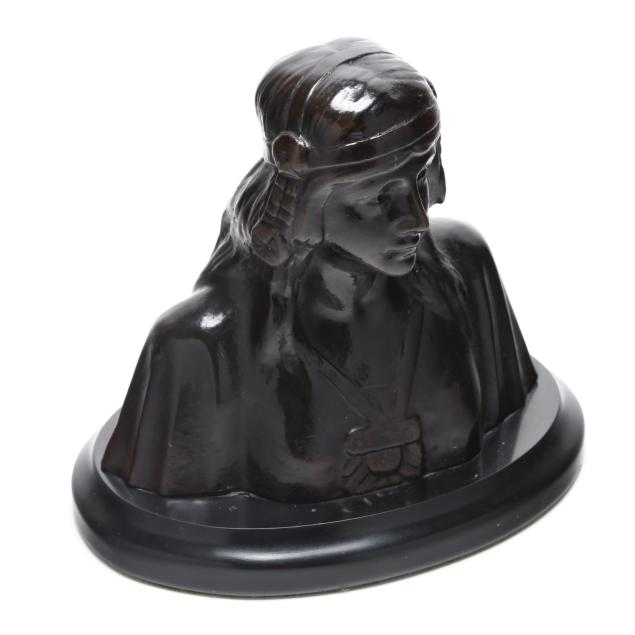
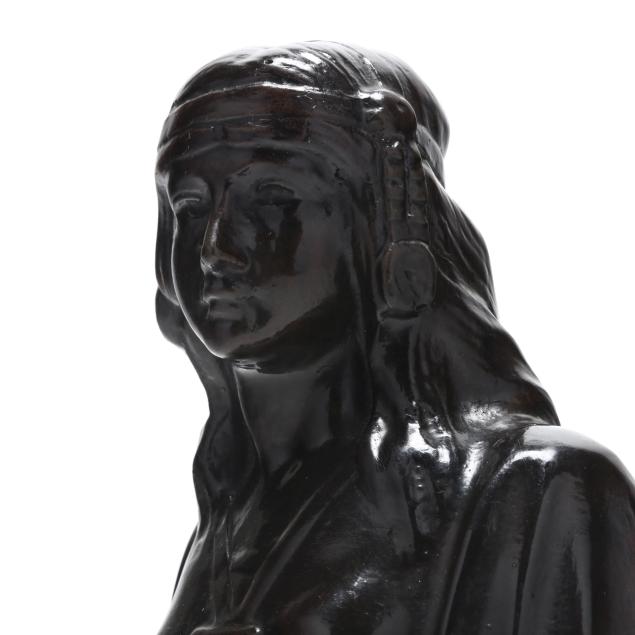
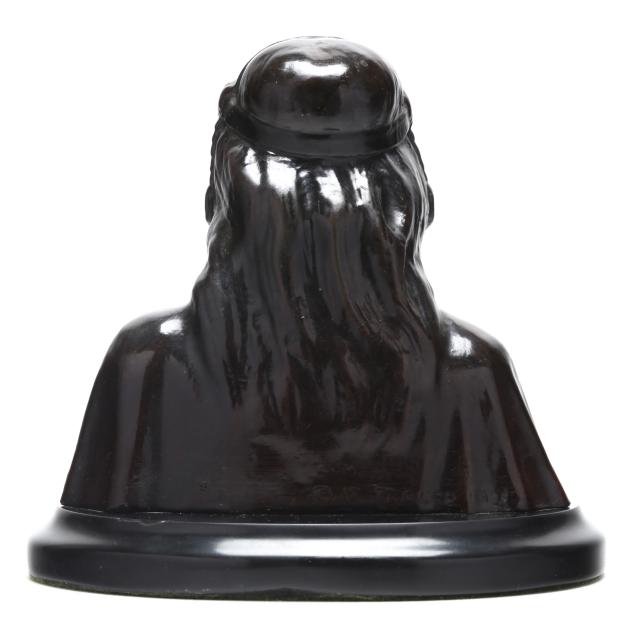
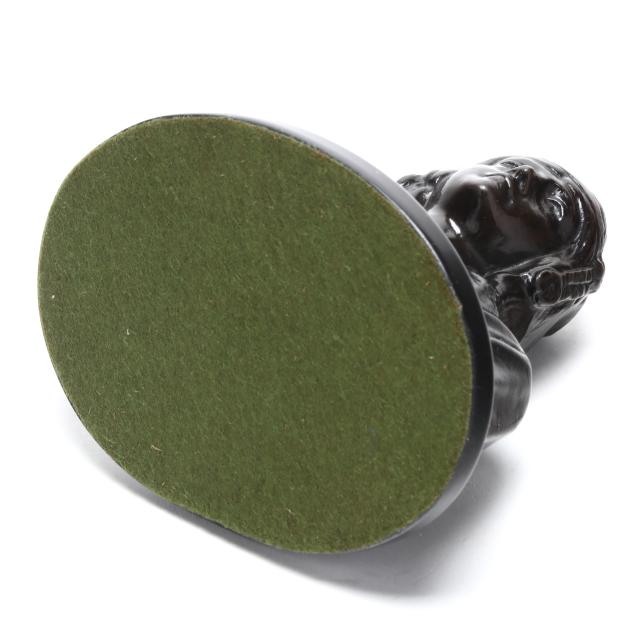
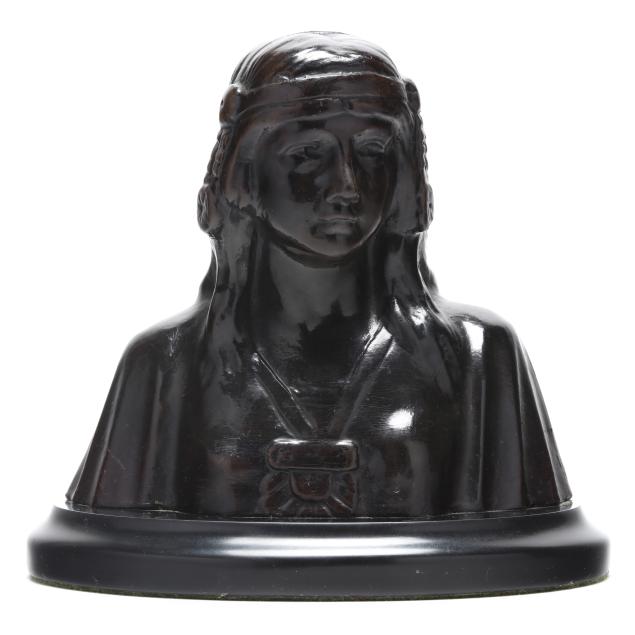
James Earle Fraser (American, 1876-1953), Indian Princess
Explore more items like this one.
Visit our Fine Art Department Fine Art
Lot Details & Additional Photographs
6 x 6 1/2 x 4 3/4 in.
For a similar example, see Bonham's Los Angeles Western Art, April 26th, 2022, Lot 91.
Having spent his childhood in the West, James Earle Fraser became one of the more famous sculptors of the American West. He also designed the Buffalo Nickel. From 1920 to 1925, he served on the National Arts Commission, and played a key role in promoting American subject matter in public art. In 1919, he received the Saltus Medal, the most prestigious medallic art award.
At age 18, with obvious art talent, he began studies at the Art Institute of Chicago and there studied sculpture with Richard Bock. By age 20, he was a student in Paris at the Ecole des Beaux-Arts and also studied at the Julian and Colarossi Academies.
At age 22, he became an assistant in New York City to Augustus Saint- Gaudens before opening his own studio in New York.
Fraser's first important commission was a bust of Theodore Roosevelt in 1908.
Two years later he completed his most memorable work, The End of the Trail, a dejected Indian sitting on a horse. Cast by Roman Bronze Works, it was originally modeled in 1894. The Seneca Chief John Big Tree was the model for the figure, which symbolizes the fate of the American Indians.
Fraser was married to Laura Gardin, also an accomplished sculptor in her own right.
Sources:
Gilbert, Alma. The Cornish Colony
Reynolds, Donald. Masters of American Sculpture
Peggy and Harold Samuels. An Illustrated Encyclopedia of Artists of the American West
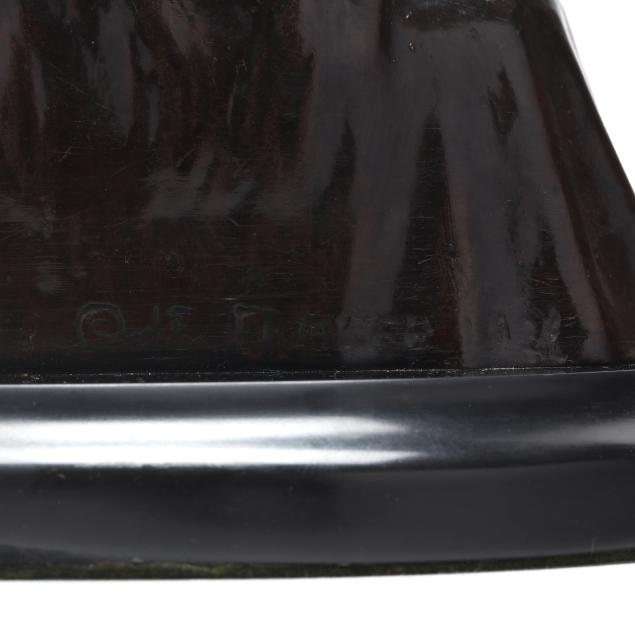
Good estate condition; some light rubbing to the patina; small area of surface wear to the marble at posterior edge.