
Lot 3151
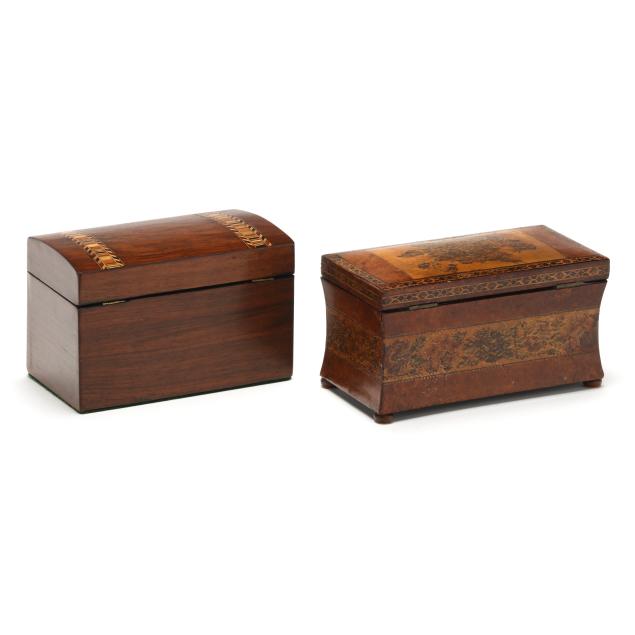
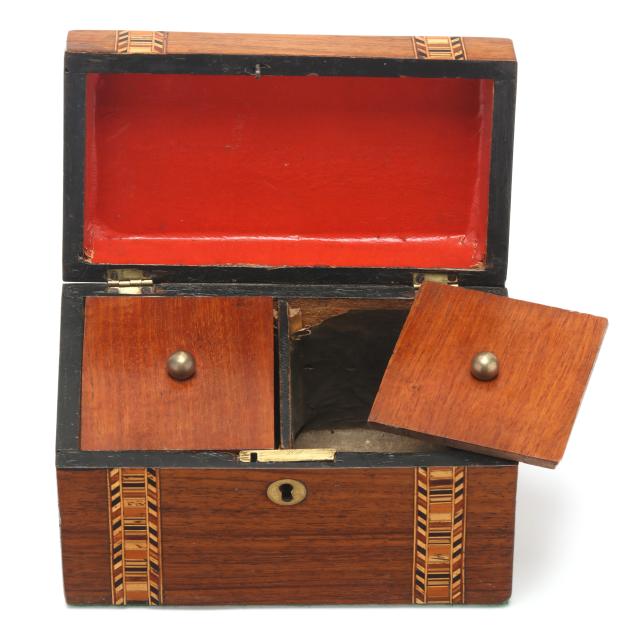
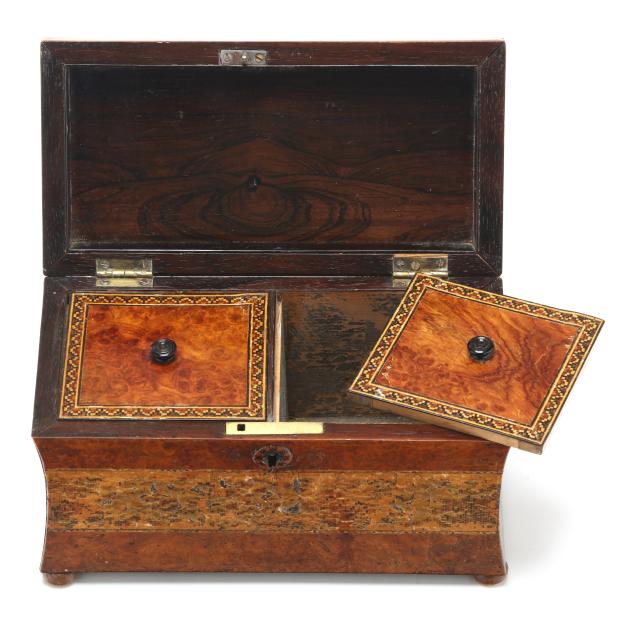
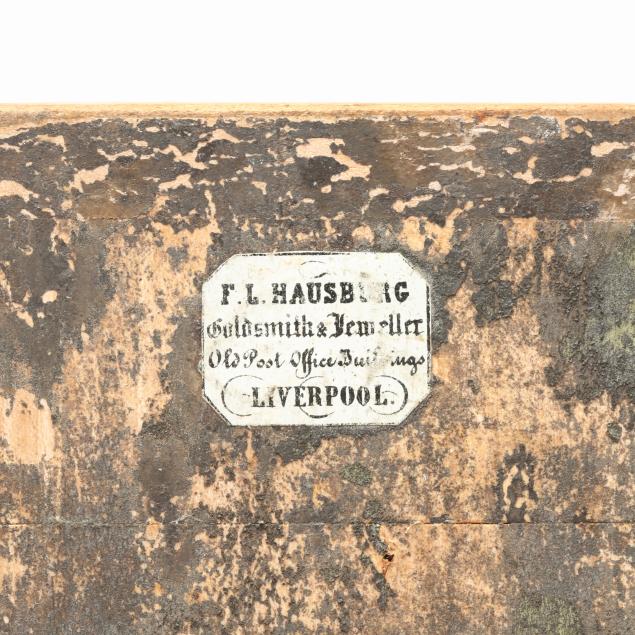
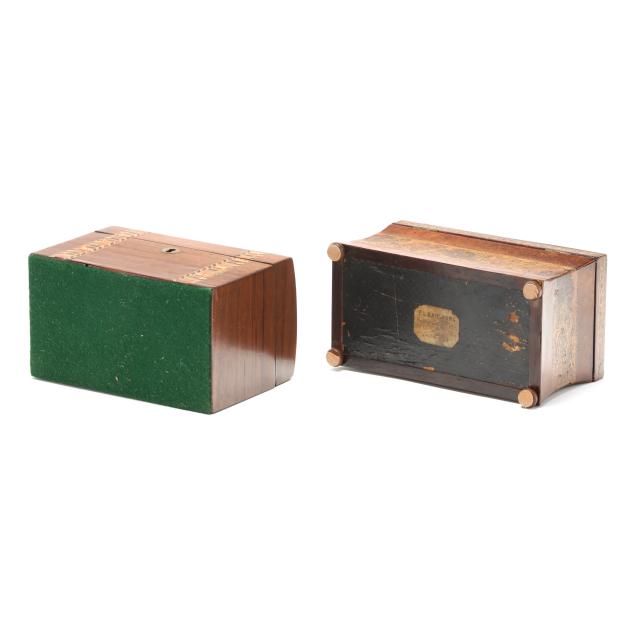
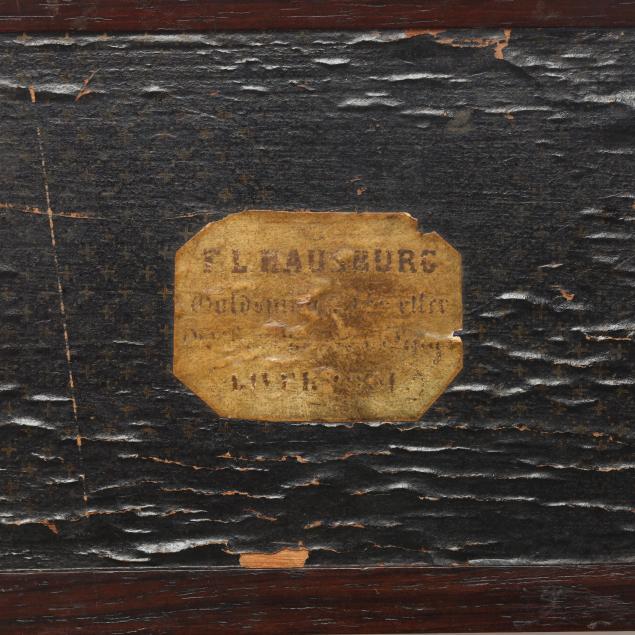
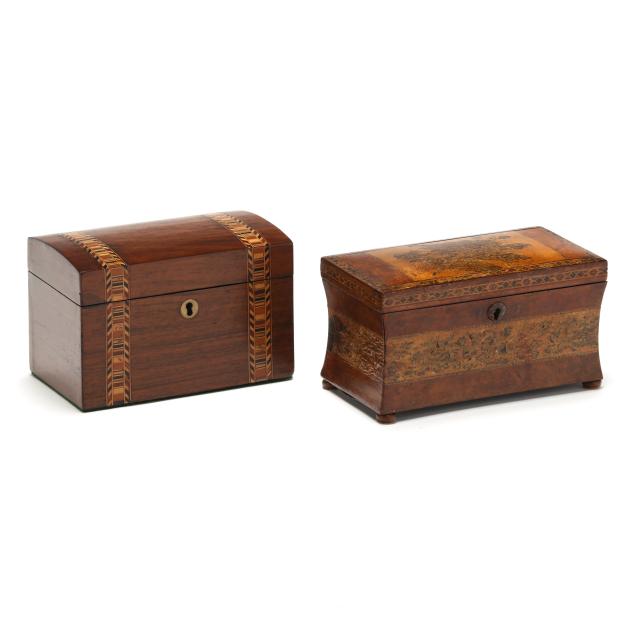
Two Fine Tunbridge Inlaid Tea Caddies, including Friedrich Ludwig Hausburg
Explore more items like this one.
Visit our Decorative Arts Department Decorative Arts
Lot Details & Additional Photographs
Private Collection, High Point, North Carolina
Friedrich Ludwig Hausburg was a celebrated nineteenth century jeweler and luxury goods maker who became one of Liverpool’s most admired retailers. Born in Berlin in 1817, he began his training in Paris under his uncle August Wilhelm Bernhardt Promoli at 4 Rue de Boulogne. This Parisian workshop specialized in fine jewelry, clocks, and a wide range of fashionable and decorative items, providing Hausburg with a rich foundation in European tastes and techniques.
By the late eighteen thirties Promoli had taken over the business of Thomas Woolfield, a prominent maker and retailer of dressing cases and luxury goods in Liverpool. The shop, once known as Woolfield’s Bazaar, had expanded to occupy four adjoining premises at 71 to 74 Church Street. This connection formed part of Hausburg’s family network, as Woolfield was the uncle by marriage of Hausburg’s wife, Catherine Mossop.
Hausburg retired in 1860 at the age of forty three, selling his business to W H Tooke who continued trading from the same Church Street address.
Today, surviving pieces by Friedrich Ludwig Hausburg, particularly his dressing cases and inlaid luxury goods, remain prized for their exceptional materials and their distinctive blend of Parisian influence and British design.
Source:
Mark Goodger: Fine Antique Boxes and Accessories, Friedrich Ludwig Hausburg.
Some rubbing and shrinkage wear to veneers of the Hausburg example, small area of veneer missing at the right hinge; tea compartment lining appears original but with losses.