
Lot 7161
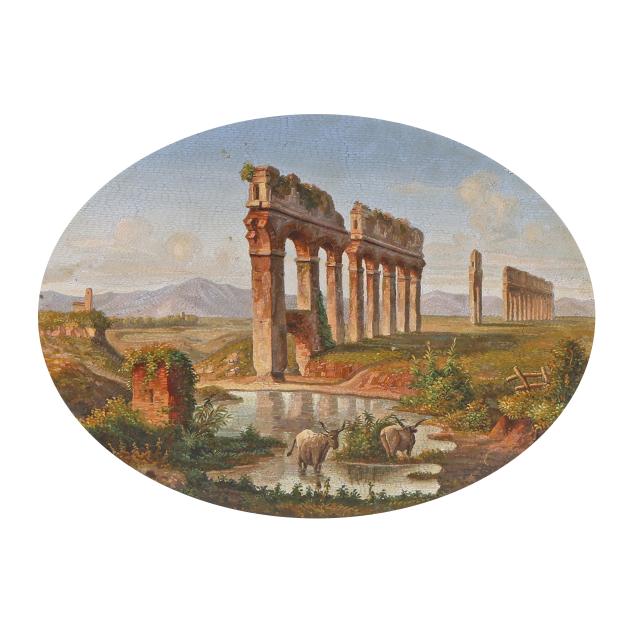
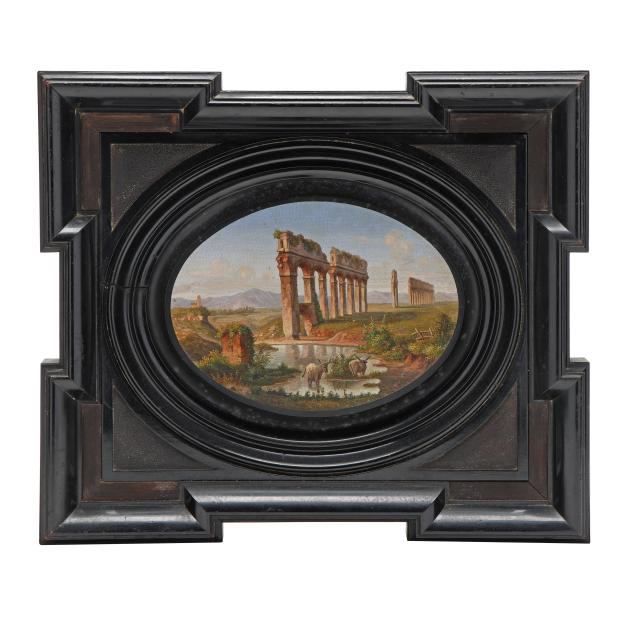
A Fine Italian Grand Tour Micromosaic Plaque of a Roman Aqueduct
Explore more items like this one.
Visit our Fine Art Department Fine Art
Lot Details & Additional Photographs
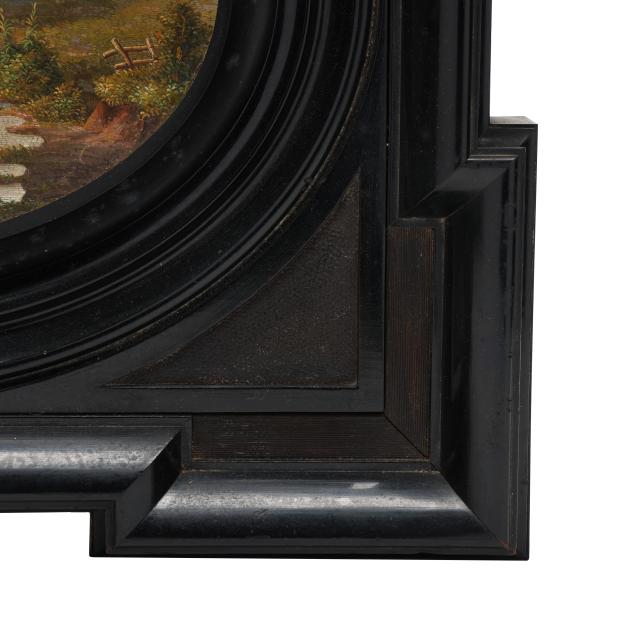
Frame dimensions 16 x 18 1/2 x 2 1/2 in.; plaque 9 x 11 1/4 in.
Private Collection, Chapel Hill, North Carolina
Originally constructed during the reigns of Emperor Caligula and Emperor Claudius (circa 38-52 CE), the Claudian Aqueduct or Aqua Claudia was one of nine aqueducts of the imperial city of Rome and is often a subject of inspiration for 19th-century artists, including notable works by John Linton Chapman (American, 1839-1905), André Giroux (French, 1801-1879), and Jean-Baptist Camille Corot (French 1796-1875).
Interesting is the contrast between the minute detailed mosaic tilework artistry and the quarried block construction method of ‘opus quadratum’ to create the colossal structure of the Roman aqueducts.
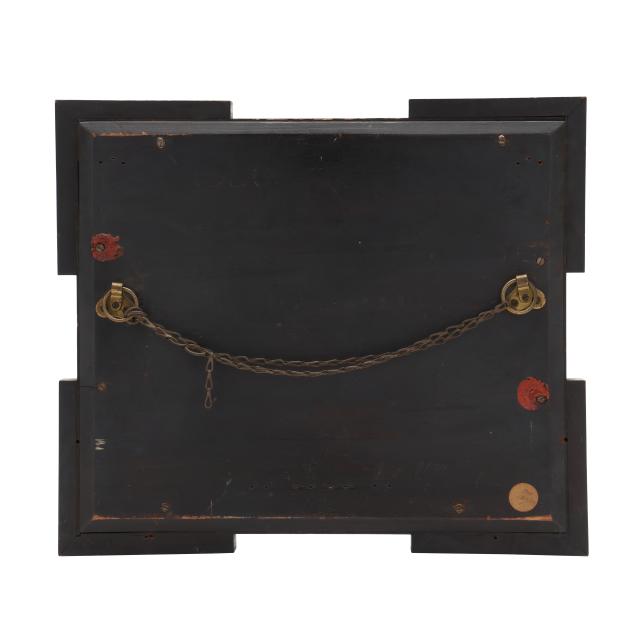
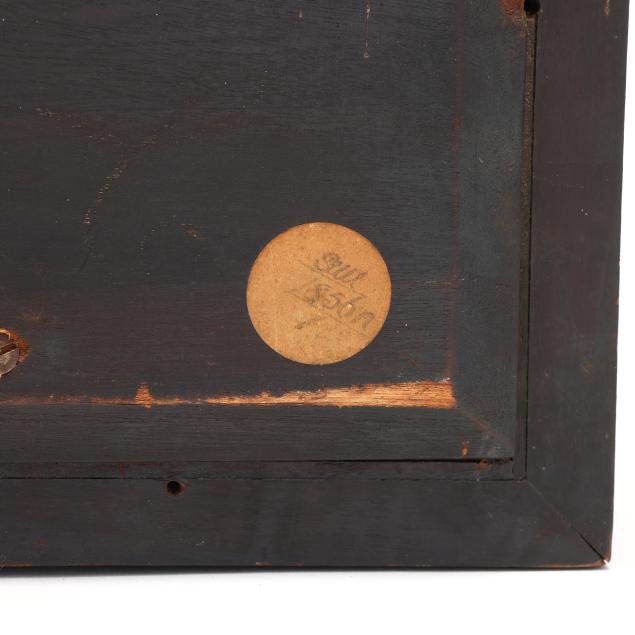
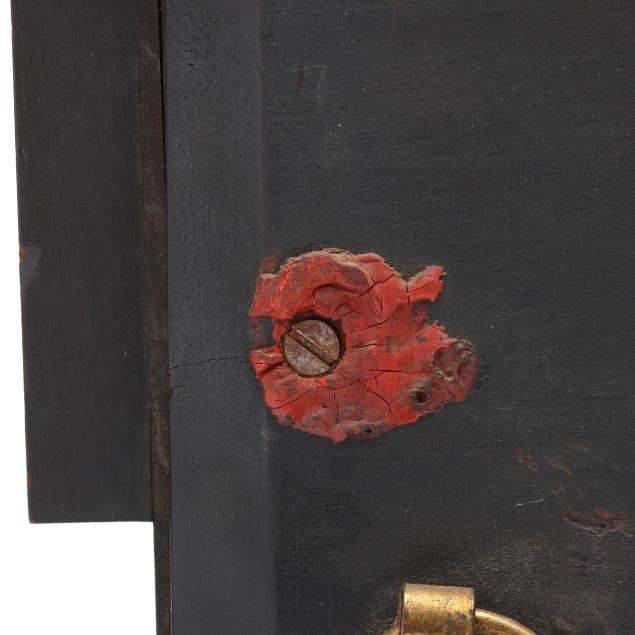
Some spotting along the perimeter of the panel; frame with crack to left vertice of the elliptical window; interior frame with later card backing.