
Lot 7002
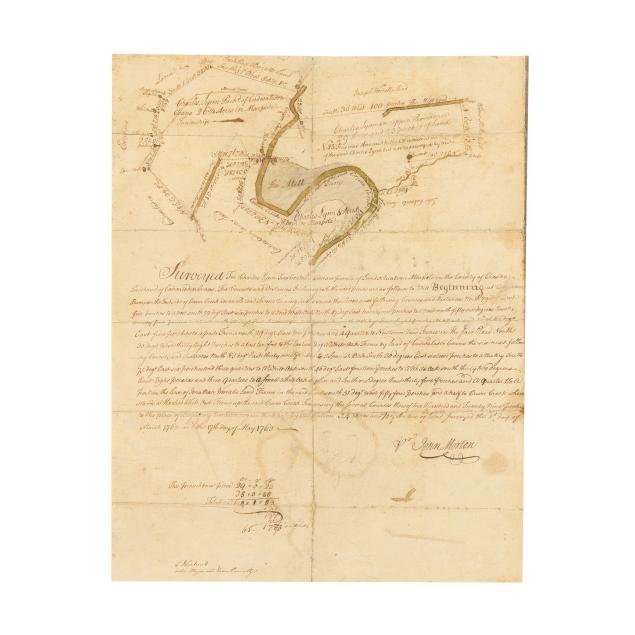
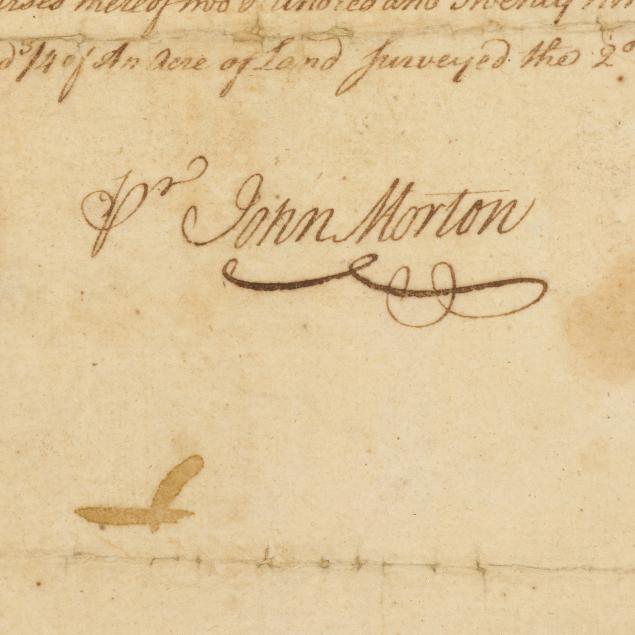
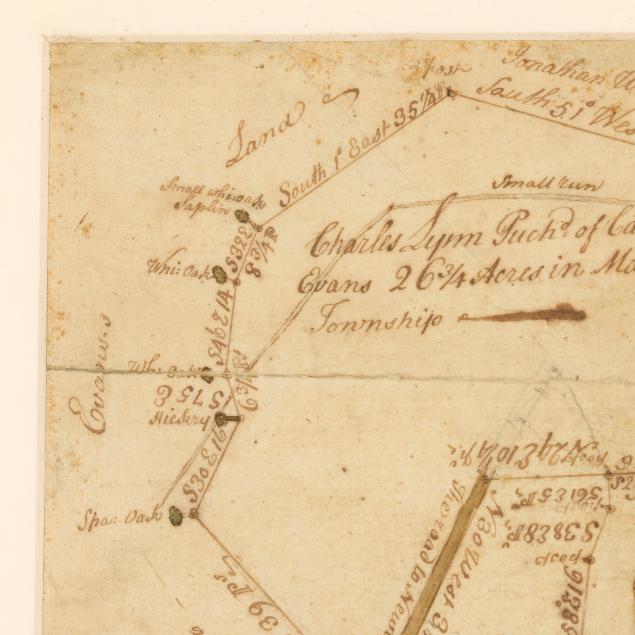
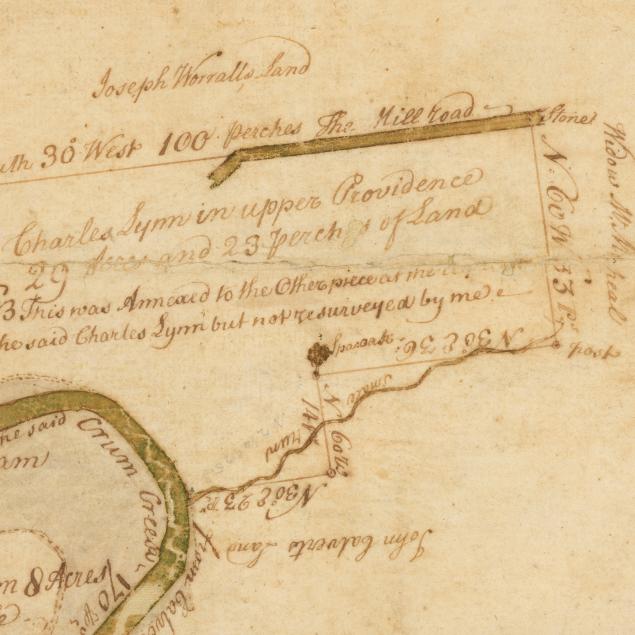
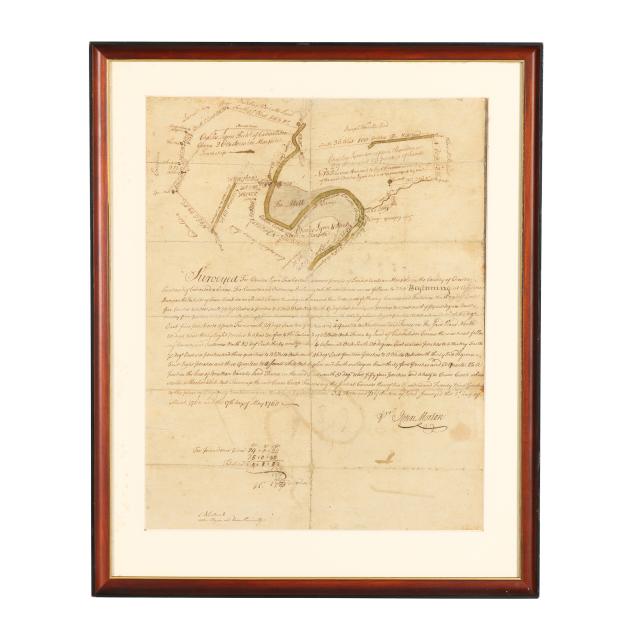
John Morton, Signer of the Declaration of Independence, Signed Pennsylvania Land Survey
Explore more items like this one.
Visit our Historical Department Historical
Lot Details & Additional Photographs
Sight size 16 1/8 x 12 5/8 in.; Frame dimensions 20 7/8 x 16 7/8 x 3/4 in.
John Morton (1725-1777) was born in Ridley Township, Chester (now Delaware) County, Pennsylvania. He had strong roots in the area, living there most of his life, and descending from early Finnish-Swedish settlers in the Swedish Empire’s colony known as New Sweden. Raised and educated by his stepfather, a land surveyor, Morton learned the necessary skills for this same profession and worked as a surveyor for nearly three decades.
Like many other Founding Fathers, John Morton wore numerous hats, working not only as a surveyor but in the field of law as well. He served numerous positions during his career, including Justice of the Peace, High Sheriff, Road Commissioner, and Associate Justice of the Supreme Court of Pennsylvania. He served as a longtime member of the Pennsylvania General Assembly, and was elected Speaker in 1775. Morton was a delegate to the Stamp Act Congress, and he represented Pennsylvania at both the First Continental Congress and the Second Continental Congress. He was an important member of the delegation, casting the deciding vote for independence. He went on to become one of the signers of the Declaration of Independence, and was working to help draft the Articles of the Confederation before his untimely death.
Linen backed and attached to board; with folds, as expected, with some associated offsetting; general age wear such as light foxing and toning; some areas of separation at the folds, a couple of stains, a few tiny chips and tears, and scattered small areas of repair; a few faint pencil lines and notations (later?); writing difficult to read along one horizontal fold; foxing to mat and board slightly loose within the frame; light wear to frame; not examined outside the frame.