
Lot 2339
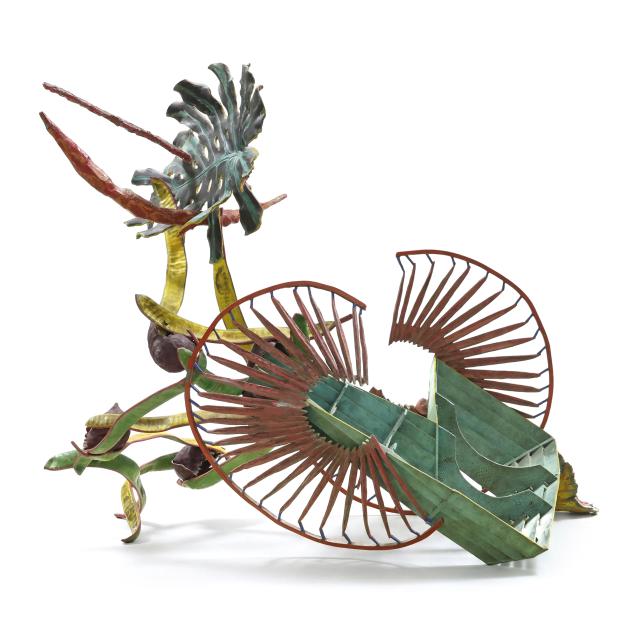
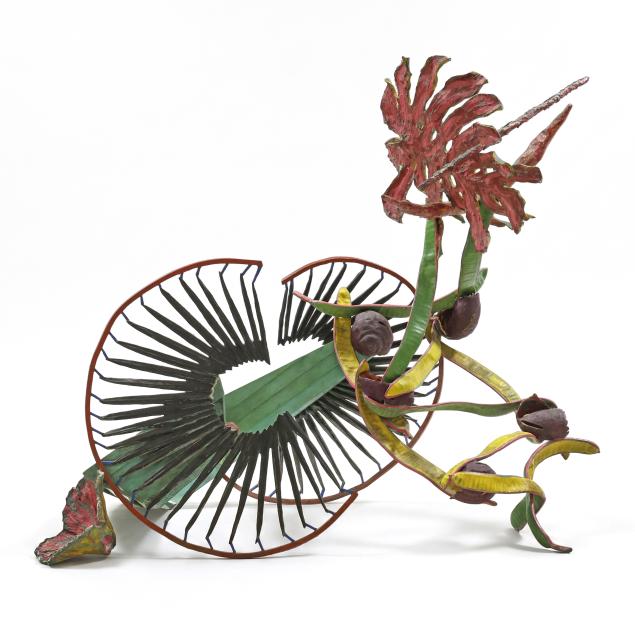
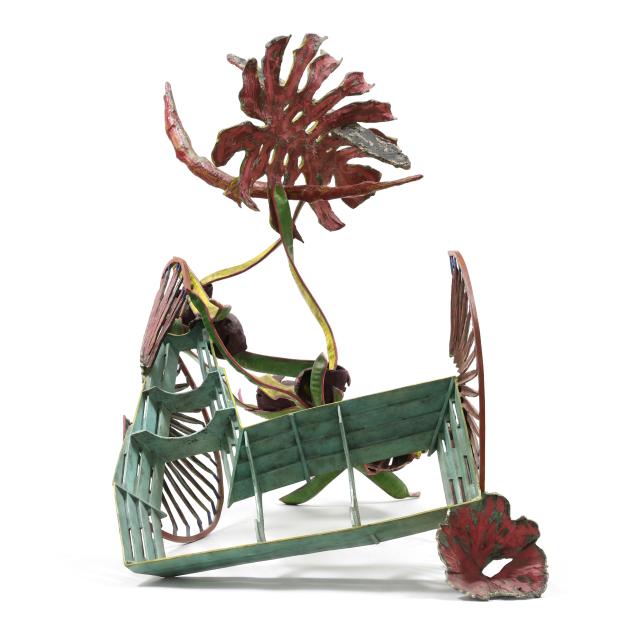
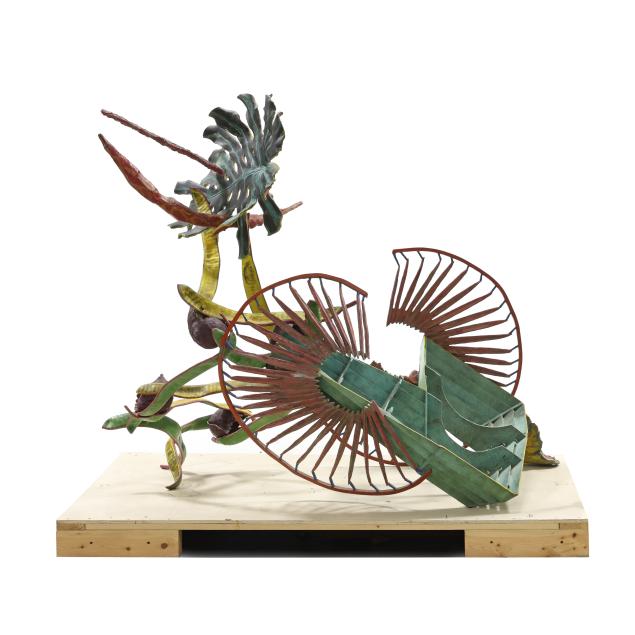
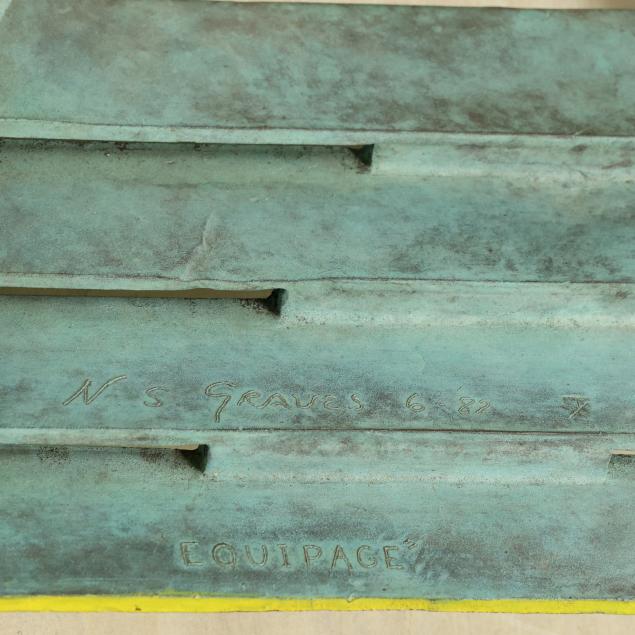
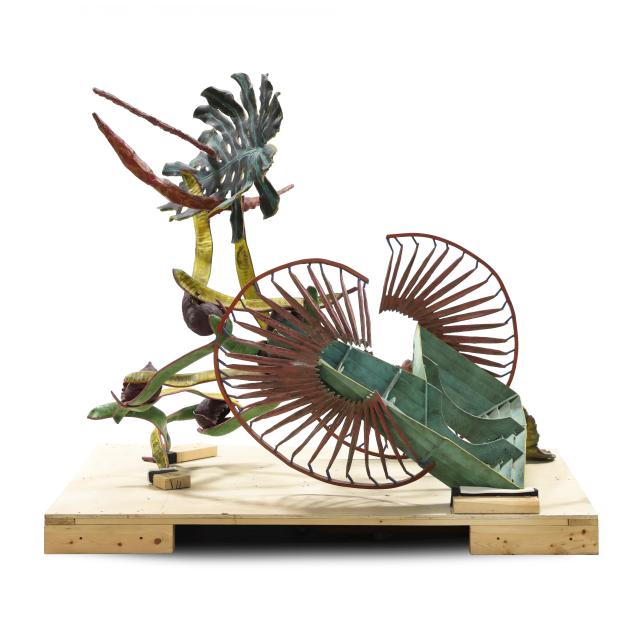
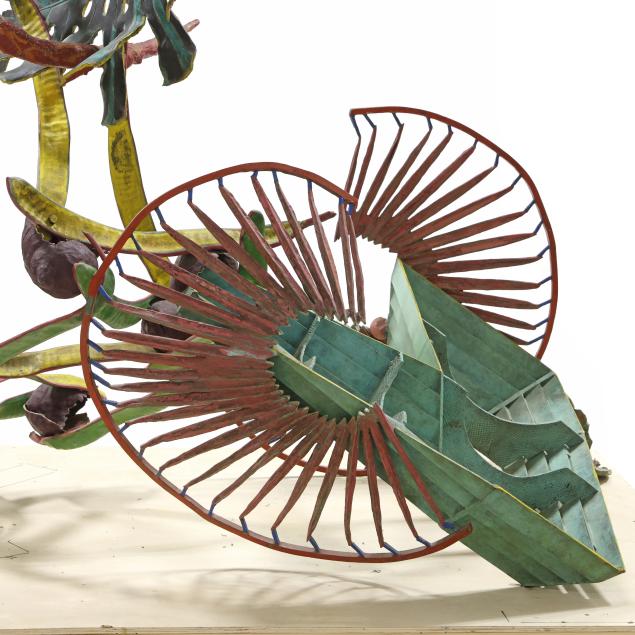
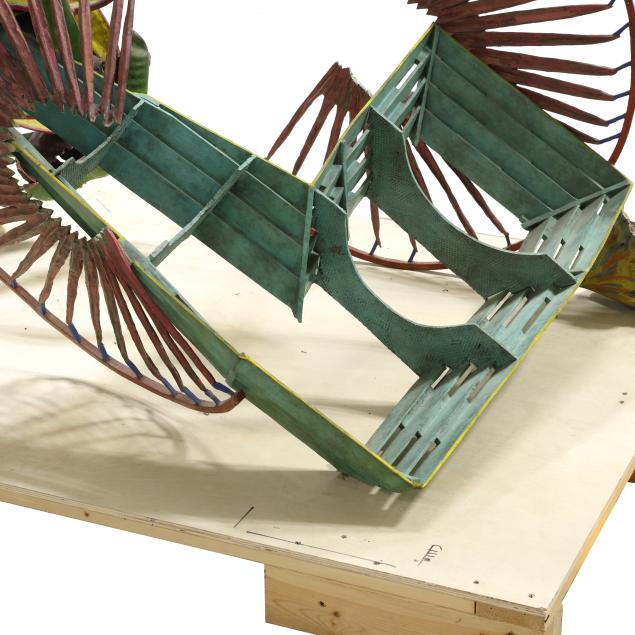
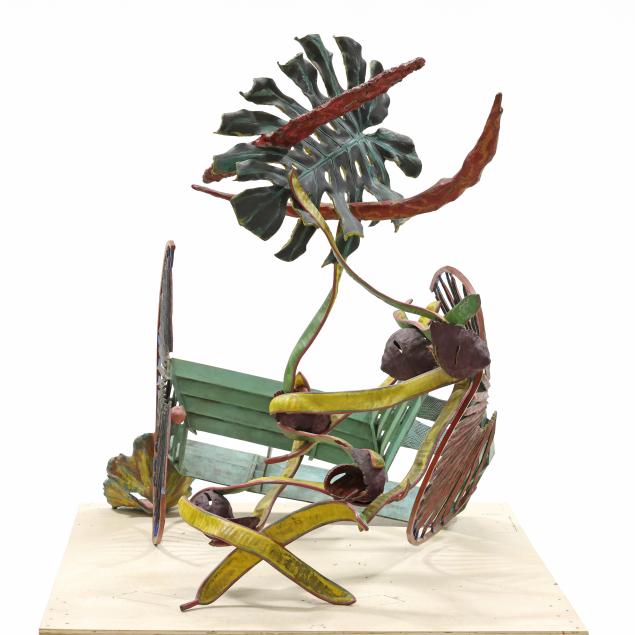
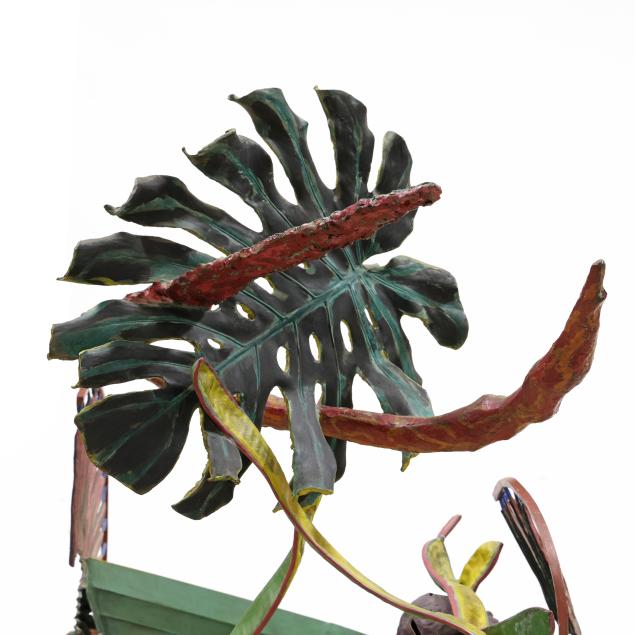
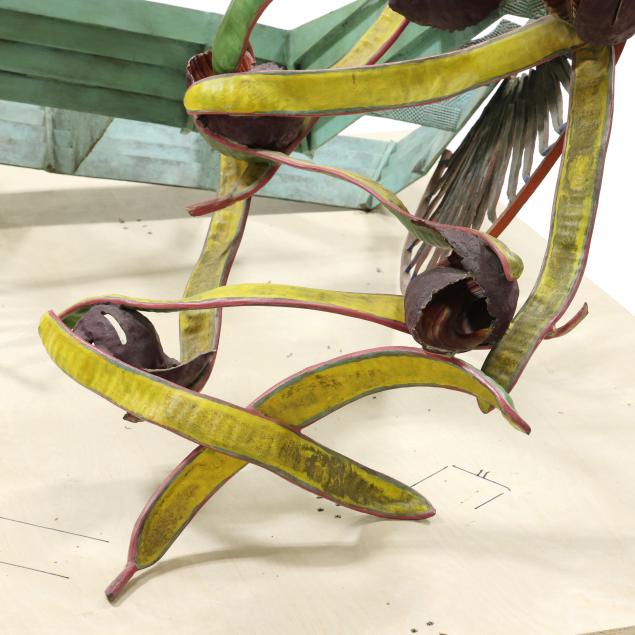
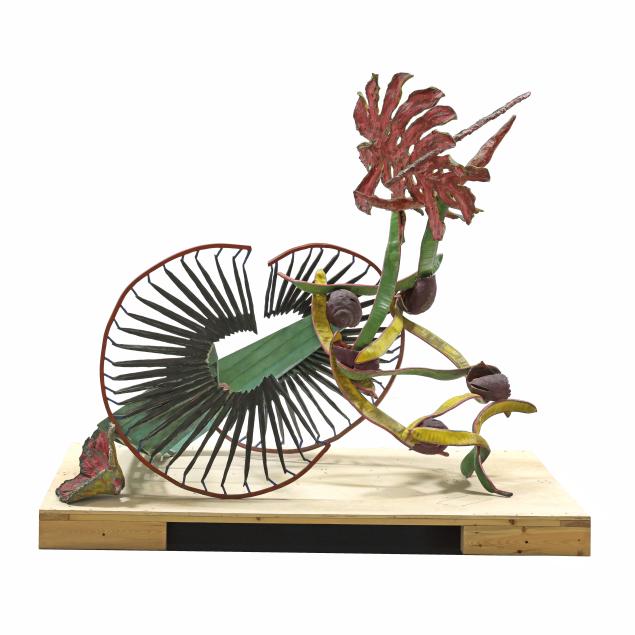
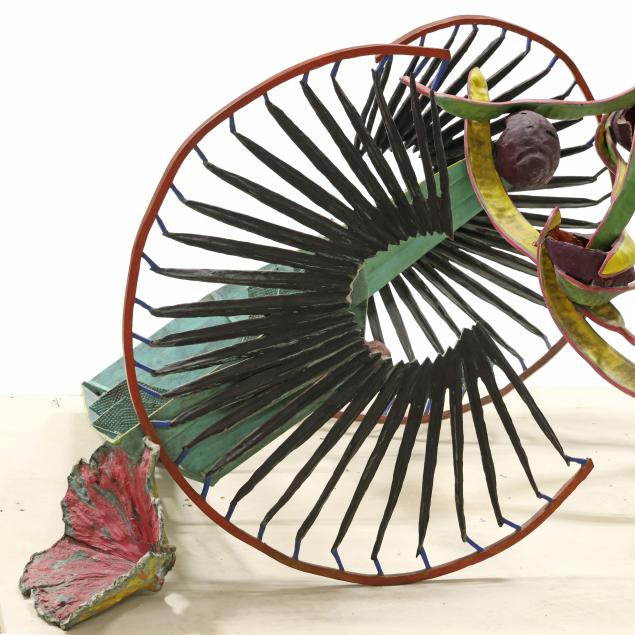
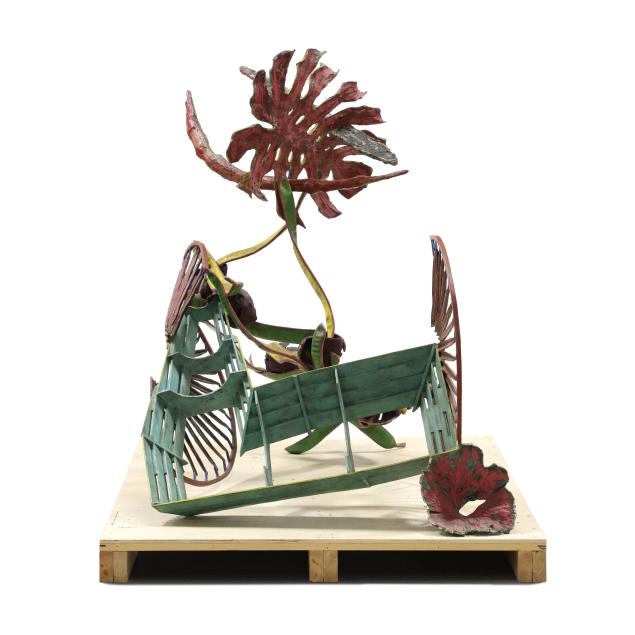
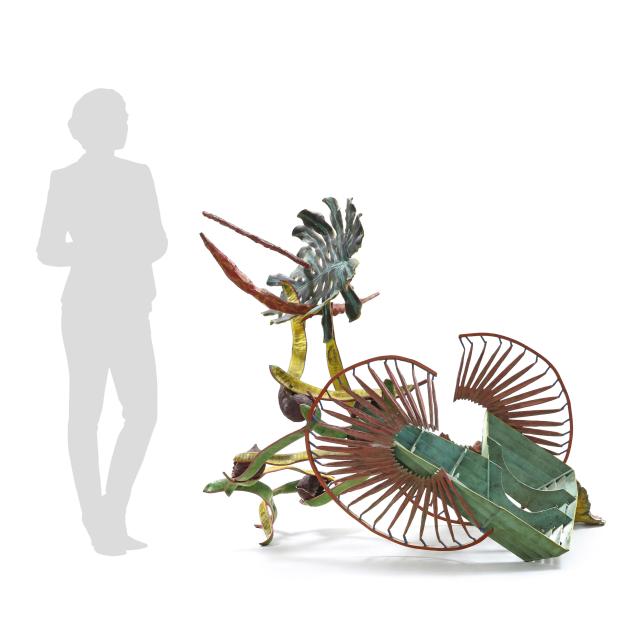
Nancy Graves (American, 1940-1995), Equipage, 1982
Explore more items like this one.
Visit our Fine Art Department Fine Art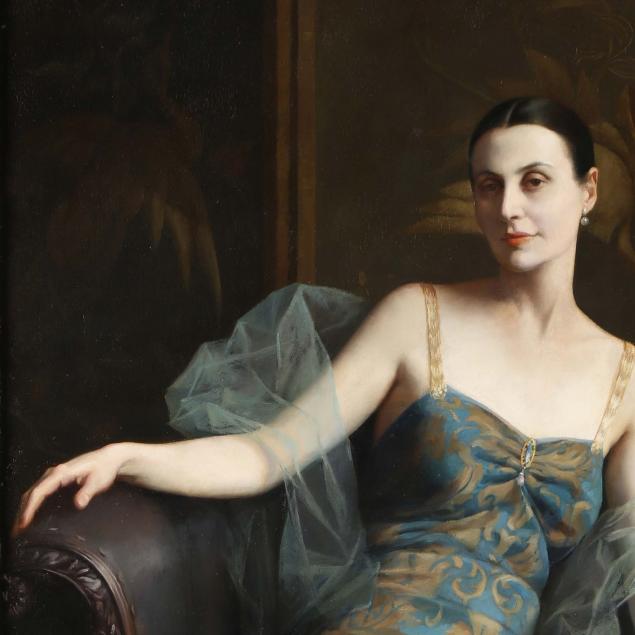
Lot Details & Additional Photographs
Sculpture 53 x 42 x 53 1/2 in.; platform 5 x 65 x 48 in.
Private Collection, Florida and North Carolina
Exhibited:
M. Knoedler & Co., New York, NY, Nancy Graves: New Sculpture 10/16/1982
Nasher Museum of Art at Duke Univeristy, Durham, North Carolina. Disorderly Conduct: American Painting and Sculpture, 1960-1990, September 21, 2017-February 28, 2018
Literature:
Anderson, Alexandra, The New Bronze Age, Portfolio, March/April 1983, p. 82 illus.
Carmean, Jr., E.A., The Sculpture of Nancy Graves: A Catalogue Raisonne, Hudson Hills Press, New York, NY in association with the Fort Worth Art Museum, Fort Worth, TX, 1987, pp. 11, 65, 96 illus., and 97 cat no. 94.
M., J., In Review: New York, Graves at M. Knoedler, The Art Gallery Scene, Washington, D.C., November 16, 1982, p. 4.
We would like to thank the Nasher Museum and Nancy Graves Foundation for their assistance with information regarding this Lot.
Nancy Graves is an American artist of international renown. A prolific cross-disciplinary artist, Graves developed a sustained body of sculptures, paintings, drawings, watercolors, and prints. She also produced five avant-garde films and created innovative set designs.
Born in Pittsfield, Massachusetts, Graves graduated from Vassar College in 1961. She then earned an MFA in painting at Yale University in 1964, where her classmates included Robert Mangold, Rackstraw Downes, Brice Marden, Chuck Close, as well as Richard Serra with whom she was married from 1964 to 1970. Five years after graduating, her career was launched in 1969 when she was the youngest artist — and only the fifth woman — to be selected for a solo presentation at the Whitney Museum of Art. Graves’ work was subsequently featured in hundreds of museum and gallery exhibitions worldwide, including several solo museum exhibitions. She was awarded commissions for large-scale site-specific sculptures and her work is in the permanent collections of major art museums. A frequent lecturer and guest artist, her work was widely documented during her lifetime. In 1991 she married veterinarian Dr. Avery Smith. Graves travelled extensively and was fully engaged with the cultural and intellectual issues of her times. Her brilliant career and life were cut short by her untimely death from cancer at age 54.
Based in SoHo, New York, Graves gained prominence in the late 1960s as a post-Minimalist artist for innovative camel, fossil, totem, and bone sculptures that were hand formed and assembled from unusual materials such as fur, burlap, canvas, plaster, latex, wax, steel, fiberglass and wood.
After intensely engaging with sculpture in the early 1970s, Graves returned to painting. Her detailed pointillist canvasses re-produced — in paint — images culled from documentary nature photographs, NASA satellite recordings, and Lunar maps, commingling scientific exactitude with abstraction.
Resuming sculpture in the late 1970s, Graves was among the first contemporary artists to experiment with bronze casting. She re-invigorated the traditional lost wax technique by assembling cast found objects into unique improbably balanced sculptures, with bright polychrome surfaces and distinctive patinas.
Throughout the 1980s Graves became widely recognized for her increasingly large and graceful open-form sculpture commissions. At the same time, she also expanded her drawing, painting, and printmaking practice and made large gestural watercolors. Then, in the late 1980s she created wall-mounted works that combined her explorations of sculpture, painting, form and color. In these large-scale pieces, she mounted high relief polychrome sculptural elements to the surfaces and edges of painted shaped canvases so that patterned shadows were cast onto the paintings and surrounding wall.
By the 1990s Graves was casting in glass, resin, paper, aluminum, and bronze, combining these varied materials and colors into daring sculptures with moving parts.
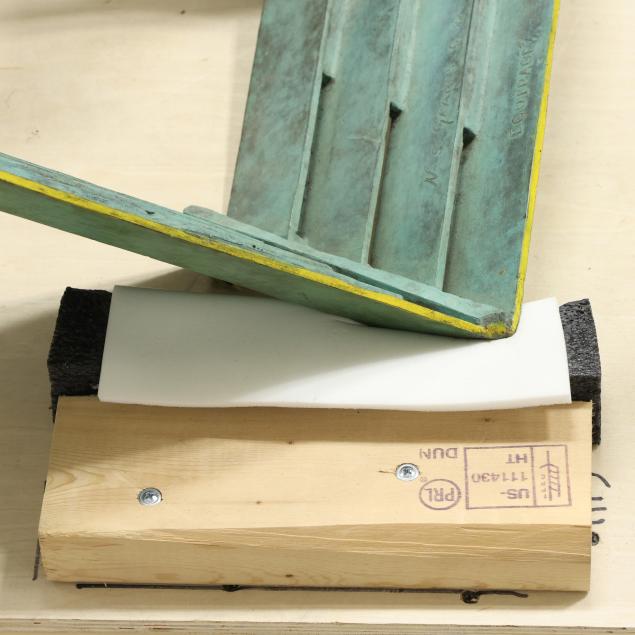
Some scattered oxidation and surface rubbing to the polychrome; otherwise good estate condition.