

Lot 3076
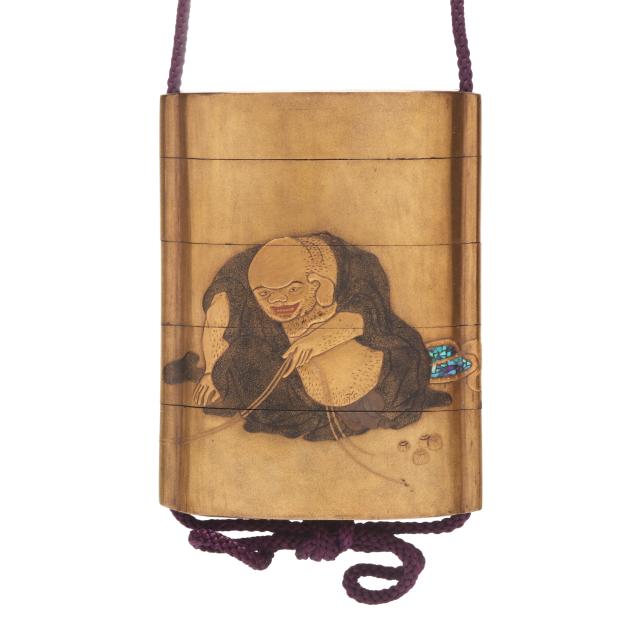
A Japanese Gold Lacquer Inro with Hotei by Kajikawa
Explore more items like this one.
Visit our Asian Arts Department Asian Arts
Lot Details & Additional Photographs
3 1/4 x 2 1/2 x 3/4 in.
An inro is a tiered container traditionally worn by Japanese men, whose kimono lacked pockets. From the late sixteenth century onward, inro were suspended from the sash (obi) by a silk cord secured with a netsuke toggle. Originally intended to carry seals and ink or medicinal compounds, they later evolved into highly refined objects of personal adornment and craftsmanship.
This example is signed Kajikawa, one of a family of lacquer workers who specialized in inro. It is often not possible to identify individual artists as many generations simply used the name "Kajikawa."
Fleabite to base of one compartment; otherwise good estate condition.


