
Lot 7059
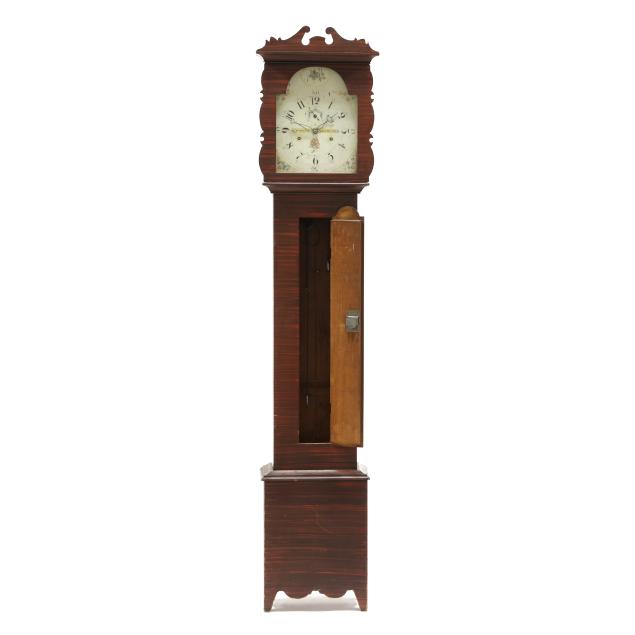
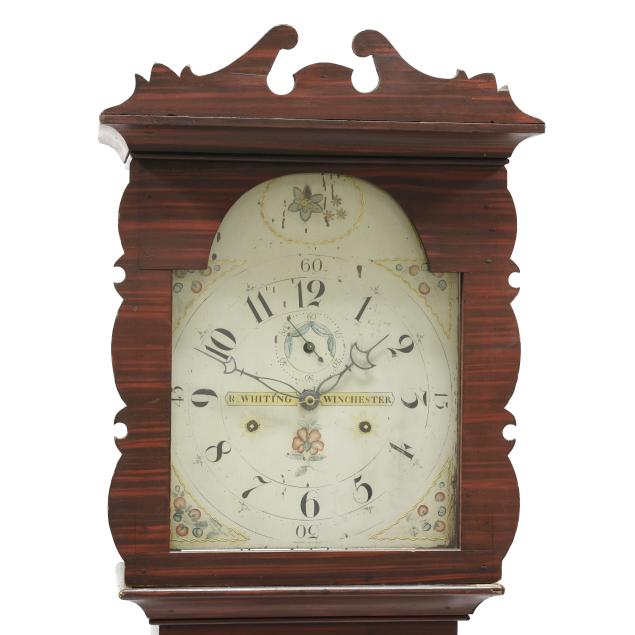
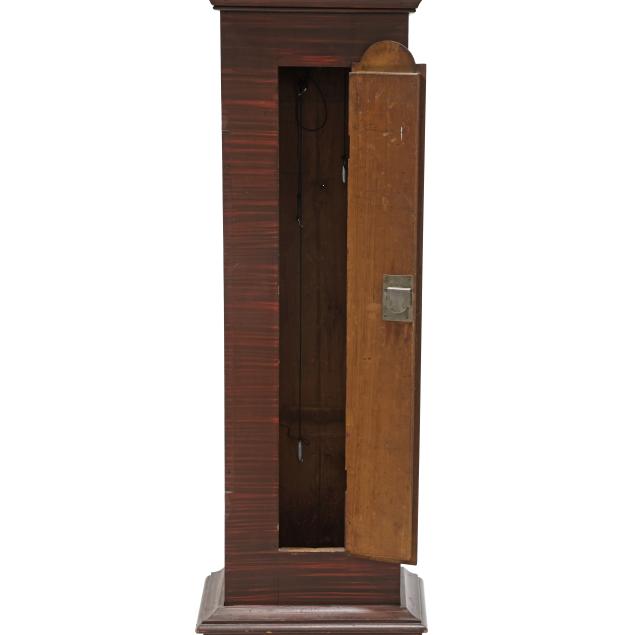
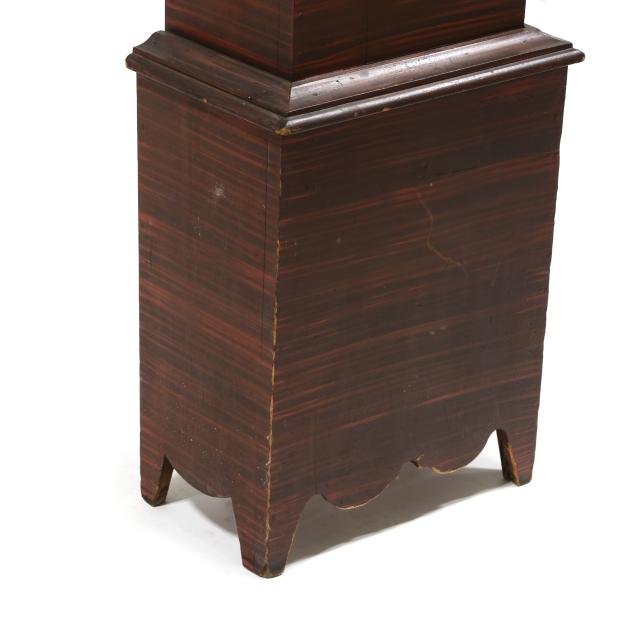
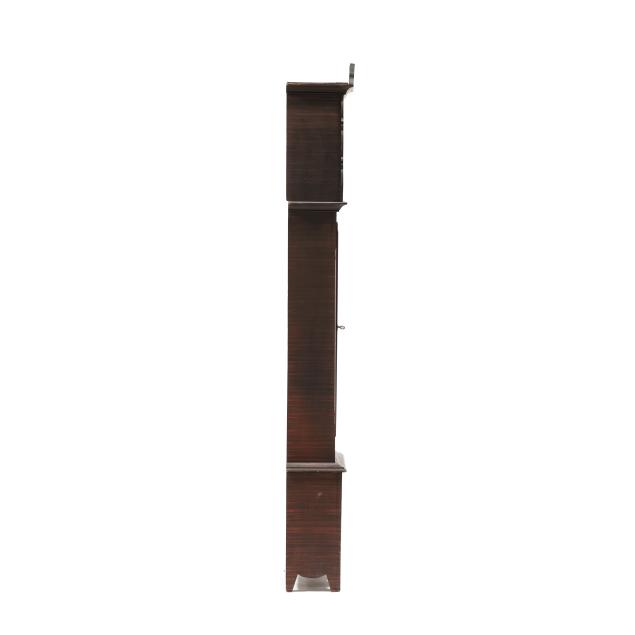
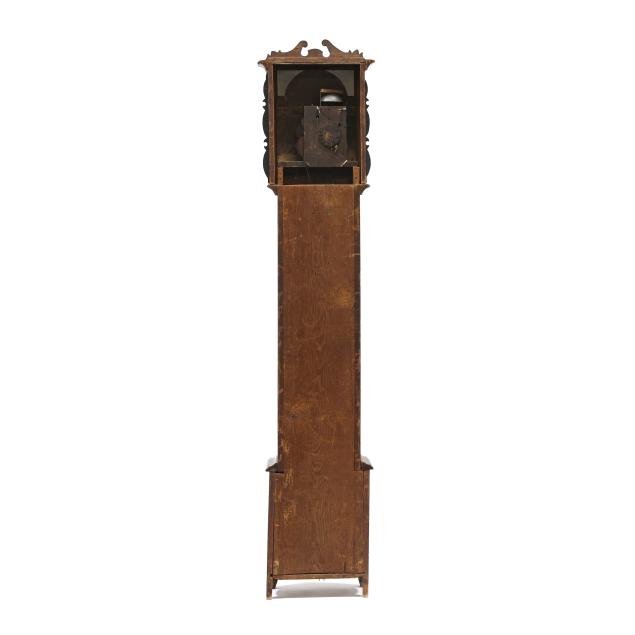
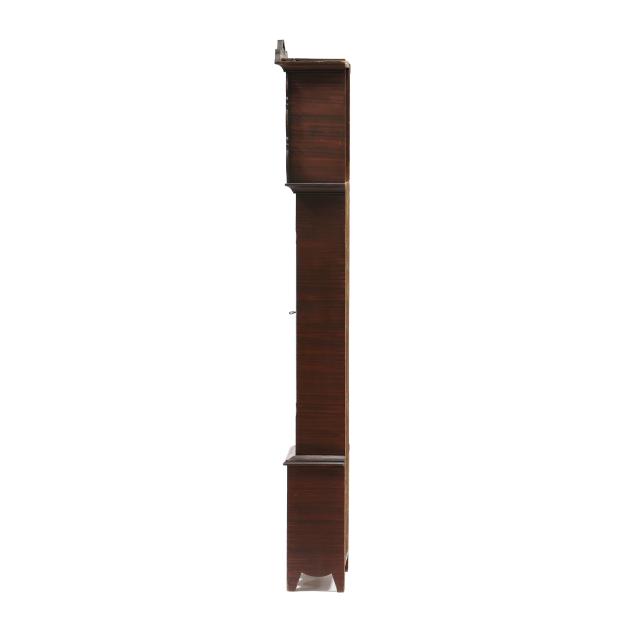
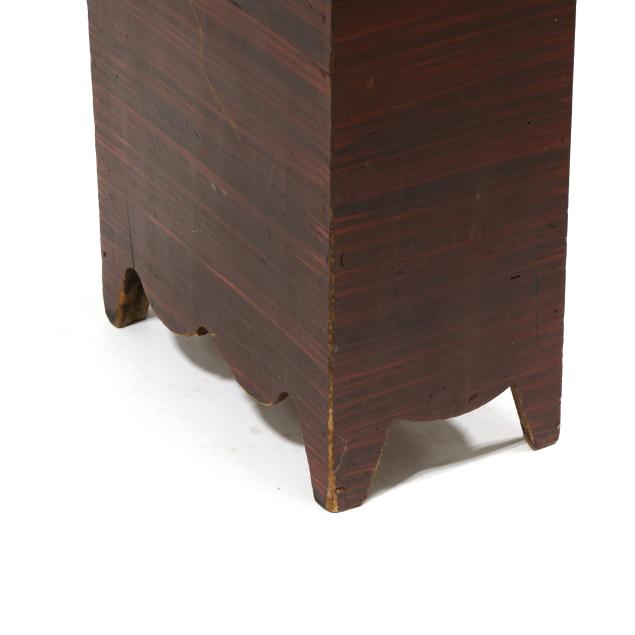
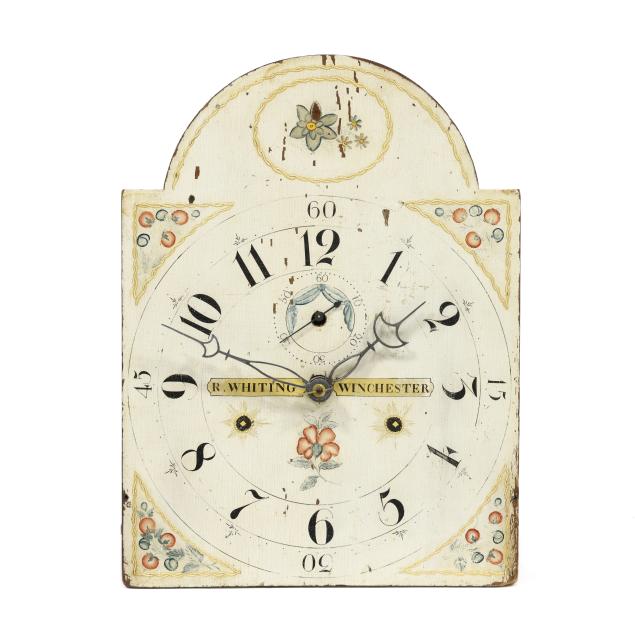
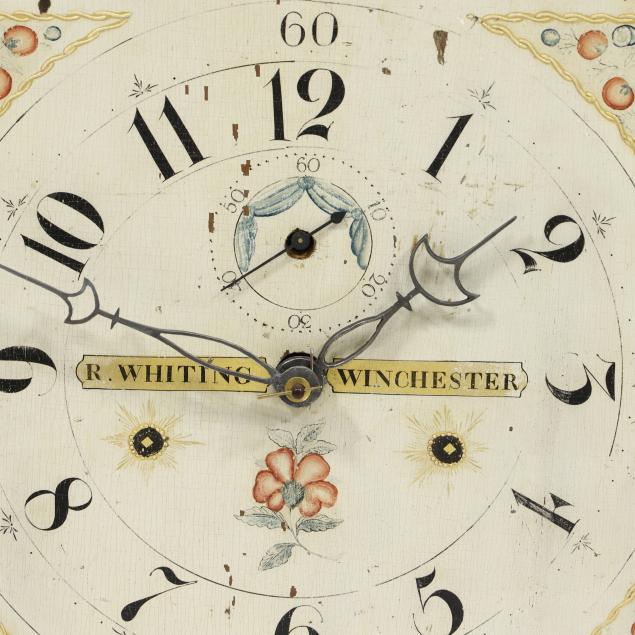
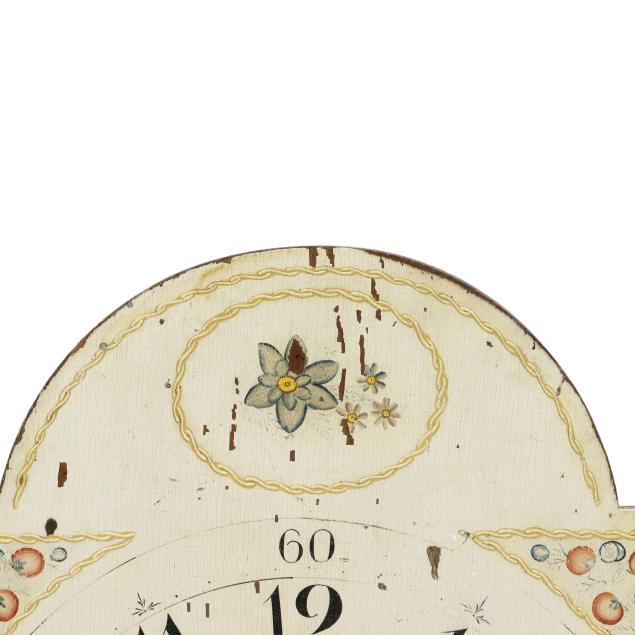
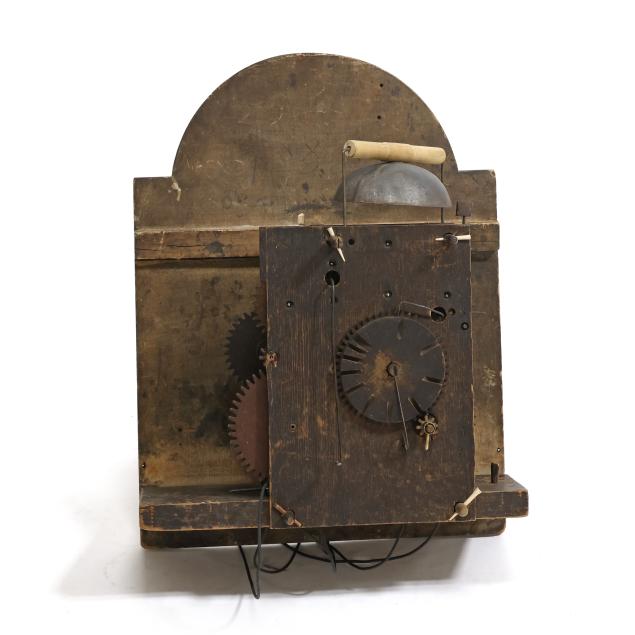
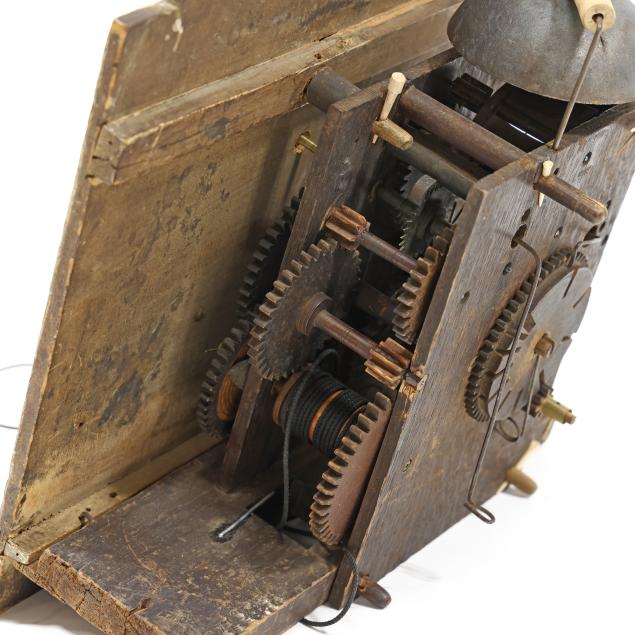
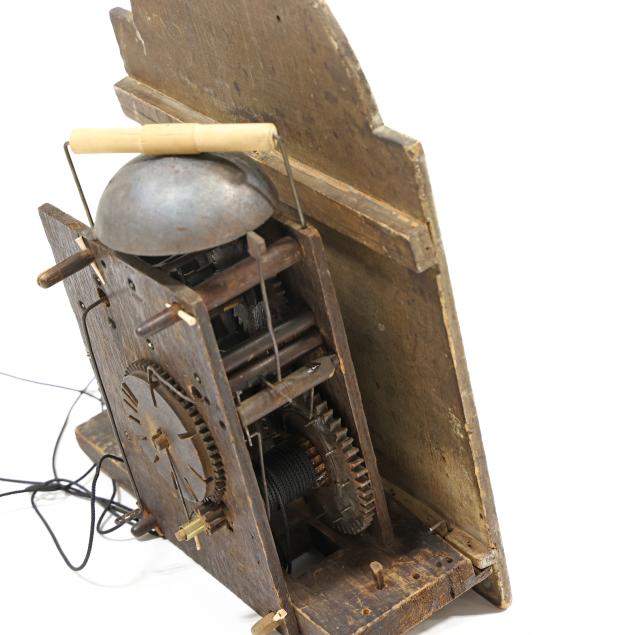
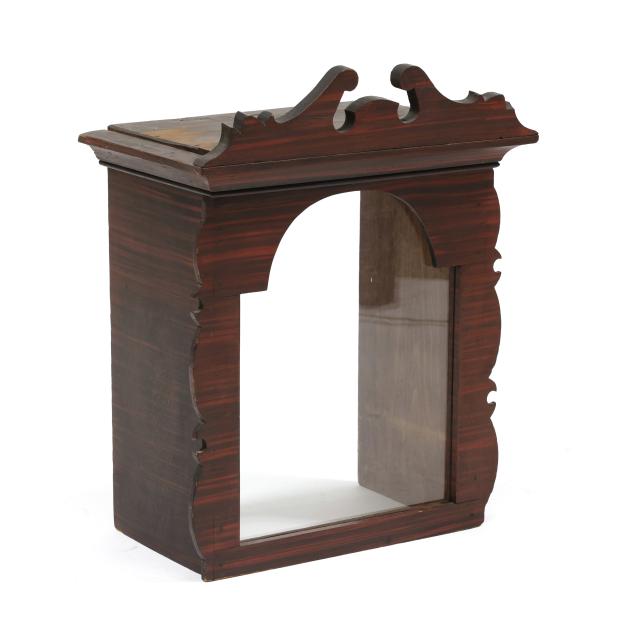
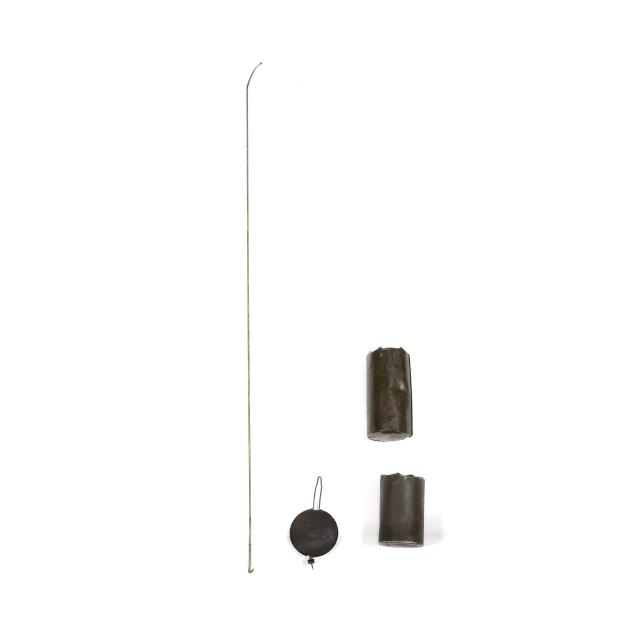
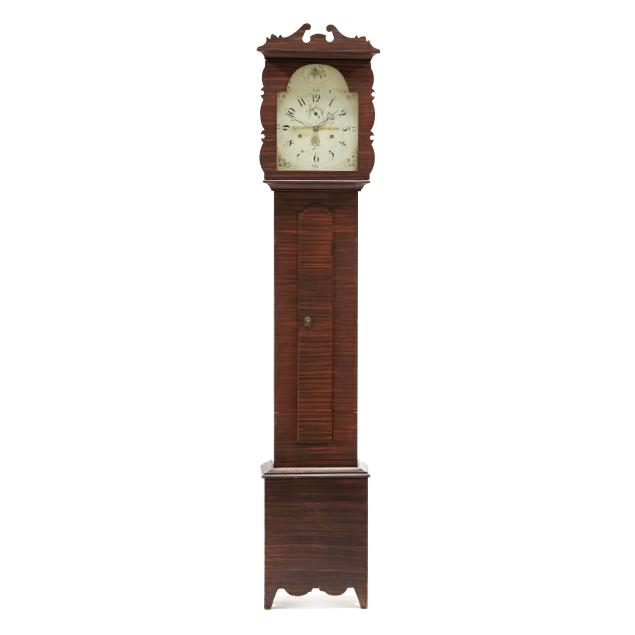
Connecticut Paint-Decorated Tall Case Clock, Riley Whiting of Winchester
Explore more items like this one.
Visit our Decorative Arts Department Decorative Arts
Lot Details & Additional Photographs
83.75 x 16 x 9.5 in.
From the Collection of Bill Ivey, Asheboro, North Carolina
Riley Whiting was born in Torrington, Connecticut, on January 16, 1785, the son of Christopher and Mary (Wilcox) Whiting. In 1806, he married Urania Hoadley and served his apprenticeship with her brothers Samuel and Luther Jr Hoadley. They settled in Winchester, Connecticut, in 1803 and were making wooden geared clocks. In 1807, they formed a partnership under the name Samuel Hoadley & Co. Luther Hoadley was killed in Groton, Connecticut, in 1813, fighting in the war. Soon after that, Samuel and Riley changed the name to Hoadly & Whiting. In 1819, Samuel Hoadley sold his share of the business to Riley and continued to make clocks under his name. He also moved the company to the town of Winsted, a location along the Naugatuck River. Riley died there in 1835. It is interesting to note that very few clocks that the two previous firms made are known. Because they were not known to have signed their clocks, Riley changed that practice when he formed his own company. The dials of his tall clocks are boldly signed across the middle. His early production consisted of tall case movements, dials, weights, and pendulums. It is thought that he began to manufacture shelf clock movements in about 1828. During this later period, Riley is thought to have perfected the eight-day wooden geared movement. After his death, his widow and 15-year-old son Riley Jr. continued a limited operation until 1841, when they sold out to William L. Gilbert Co. in Winstead.
Biographical Information Courtesy of Delaney Antique Clocks
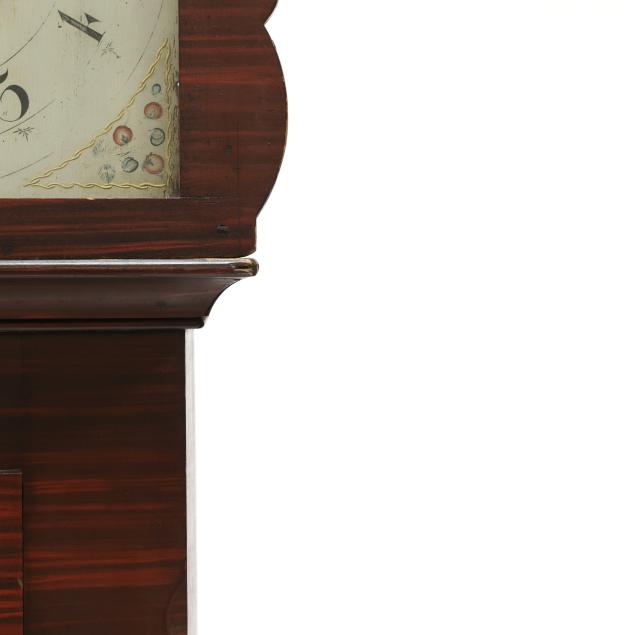
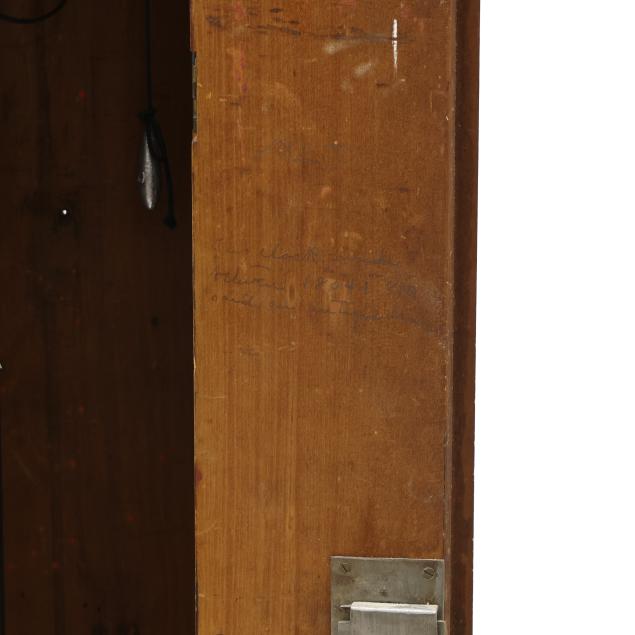
Case with wear especially at corners; light marring to base; some marks and paint losses to face. See Terms and Conditions: Clocks and Watches.