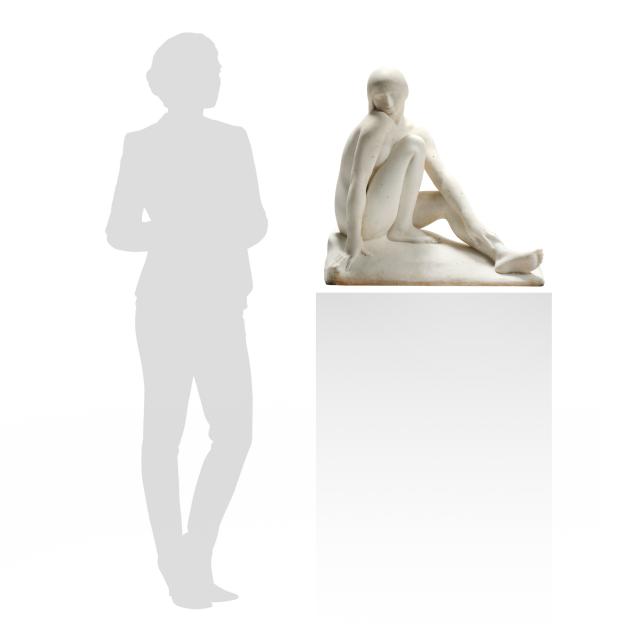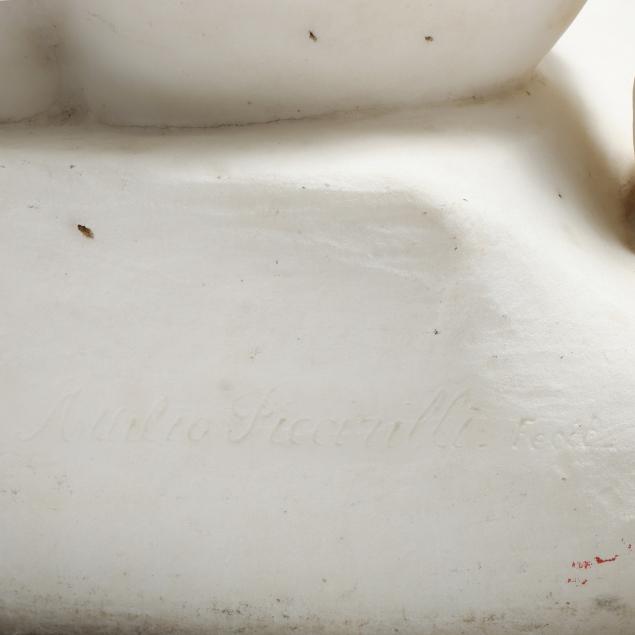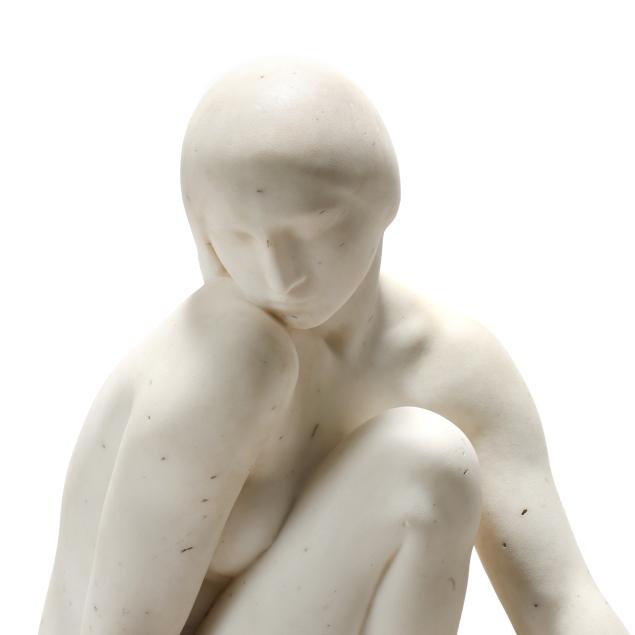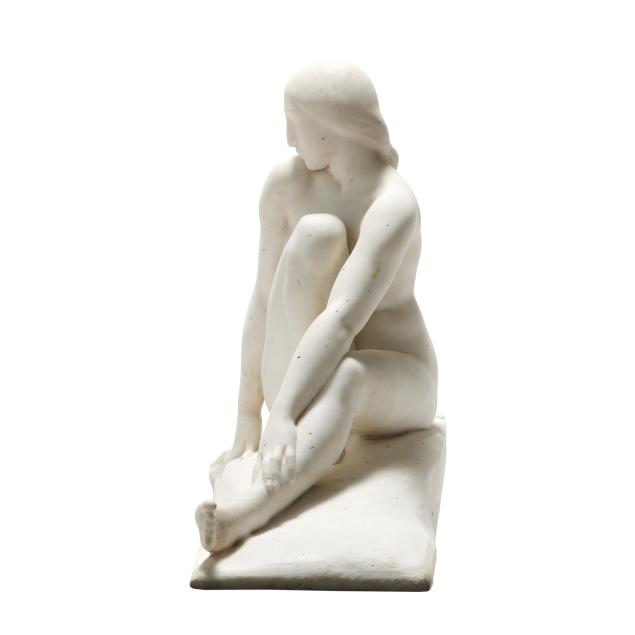

Lot 7069
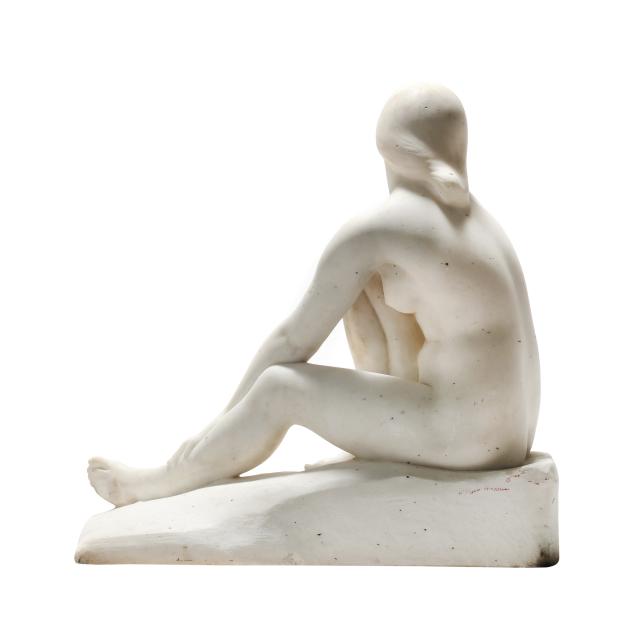
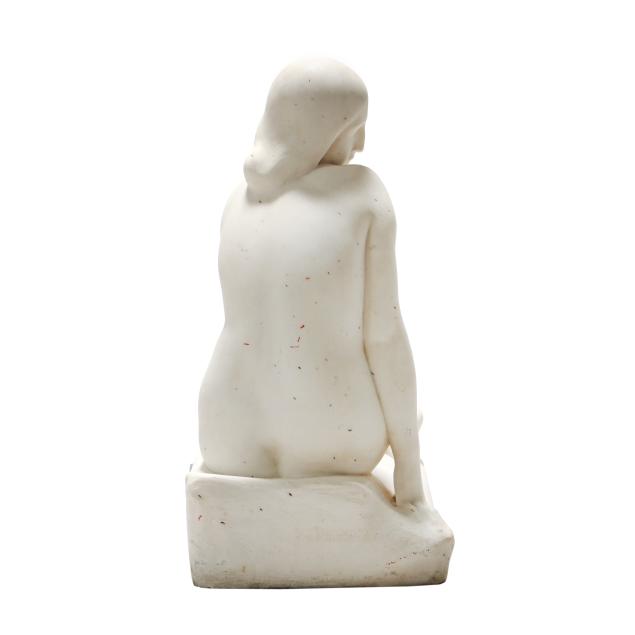
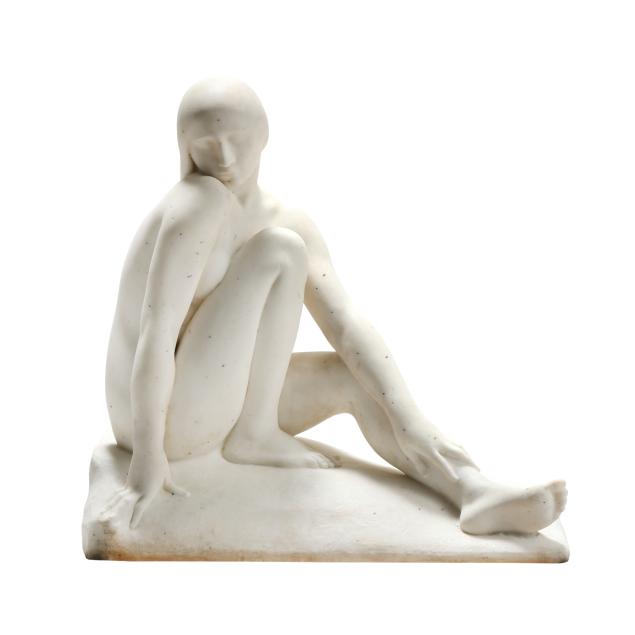
Attilio Piccirilli (Italian/American,1866-1945), Carved Marble Model of a Seated Nude
Explore more items like this one.
Visit our Fine Art Department Fine Art
Lot Details & Additional Photographs
27 x 26 12 x 14 in.
From the Important Glass Collection of Wilson and Susan Craigie, Richmond, Virginia
For a similar example see Sotheby's American Paintings - Drawings & Sculpture 29 Sep 2010, Lot 106.
Attilio Piccirilli was one of six sons of Giuseppe Piccirilli, all born in Massa, a commune in Massa e Carrera province in Tuscany, Italy. The family emmigrated to the United States and settled in New York City, establishing and important historical business in stone carving. Attilio, along with his brothers, completed many important commissioned monuments, historical works, portrait busts, and other figural works. His studio was located on 142nd Street in the Mott Haven section of the Bronx.
Attilio studied sculpture at the Academia San Luca in Rome from 1881 to 1888, and then emigrated to New York City with his parents and six brothers in 1887 when he was age 21. The father established a marble-cutting studio that carried out the designs of others and also produced work by Attilio and his brother, Furio Piccirilli, who became a noted sculptor.
Eventually Attilio became head of the studio. Together with co-founder Onorio Ruotolo, Attilio Piccirilli established the Leonardo DaVinci Art School in 1923, where Isamu Noguchi and other noted sculptors received valuable education. Attilio's reputation for being a skilled helper to prominent sculptors and achieving distinction with his own work earned him the Jefferson Presidential Medal in 1932 for his services as a U.S. citizen.
New York City commissions include the U.S.S. Maine National Monument, a 56 ft. tall monument which honors the American sailors lost when the Navy vessel, the U.S.S. Maine, exploded in 1898 and sank in Havana harbor in Cuba; Soldiers Monument in the Bronx; the New York Stock Exchange pediment; Lions at the entrance of the New York Public Library; Fireman's Memorial on Riverside Drive.
For Rockefeller Center's International Building, he did a glass panel, Youth Leading Industry, at the entrance, and Commerce and Industry with a Caduceus above the above the entrance on Fifth Avenue. At One Rockefeller Plaza, he did a bas-relief for the West 48th Street entrance. This bas relief was cast in 45 Pyrex glass blocks, "a ground-breaking use of Pyrex as an artistic material. . . .No two are alike and no others exist in the world." (Roussel, 127)
Its foundry representative from Corning Glass Works referred to the piece as 'poetic glass'. It was written the "Piccirilli created the scene using all the artistic devices of flamboyant realism---classical symbolism, bulging muscles, pulsating movement, and theatrical poses. Lit from behind, it remains one of the highlights of an evening stroll down Fifth Avenue." (Roussel, 127)
Commissions outside of New York City include the John McDonogh Monument for Lafayette Square in New Orleans (The John McDonough Monument was Piccirilli's first major public monument, and he was present for the unveiling in December, 1898); a portrait statue of Governor Henry W. Allen in Baton Rouge, Louisiana; a war memorial in Albany, New York; Richard Ellis Monument in Waxahachie, Texas; The Pioneer Women, a memorial work on the campus of Texas Women's University at Denton, Texas; Laughing Boy and Goat at Brookgreen Gardens in Murrell's Inlet, South Carolina; James Monroe portrait in Charlottesville, Virginia; and busts of Presidents James Monroe and Thomas Jefferson at the Virginia State Capitol in Richmond, Virginia.
Among art related affiliations for Attilio Piccirilli were Allied Artists of America, National Academy of Design and New York Architectural League.
Sources include:
Christine Roussel, The Guide to the Art of Rockefeller Center
John and Deborah Powers, Texas Painters, Sculptors & Graphic Artists
John Mahe and Rosanne McCaffrey, Encyclopaedia of New Orleans Artists, 1718-1918
Information from Timothy P. Flannery, Viterbo
Scattered nicks and chips to the base; areas of pitting and abrasions and surface staining.