
Lot 7121
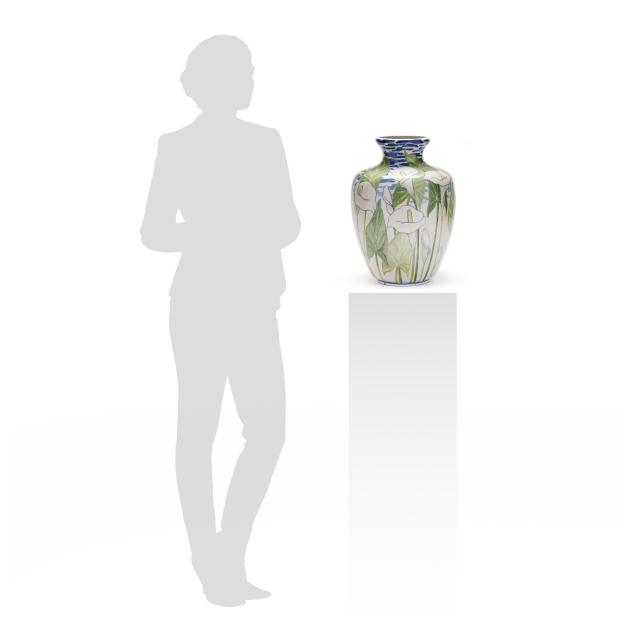
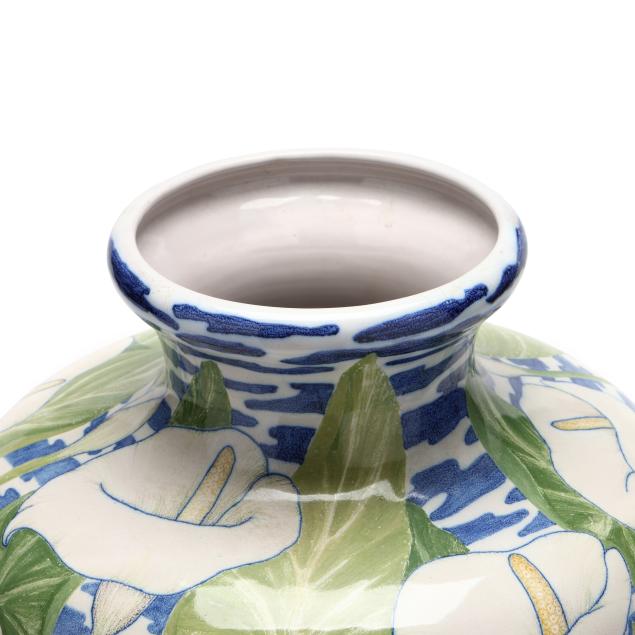
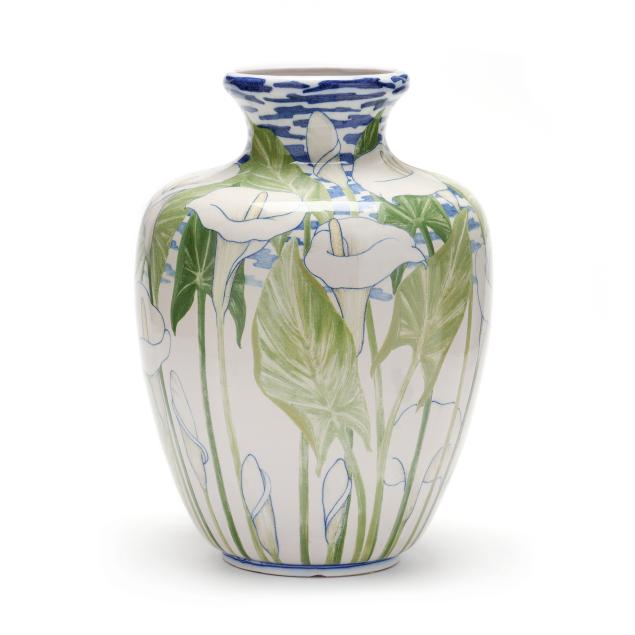
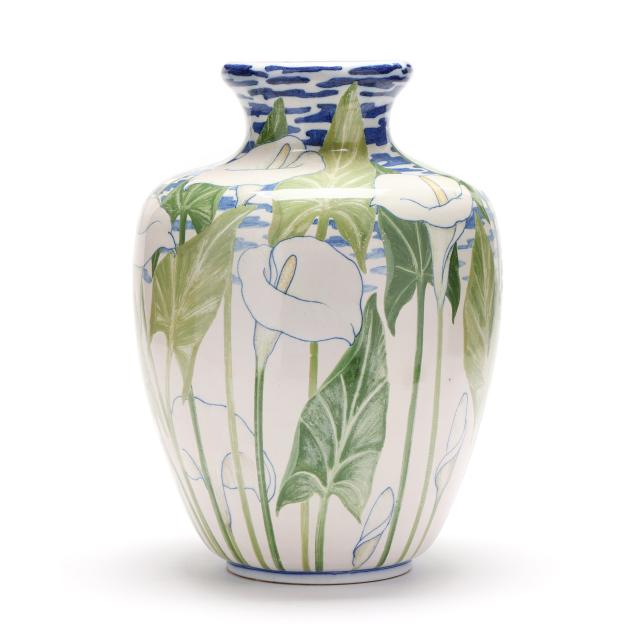
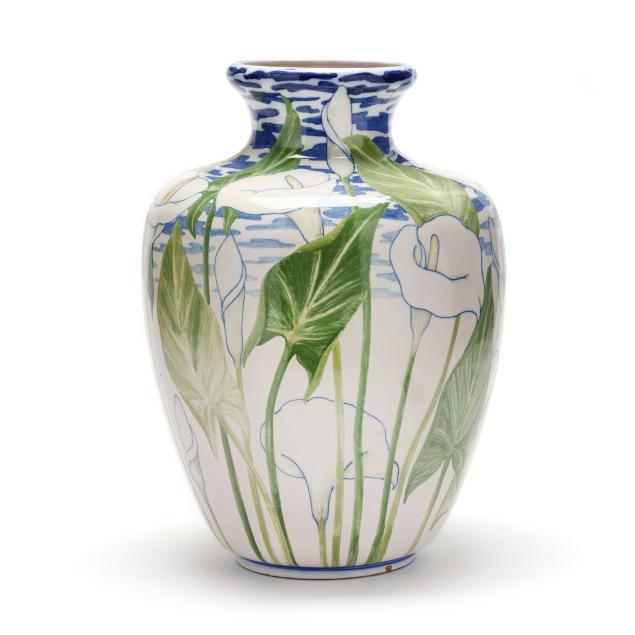
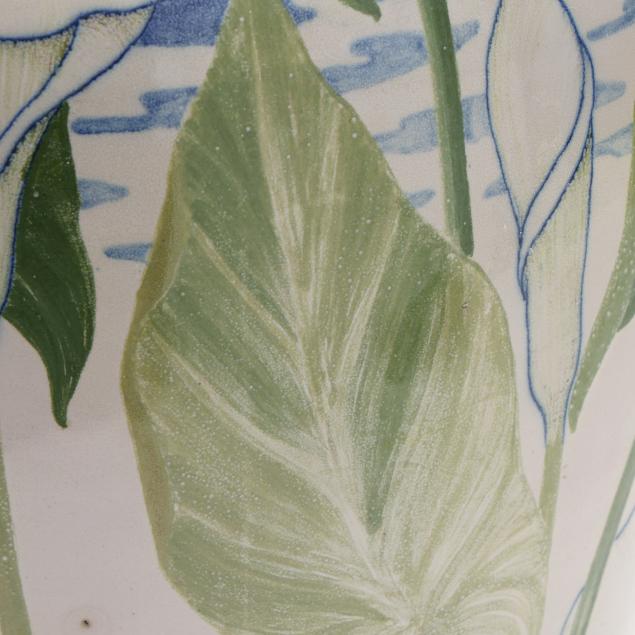
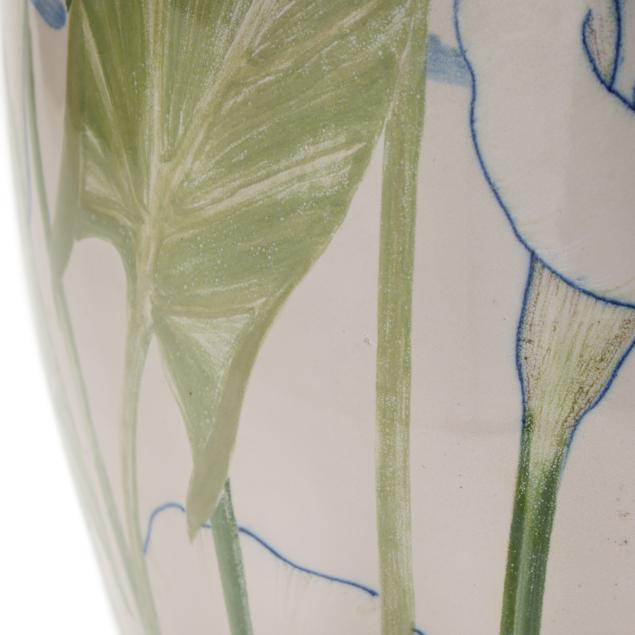
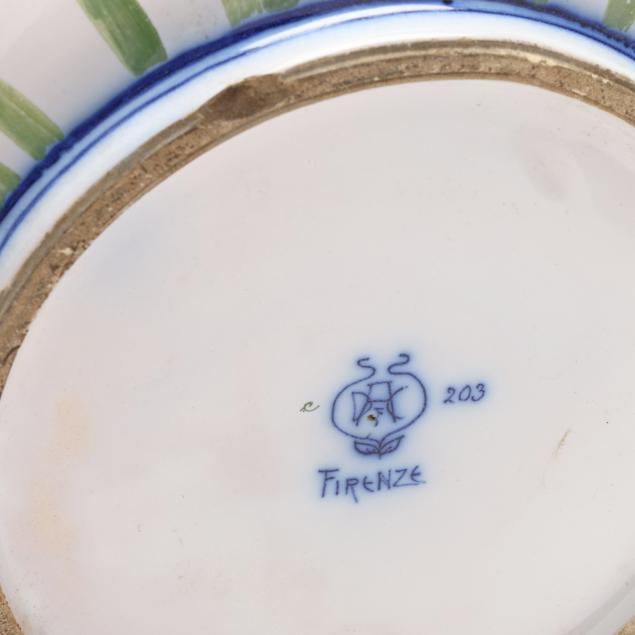
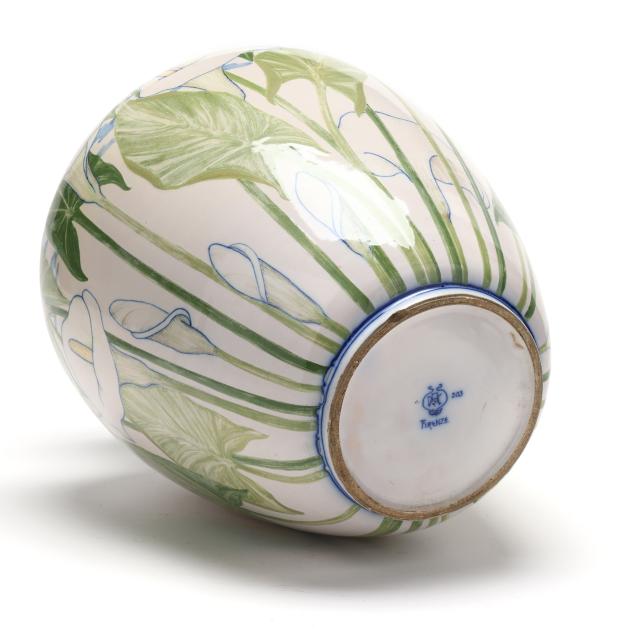
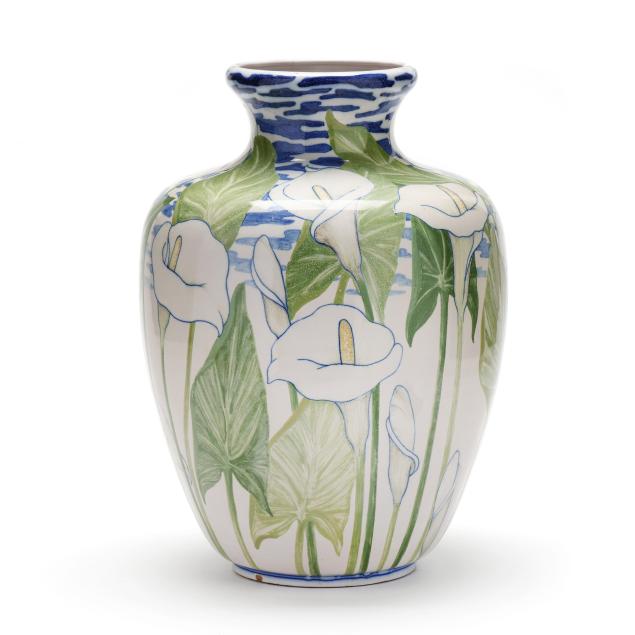
Galileo Chini (Italian, 1873-1956), Rare Large Calla Lily Vase
Explore more items like this one.
Visit our Pottery & Porcelain Department Pottery & Porcelain
Lot Details & Additional Photographs
17 1/2 x 12 x 12 in.
Galileo Chini was a unique, multifaceted artist in the Italian art scene between the Art Nouveau and Art Deco Periods. Chini firmly believed in the union of art and craftsmanship and their fundamental role in the redevelopment of the region. Experimenting with every aspect of art, he was a painter with a strong personality, ranging from Symbolism to Divisionism up to the darker and more expressionist final phase, a great decorator, a sublime ceramist, illustrator, set designer, but also an urban planner and a man of great civil commitment.
As a ceramist, he founded the “L'Arte della Ceramica” factory and later “Le Fornaci San Lorenzo” together with his cousin Chino in the village of Borgo San Lorenzo, a few kilometers from Florence, introducing Art Nouveau into the Italian tradition.
As a set designer he was also linked to Giacomo Puccini, who called him in 1918 for the world premiere of Gianni Schicchi at the Metropolitan Opera in New York and again for the sets for the world premiere of Turandot, staged in 1926 at “La Scala” in Milan with Arturo Toscanini conducting.
An artist of international standing, he participated in all the major international exhibitions (London, Brussels, Ghent, St. Petersburg, among others) and in Italy at the Venice Biennale and the Rome Quadrennial. He decorated important public and private buildings, and in 1911 he left for Siam, summoned by King Rama V to decorate the interior of the new Throne Palace in Bangkok, where he created a grandiose and extraordinary decorative work. Upon his return to Italy, he continued his incessant creative activity throughout the peninsula, moving now from his studio in Florence, now from his holiday home, built in Lido di Camaiore, thanks to his work for the King of Siam.
He was a member of the Commission established for the restoration of the buildings along the Viareggio Promenade and created the entire decorative apparatus of the Berzieri Baths in Salsomaggiore, which represents the great narrative of his art, the broadest expression of all his abilities, where creativity and skill, architecture, ceramics and painting blend in a kaleidoscopic oriental imagery.
In Florence he taught at the Academy, where his students included Ottone Rosai, Primo Conti and Marino Marini.
Biographical Information courtesy of https://www.galileochini.it/
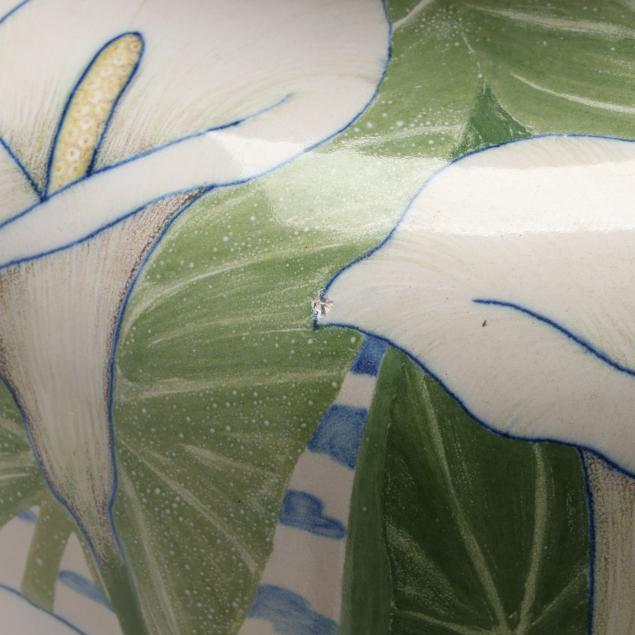
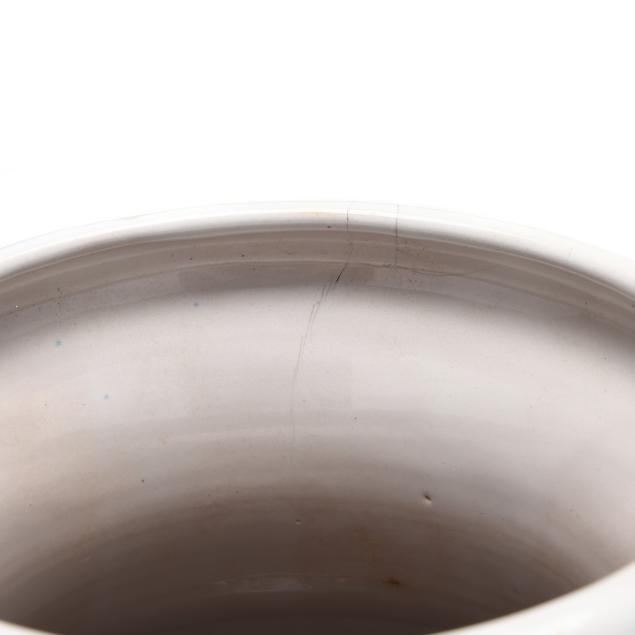
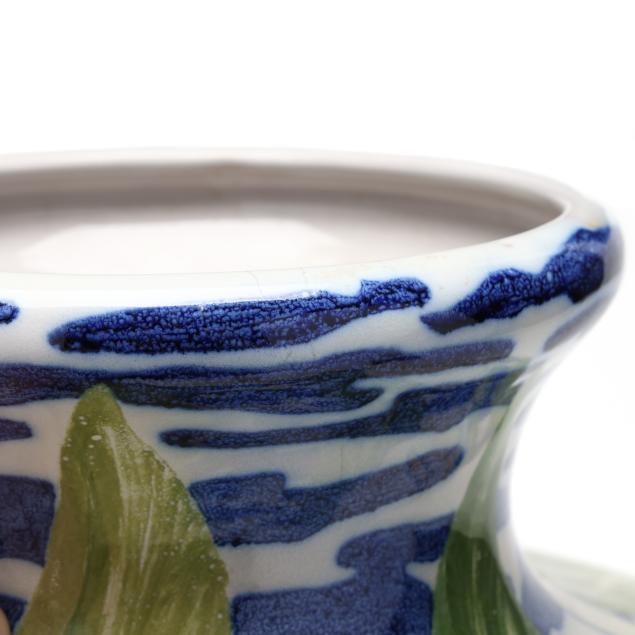
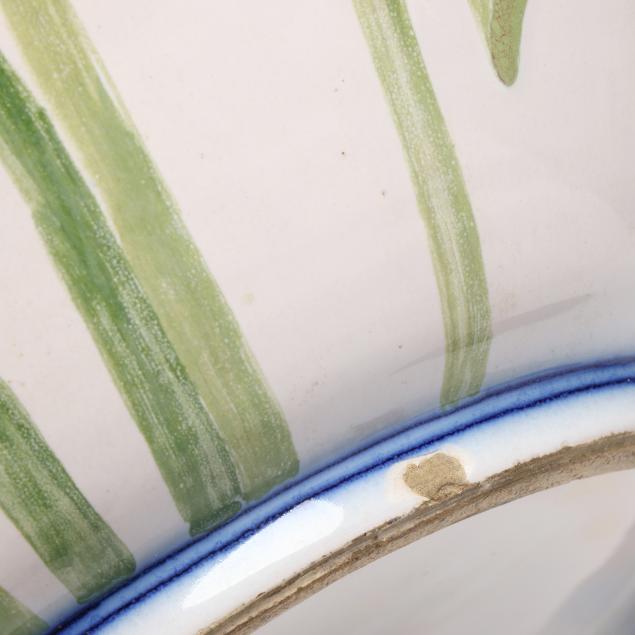
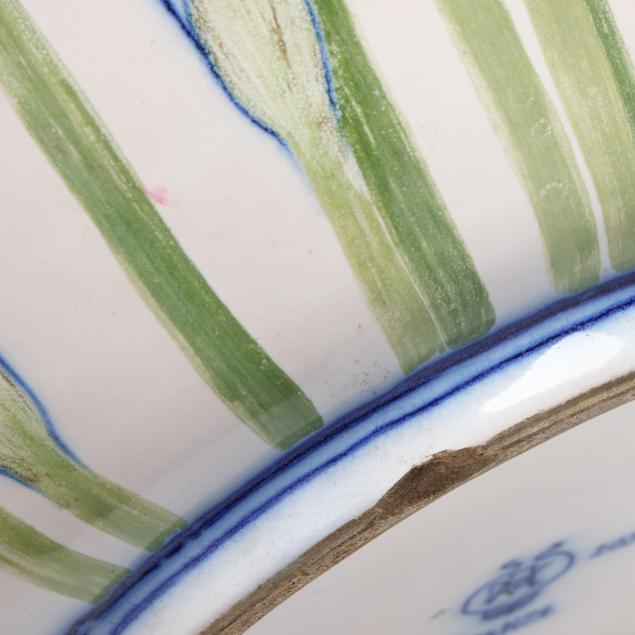
Upper rim with three hairlines; a few small glaze flakes to the body, base rim with two chips.