
Lot 7167
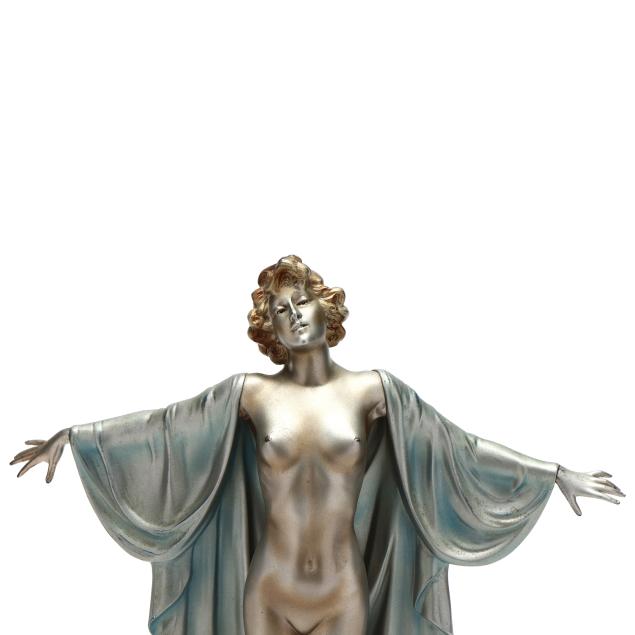
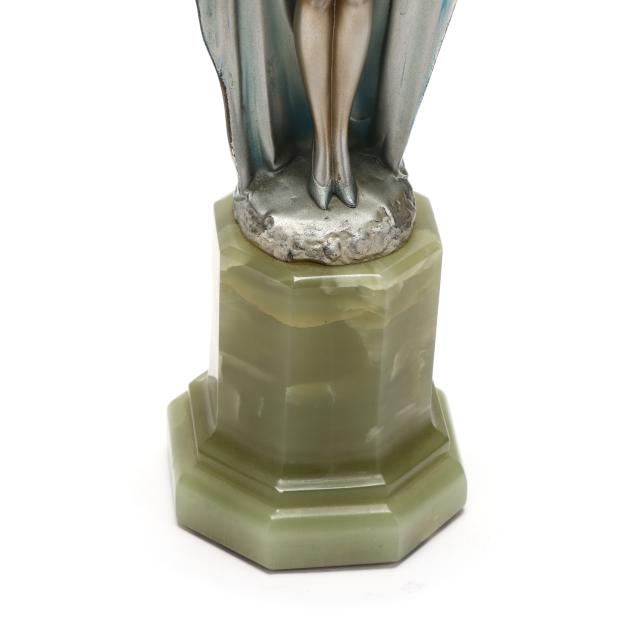
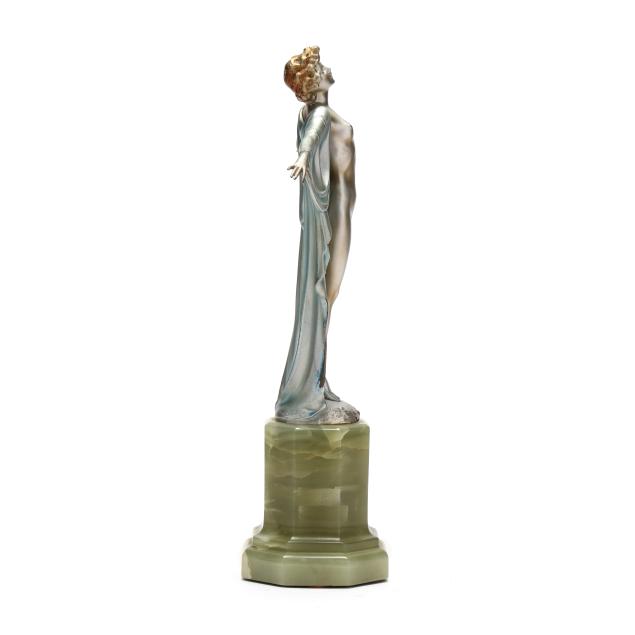
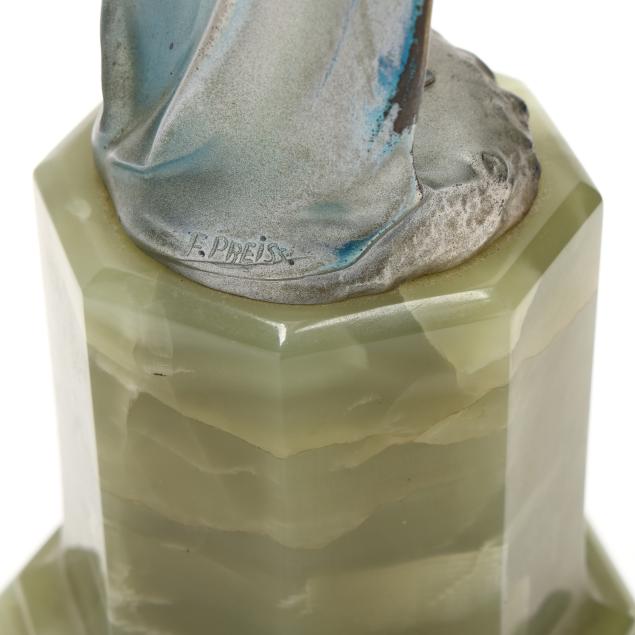
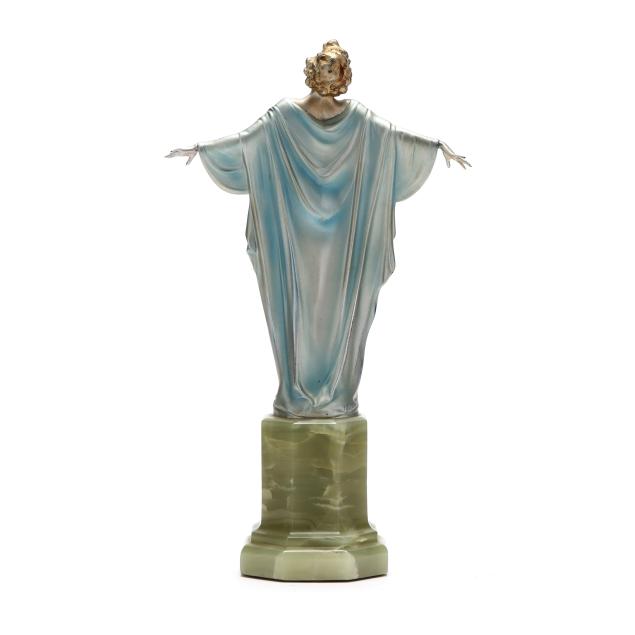
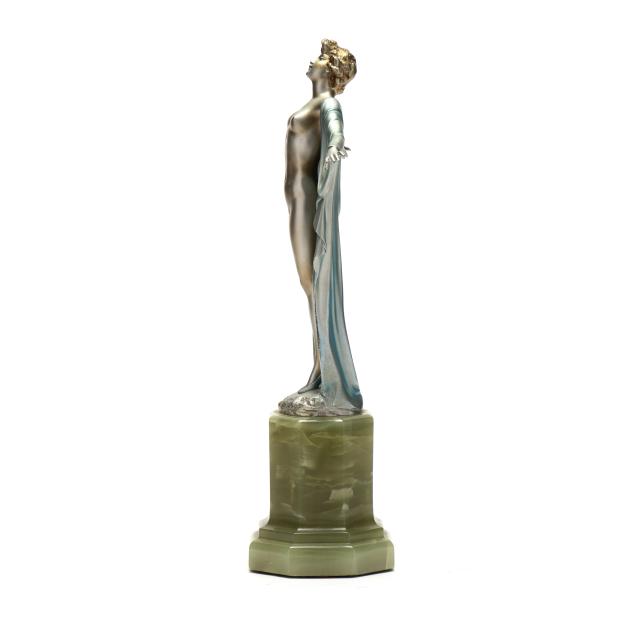
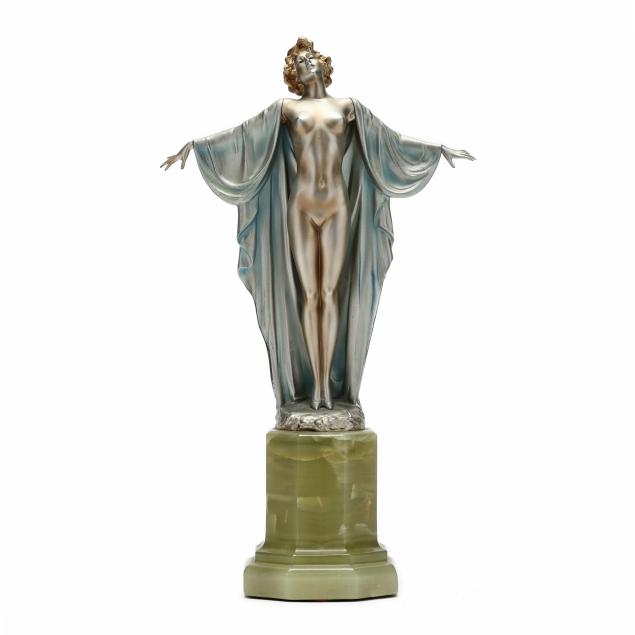
Johann Philipp Ferdinand Preiss (German, 1882-1943), Spring Awakening
Explore more items like this one.
Visit our Fine Art Department Fine Art
Lot Details & Additional Photographs
14 5/8 x 8 1/4 x 4 in.
Private Collection, Emerald Isle, North Carolina
Ferdinand Preiss was born in Erbach in the Odenwald, Germany. When he was 15 years old his parents died, one shortly after the other, and the six children were looked after by friends and relatives. Ferdinand lived with the family of the then famous carver Philipp Willmann, where he was trained. In 1901 he left Willmann's workshop and travelled to Mailand, Rome and Paris. He earned his living as a modeler.
In Baden-Baden he got to know Arthur Kassler who became his companion. With him he founded the company Preiss & Kassler in Berlin.
In 1907 he married a Berliner, Margarethe Hilme. Soon afterwards his son Harry and his daughter Lucie were born. At first, the model collection of the new company consisted of small carvings, including statuettes of children and carvings whose motifs were mostly oriented towards classical ideals. From 1910 onwards the first carvings which combined bronze with ivory were produced. The casting was done by the company Gladenbeck in Berlin.
Immediately after the end of the war Preiss and Kassler built up the business again, which would reach full bloom during the 1920s. Preiss was the artistic director whereas Kassler devoted himself to the commercial side of the business. Their speciality was Art Deco-style cabinet sculptures, much like the example in this Lot. The models, which were practically all designed by Ferdinand Preiss, were produced in limited editions. A large proportion of the production was exported to England and the USA.
The company Preiss & Kassler existed until 1943. Ferdinand Preiss died that year at the age of 61 from a brain tumor. The workshop with the stock of samples in Ritterstrase in Berlin completely burned down in 1945 just before the end of the war during a bomb attack.
Source:
http://www.preiss.de/engl/pkbiographie.htm
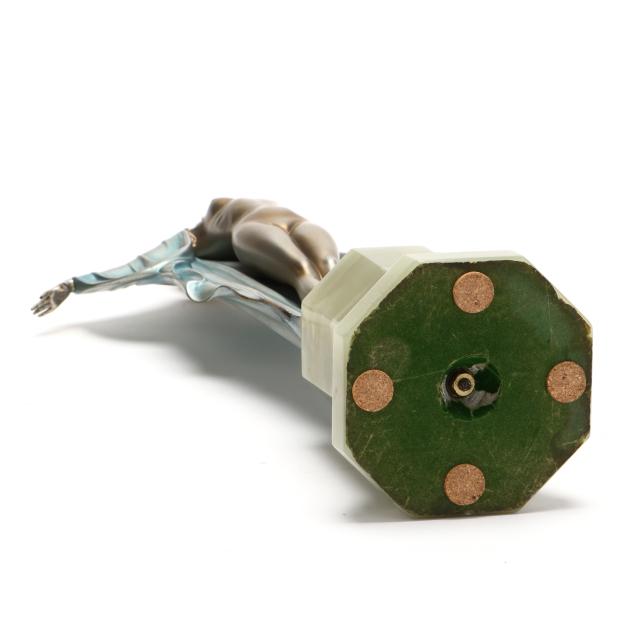
Overall good condition; small areas of rubbing to the patina.