
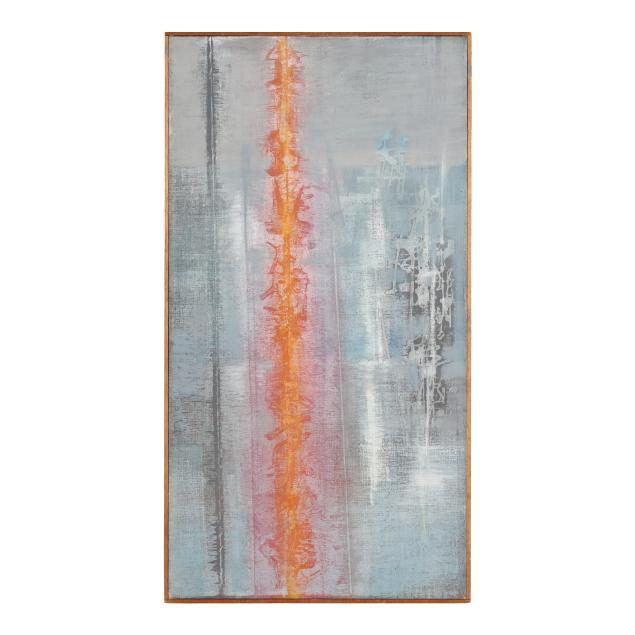
Lot 3122
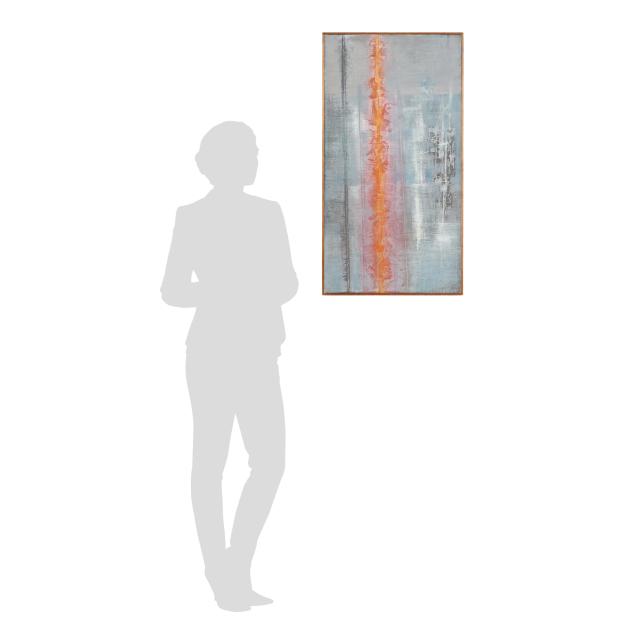
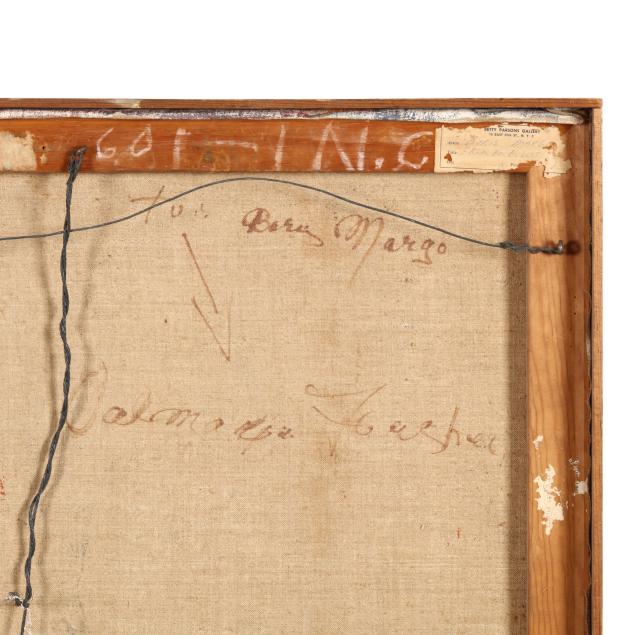
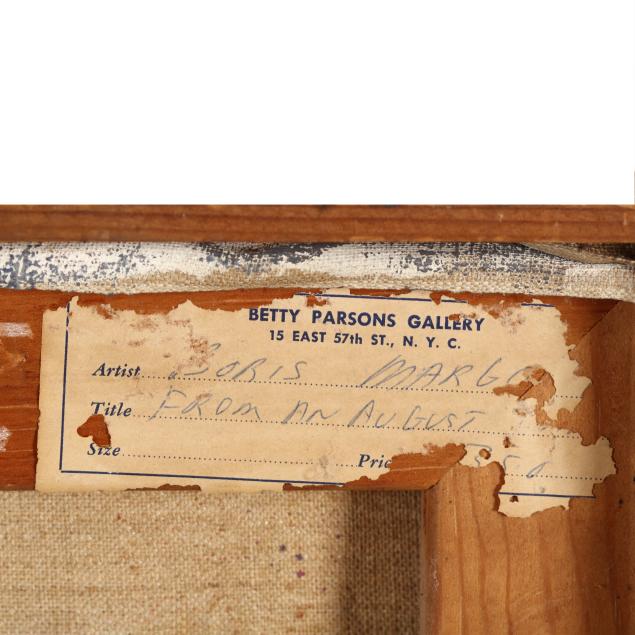
Boris Margo (Ukrainian American, 1902-1995), Untitled
Explore more items like this one.
Visit our Fine Art Department Fine Art
Lot Details & Additional Photographs
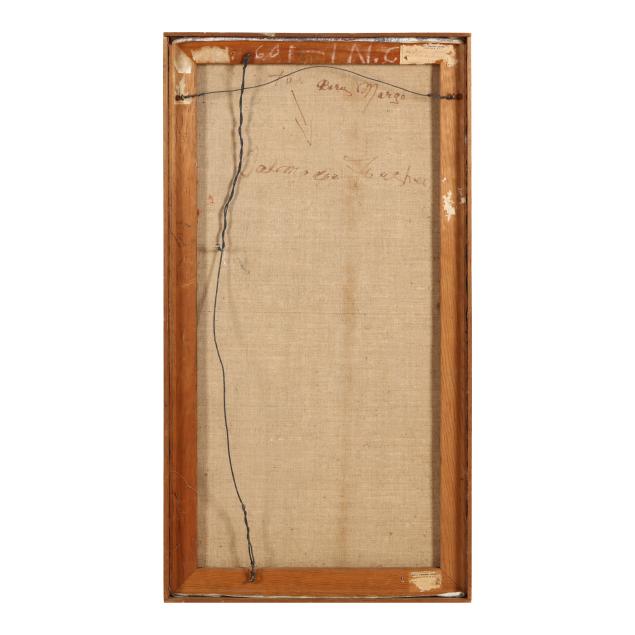
Stretcher size 34 x 18 in.; Frame dimensions 34 5/8 x 18 1/2 in.
From the Private Collection of the late Ola Maie Foushee, Chapel Hill, North Carolina
Ola Maie Foushee (1905–1999) was a North Carolina artist, writer, and arts advocate born in the mill village of Avalon in Rockingham County. Showing artistic talent from an early age, she studied art at the University of North Carolina at Chapel Hill and Greensboro and later taught privately while exhibiting her largely abstract paintings throughout the Southeast. She was a charter member of the Associated Artists of North Carolina and active in several regional arts organizations, while also becoming known for her lectures and her long-running newspaper column, “Art in North Carolina,” published during the 1950s and 1960s.
In addition to her work as a painter, Foushee was an influential author and historian of North Carolina art. Her book Art in North Carolina: Episodes and Developments (1970) was long considered a foundational text on the subject. She also published works on regional history and biography, including studies of Avalon and North Carolina arts patron Katherine Pendleton Arrington. Foushee spent much of her adult life in Chapel Hill and Durham, where she remained active in the arts community until her death in 1999.
Betty Parsons Gallery, New York
Boris Margo was a Ukrainian American painter, printmaker, and innovator whose work bridged Surrealism and Abstract Expressionism. Born in Volochisk, Ukraine, he studied in Odesa, Moscow, and Leningrad before immigrating to New York in 1930. There he became part of the city's avant-garde, working as an assistant to Arshile Gorky and developing friendships with artists including Mark Rothko. Margo is best known for pioneering the cellocut, an innovative printmaking process using dissolved celluloid to create richly textured printing plates, and for his early use of decalcomania, an automatist technique embraced by the Surrealists.
From 1947 to 1962, Margo was represented by the influential Betty Parsons Gallery, placing him alongside many of the leading figures of postwar American art. During this period he exhibited regularly at the Whitney Museum of American Art and was included in Sidney Janis's landmark 1944 exhibition Abstract and Surrealist Art in the U.S. His work is represented in the collections of the Metropolitan Museum of Art, the Museum of Modern Art, the Whitney Museum of American Art, the Art Institute of Chicago, the National Gallery of Art, and numerous other major museums.
Light surface grime; no evidence of restoration visible under UV light.