
Lot 1048
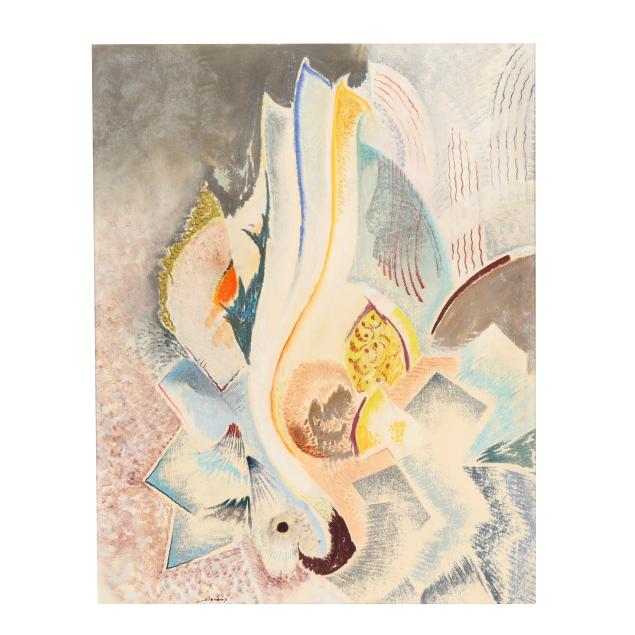
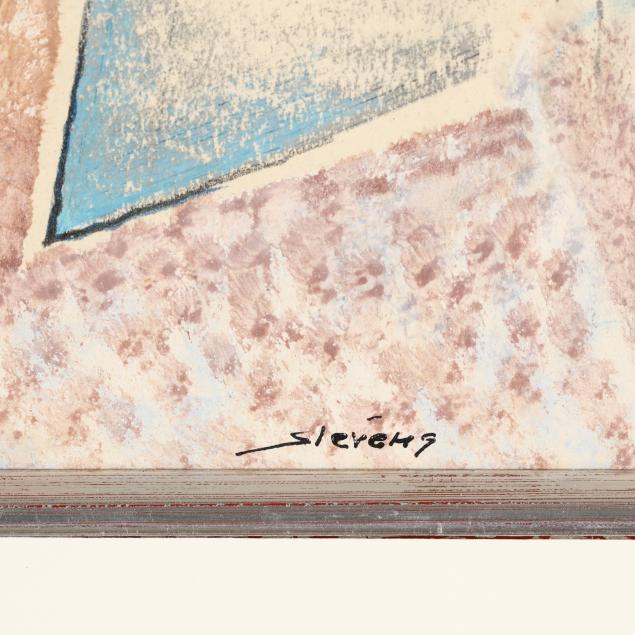
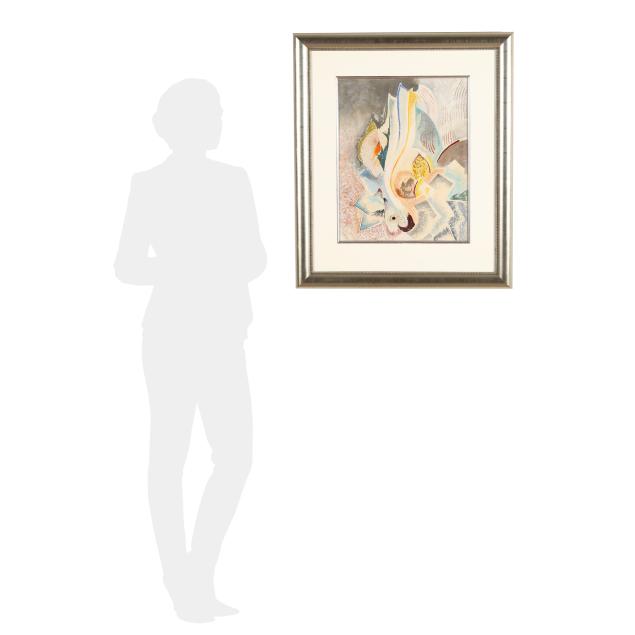
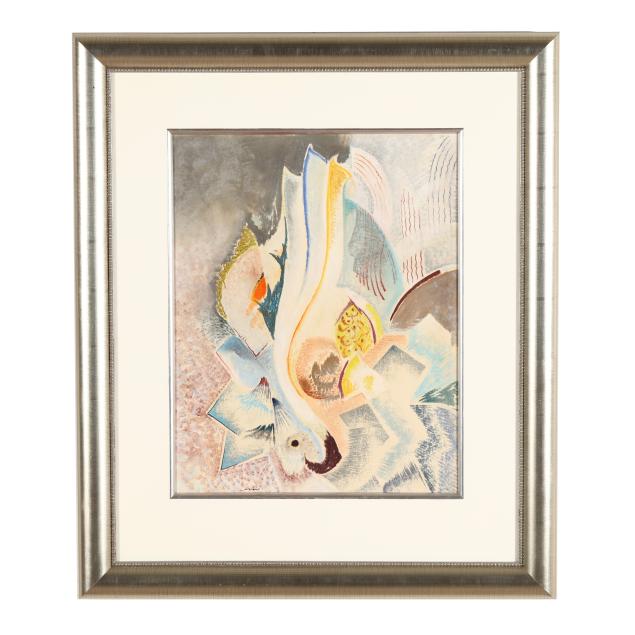
Will Henry Stevens (American, 1881-1949), Untitled
Explore more items like this one.
Visit our Fine Art Department Fine Art
Lot Details & Additional Photographs
Sight size 20 x 15 3/4 in.; Frame dimensions 31 x 25 1/2 in.
Private Collection, Raleigh, North Carolina
Estate of Susan Fox Beischer, daughter of Francis Hill Fox, granddaughter of Durham philanthropist and banker, John Sprunt Hill, and his wife, Anne Watts Hill, and great-granddaughter of George W. Watts, an original partner in American Tobacco Corporation.
Will Henry Stevens was a versatile American modernist whose career bridged realism, abstraction, and a deep reverence for the natural world. He enrolled at the Art Academy of Cincinnati in 1901, studying under Frank Duveneck and Lewis Henry Meakin, and in 1904 won a design competition sponsored by Cincinnati’s Rookwood Pottery, where he was hired as a tile designer. By 1906, Stevens had moved to New York to study at the Art Students League with William Merritt Chase, forging important associations with Van Dearing Perrine and Jonas Lie. His first solo exhibition followed at the New Gallery in 1907. Throughout his career, Stevens worked across media and styles, creating both representational landscapes and innovative abstractions influenced by Emerson, Thoreau, Chinese Song dynasty paintings and modernist pioneers such as Kandinsky and Klee.
In 1921, Stevens joined the faculty of Sophie Newcomb College in New Orleans, a position he held until 1948. While he painted the Louisiana landscape during the academic year, his summers were spent in the mountains of North Carolina and Tennessee, where the natural environment inspired many of his most lyrical works. Stevens was an active and well-regarded teacher at Southern art colonies, particularly around Asheville. In 1944, Stevens exhibited work at Black Mountain College where Josef Albers praised his “sensitive musicality for color.” Today, Stevens’s works are represented in major collections, including the Smithsonian American Art Museum, the Museum of Fine Arts, Boston, the Los Angeles County Museum of Art, and the Johnson Collection in Spartanburg, affirming his place as a key figure in American modernism and Southern regional art.
Good estate condition.