
Lot 7070
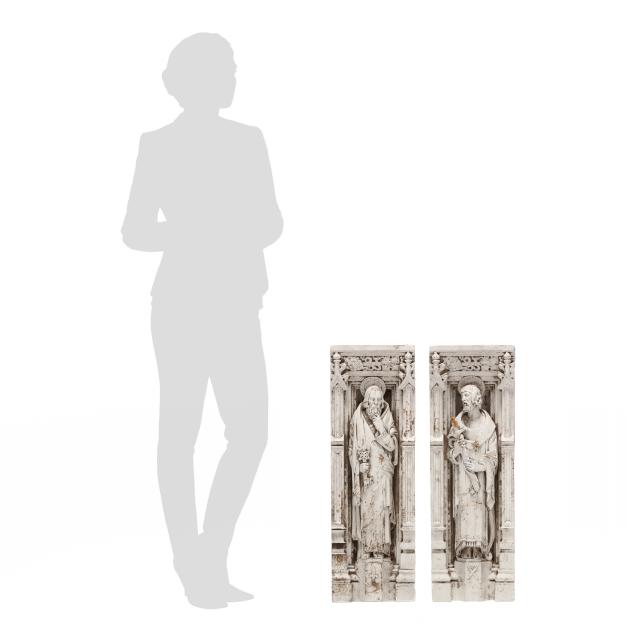
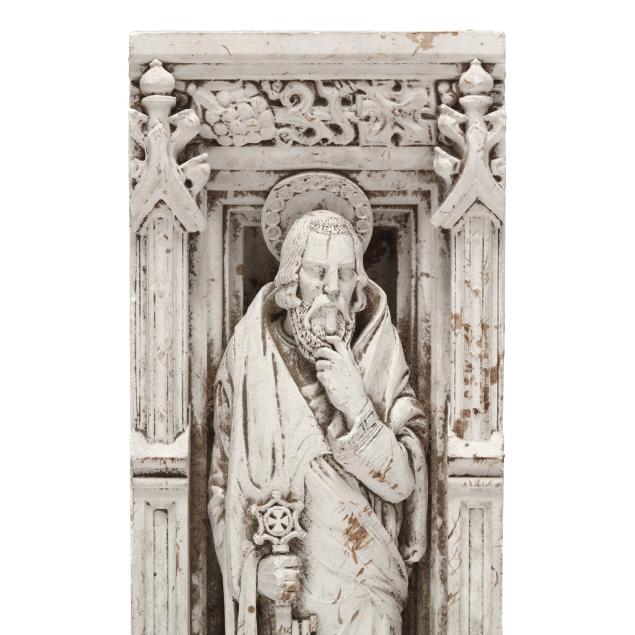
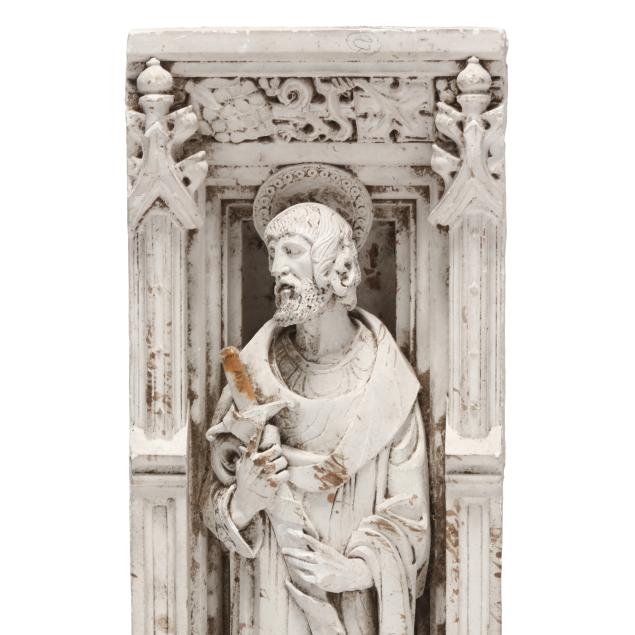
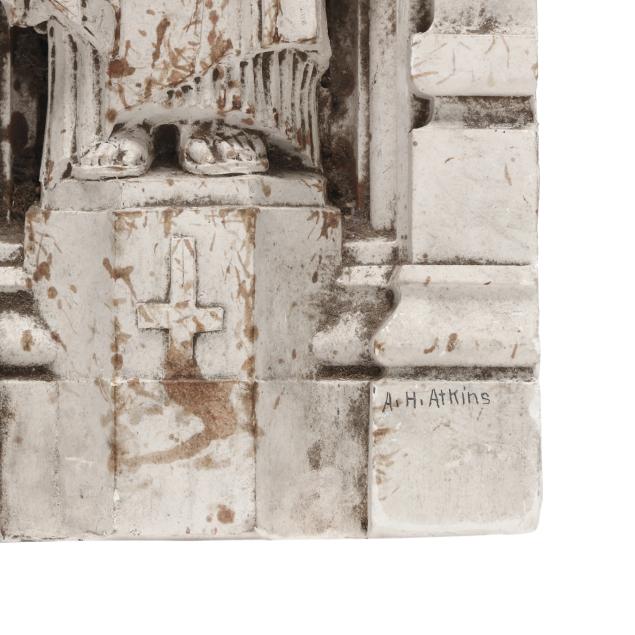
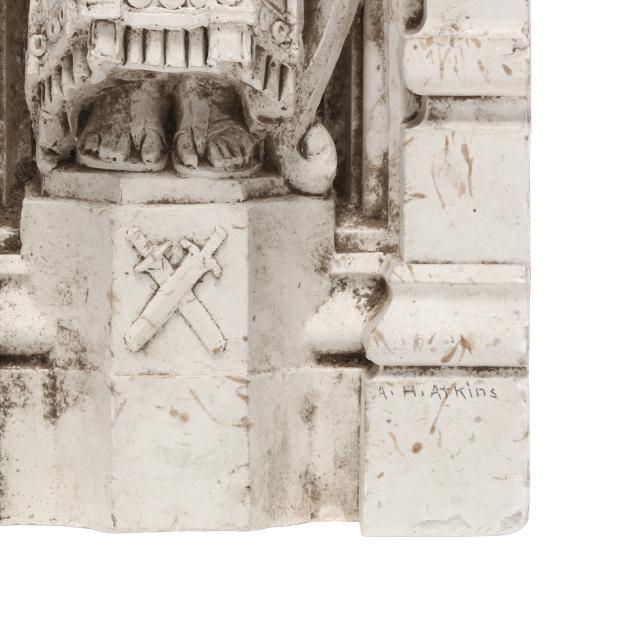
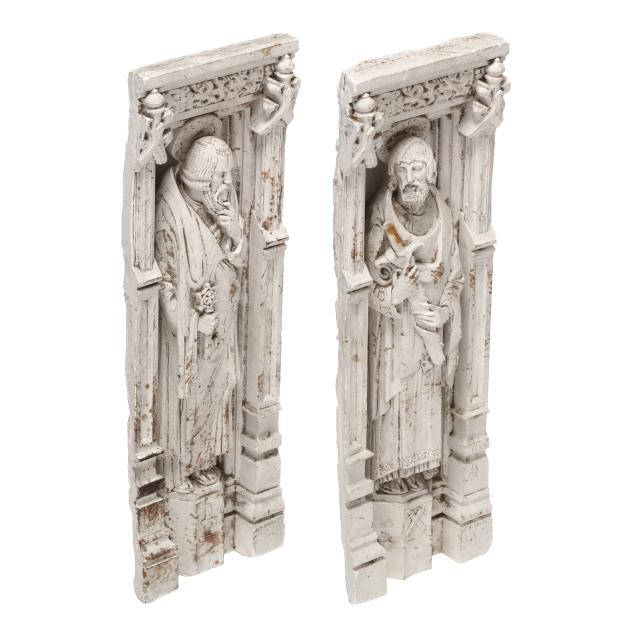
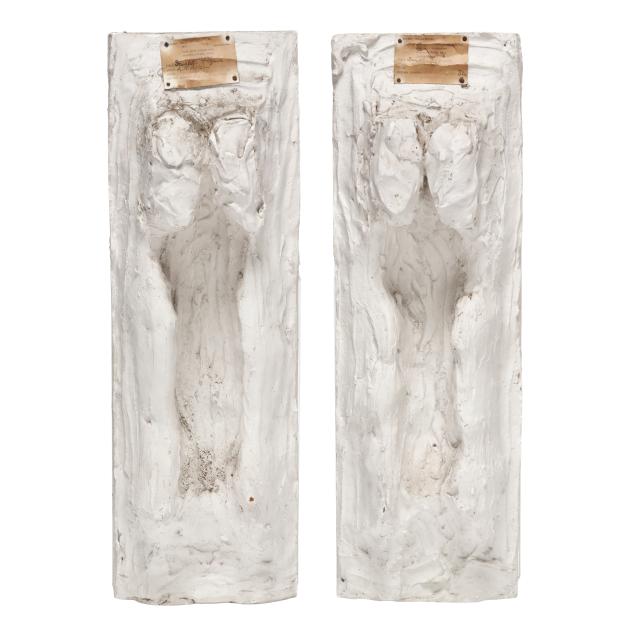
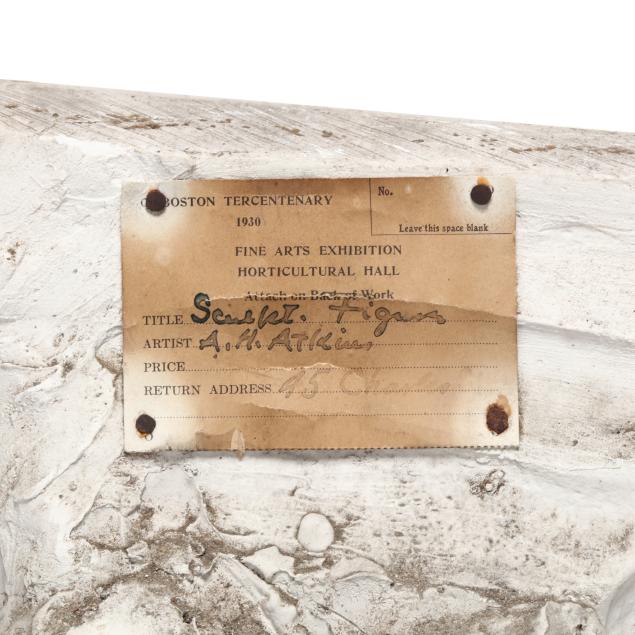
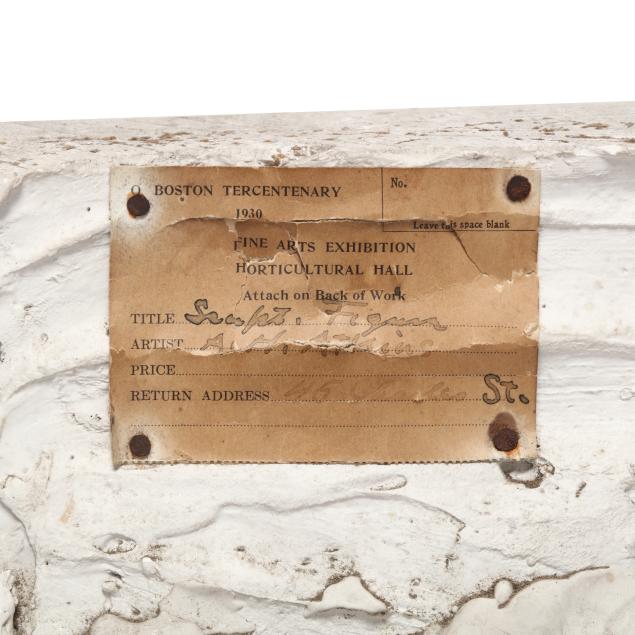
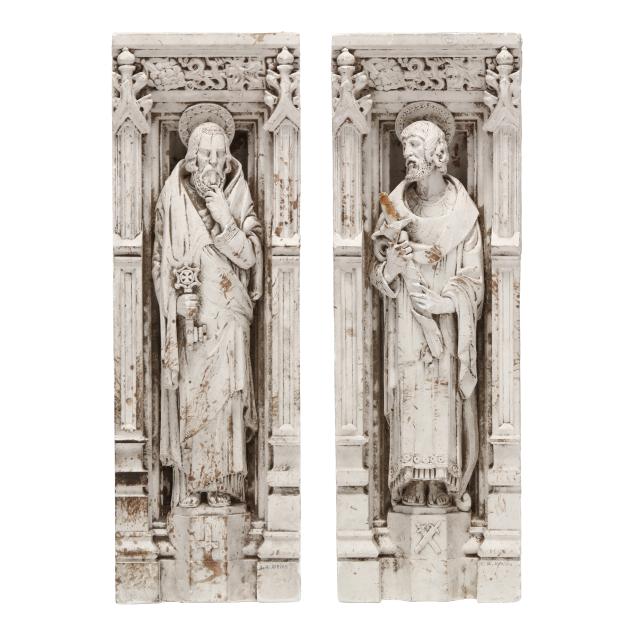
Albert Henry Atkins (American, 1880-1951) (RA 1920-1951), Two Plasterwork Models of a Saint for the Boston Tercentenary
Explore more items like this one.
Visit our Fine Art Department Fine Art
Lot Details & Additional Photographs
29 1/4 x 9 1/2 x 5 1/2 in.
From a Private Collection
Albert Henry Atkins was a sculptor working in plaster, bronze, and stone who specialized in allegorical and religious work. He had a studio in Gloucester, Massachusetts later in life and in New York City at 11th Street in 1926. He was a member of the North Shore Art Association, Rockport Art Association, Providence Art Club, Architectural League of New York, National Sculpture Society American Federation of Arts, San Francisco Museum of Art, Copley Society Boston, American Art Association(Paris).
He won medals at the Milwaukee Art Institute -1917; North Shore Art Association -1925; Garden City American Art Alliance (Gold) in 1931; and interestingly at the Tercentenary Exhibition Boston (Gold),1931 for 'Ecclesiastical' work category, (the same exhibition he exhibited these two plaster works).
Atkins executed a number of projects for important historical buildings and cathedrals, including a baptismal font for the Cathedral of St. John the Divine, and thirteen statues and a bronze gate for an altar rail at St. Patrick's Cathedral, New York.
Atkins was born in Milwaukee, Wisconsin, and from 1909 to 1925 served as head of the sculpture department at the Rhode Island School of Design (RISD). He received his artistic training at the Cowles School of Art in Boston and in Paris at the Académie Julian and the Académie Colarossi. It was likely at RISD that Atkins met Louise Allen Hobbs (1880-1953), who would become his wife in 1922 and was also a sculptor. Locally, the pair exhibited at the Gallery-on-the-Moors (1916-1918) in East Gloucester and at the North Shore Arts Association; today both are represented in museum collections as well as by outdoor public pieces. In 1924, the Atkins purchased the old Haskell House in West Gloucester (c. 1650), filling it with a collection of early American furniture and decorative arts. Albert maintained studio space in an adjoining barn where, in addition to sculpture, he also made etchings.
In 1955, a few years after Albert and Louise Atkins passed away, CAM (Cape Ann Museum) purchased the Haskell House from the Atkins family. With the House came the Atkins’ extensive collection of early Americana. Examples of the pairs’ sculpture also came with the property. The Museum kept just a few examples of the Atkins’ work and placed the rest in private collections. It was not until 2006 that Albert’s 1914 piece, Spirit of the Sea officially came into CAM’s holdings and was placed on its perch in the courtyard. A handful of other works by Albert Atkins remain in CAM’s collection including Toilers of the Sea, a plaster thought to have been created for the 1923 competition to select a sculpture to go on Stacy Boulevard as part of Gloucester’s 300th Anniversary celebration.
Sources:
Cape Ann Museum, Gloucester, MA.
Glenn Opitz, Editor, Mantle Fielding's Dictionary Of American Painters, Sculptors & Engravers, 1983, pg. 31.
Scattered areas of staining marks; surface wear to the chipping to edges; dorsal surface of Saint Paul's left hand with areas of chipping.