
Lot 1352
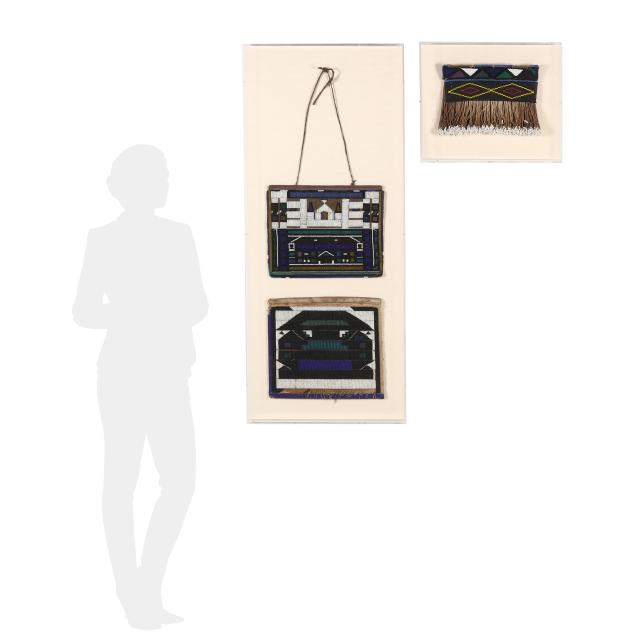
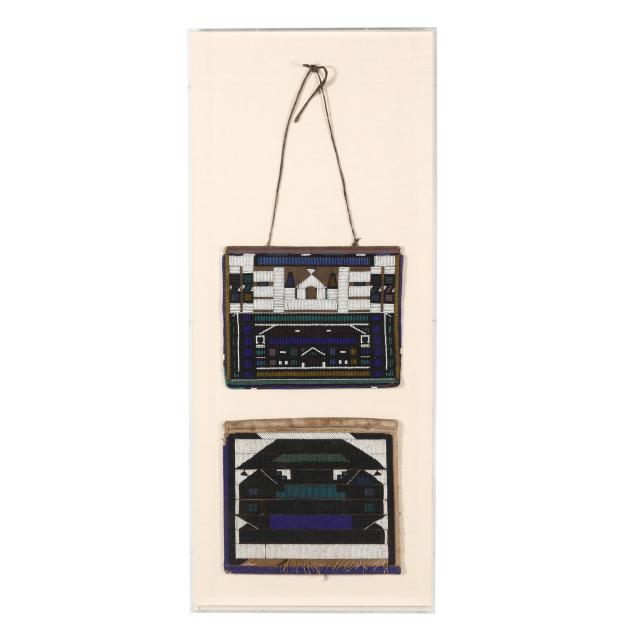
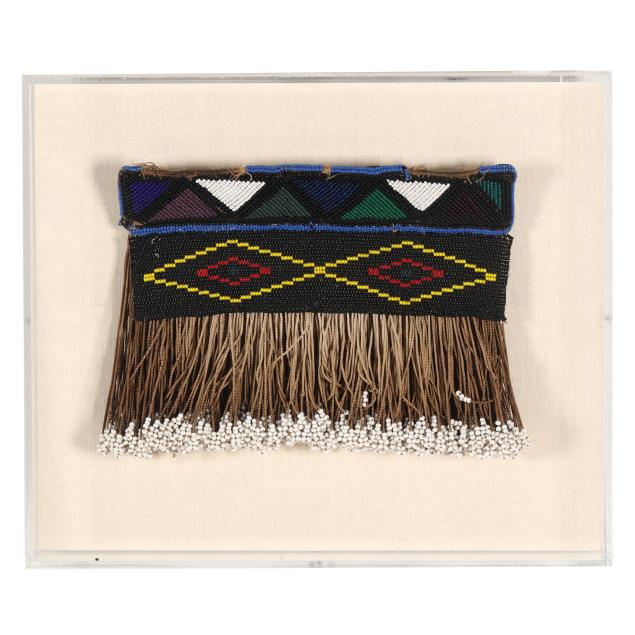
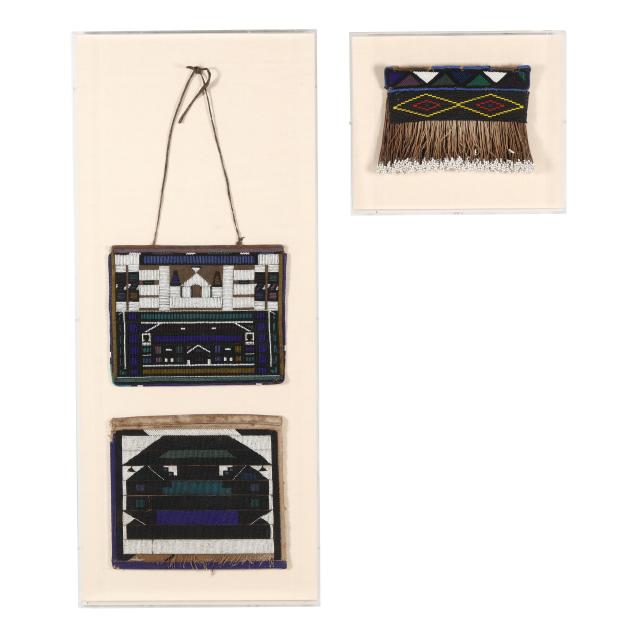
Three Framed South African Beadwork Aprons, Gabi and Pepetu
Explore more items like this one.
Visit our Historical Department Historical
Lot Details & Additional Photographs
From the Estate of the late Francine Pilloff, Chapel Hill, North Carolina
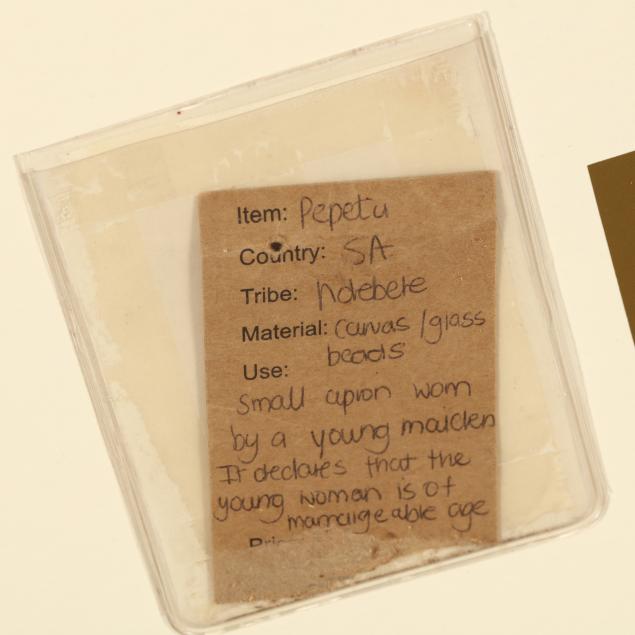
Throughout their lives, Southern African Ndebele women wear various aprons that mark stages of social advancement. Pre-adolescent girls wear an apron of one solid piece, called a gabi (ghabi); when they reach adolescence, they start wearing the pepetu (isiphephetu). After marriage, a woman wears more elaborately adorned aprons: the mapoto, for everyday use, and the jocolo, with five rounded finger like flaps, is typically reserved for special occasions.
Some staining and small areas of bead loss; not examined out of the frames.