
Lot 9089
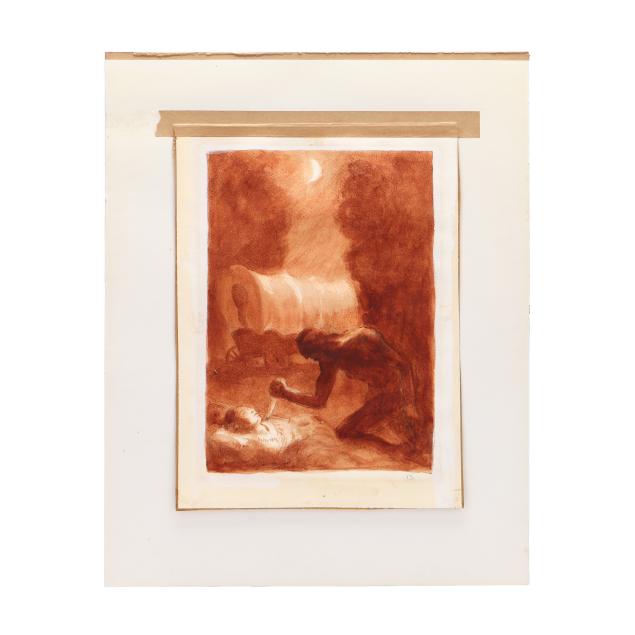
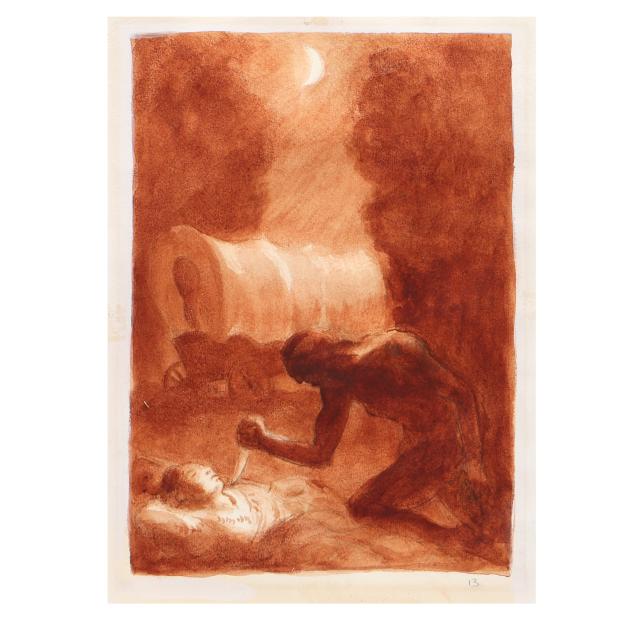
John Steuart Curry (American, 1897-1946), Illustration for The Prairie by James Fenimore Cooper
Explore more items like this one.
Visit our Fine Art Department Fine Art
Lot Details & Additional Photographs
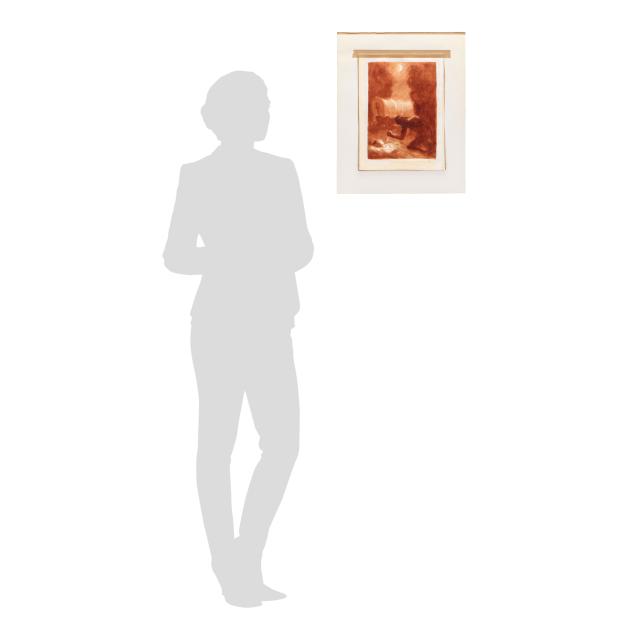
Image 12 x 8 5/8 in.; Sheet size 14 1/2 x 10 1/2 in.; Frame dimensions 21 1/4 x 17 1/4 in.
From the Estate of Samuel and Margaret Nock, Manhattan, Kansas
Illustrated:
J.F. Cooper, The Prairie, Menasha, Wisconsin, 1940, p. 46.
John Steuart Curry was one of the leading figures of American Regionalism, alongside Thomas Hart Benton and Grant Wood. Born on a farm near Dunavant, Kansas, Curry studied at the Art Institute of Chicago and later with illustrator Harvey Dunn. After a period working as a successful commercial illustrator, he traveled to Paris in 1926, where he studied drawing and the Old Masters at the Louvre. Rejecting both European academicism and modernism, Curry returned to the United States and found his artistic voice in the people, landscapes, and traditions of the rural Midwest. His Baptism in Kansas received critical acclaim in 1928 and helped establish his national reputation.
Curry's paintings often capture the drama and vitality of American life, from farms, livestock, and violent Midwestern storms to circuses and historical subjects. In 1936, he became artist-in-residence at the University of Wisconsin and later received a major commission to paint murals for the Kansas State Capitol, including his celebrated and controversial Tragic Prelude, featuring abolitionist John Brown. Curry's work earned numerous honors during his lifetime, and in 1943 he was elected an Academician of the National Academy of Design.
Reinforced edging to edges of sheet on verso, taped hinge to top edge of sheet; soft cockling to paper.