
Lot 7022
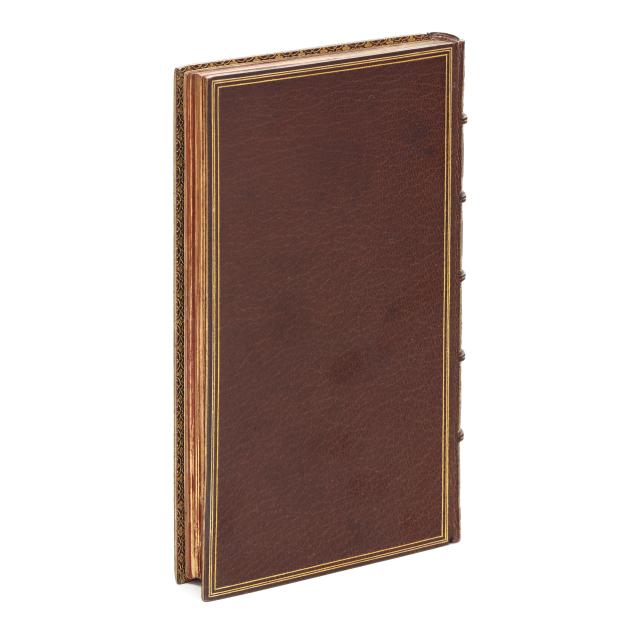
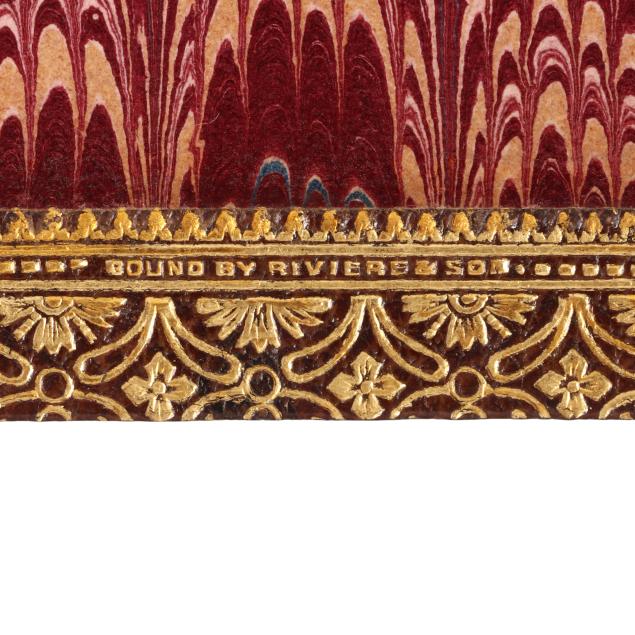
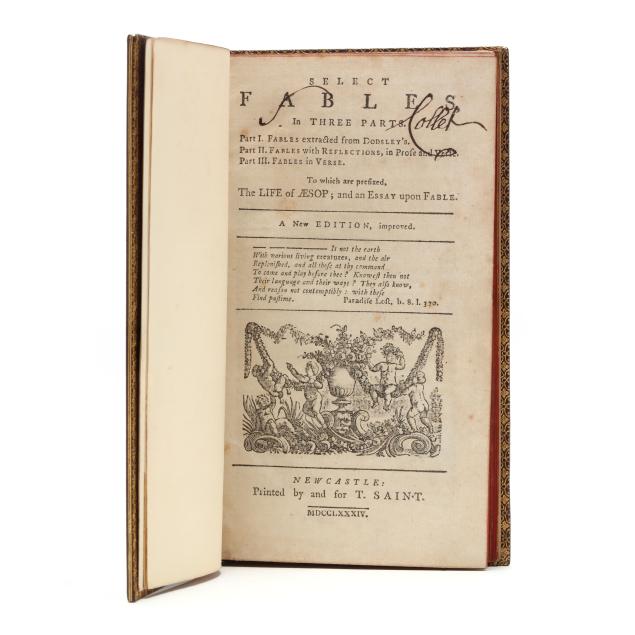
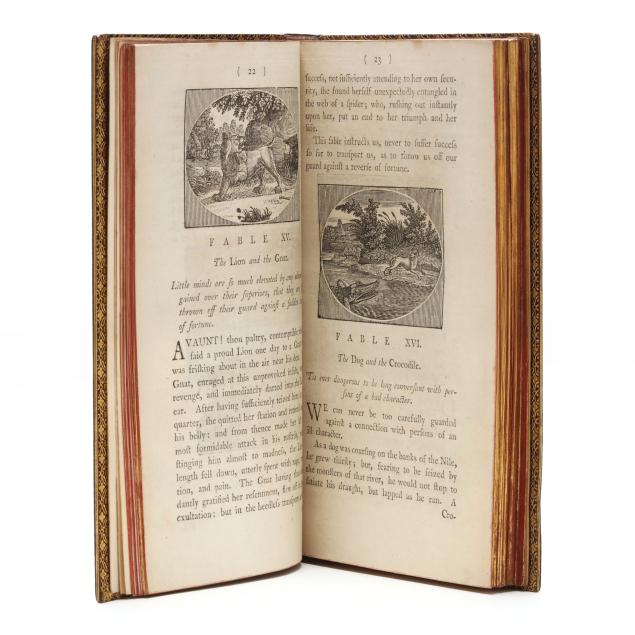
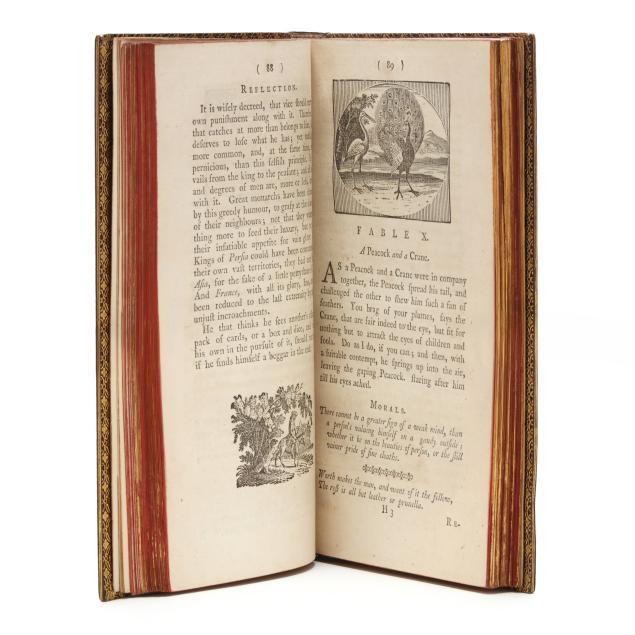
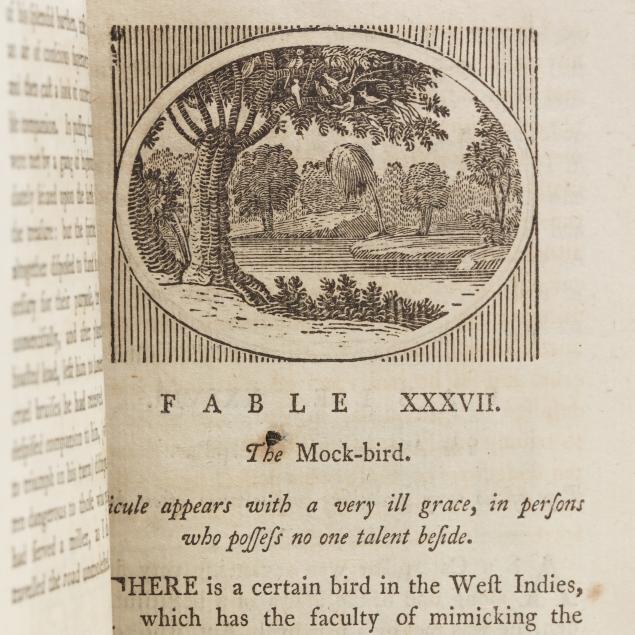
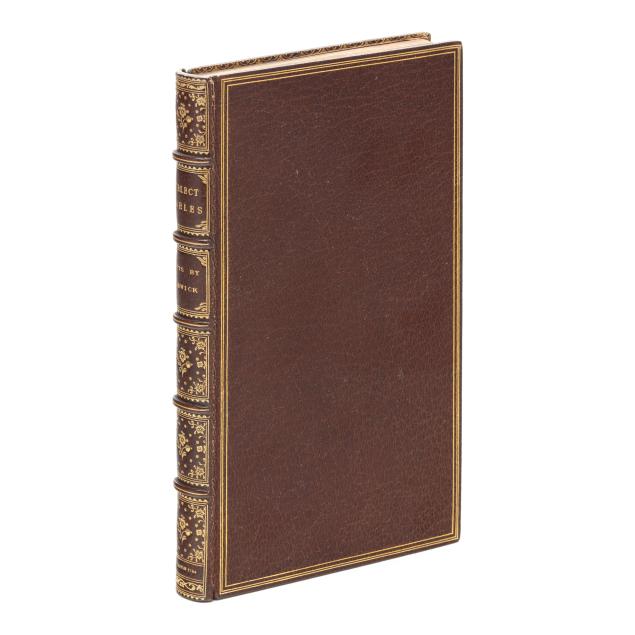
The Beautifully Illustrated Second Edition of Select Fables, Finely Bound by Riviere & Son
Explore more items like this one.
Visit our Historical Department Historical
Lot Details & Additional Photographs
7 x 4 1/4 in.
From a Private Chapel Hill, North Carolina Collection
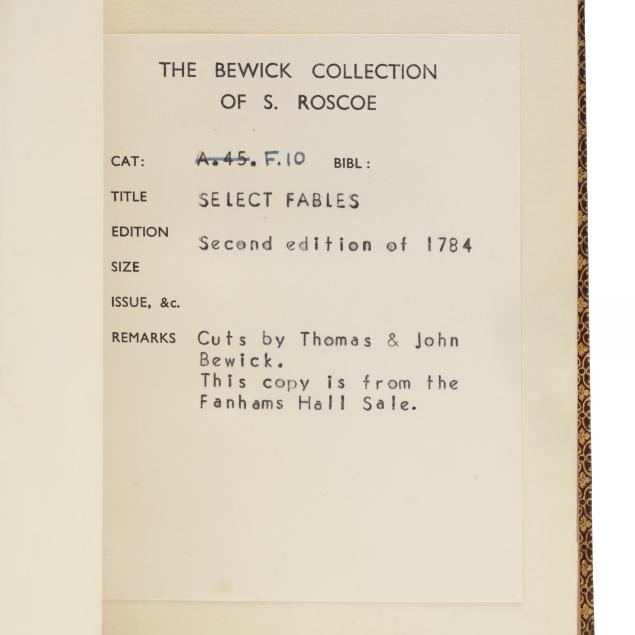
The Bewick Collection of Sidney Roscoe (with slip tipped in at front endpaper indicating this copy is from the Fanhams Hall Sale)
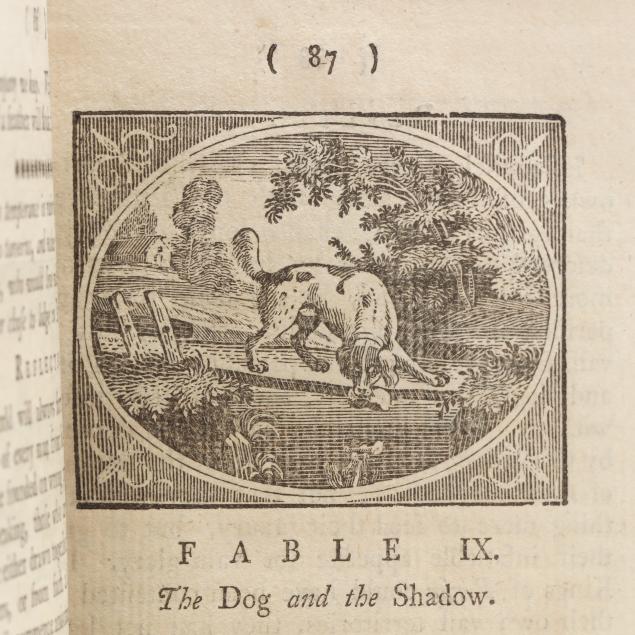
Thomas Bewick (England, 1753-1828) was a self-taught wood-engraver who worked primarily in Newcastle. He is often considered the founder of the wood-engraving technique of relief printing. Bewick is best known for illustrating A General History of Quadrupeds, History of British Birds, and many editions of Aesop's Fables.
According to Bewick collector Thomas Hugo, the first edition of this book from 1776 had "a miserable set of illustrations." However, "for this edition a new set of cuts was engraved by Thomas and John Bewick, and the work was otherwise materially improved. These cuts were then deemed superior to any of Bewick's previous productions." (Hugo, The Bewick Collector, page 12.)
Handsome binding in near pristine condition with only negligible creasing and rubbing to joints and one subtle dent to edge; interior with scattered light foxing, a few small tears, title page with ink signature, a tiny hole in E2, and L4 trimmed slightly at outer margin; as Tattersfield points out, the copperplate frontispiece is usually wanting, as it is in this copy. Easily very good.